Artwork
Self Portrait
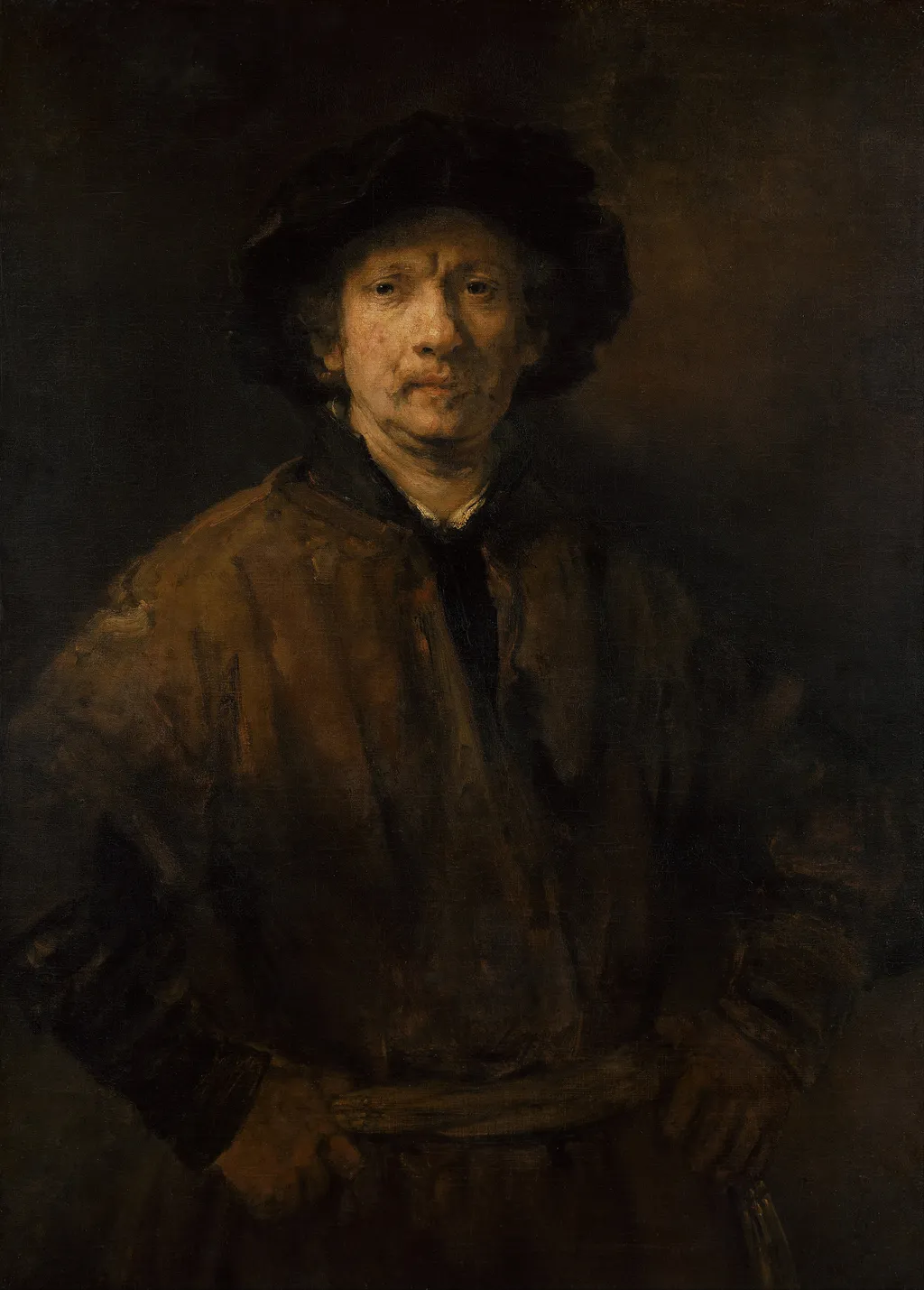
Self Portrait is an oil painting by the Dutch Golden Age artist Rembrandt van Rijn. It dates from 1652 and is held in the collection of the Kunsthistorisches Museum.
About this work
This is a self-portrait by Rembrandt. He painted it in 1652 using oil paint. It hangs in the Kunsthistorisches Museum in Vienna.
It’s one of over 40 self-portraits he made. This one shows him standing straight, hands on his hips, looking confident. Art historians note it’s simpler than his earlier fancy portraits. It was painted right as money troubles started for him.
Check out Rembrandt next.
Subject & Meaning
A similar pose appears in a drawing circa 1650 showing studio clothes, and the work influenced later homages such as Norman Rockwell's triple self-portrait.
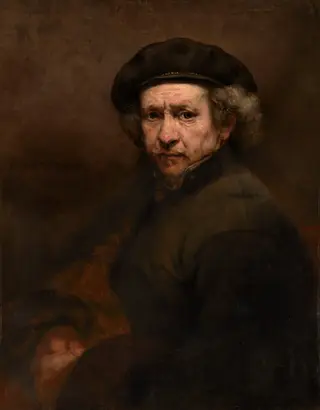
The painting depicts Rembrandt in a direct frontal pose with hands on his hips, wearing a brown work robe over a black doublet and a black beret, signaling a shift from earlier finery toward humble working attire. Painted in 1652, it marks the return after seven years of self-portraiture and inaugurates a prolific period of one self-portrait per year until his death in 1669. Art historian Christopher White describes it as one of the most magisterial and sombre of Rembrandt's late works, and Ernst van de Wetering suggests the series was intended for connoisseurs collecting self-portraits of prominent artists.
The composition shares frontal lighting and informal dress with his c. 1655 self-portrait, while microscopic analysis reveals a distinct underlayer beneath shadows in the eye sockets and moustache. A similar pose appears in a drawing circa 1650 showing studio clothes, and the work influenced later homages such as Norman Rockwell's triple self-portrait.
Technique & Style
Executed in oil on canvas in 1652, the work measures 112.0 cm in height and 81.5 cm in width. Rembrandt employs a restricted palette dominated by earthy browns and blacks for the costume, with the face and hands modeled in warmer, more saturated tones under a raking light that leaves most of the body in shadow. The brushwork is notably free and economical, especially in passages of clothing where the ground and underlayers remain visible, creating a tactile, almost sketch-like quality.
The composition is frontal and direct, with the artist shown standing, arms akimbo, conveying a newfound self-assurance. Microscopic analysis reveals the use of a local imprimatura beneath the shadows of the eyes and moustache, distinct from the gray ground layer; this technique, also observed in works by Vermeer, remains of uncertain purpose.
History & Provenance
Rembrandt painted this oil-on-canvas self-portrait in 1652, marking his return to the genre after a seven-year hiatus since 1645. The work inaugurated a prolific period during which the artist produced approximately one self-portrait annually until his death in 1669. While the painting reflects the onset of the artist's financial difficulties through its depiction of informal working attire rather than sumptuous finery, it presents a figure of direct confidence.
A drawing from circa 1650 suggests a preparatory study featuring similar attire, though the final painting substitutes a black beret for the top hat seen in the sketch.
The provenance of the work is documented in the 1720 inventory of the collections of Charles VI. Since that time, the painting has remained in the Kunsthistorisches Museum in Vienna, where it is currently housed. Art historians have noted that these late self-portraits were likely created specifically for connoisseurs who collected works by prominent artists, rather than solely for personal reflection.
The painting is held by the Kunsthistorisches Museum in Vienna, where it remains in the permanent collection.
Its inventory number is GG_1024 (Kunsthistorisches Museum, Gemäldegalerie).
The work was recorded in the imperial collections by 1720, when it appeared in an inventory of Charles VI’s holdings, marking the earliest documented provenance for the painting.
Context
Scholarship has emphasized the 1652 Self Portrait as a pivotal late work that reintroduced frontal presentation after Rembrandt’s seven-year hiatus from painted self-depiction. Christopher White characterizes it as “one of the most magisterial and sombre” of Rembrandt’s late images, marking a shift from earlier sumptuous attire to informal studio dress.
Technical studies note an unusual local imprimatura beneath shadows, visible in the eye sockets and moustache, distinct from the gray ground, a practice also observed in Vermeer’s work whose purpose remains debated. Ernst van de Wetering argues that such self-portraits were produced for connoisseurs collecting artist likenesses rather than personal introspection, situating the Vienna work within a broader market for self-representation among prominent painters.
Legacy
The 1652 Self Portrait marks a pivotal resurgence in Rembrandt's artistic output, ending a seven-year hiatus and inaugurating a prolific phase where the artist produced approximately one self-portrait annually until his death in 1669. Art historian Christopher White has characterized the work as one of the most magisterial and sombre late pictures by the master. The painting's composition and informal attire influenced subsequent works, including a c. 1655 self-portrait in the same Vienna collection that shares its frontal angle and lighting.
Its legacy extends to later artists; a 17th-century painting of Rembrandt's son, Titus, duplicates the figure's pose, and the work appears in Norman Rockwell's famous triple self-portrait alongside masterpieces by Dürer, Van Gogh, and Picasso.
Overview
Created in 1652, this oil painting on canvas presents the Dutch master Rembrandt van Rijn in a self‑portrait. It resides in the Kunsthistorisches Museum in Vienna and forms part of the artist’s extensive series of more than forty self‑depictions, marking his return to the genre after a seven‑year pause.
Own this work as a print
Artist & collection

Artist
Rembrandt Harmenszoon van Rijn, known mononymously as Rembrandt, was a Dutch Golden Age painter, printmaker, and draughtsman.

- Self portrait
 Self-Portrait
 Self-portrait
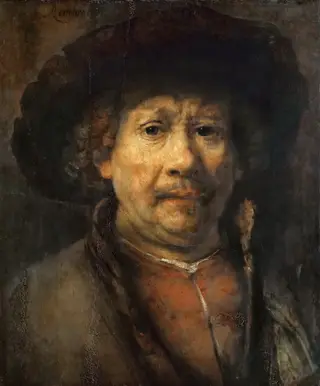 Self-portrait
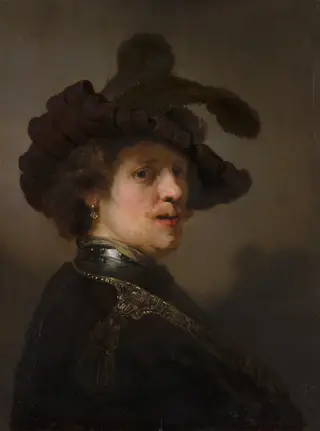 Portrait of a man in a plumed hat
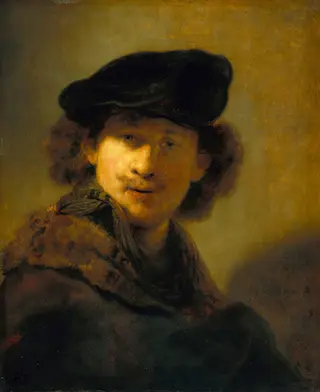 Self-portrait in a Velvet Beret
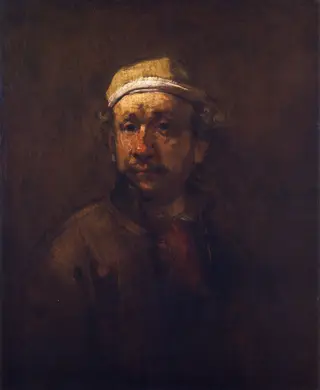 Portrait of Rembrandt
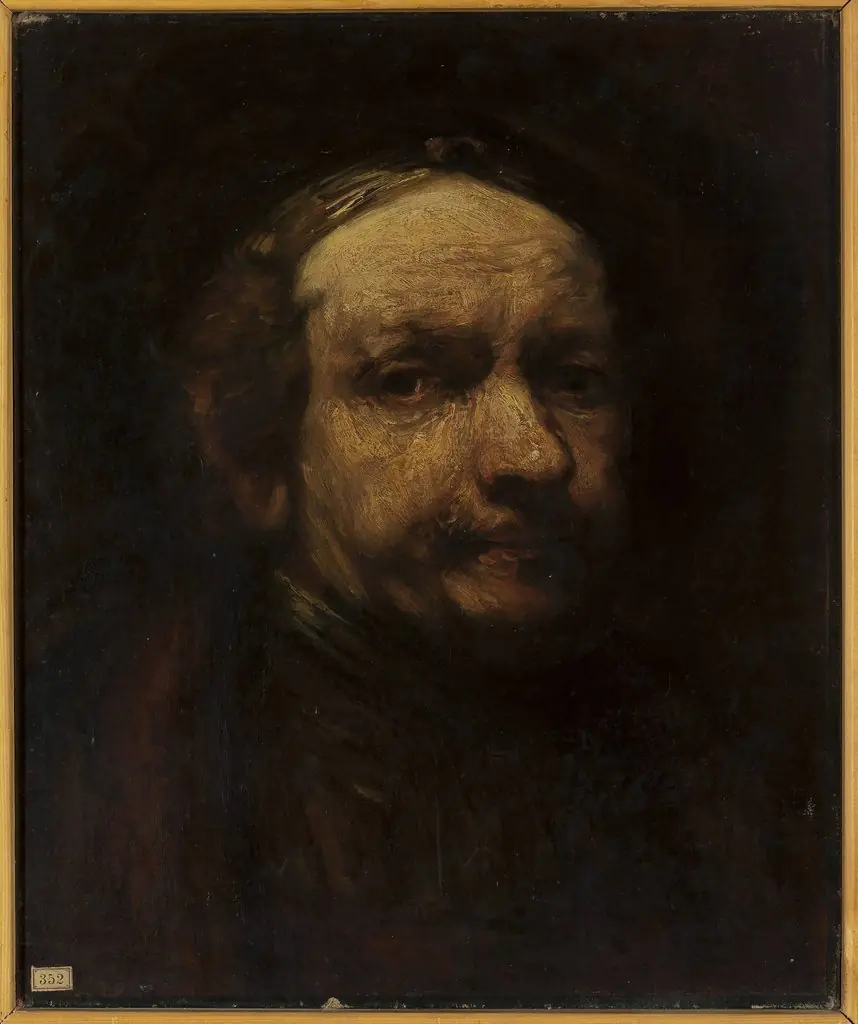 Copy of Rembrandt's “Self-portrait”
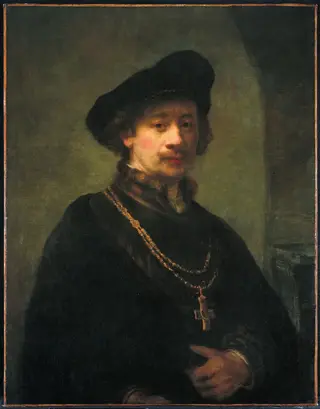 Self-portrait with beret, gold chain, and cross
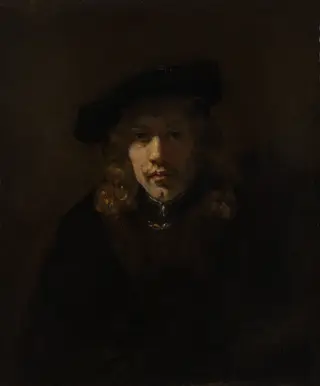 Man in a Beret
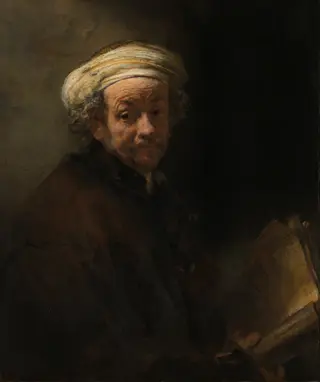 Self-portrait as the Apostle Paul
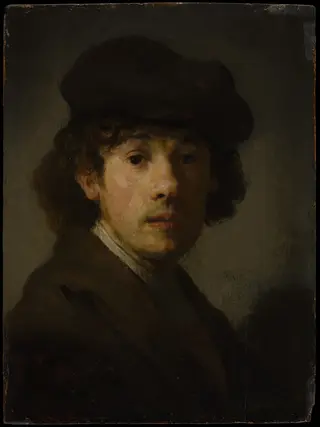 Rembrandt (1606–1669) as a Young Man