Artwork
Self-portrait with dishevelled hair
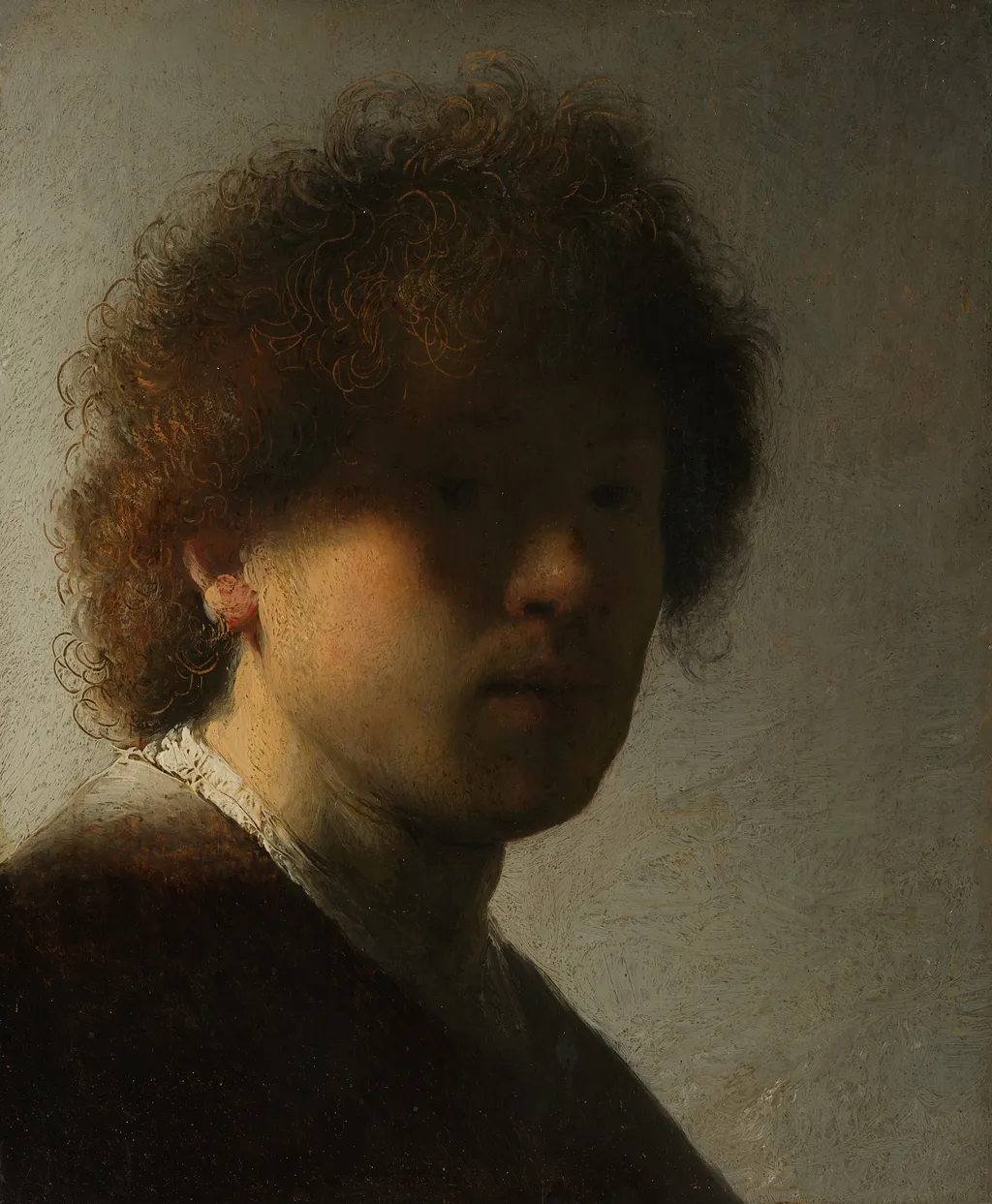
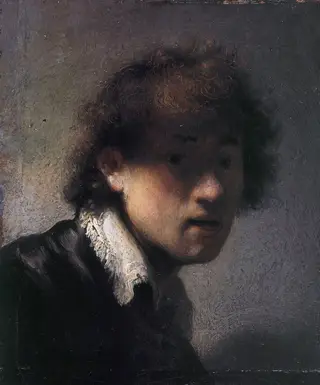
Self-portrait with dishevelled hair is an oil painting by the Dutch Golden Age artist Rembrandt van Rijn. It dates from 1628 and is held in the collection of the Rijksmuseum.
About this work
Subject & Meaning
The work depicts the artist Rembrandt at approximately twenty-two years of age, shown in a relaxed state rather than as a formal portrait.
The work depicts the artist Rembrandt at approximately twenty-two years of age, shown in a relaxed state rather than as a formal portrait. While many of Rembrandt's early self-images function as tronies or studies for facial expressions, this specific panel is distinguished by its focus on the technical exercise of chiaroscuro rather than the exploration of grimaces. The subject is illuminated by a strong, unusual light source from behind, casting the eyes and forehead into deep shadow so that the figure appears to emerge from the darkness.
Consequently, the painting is interpreted not as a character study, but as an investigation into how light interacts with various textures, including skin, hair, and a plastered wall. The dishevelled hair and shadowed features serve to highlight the artist's early mastery of light effects and paint application.
Technique & Style
Created circa 1628, this work is executed in oil paint on a wooden panel, measuring 22.6 cm by 18.7 cm. The composition serves as a rigorous exercise in chiaroscuro, utilizing a rare backlighting angle where strong light strikes the figure from behind to illuminate only the neck, right ear, jaw, and parts of the shoulder. Rembrandt employs varied paint handling to mimic these lighting conditions: thick, pasty impasto defines the illuminated collar and neck, while the paint surface becomes progressively thinner and more refined in the shadowed areas of the face. The artist demonstrates technical dexterity by scratching the still-wet paint with the back of his brush to lift individual strands of curly hair.
The background features short, textured strokes suggesting a plastered wall, where the light ground is occasionally revealed through the application of paint.
History & Provenance
The painting was created by Rembrandt around 1628, when the artist was about twenty-two years old, and is regarded as the earliest known painted self-portrait by him. Both the Rijksmuseum and the Rembrandt Research Project date the panel to circa 1628, with P. van Thiel (1989) considering a date of 1628 probable while retaining the cautious "circa 1628" attribution.
On 27 May 1959 the work was sold in London through the auction house Sotheby's to the art dealer Daan H. Cevat for 1,700 British pounds. In 1960 it was placed on loan to the Rijksmuseum Amsterdam, and in 1977 the museum acquired it definitively for 1.8 million guilders. The purchase was supported by the Rembrandt Foundation, the Foundation for the Advancement of the Interests of the Rijksmuseum, the Prince Bernhard Fund, the Photo Sales Committee, and the Ministry of Culture, Recreation and Social Work.
A workshop copy of the painting is held in the collection of the National Trust.
The painting is held in the collection of the Rijksmuseum Amsterdam. It entered the museum in 1960 on loan from art dealer Daan H. Cevat, who had acquired it at a Sotheby's auction in London on 27 May 1959 for £1,700. The Rijksmuseum purchased the work outright in 1977 for 1.8 million guilders, with support from the Rembrandt Foundation, the Foundation for the Advancement of the Interests of the Rijksmuseum, the Prince Bernhard Fund, the Photo Sales Committee, and the Ministry of Culture, Recreation and Social Work.
No specific exhibition history is provided in the sources beyond its continuous presence at the Rijksmuseum since 1960.
Context
Rembrandt created this early self-portrait when he was about twenty-two years old, making it one of his first known painted likenesses. It belongs to a series of more than forty painted self-portraits he produced throughout his career, alongside numerous drawings and etchings that often served as studies for facial expressions and lighting effects. The work exemplifies his experimentation with chiaroscuro, using strong backlighting to illuminate only parts of his face and clothing while leaving the forehead and eyes in shadow.
Rembrandt employed varied paint textures, thick, pasty strokes where light struck the neck and ear, and thinner layers in deeper shadow, to render the subtle effects of light on skin, hair, and a plastered wall in the background. Technical analysis shows he used the back of his brush to lift wet paint and suggest individual strands of hair, demonstrating a high level of observational precision for a young artist. The painting remained in private hands until 1959, when it was sold at Sotheby's in London, and was acquired by the Rijksmuseum in 1977 with support from several Dutch cultural funds.
Legacy
The work has become a reference point for understanding Rembrandt's early technical experimentation and psychological depth in self-portraiture. Its distinctive use of chiaroscuro to model facial features and texture, particularly in rendering hair and fabric, influenced later artists' approaches to light and surface treatment. The painting's survival and continued scholarly attention, including its acquisition by the Rijksmuseum with major funding support, cemented its status as a pivotal early work in the artist's oeuvre.
It remains a key example cited in studies of Dutch Golden Age portraiture and the evolution of self-representation.
Overview
This oil painting, titled Self‑Portrait with Dishevelled Hair, is an early work by Rembrandt van Rijn created during the Dutch Golden Age. Executed in a modest size, it presents a young man with unruly curls, a solemn gaze, and a face turned slightly away from the viewer. The composition is dominated by a dark, unadorned background that concentrates attention on the illuminated features of the sitter.
Own this work as a print
Artist & collection

Artist
Rembrandt Harmenszoon van Rijn, known mononymously as Rembrandt, was a Dutch Golden Age painter, printmaker, and draughtsman.

- Self-Portrait
 Self-portrait Lit from the Left
 Portrait of Rembrandt with a gorget
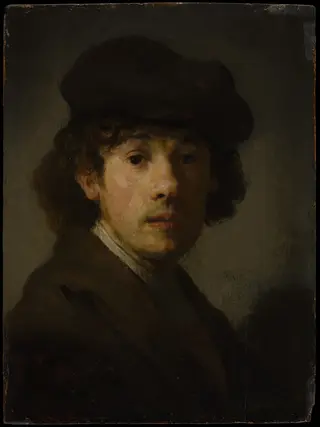 Rembrandt (1606–1669) as a Young Man
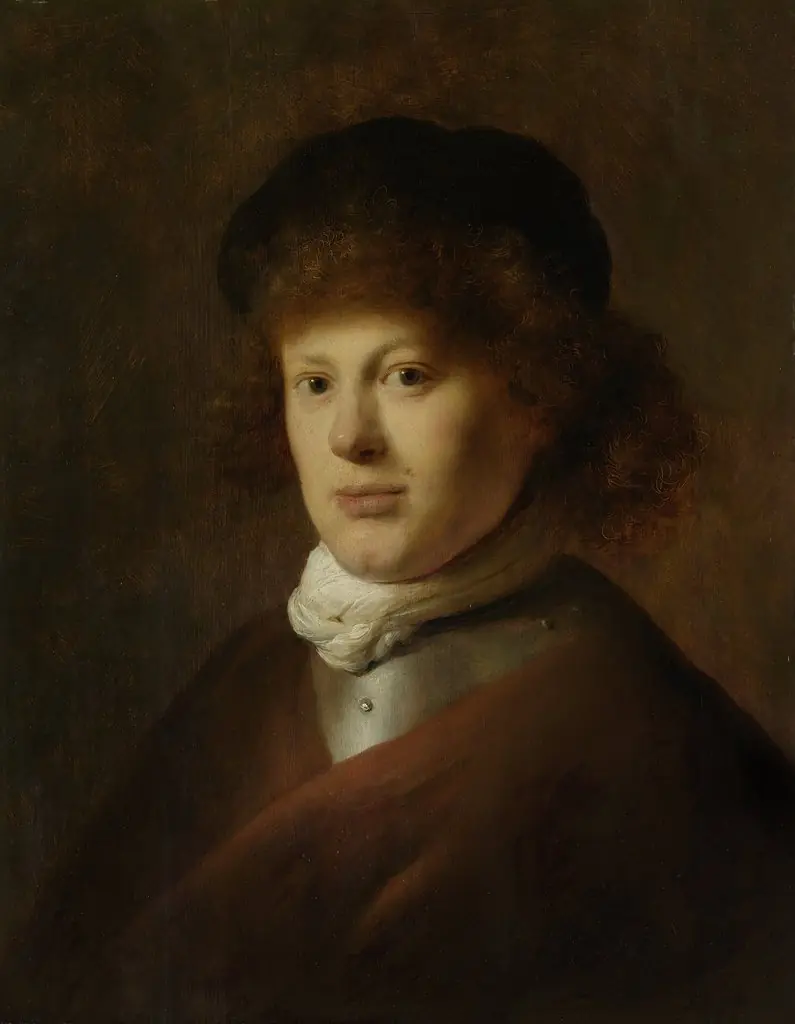 Portrait of Rembrandt Harmensz van Rijn
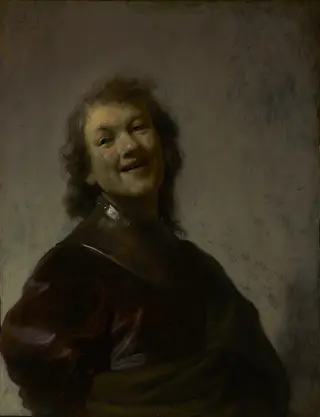 Rembrandt Laughing
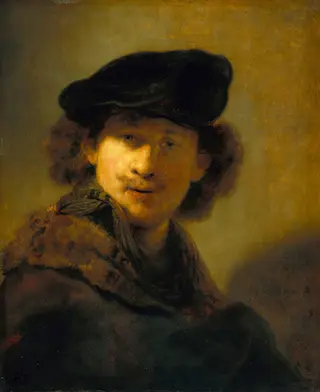 Self-portrait in a Velvet Beret
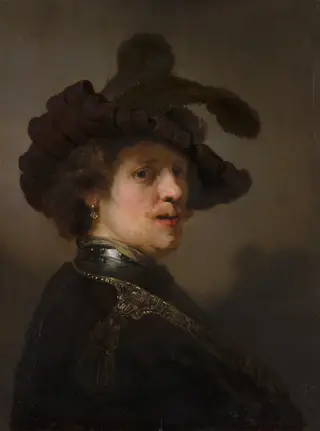 Portrait of a man in a plumed hat
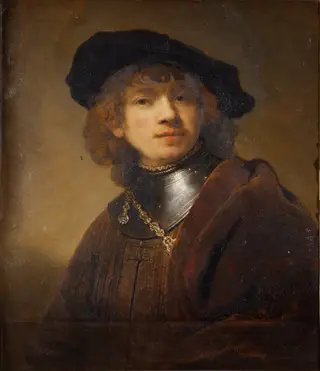 Tronie of a Young Man with Gorget and Beret
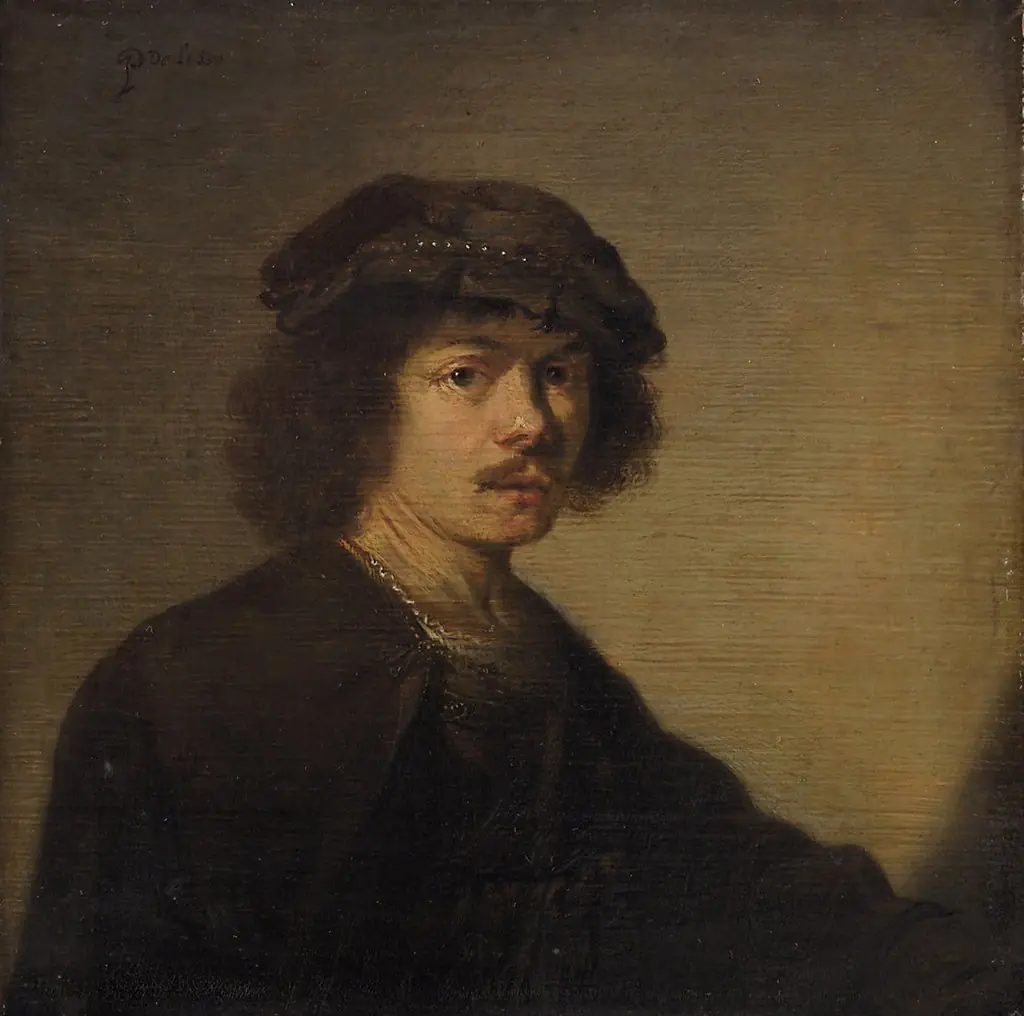 Selbstbildnis in Phantasietracht
 Girl with the Red Hat
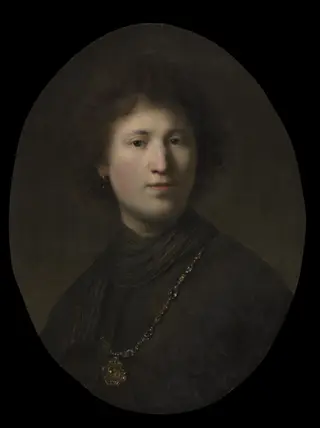 A Young Man with a Chain