Artwork
Still Life with Peacocks
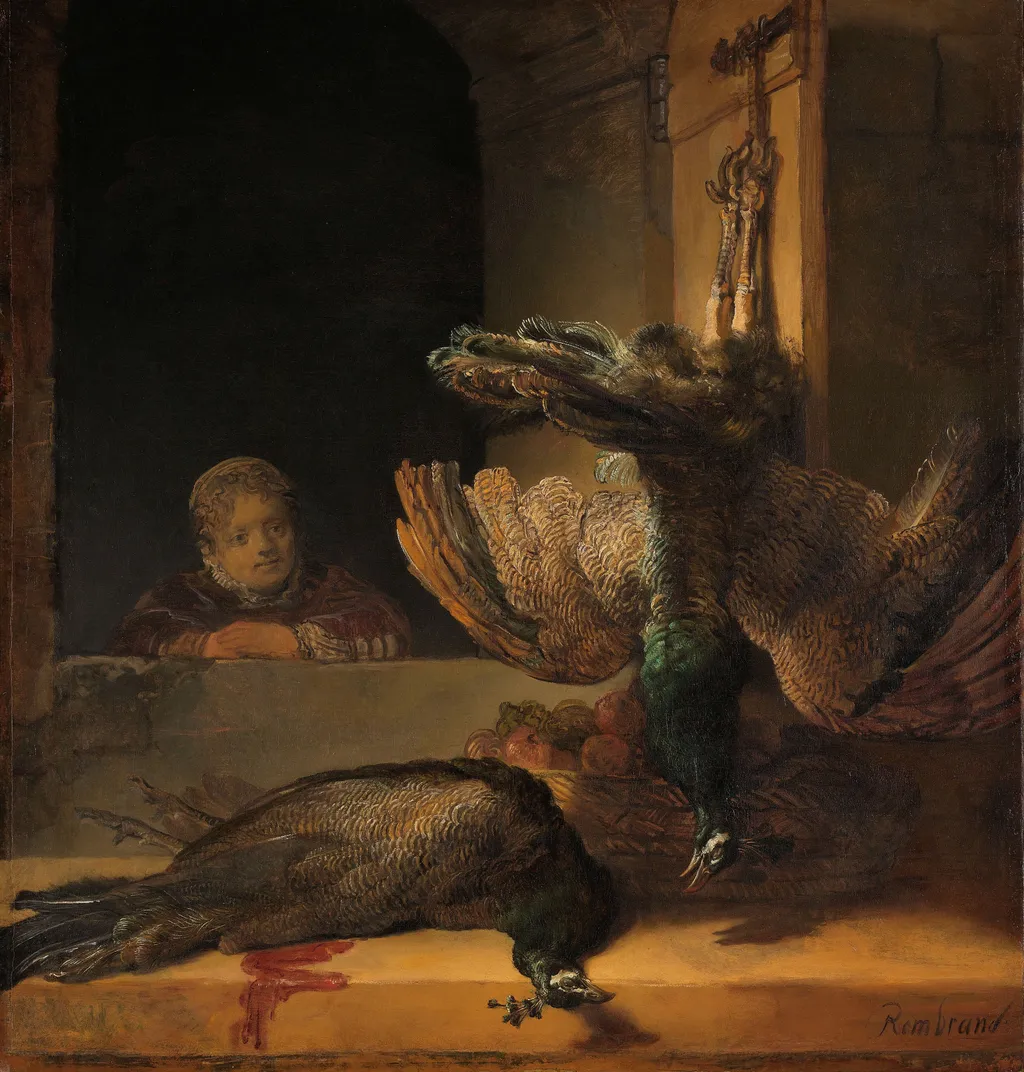
Still Life with Peacocks is an oil painting by the Dutch Golden Age artist Rembrandt van Rijn. It dates from 1636 and is held in the collection of the Rijksmuseum. Created in 1636, this oil on canvas by Rembrandt Harmenszoon van Rijn belongs to the Dutch Golden Age.
About this work
Technique & Style
While some scholars question the authenticity of this modified signature, the attribution of the painting itself remains undisputed.
Executed in oil paint on canvas, this work measures approximately 145 by 135.5 cm. The composition depicts a young girl in a crimson velvet jacket leaning from a stone window to observe two dead peacocks; one hangs from a wooden shutter while the other rests on a stone plinth beside a pool of blood and a fruit basket. This arrangement merges still-life elements with a figural presence, a motif later expanded by Gerrit Dou. Technical examination via X-ray reveals that the signature at the lower right was altered from 'Rembrand' to 'Rembrandt,' with specific letters appearing to have been painted over.
While some scholars question the authenticity of this modified signature, the attribution of the painting itself remains undisputed.
History & Provenance
Still Life with Peacocks was painted by Rembrandt around 1639 (some sources give 1636). It is first documented in the estate inventory of Clara de Valaer, widow of Hendrik van Domselaer, drawn up in Amsterdam on 16 October 1660, and reappeared in September 1685 in the inventory of her son Tobias van Domselaer. A possible later trace is a 1734 auction of a Rembrandt "Dead birds" from the Willem Six collection, though the identification is uncertain.
By 1819 the painting belonged to the British politician William Ralph Cartwright, who loaned it to a London exhibition that year; he may have inherited it via his aunt Catherine Ann Blackwood and her father-in-law Colonel John Blackwood. It remained with his grandson William Cornwallis Cartwright until at least 1915. In 1918 the Amsterdam dealer Frederik Muller & Co. acquired it, selling it to Jean Joseph Marie Chabot, who held it until 1942 and loaned it to the Rijksmuseum from 1923.
On 21 July 1942 Chabot illegally sold it for 800,000 guilders to Erhard Göpel for Hitler's planned Führermuseum in Linz. On 9 October 1945 the Americans transferred it via the Central Collecting Point to the Dutch government and Stichting Nederlands Kunstbezit, which loaned it to the Rijksmuseum in 1948; the museum acquired definitive ownership on 24 February 1960.
Still Life with Peacocks is held in the Rijksmuseum Amsterdam. Its inventory number is not specified in the provided sources. The work entered Dutch state possession in 1945 after being transferred from the Central Collecting Point and was loaned to the Rijksmuseum in 1948 before definitive acquisition on 24 February 1960.
It was previously owned by William Cornwallis Cartwright and Jean Joseph Marie Chabot, and was illegally sold in 1942 to Erhard Göpel for Adolf Hitler's Führermuseum.
The provenance traces back to Clara de Valaer's 1660 estate inventory, later appearing in her son's 1685 inventory. It was owned by British politician William Ralph Cartwright in 1819, then acquired in 1918 by Frederik Muller & Co., and held by Chabot until its 1942 sale. After World War II, it was restituted to the Netherlands and placed with Stichting Nederlands Kunstbezit.
The painting has been exhibited at the Rijksmuseum Amsterdam, including a loan period between 1923 and 1942 under Chabot's possession.
Context
Still Life with Peacocks occupies a distinctive place within Rembrandt's oeuvre as one of the few still lifes he painted, and it is associated with the Dutch Golden Age movement. The motif of a figure leaning in a stone window surrounded by objects was later developed further by Rembrandt's pupil Gerrit Dou, situating the work as an early example of a compositional formula that influenced his workshop's later output.
Questions of attribution have also shaped the painting's scholarly profile. While the work appears to be signed 'Rembrand' at the lower right, x-rays reveal that it was originally signed Rembrandt, with the R, d, and t subsequently painted over. Not all art historians agree that the visible signature is authentic, though the attribution of the painting itself is not in dispute.
The work's complex twentieth-century history, including its illegal sale in 1942 to Adolf Hitler's planned Führermuseum in Linz and its eventual return to the Netherlands via the Central Collecting Point, has also drawn scholarly attention as a case study in wartime looting and postwar restitution.
Legacy
The painting has influenced later artists through its window motif, particularly noted as a development seen in the work of Rembrandt's pupil Gerard Dou. Its legacy is tied to complex provenance, including illegal sale to Adolf Hitler's planned Führermuseum during World War II and subsequent post-war restitution to the Rijksmuseum. The work remains a significant example of Dutch Golden Age still life and Rembrandt's experimentation with genre elements.
Overview
Created in 1636, this oil on canvas by Rembrandt Harmenszoon van Rijn belongs to the Dutch Golden Age. The work presents a dimly lit interior where two deceased peafowl lie on a ledge, observed by a young child. Scattered feathers and a small pool of blood complete the arrangement, which is now part of the Rijksmuseum’s collection.
Subject & Meaning
The composition juxtaposes the vivid plumage of the dead birds with the innocent curiosity of the child, suggesting a meditation on mortality and the fleeting nature of beauty. The presence of blood and fallen feathers reinforces the tension between life’s vibrancy and its inevitable decline, inviting viewers to contemplate the transitory.
Own this work as a print
Artist & collection

Artist
Rembrandt Harmenszoon van Rijn, known mononymously as Rembrandt, was a Dutch Golden Age painter, printmaker, and draughtsman.

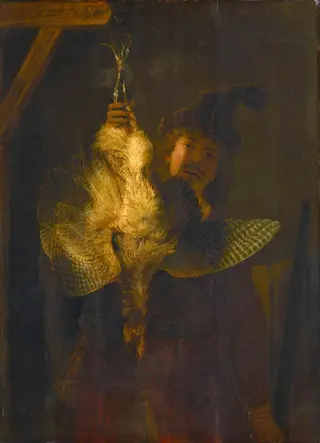 The Bittern Hunter
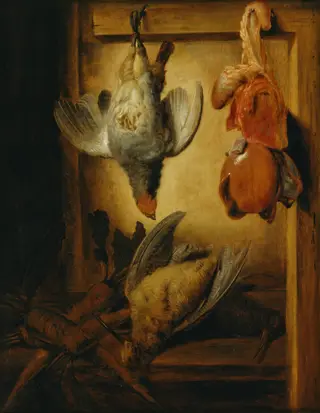 Dead Wild Fowl
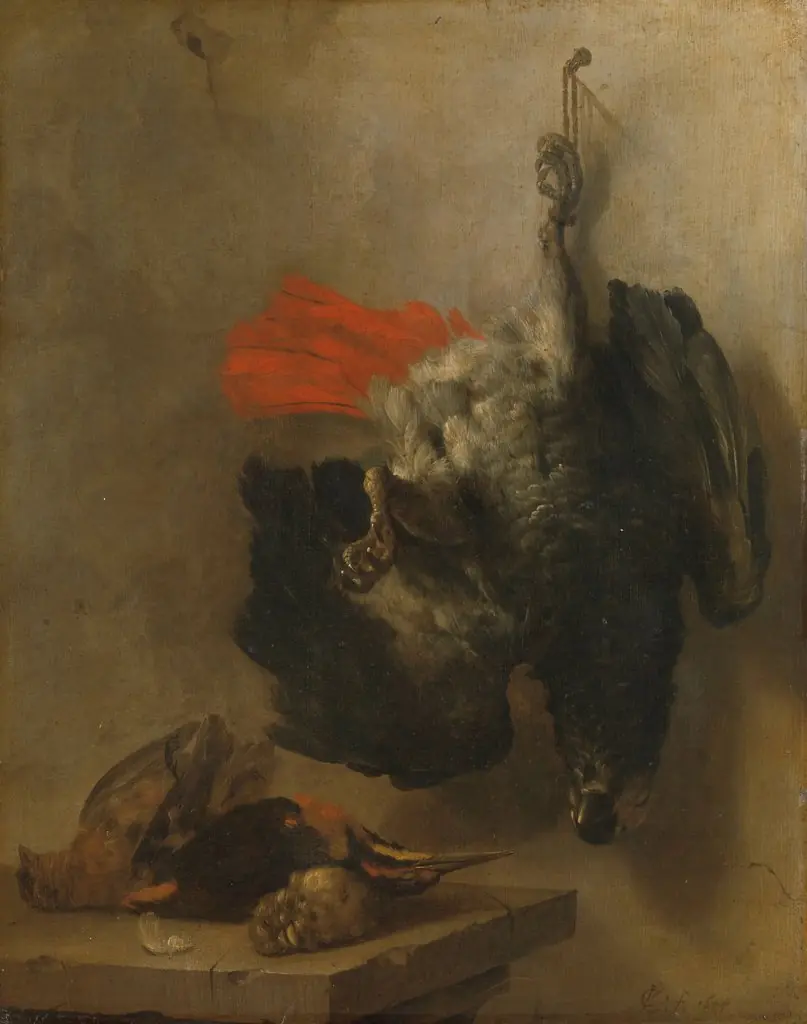 Still life with parrot and snipes
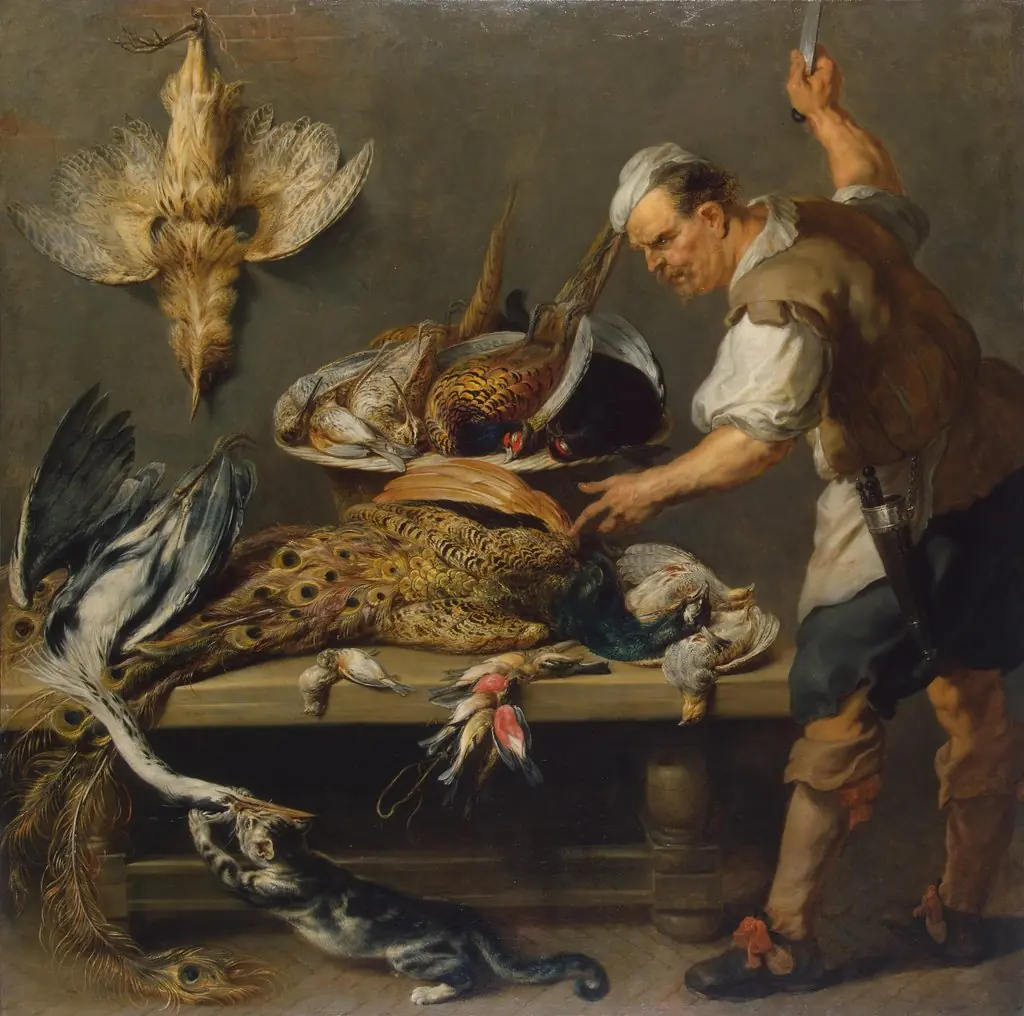 Cook at a Kitchen Table with Dead Game on it
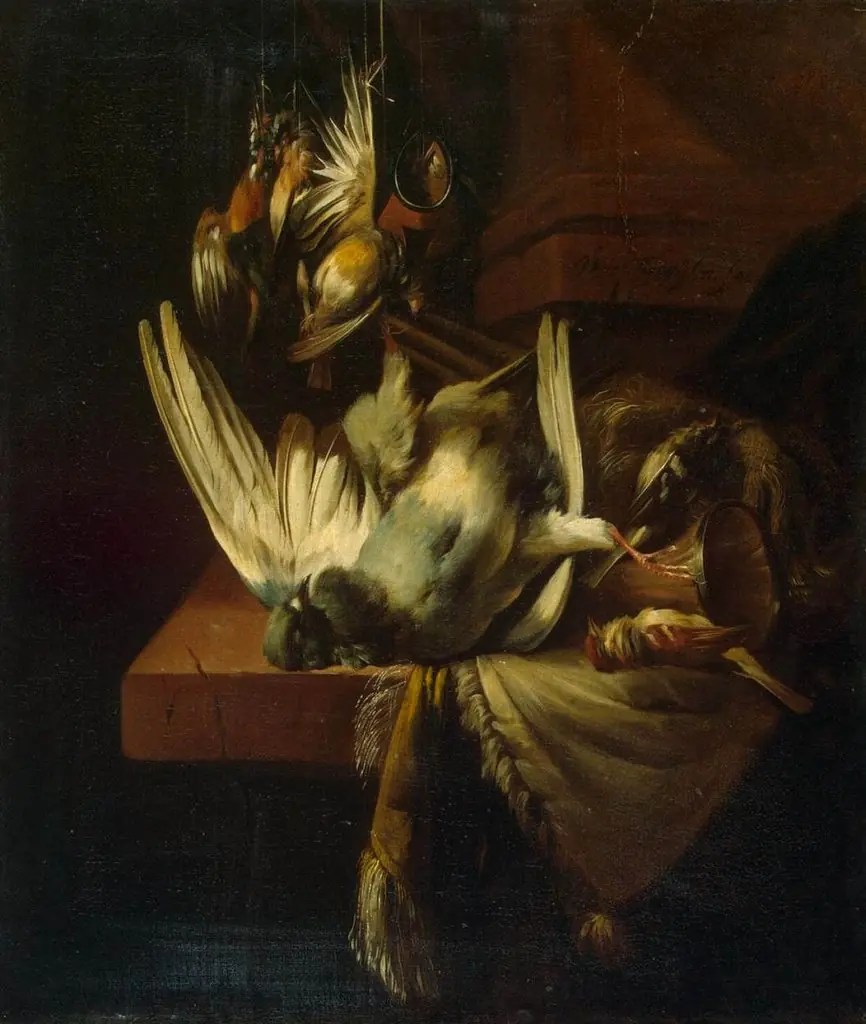 Still Life with Dead Game
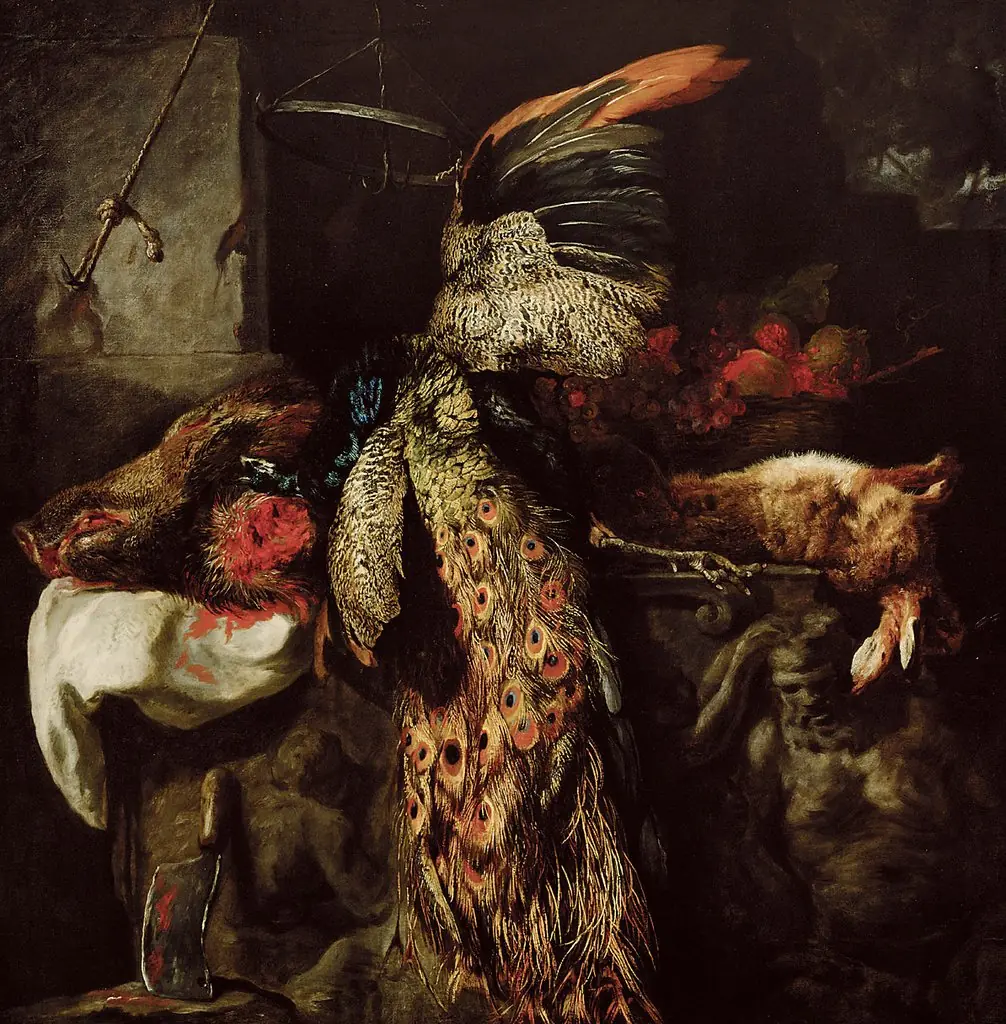 Dead game with dead peacock and a hog's head
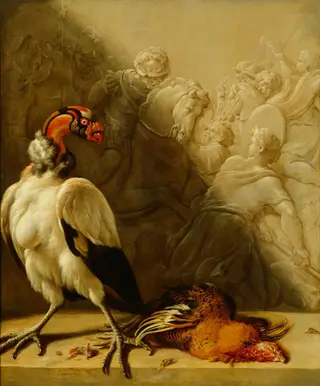 Südamerikanischer Königsgeier
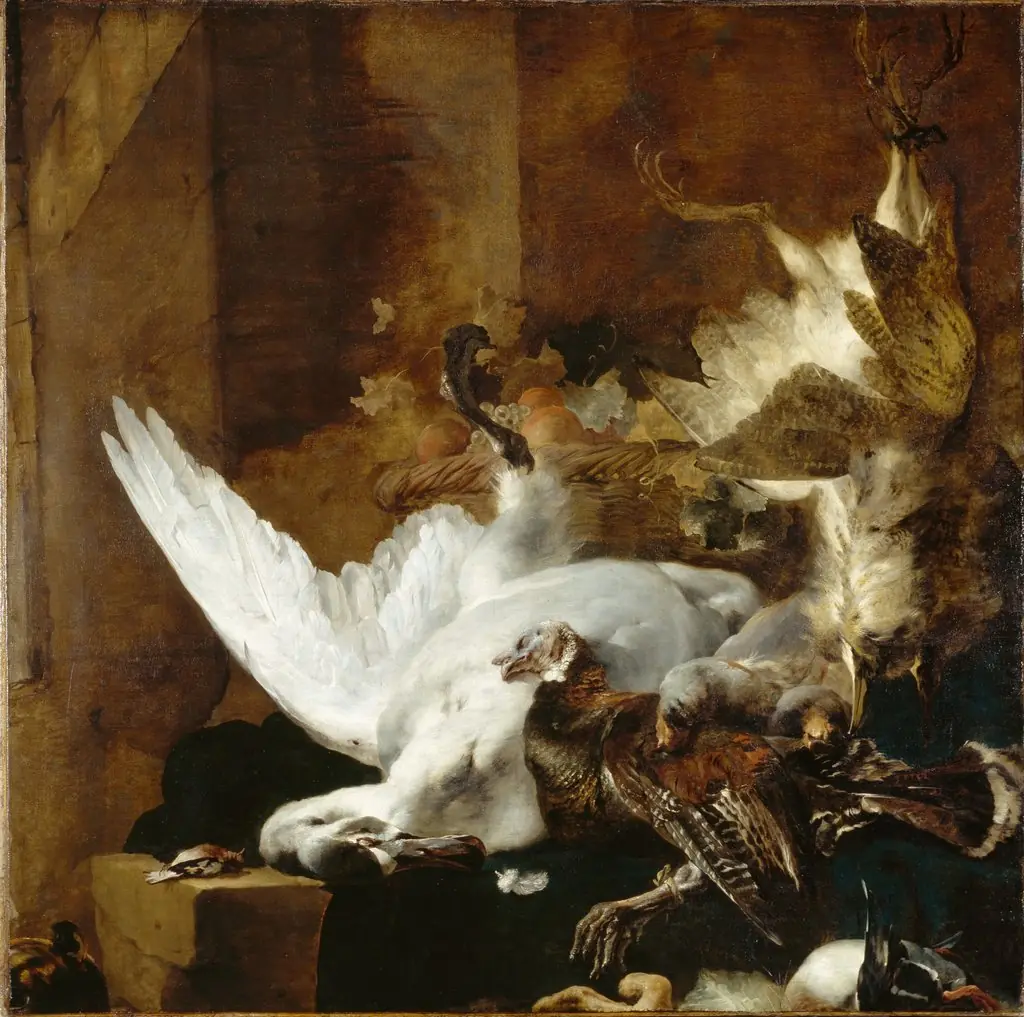 Still Life with a Dead Swan
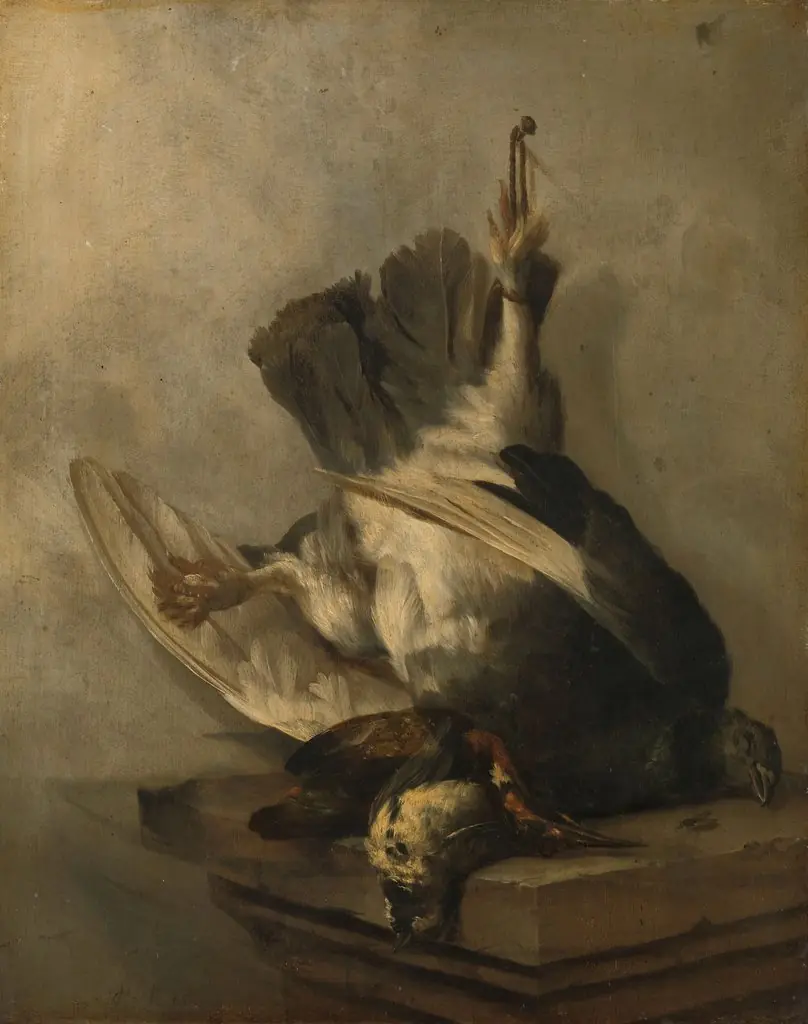 Still life with woodpecker and snipes
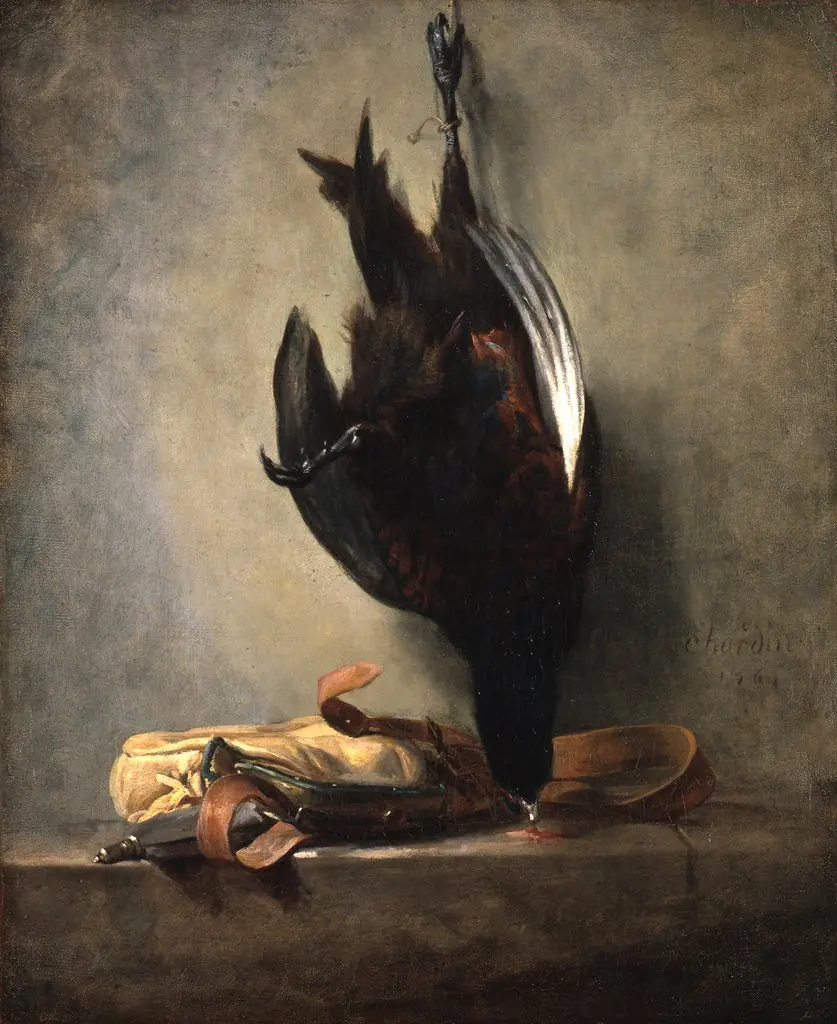 Still Life with a dead Pheasant and a Hunting Bag
 Birds fighting
- Still Life with Birds