Artwork
The Entombment
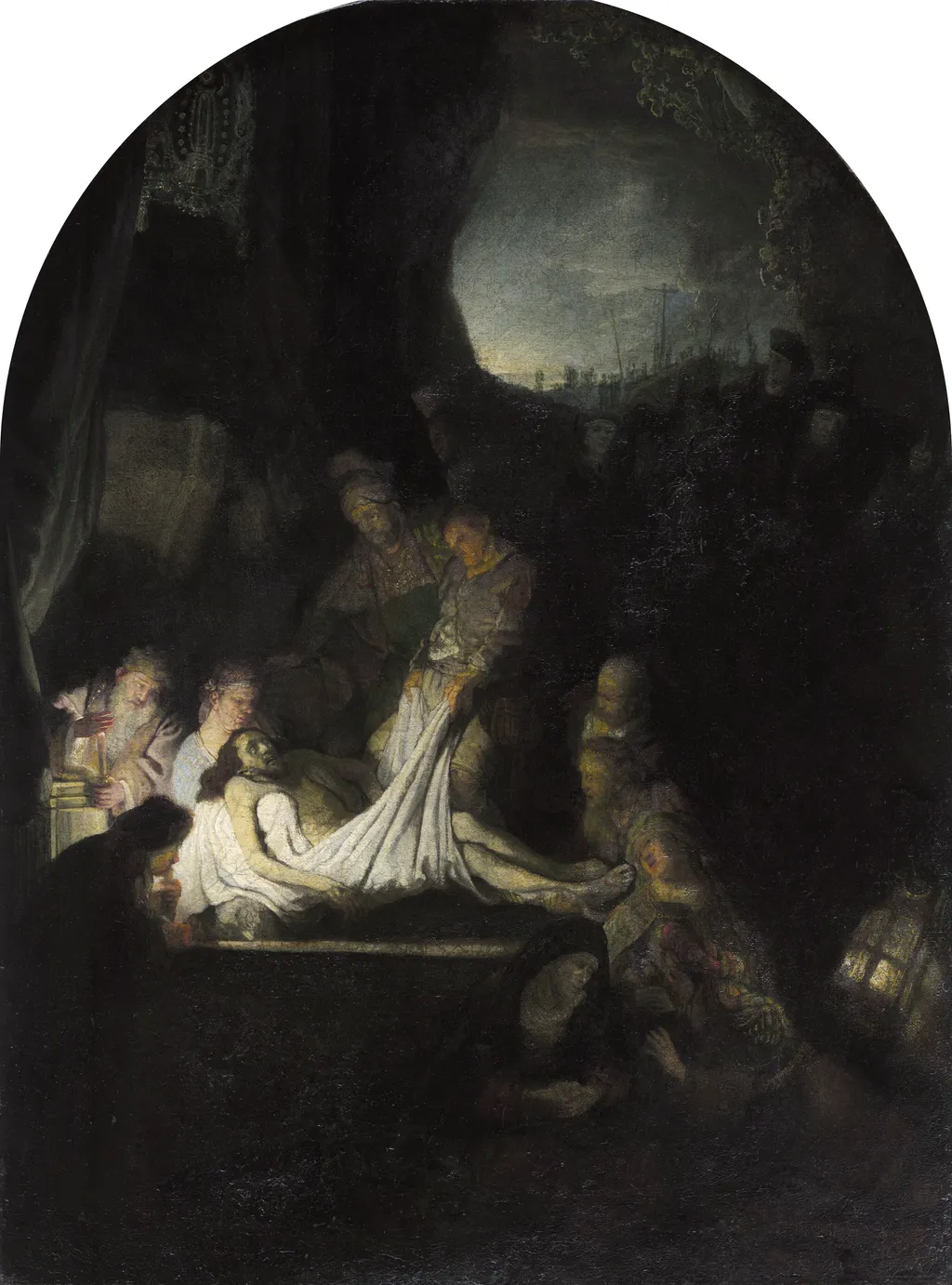
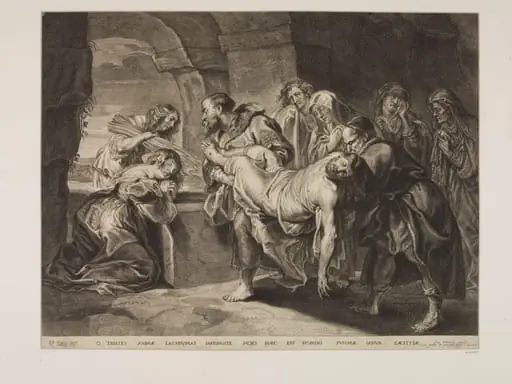
The Entombment is an oil painting by the Dutch Golden Age artist Rembrandt van Rijn. It dates from 1639 and is held in the collection of the Bavarian State Painting Collections.
About this work
Subject & Meaning
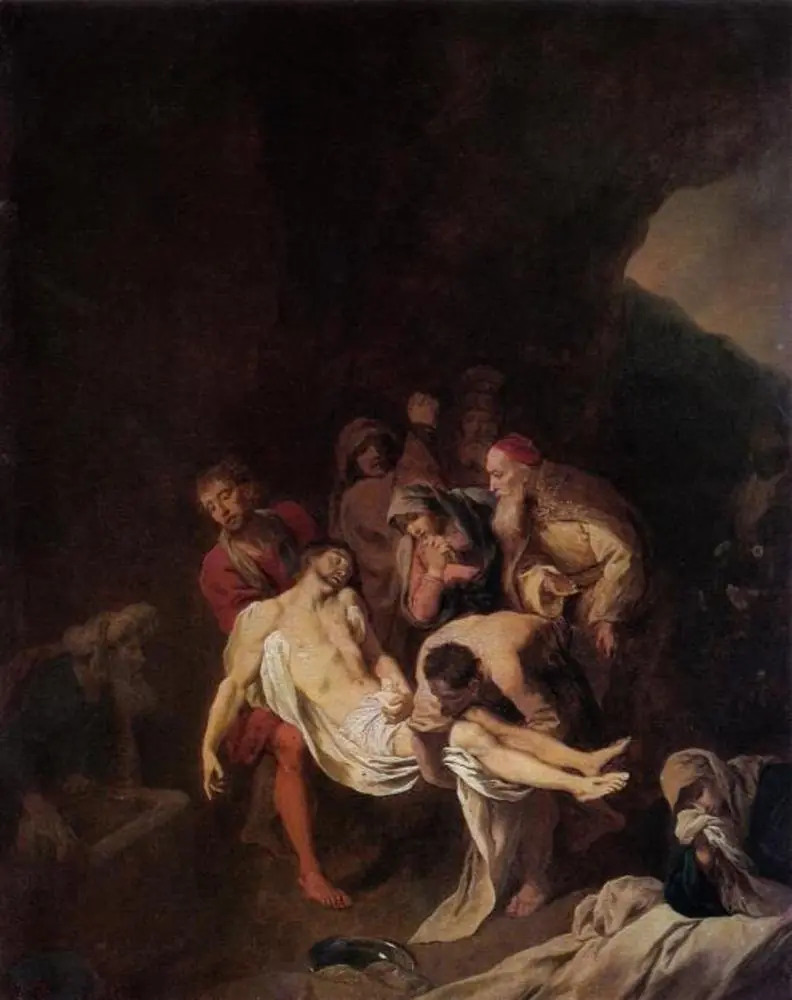
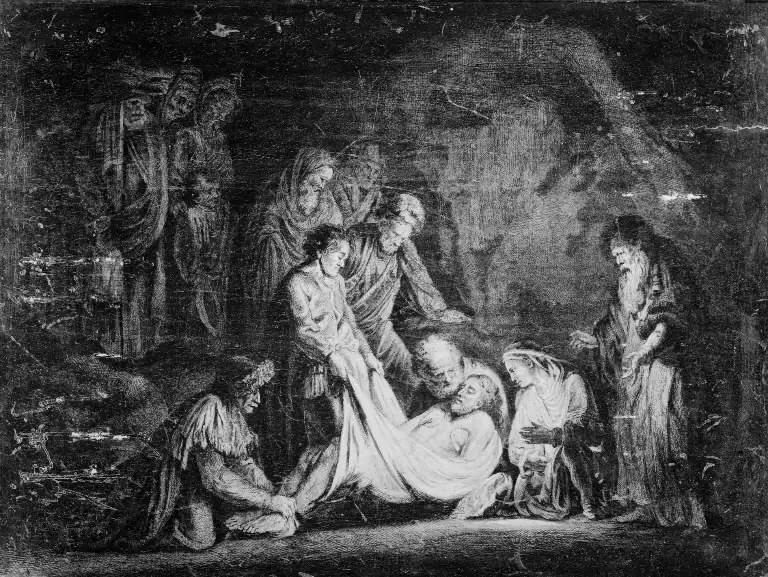
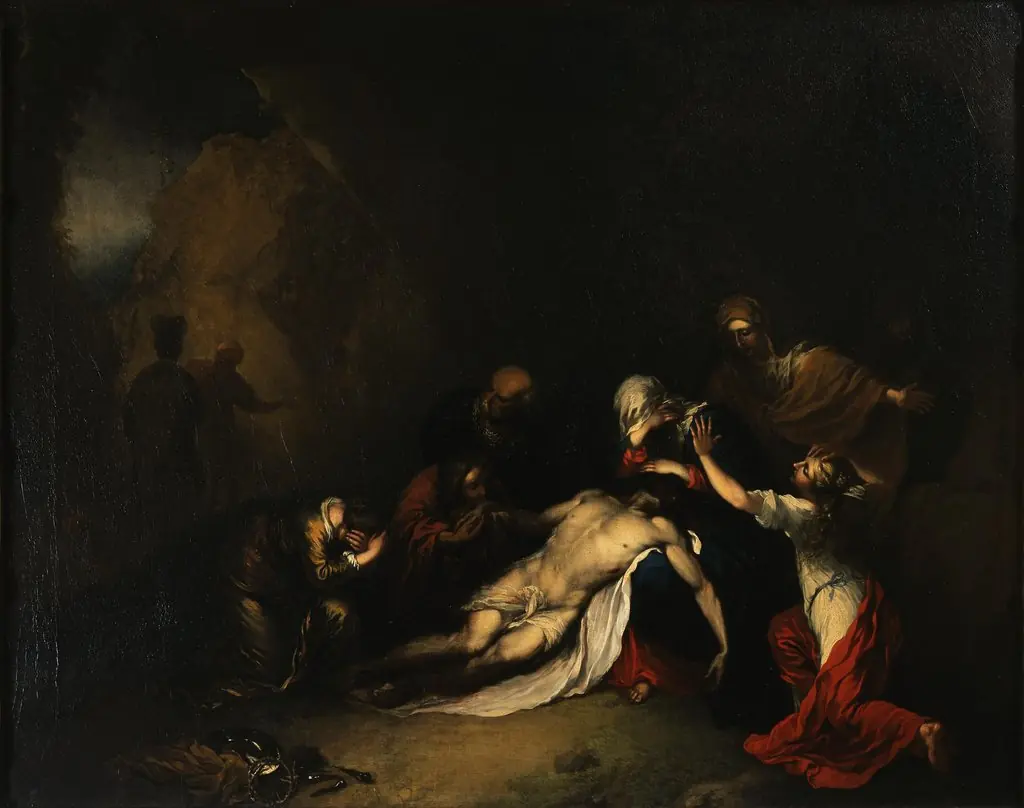
The painting depicts the moment when Christ’s body is laid in the tomb after the Crucifixion, a subject known in art as the Entombment.
The painting depicts the moment when Christ’s body is laid in the tomb after the Crucifixion, a subject known in art as the Entombment. Rembrandt’s composition centers on the shrouded corpse supported by two figures, one positioned at Christ’s head and another at his feet, while a third figure in the background holds spices in a vessel, referencing the anointing ritual described in the Gospels. The subdued palette and restrained gestures emphasize solemnity and reverence rather than dramatic action, aligning with Dutch Calvinist tendencies to focus on piety and inner reflection.
The inclusion of the spice vessel underscores the narrative’s continuity with the Lamentation and Burial, marking the transition from death to entombment within the Passion cycle.
Technique & Style
The Entombment is an oil-on-canvas painting executed by Rembrandt in 1639. The work measures 92.5 cm in height and 68.9 cm in width. As a product of the Dutch Golden Age, the piece employs oil paint to depict the religious subject of the entombment of Christ.
The painting is currently held within the collection of the Alte Pinakothek, part of the Bavarian State Painting Collections.
History & Provenance
The painting was created in 1639, as indicated by Rembrandt’s dated signature on the work. It entered the Bavarian State Painting Collections through the collection of Johann Wilhelm, Elector Palatine, whose holdings were later integrated into the Alte Pinakothek in Munich, where the painting remains today. The Elector’s collection, assembled during his tenure as governor of the Spanish Netherlands, included several Dutch Golden Age works, suggesting the painting may have been acquired by him or his agents in the early eighteenth century.
The Entombment is held by the Bavarian State Painting Collections within the Alte Pinakothek in Munich. It forms part of the Johann Wilhelm von der Pfalz collection housed at this institution. The work was created in 1639.
The painting depicts the entombment of Jesus Christ and is executed in oil paint on canvas. Its physical dimensions measure 92.5 cm in height and 68.9 cm in width.
Overview
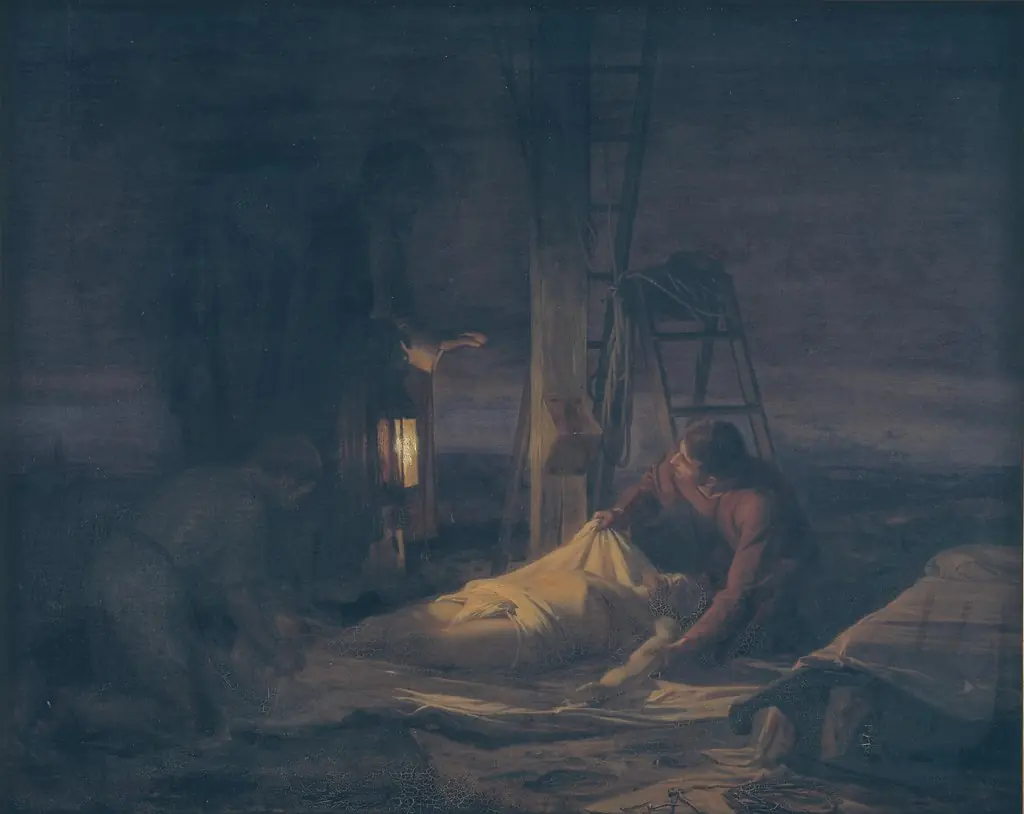
Created in 1639 by Rembrandt van Rijn, this oil painting presents a nocturnal scene in which a shrouded figure lies on a table surrounded by mourners. The composition is confined to a dim interior, while an open window reveals a luminous moonlit landscape beyond. The work belongs to the collection of the Alte Pinakothek in Munich.
Context
Executed during the Dutch Golden Age, the work reflects Rembrandt’s interest in religious genre scenes that combined narrative depth with psychological insight. While the Netherlands was predominantly Protestant, such depictions of Christ’s passion were common in private devotion, allowing the artist to explore universal human emotions within a biblical framework.
Own this work as a print
Artist & collection

Artist
Rembrandt Harmenszoon van Rijn, known mononymously as Rembrandt, was a Dutch Golden Age painter, printmaker, and draughtsman.