Artwork
The Death of the Virgin
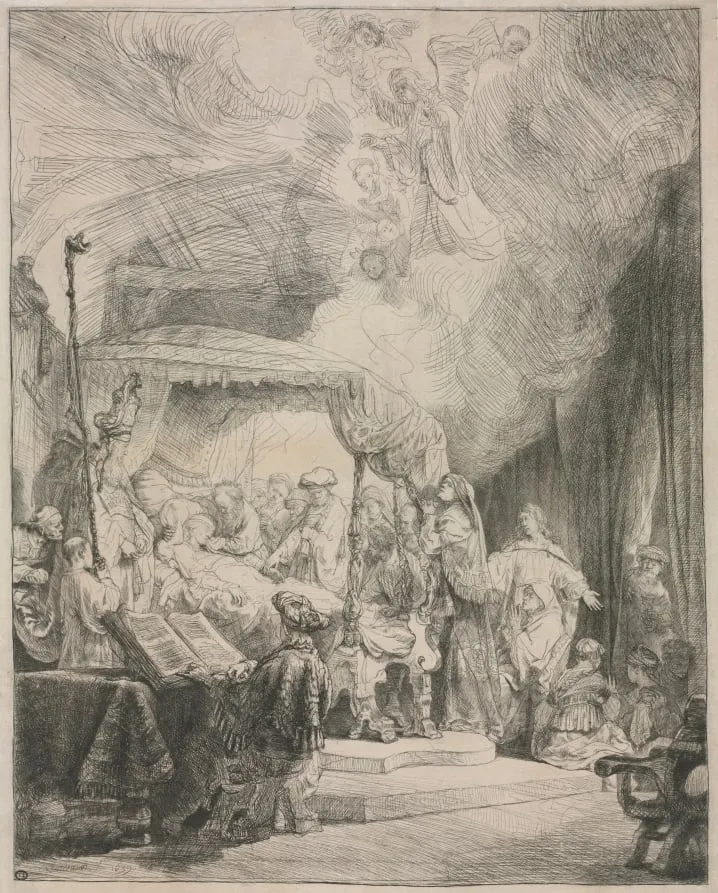
The Death of the Virgin is a print by the Baroque artist Rembrandt van Rijn. It dates from 1639 and is held in the collection of the Cleveland Museum of Art.
- Accession no.
- 1946.311
- Credit line
- In memory of Ralph King, gift of Mrs. Ralph King; Ralph T. Woods, Charles G. King; and Frances King Schafer
About this work
Overview
The Death of the Virgin is a 1639 etching and drypoint by Rembrandt van Rijn, depicting the final moments of the Virgin Mary as narrated in The Golden Legend.
The Death of the Virgin is a 1639 etching and drypoint by Rembrandt van Rijn, depicting the final moments of the Virgin Mary as narrated in The Golden Legend. The composition centers on a dimly lit, crowded chamber where the Virgin lies on a bed draped in heavy fabric, surrounded by apostles and other mourners in various states of grief and contemplation. Some figures stand with hands raised in prayer or shock, while others kneel in solemn reverence.
Above the earthly scene, faint, ethereal shapes of angels hover near the ceiling, contrasting with the shadowed, somber atmosphere below. Rembrandt employs his characteristic mastery of light and shadow, using deep blacks and subtle gradations to create a sense of depth and emotional intensity. This work reflects the artist's early interest in biblical narratives and his ability to convey profound human emotion through intricate line work and atmospheric lighting.
Created during a period when Rembrandt was establishing his reputation in Amsterdam, the print demonstrates his skill in combining detailed observation with spiritual symbolism, marking an important contribution to his exploration of religious themes in printmaking.
Subject & Meaning
The composition depicts the moment of the Virgin Mary’s passing, a theme common in 17th‑century devotional art. Figures are shown in various states of grief, some kneeling, others with raised hands, while ethereal angels hover above, suggesting a transition from earthly sorrow to heavenly consolation.
Technique & Style
Rembrandt employs chiaroscuro, contrasting deep shadows with sharply illuminated forms to heighten drama. The print’s line work is loose and energetic; faces and hands are suggested rather than fully detailed, giving the scene a sense of immediacy and emotional intensity.
History & Provenance
Created in 1639, the print entered the Cleveland Museum of Art’s holdings through acquisition in the 20th century, though earlier ownership records are sparse. Its presence in a major American collection reflects the broad appreciation of Rembrandt’s graphic oeuvre beyond his paintings.
Context
During the 1630s Rembrandt explored biblical narratives through both painting and printmaking, often focusing on intimate, human moments. The Death of the Virgin aligns with his interest in rendering spiritual subjects within domestic, candlelit settings, a hallmark of Dutch Baroque sensibility.
Artist & collection

Artist
Rembrandt Harmenszoon van Rijn, known mononymously as Rembrandt, was a Dutch Golden Age painter, printmaker, and draughtsman.

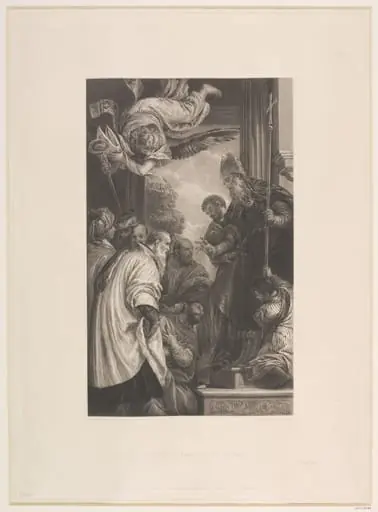 Consecration of St. Nicholas
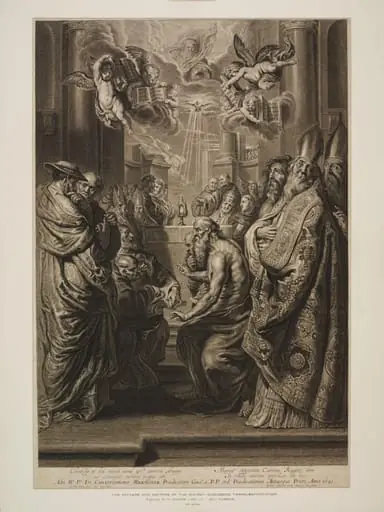 Untitled
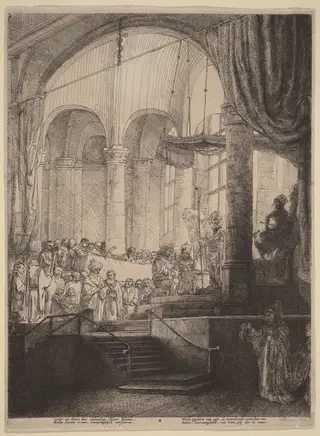 Medea, or the Marriage of Jason and Creusa
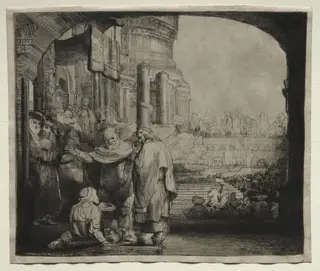 Peter and John Healing the Cripple at the Gate of the Temple
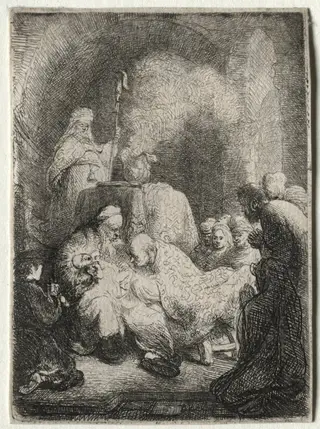 The Circumcision: Small Plate
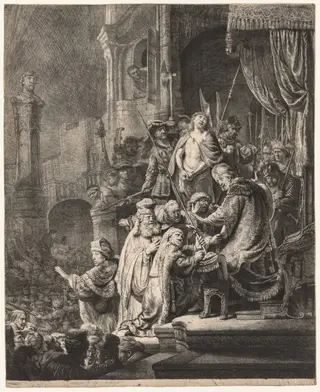 Christ Before Pilate: Large Plate
 The Mystic Marriage of Saint Catherine
 Adoration of the Shepherds
 The Mystic Marriage of Saint Catherine