Artwork
The Sleeping Herdsman
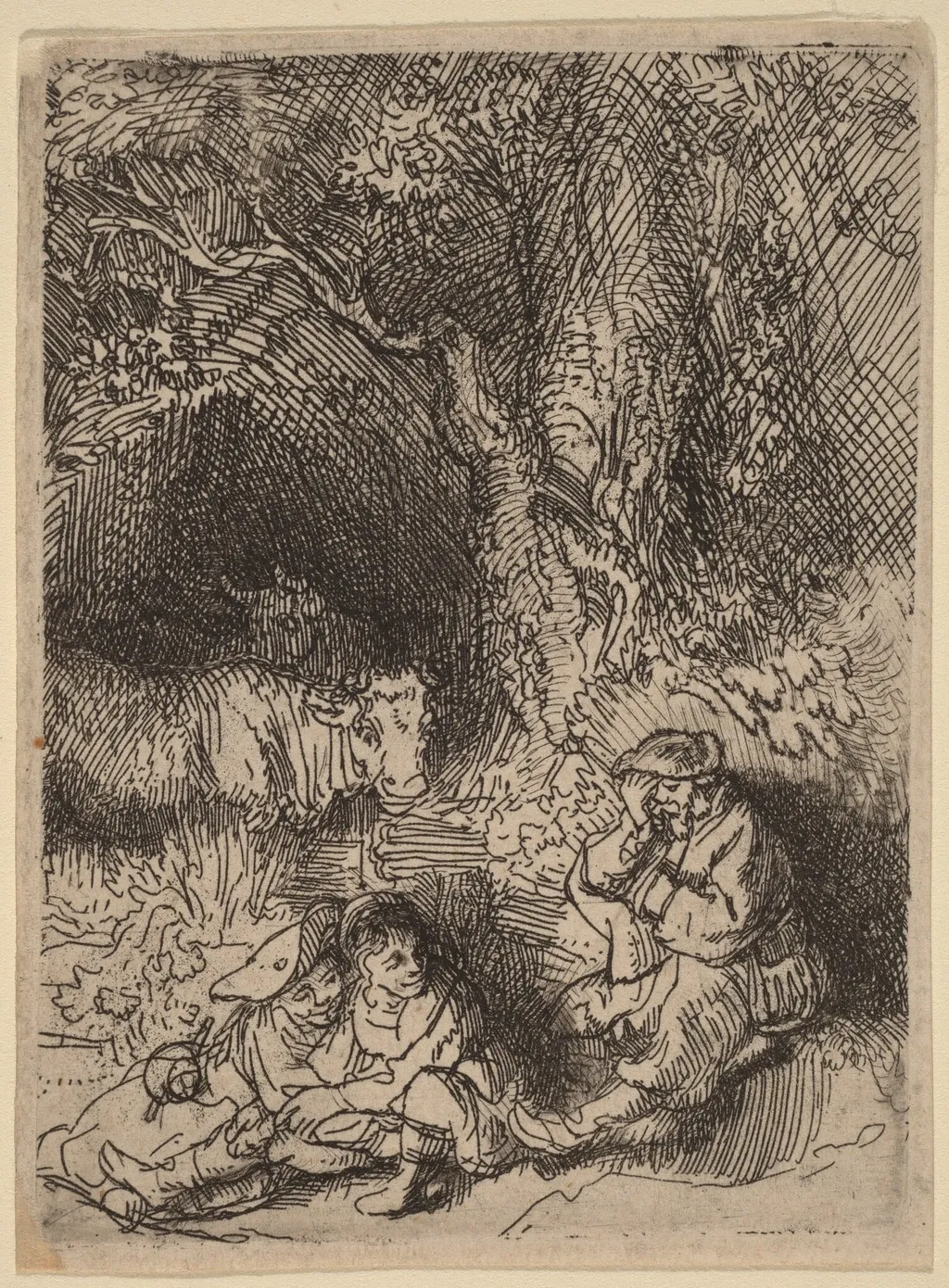
The Sleeping Herdsman is an ink print by the Baroque artist Rembrandt van Rijn. It dates from 1644 and is held in the collection of the National Gallery of Art.
About this work
Overview
Rembrandt employs a dynamic interplay of light and shadow, utilizing heavy, scratchy lines to define the dark masses of the foliage and the figures' forms.
The Sleeping Herdsman is an etching and burin print created by Rembrandt van Rijn in 1644. The composition depicts a rural scene where a herdsman lies asleep beneath the sprawling branches of a large tree, accompanied by a group of resting livestock, including sheep and a dog. Rembrandt employs a dynamic interplay of light and shadow, utilizing heavy, scratchy lines to define the dark masses of the foliage and the figures' forms.
The artist's technique involves dense cross-hatching and varied line weights to create texture and depth, rendering the leaves and branches as a complex network of tangled marks. This work exemplifies Rembrandt's mature printmaking style, where he moves beyond mere representation to capture the atmospheric mood of a quiet, pastoral moment. The piece reflects his enduring interest in genre subjects and the natural world, demonstrating his ability to convey a sense of stillness and organic vitality through the expressive potential of the etching needle and burin. It stands as a significant example of his exploration of light and texture in the mid-1640s.
Subject & Meaning
The scene depicts a solitary herdsman lying in a relaxed pose while his animals, sheep, goats, or cattle, sleep nearby. The tranquil arrangement suggests a pause in labor, inviting contemplation of the relationship between human labor and the natural world. The subdued atmosphere hints at a dream‑like state, emphasizing rest over activity.
Technique & Style
Rembrandt employed a combination of acid‑etched lines and hand‑finished burin work, creating a texture that oscillates between delicate hatching and bold, scratchy strokes. Dark, dense lines model shadows, while lighter, tangled marks suggest foliage and foliage. This contrast gives the print a dynamic, almost tactile quality, guiding the viewer’s eye across the composition.
History & Provenance
The etching dates to circa 1644, a period when Rembrandt was experimenting with printmaking as a means of disseminating his work. Though specific ownership records are scarce, the piece belongs to the corpus of his early prints that were circulated among collectors and fellow artists, contributing to his reputation as a master of the medium.
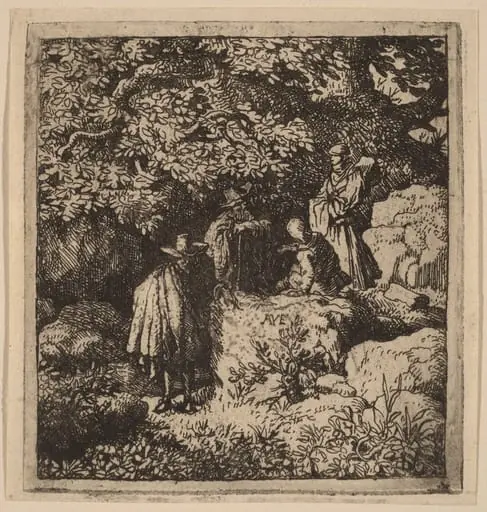
Own this work as a print
Artist & collection

Artist
Rembrandt Harmenszoon van Rijn, known mononymously as Rembrandt, was a Dutch Golden Age painter, printmaker, and draughtsman.

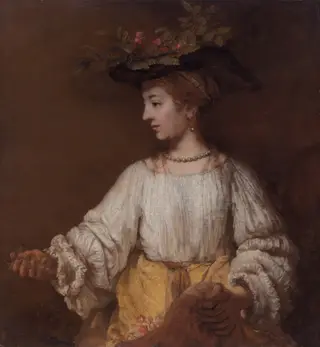
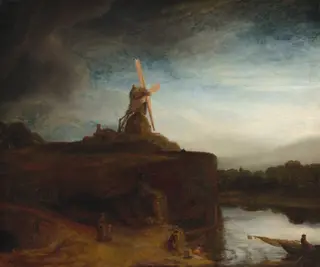
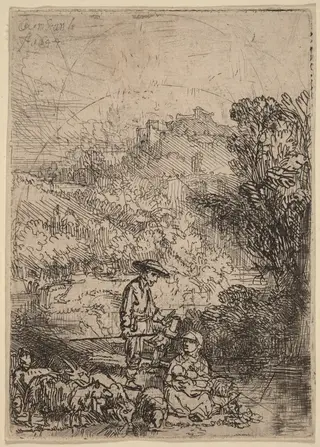 The Shepherd and His Family
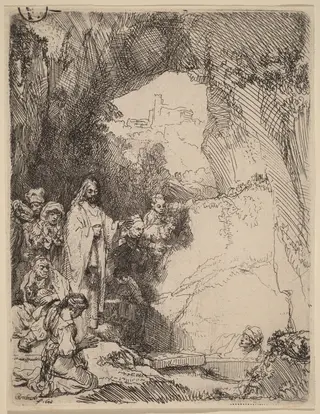 The Raising of Lazarus: Small Plate
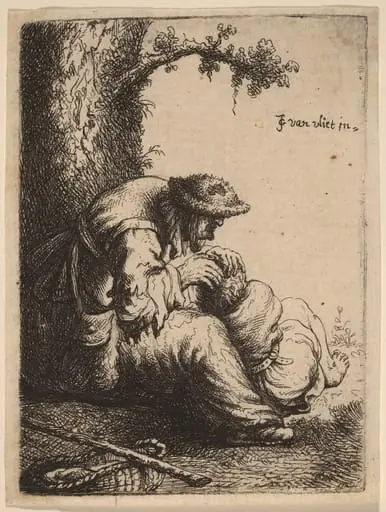 Beggar Woman Fleaing a Boy
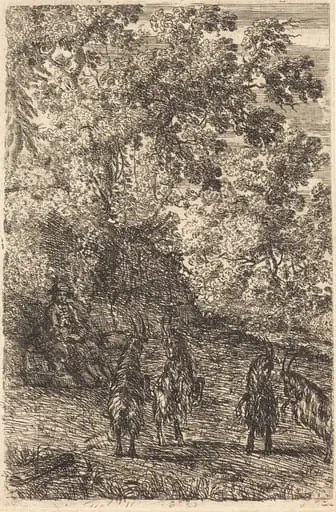 Shepherd with Four Goats (Les quatre chèvres)
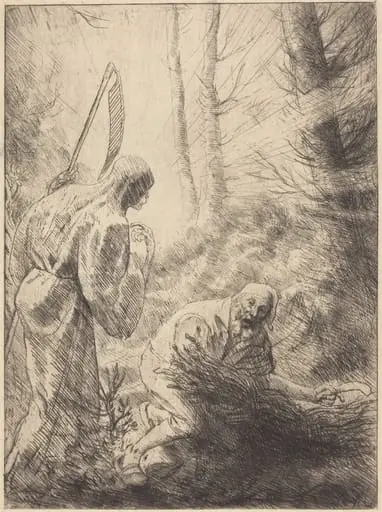 Death and the Woodcutter, 2nd plate (La Mort de le bucheron)
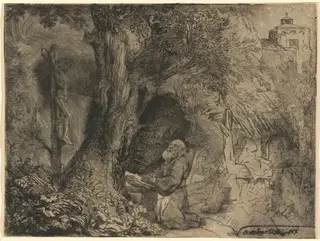 Saint Francis beneath a Tree Praying
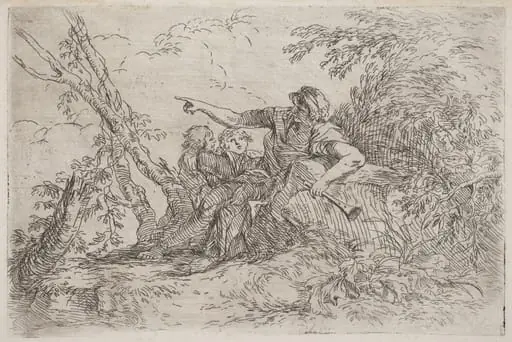 Shepherd in a Landscape
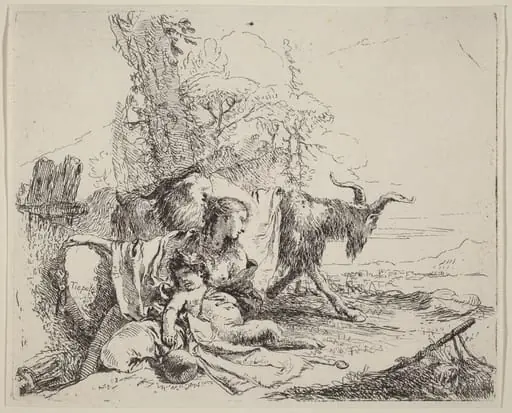 Woman, Satyr Child, and Goat in a Landscape
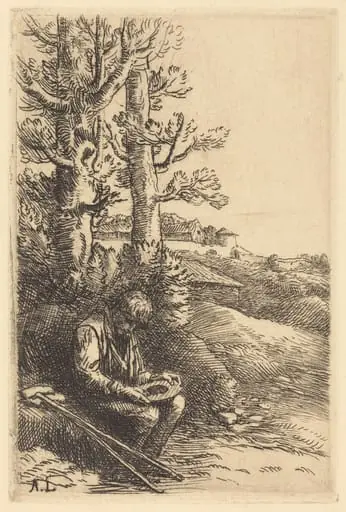 Little Beggar (Le petit mendiant)
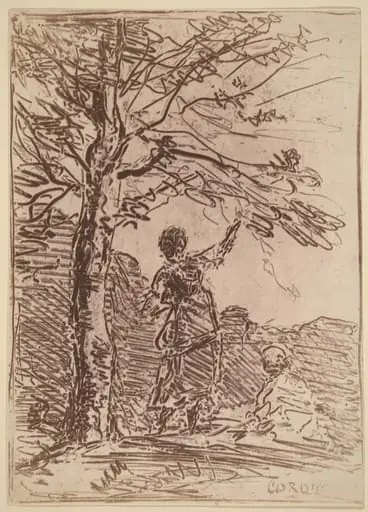 Young Woman and Death (La Jeune Fille et la Mort)