Artwork
Three Heads of Women, One Lightly Etched
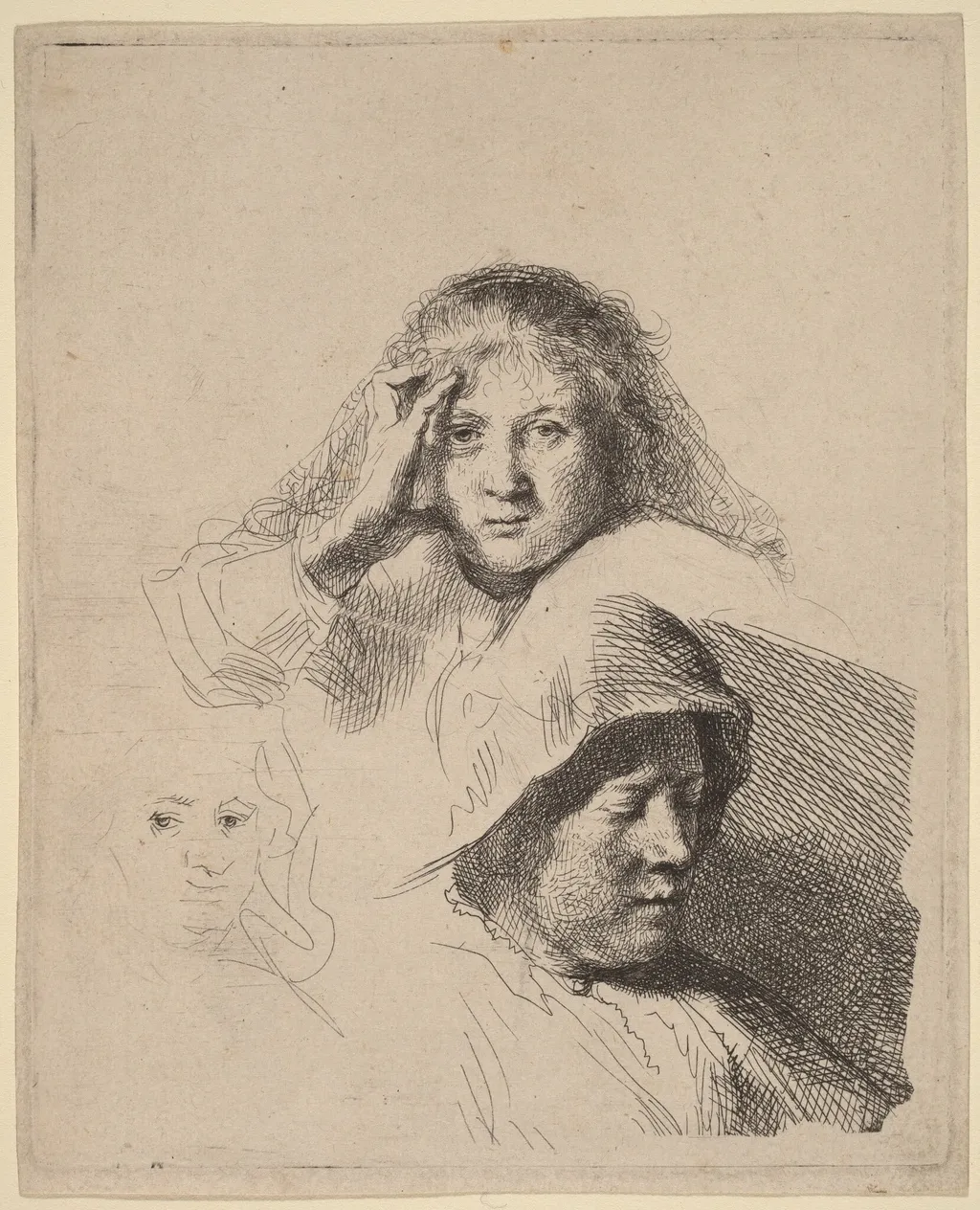
Three Heads of Women, One Lightly Etched is an ink print by the Baroque artist Rembrandt van Rijn. It dates from 1637 and is held in the collection of the National Gallery of Art.
About this work
Overview
In contrast, the head to the left is lightly etched, appearing as a faint, sketch-like study that suggests form through minimal strokes.
Created in 1637, Three Heads of Women, One Lightly Etched is an etching by Rembrandt van Rijn executed on laid paper. The composition arranges three female heads in a horizontal row, demonstrating the artist's exploration of light, texture, and varying degrees of finish within a single plate. The central figure is the most fully realized, depicted with curly hair, a veil, and her right hand raised to her forehead, rendered with confident, descriptive lines.
In contrast, the head to the left is lightly etched, appearing as a faint, sketch-like study that suggests form through minimal strokes. The third head, positioned to the right, occupies an intermediate state of definition, bridging the gap between the detailed central portrait and the sparse outline on the left. This work exemplifies Rembrandt's experimental approach to etching during the 1630s, where he frequently utilized the medium to test different levels of detail and tonal variation.
By juxtaposing a finished study with unfinished sketches on the same sheet, the artist highlights the process of observation and the transition from conception to completion. The piece remains a significant example of his graphic output, illustrating his mastery in manipulating the etching needle to create diverse visual effects ranging from solid form to atmospheric suggestion.
Subject & Meaning
The central figure is a woman with curled hair and a veil, her right hand lifted to her forehead in a gesture that suggests contemplation. The two side figures are less defined; the left profile is rendered in a sketch‑like manner, and the right figure is partially concealed by a hood. The overall tone is one of quiet introspection, inviting the viewer to consider the inner lives of the subjects.
Technique & Style
Rembrandt employed the etching technique, varying the depth of line to achieve differing degrees of clarity. The central head benefits from richer, more precise incisions, while the peripheral heads retain a lighter, almost spontaneous quality. This gradation of line work exemplifies Rembrandt’s skill in manipulating tone and texture on laid paper to convey atmosphere.
History & Provenance
Created circa 1637, the print belongs to the mature period of Rembrandt’s printmaking, when he explored expressive portraiture through etching. The work is catalogued among his numerous prints from the 1630s, though specific ownership records for this particular impression are limited.
Own this work as a print
Artist & collection

Artist
Rembrandt Harmenszoon van Rijn, known mononymously as Rembrandt, was a Dutch Golden Age painter, printmaker, and draughtsman.

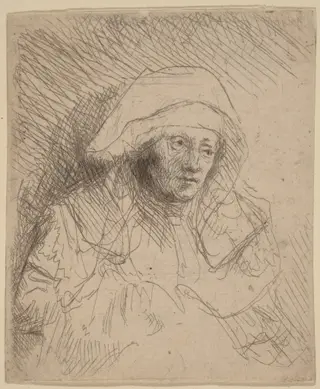 Sick Woman with a Large White Headdress (Saskia)
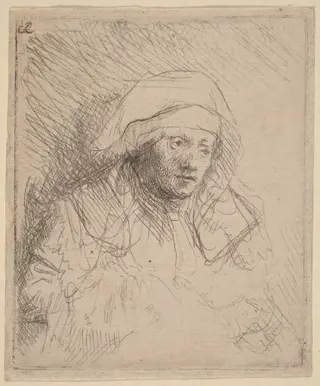 Sick Woman with a Large White Headdress (Saskia)
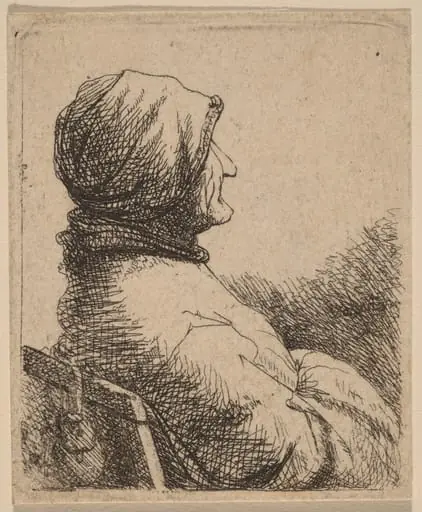 Bust of an Old Woman Turned in Profile to the Right
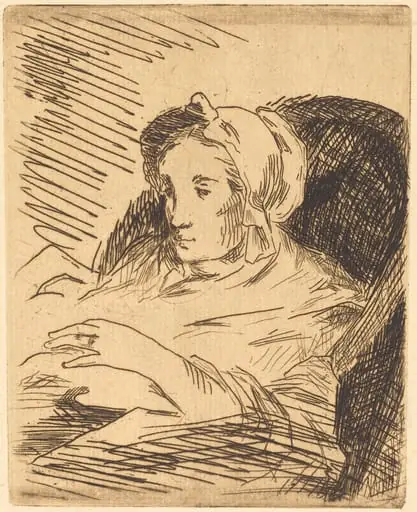 The Convalescent (La convalescente)
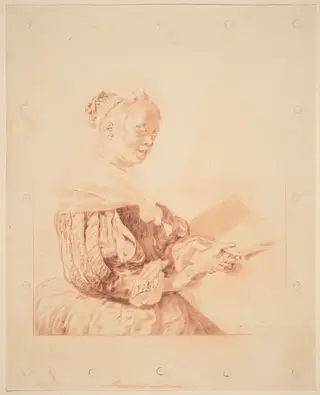 Young Girl at the Keyboard
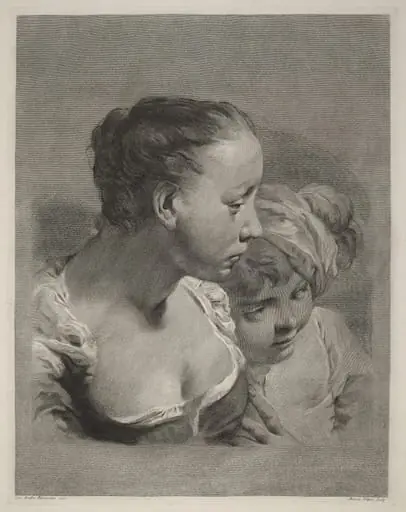 Young Woman and a Boy Facing Right
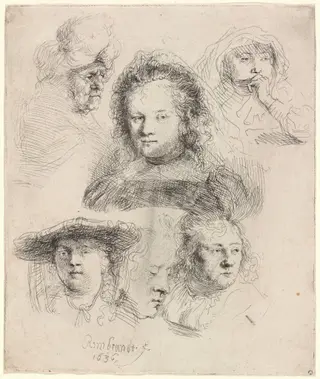 Studies of the Head of Saskia and Others
 Study for "The Rustic Dancers"
 Young Girl at the Keyboard
 Nora Quinn
 The Little Jewish Bride (Saskia as Saint Catherine)
- Three Heads of Women, One Asleep