Artwork
Georges Rivière
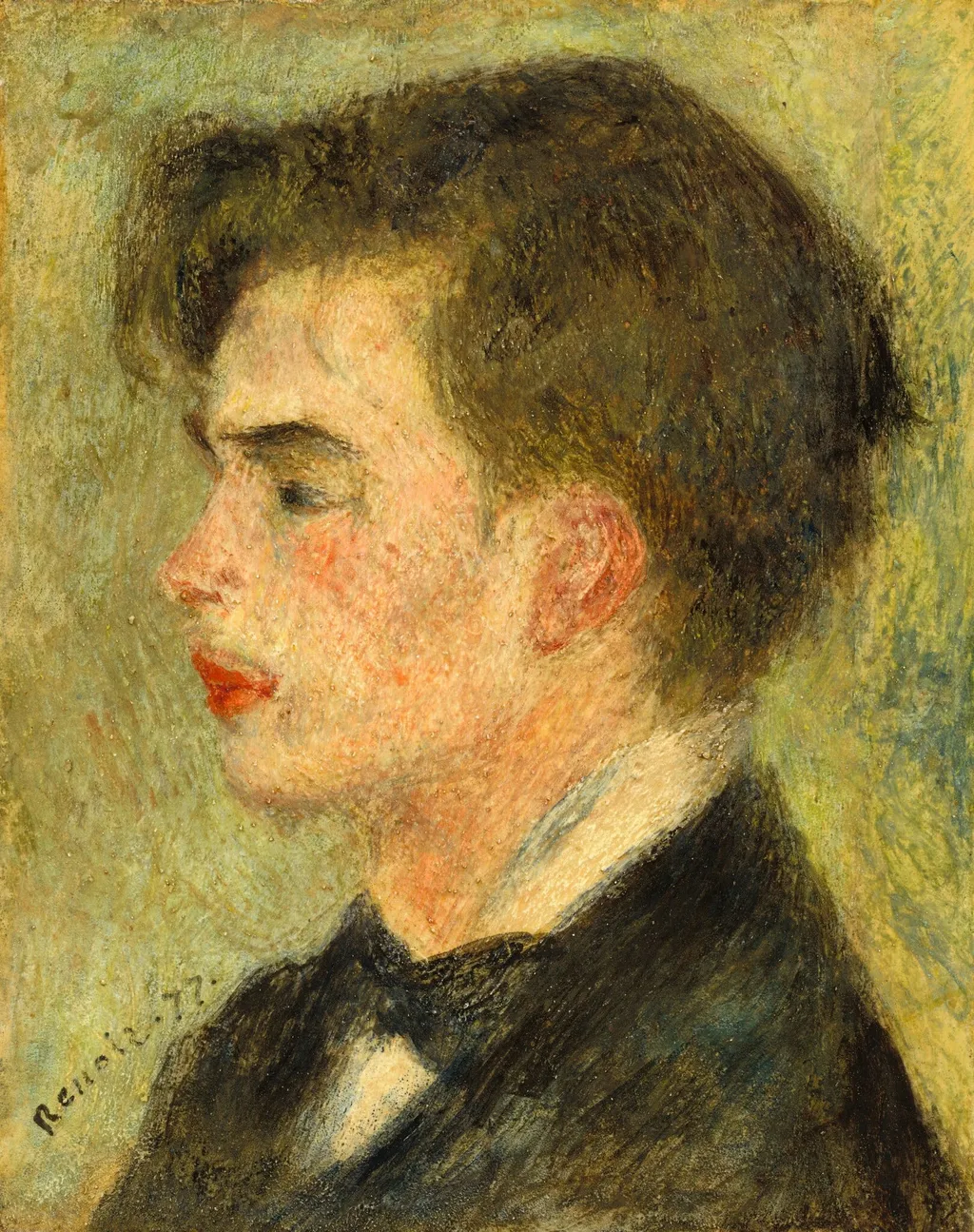
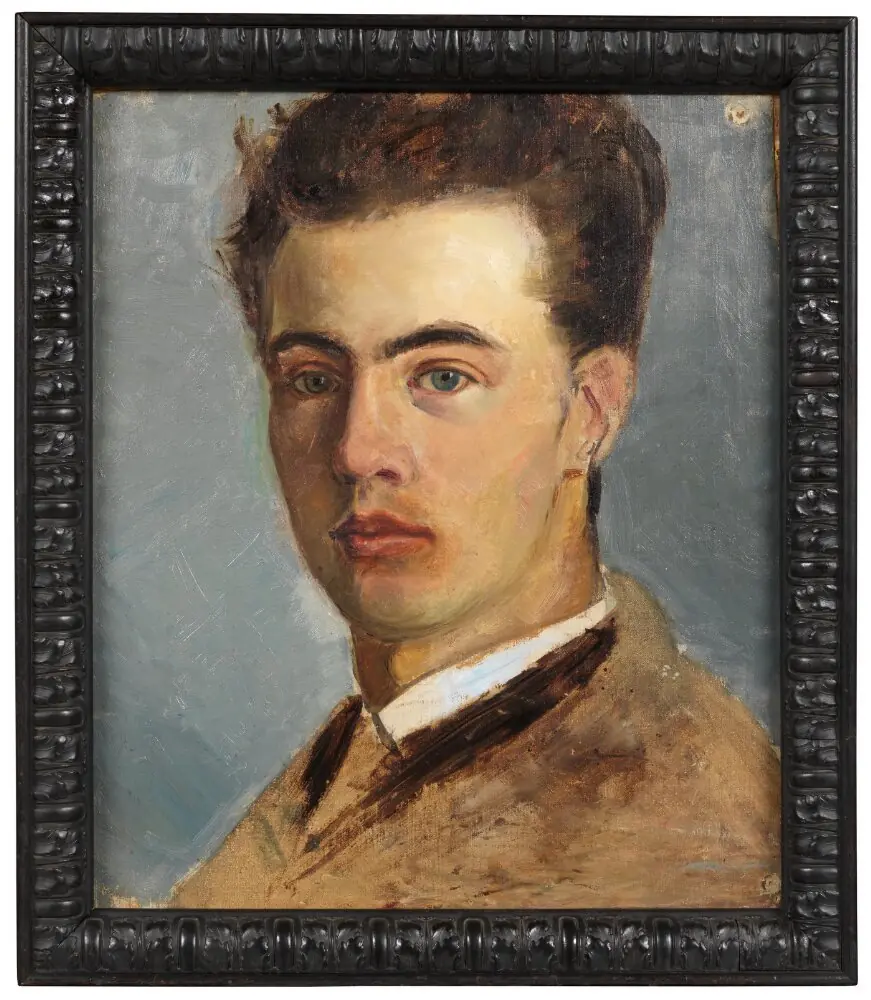
Georges Rivière is an oil painting by the Impressionist artist Pierre-Auguste Renoir. It dates from 1877 and is held in the collection of the National Gallery of Art.
- Inscription
- Inscribed:lower left: Renoir.77
About this work
Subject & Meaning
Georges Rivière is a portrait depicting its sole named subject, the man of the same name, rendered by Auguste Renoir in 1877.
Georges Rivière is a portrait depicting its sole named subject, the man of the same name, rendered by Auguste Renoir in 1877. Classified as a portrait and identified through its main subject as Georges Rivière, the work functions as a personal likeness rather than an allegorical, narrative, or symbolic composition. No attributes, objects, or iconographic elements are recorded in the available documentation that would indicate a secondary meaning, emblematic content, or coded symbolism beyond straightforward portraiture.
The painting's significance rests on its identity as a representation of a specific individual sitter, with the subject matter confined to the figure of Rivière himself.
History & Provenance
Painted by Auguste Renoir in 1877, the portrait of Georges Rivière depicts its namesake sitter directly. The work's early provenance remained with Rivière himself, who lived from 1855 to 1943 in France. By 1952 the painting had entered the collection of Captain Edward H. Molyneux in Paris, where it was included that year in an exhibition of his holdings at the National Gallery of Art.
On 15 August 1955 Molyneux sold the canvas to Ailsa Mellon Bruce in New York. Bruce bequeathed it in 1970 to the National Gallery of Art, where it remains in the collection.
The portrait is held by the National Gallery of Art, Washington, D.C., where it entered as part of the Ailsa Mellon Bruce bequest in 1970 (accession no. 1970.17.3). It was previously in the collection of Capt. Edward H. Molyneux in Paris by 1952 and exhibited there that year at the National Gallery of Art. The work has not been loaned to other institutions since its acquisition by the National Gallery of Art.
Legacy
The 1877 portrait of Georges Rivière by Auguste Renoir, housed in the National Gallery of Art, is recognized as a significant example of the artist’s early portraiture and has shaped scholarly views of Renoir’s development in the genre. Its provenance, from the sitter, through Capt. Edward H. Molyneux’s collection and a 1955 sale to Ailsa Mellon Bruce, to a 1970 bequest, was highlighted in a 1952 exhibition of the Molyneux works, underscoring its historical trajectory (1). The painting’s inclusion in the National Gallery’s permanent collection has allowed continued study of Renoir’s technique and composition, influencing later portraitists who reference its psychological depth and handling of light (2).
Overview
This painting by Auguste Renoir, titled Georges Rivière, dates from 1877. Executed in oil on cement, it is a portrait of the artist's friend, Georges Rivière. The work represents a departure from conventional canvas supports, showcasing an experimental approach to materials within Renoir's practice.
Technique & Style
Renoir chose an unconventional support for this portrait, applying oil paint directly onto a cement surface rather than the typical canvas. This choice results in a distinct visual quality, as the inherent texture of the cement remains discernible beneath the layers of paint. This material decision contributes to the work's unique aesthetic and tactile presence.
Own this work as a print
Artist & collection
Artist
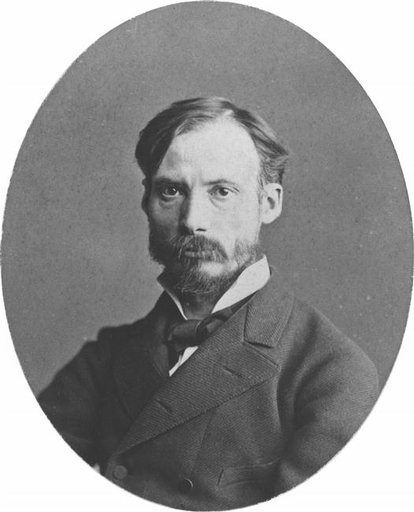
Pierre-Auguste Renoir was a French artist who was a leading painter in the development of the Impressionist style.