Artwork
Untitled
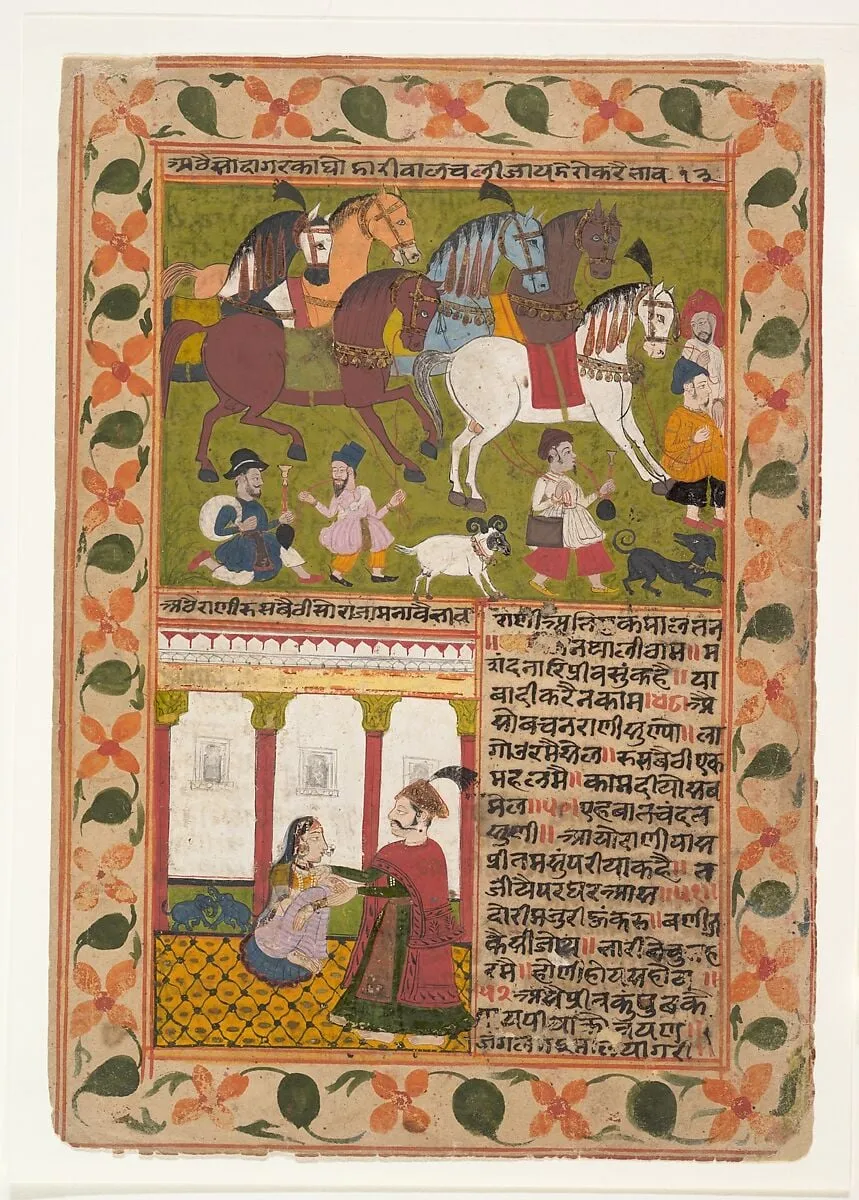
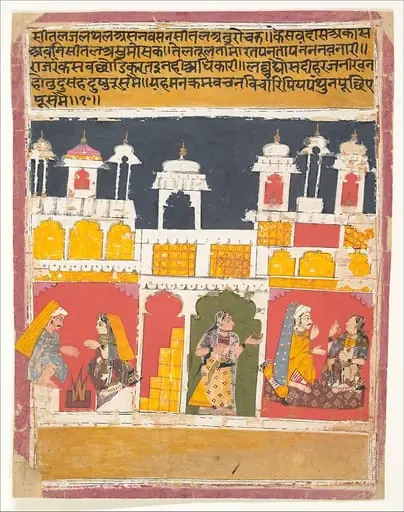
Untitled is a watercolor painting by the Baroque artist son of Karam Chand Rikhaji. It dates from 1749 and is held in the collection of the Metropolitan Museum of Art.
- Accession no.
- 1975.410.2a, b
- Credit line
- Gift of Mr. and Mrs. Ed Wiener, 1975
About this work
Subject & Meaning
These figures constitute the entirety of the depicted subject, with no additional narrative attributes identified in the documented record.
The painting shows a man, a woman, a dog and a horse arranged within a domestic setting typical of 18th-century Indian genre scenes. These figures constitute the entirety of the depicted subject, with no additional narrative attributes identified in the documented record. The presence of a domesticated animal alongside human subjects suggests a focus on everyday interaction rather than allegorical symbolism.
The composition reflects the genre conventions of the period, emphasizing realistic portrayal over symbolic meaning. The work's iconography is therefore limited to the literal representation of these four participants.
Technique & Style
Executed in ink and opaque watercolor on paper, this 1749 painting by Rikhaji, son of Karam Chand, employs the traditional South Asian miniature technique of combining linear ink drawing with layered, opaque pigment washes. The modest sheet dimensions of 28.9 by 20 centimeters indicate an intimate, small-scale format consistent with portable album leaves produced in eighteenth-century India. The work's classification as a genre scene, depicting a man, woman, horse, and dog, suggests a narrative composition in which the artist used fine brushwork to render figures and animals within a compact pictorial field.
The opaque watercolor medium allowed for rich, saturated coloration and precise detailing, while the ink underdrawing provided structural definition. Held in the Metropolitan Museum of Art, the painting reflects the stylistic conventions of mid-eighteenth-century Indian regional painting.
History & Provenance
Untitled, a painting executed in ink and opaque watercolor on paper, was created by Rikhaji, son of Karam Chand, in India in 1749. The piece depicts a genre scene featuring a man, a woman, a dog, and a horse, and is held in the collection of the Metropolitan Museum of Art in New York. While the specific commission details and the complete chain of ownership prior to its acquisition by the museum are not detailed in the available records, the work is definitively attributed to Rikhaji and dated to the mid-18th century within the Indian tradition. The available sources do not specify an accession number or document any exhibition history.
Context
The untitled painting by Rikhaji, son of Karam Chand, dated 1749, exemplifies the genre-scene tradition of Indian miniature painting. Its depiction of a man, woman, dog and horse situates the work within everyday rather than allegorical subject matter. Held in the Metropolitan Museum of Art, the piece illustrates the stylistic conventions of mid-18th-century regional Indian painting.
Overview
This untitled work, created in 1749 by Rikhaji, son of Karam Chand, is an ink and opaque watercolor painting on paper. It captures a seemingly ordinary moment, depicting several figures and animals in a naturalistic setting. The composition offers a glimpse into daily life rather than a formal portrait or grand historical event.
Artist & collection
Artist
Son of a Gujarati merchant, he painted in tiny, precise strokes and tucked his signature into a corner, letting the work carry itself.

- A deceitful lady
 Untitled
 Untitled
 Ragini Kakubha, Page from a Jaipur Ragamala Set
 Ragini Dhanashri, Page from a Jaipur Ragamala Set
 Saindhavi Ragini of the "Sri Raga" Family, page from a Ragamala Series
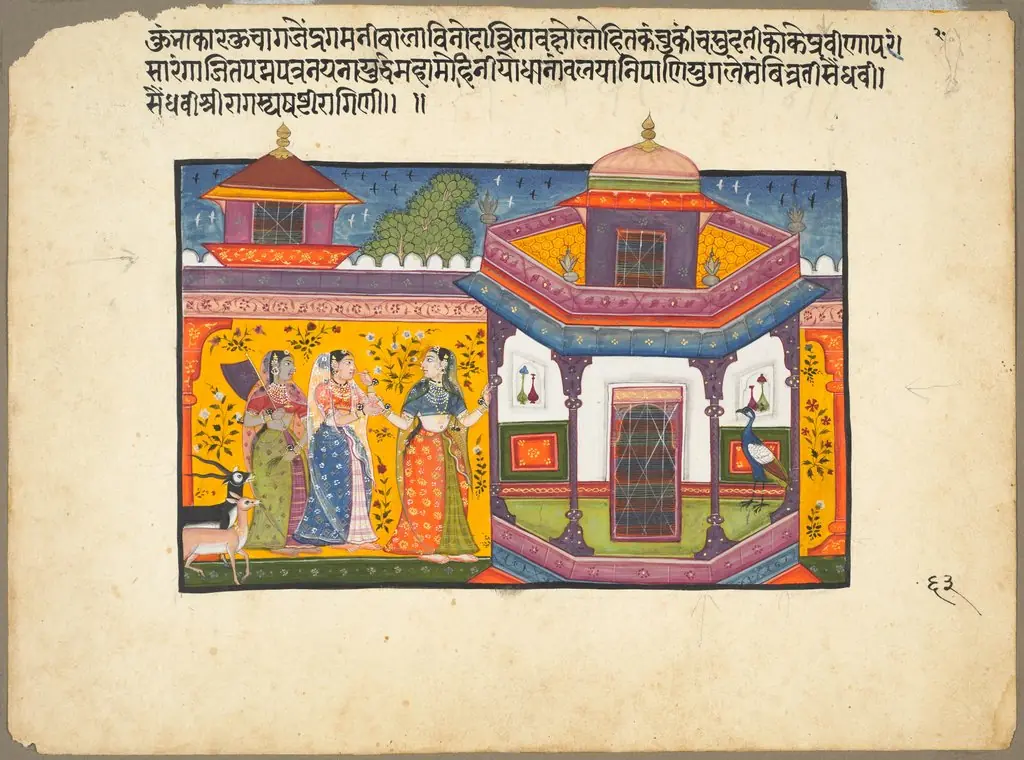 Saindhavi Ragini of the "Sri Raga" Family, page from a Ragamala Series
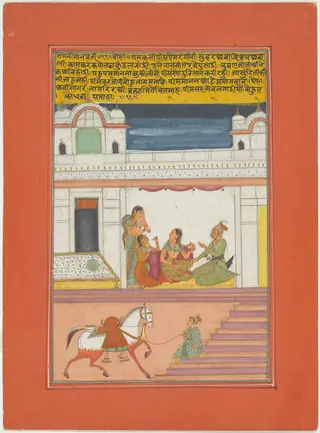 Ragini Manavati, Page from a Jaipur Ragamala Set
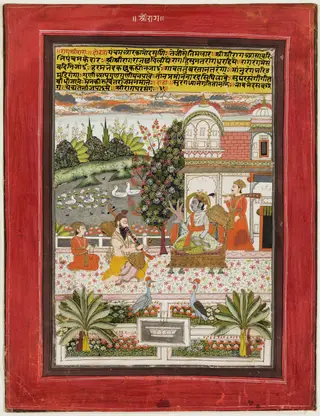 Krishna with Guru in Palace Scene
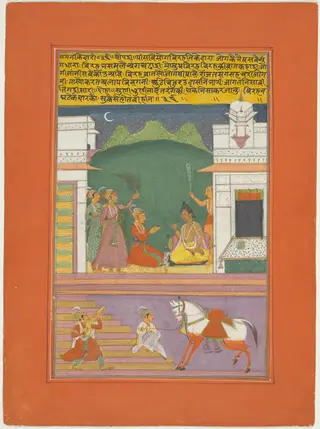 Ragini Kedara, Page from a Jaipur Ragamala Set
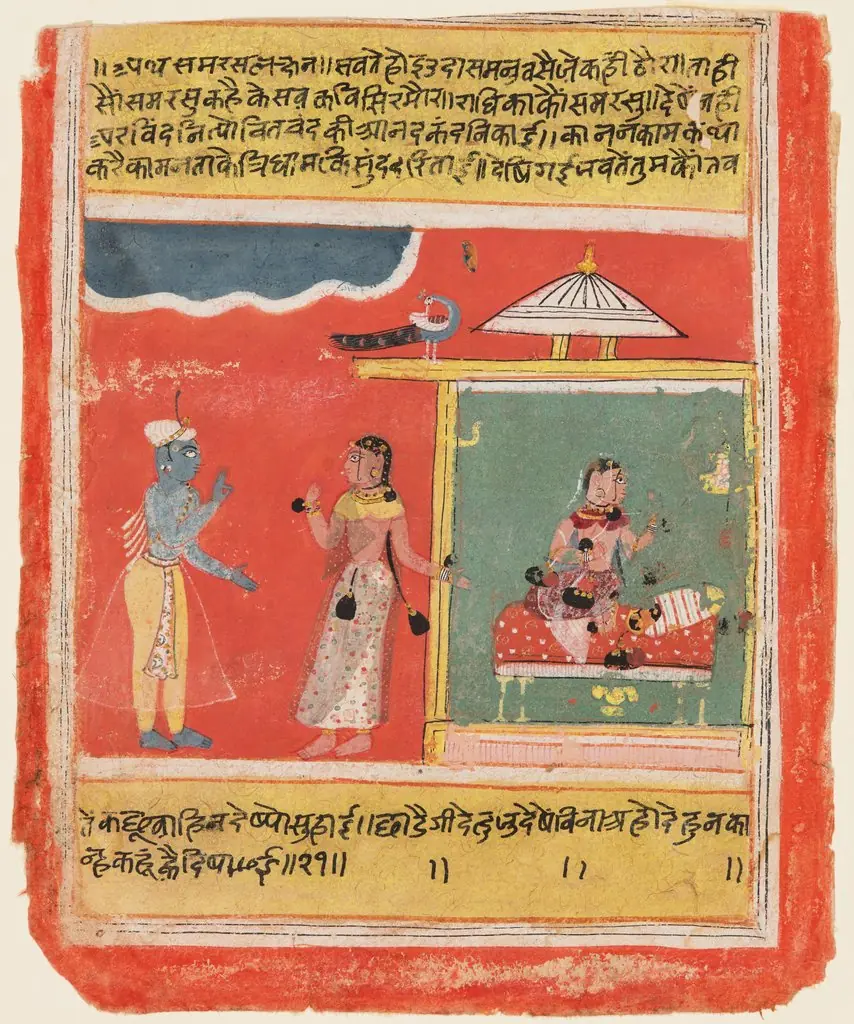 The Sentiment of Peace: Sama Rasa, from a Rasikapriya
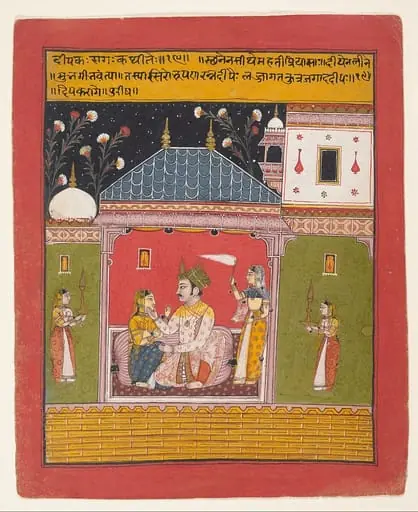 Untitled