Artwork
St Luke Drawing the Virgin
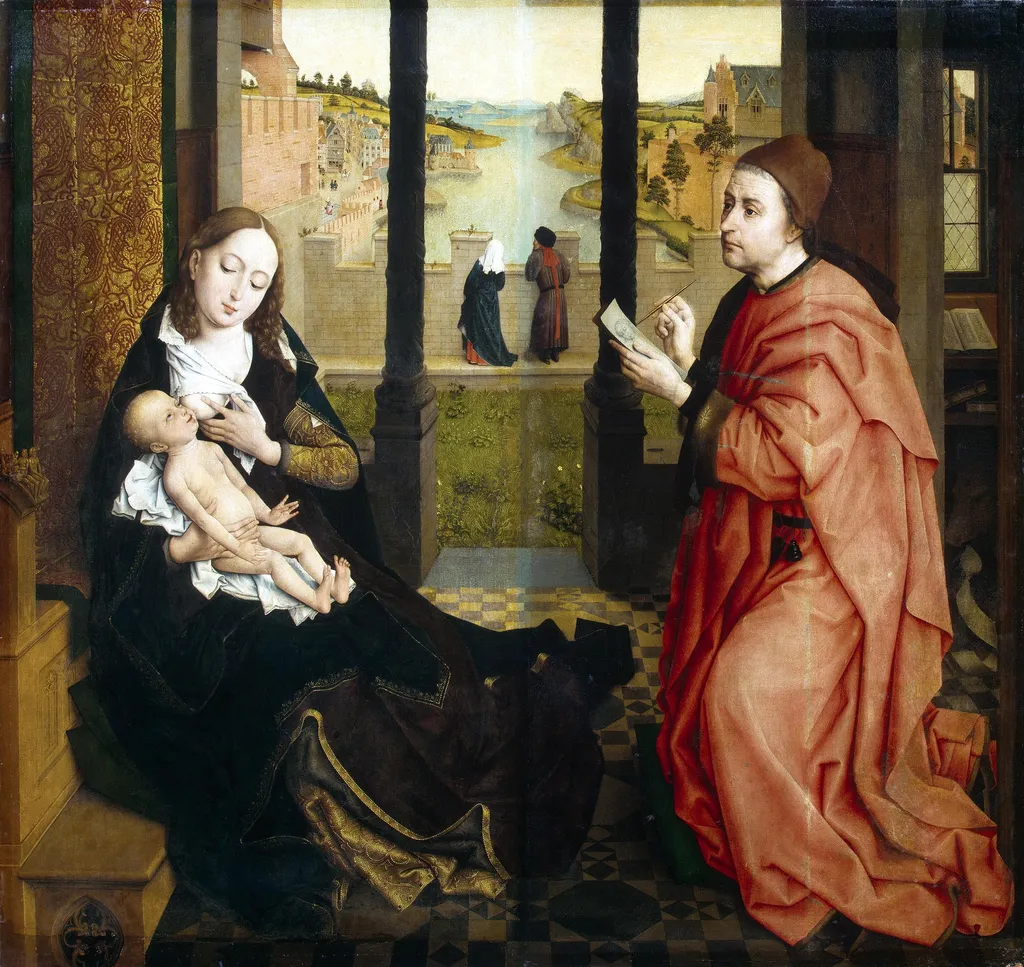
St Luke Drawing the Virgin is an oil painting by the Northern Renaissance artist Rogier van der Weyden. It dates from 1440 and is held in the collection of the Hermitage Museum.
About this work
Subject & Meaning
Luke’s dual identity as evangelist and painter underscores his role as a faithful witness to the divine narrative and as a practitioner of devotional art.
Saint Luke is shown seated, engaged in the act of drawing the Virgin Mary as she nurses the Christ Child. He holds a stylus or pen, his gaze fixed on the Virgin, while the infant Christ rests at her breast.
Luke’s dual identity as evangelist and painter underscores his role as a faithful witness to the divine narrative and as a practitioner of devotional art. The Nursing Madonna motif highlights Mary’s humility and the humanity of the Incarnation. By portraying the saint in the act of creation, the work suggests that artistic imitation mirrors God’s own creative act, inviting the viewer to contemplate the sacred image as both theological statement and visual prayer.
Technique & Style
Created in 1440, this Early Netherlandish religious work by Rogier van der Weyden is executed in oil paint on a canvas support. The painting measures 102 cm in height and 108.5 cm in width. It depicts Saint Luke the Evangelist engaged in the act of painting the Nursing Madonna, who holds the Christ Child.
The composition reflects the artist's characteristic handling of the medium within the religious art genre of the period.
History & Provenance
The painting was created by Rogier van der Weyden in 1440, executed in oil paint and produced in the Netherlands. It is now held in the collection of the Hermitage Museum, where it remains located.
The sources do not provide further detail on the original commission, any intermediate owners, or the chain of custody between the work's creation in 1440 and its accession by the Hermitage Museum.
Overview
Created circa 1440 by the early Netherlandish painter Rogier van der Weyden, this oil painting presents a domestic interior in which the Virgin Mary cradles the infant Christ while the evangelist Saint Luke records the scene. The composition balances intimate tenderness with a subtle narrative of artistic documentation, and the work now belongs to the collection of the State Hermitage Museum in St. Petersburg.
Context
Within the broader framework of the Northern Renaissance, the work reflects a growing interest in naturalistic detail and domestic settings, moving away from purely hierarchical religious compositions. Van der Weyden’s focus on a quiet, interior moment aligns with contemporary devotional practices that emphasized personal contemplation of sacred scenes.
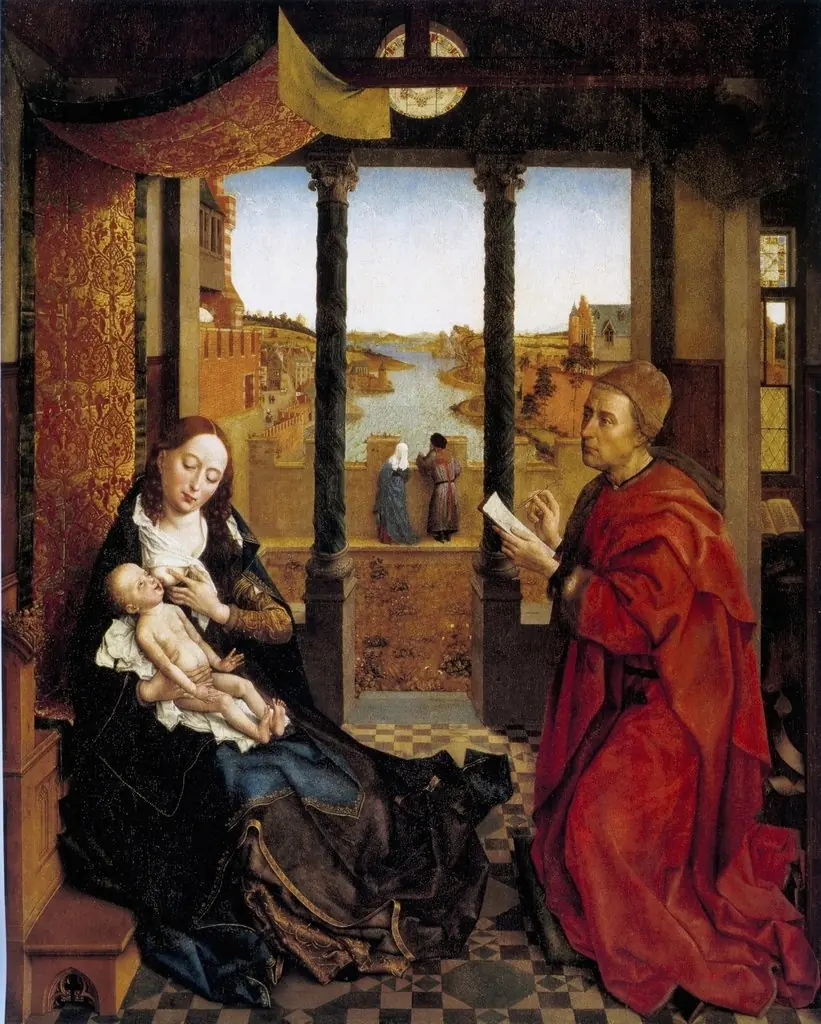
Own this work as a print
Artist & collection
Artist
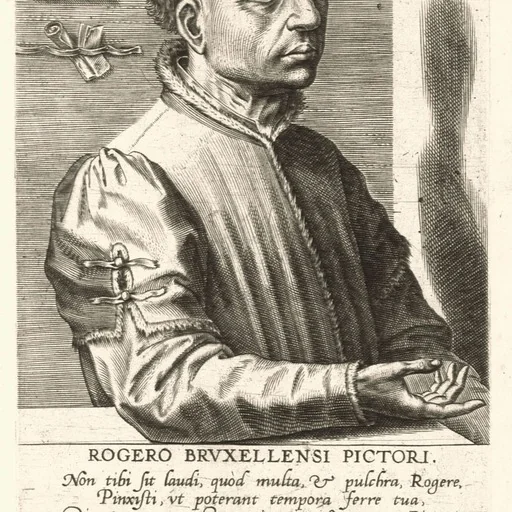
Rogier van der Weyden (Dutch:; 1399 or 1400 – 18 June 1464), initially known as Roger de la Pasture (French: ), was an early Netherlandish painter whose surviving works consist mainly of religious triptychs,…

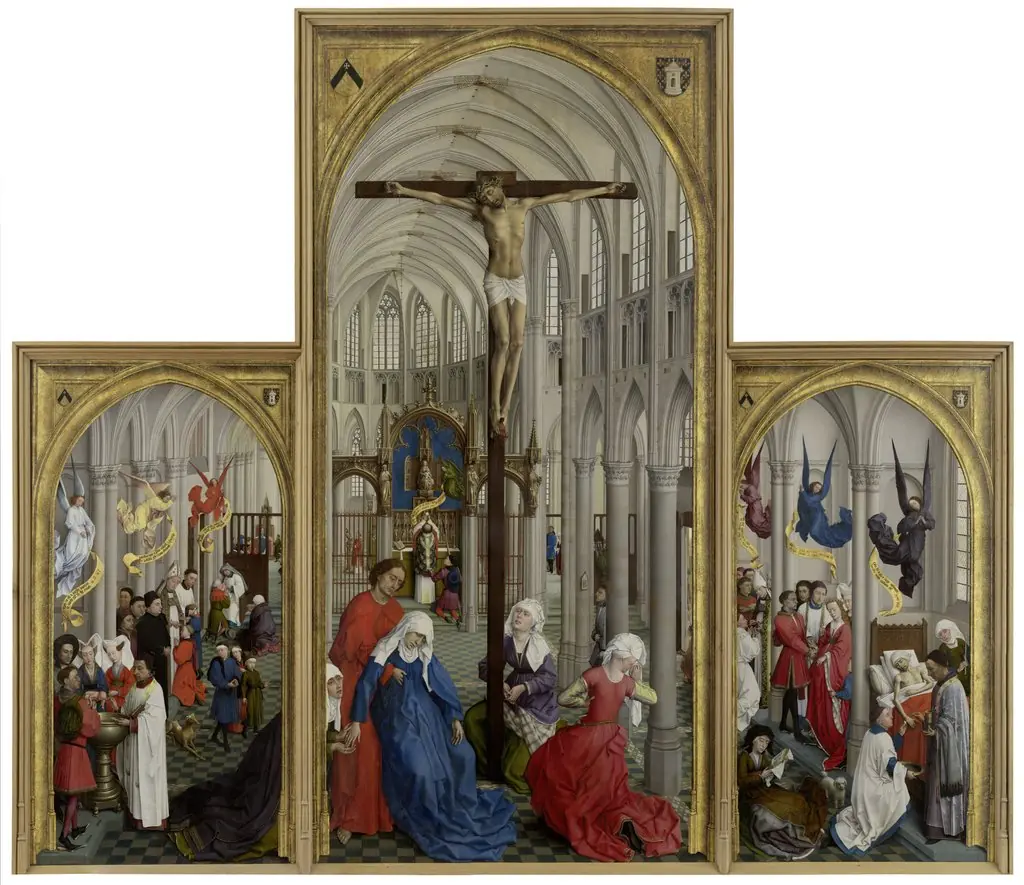
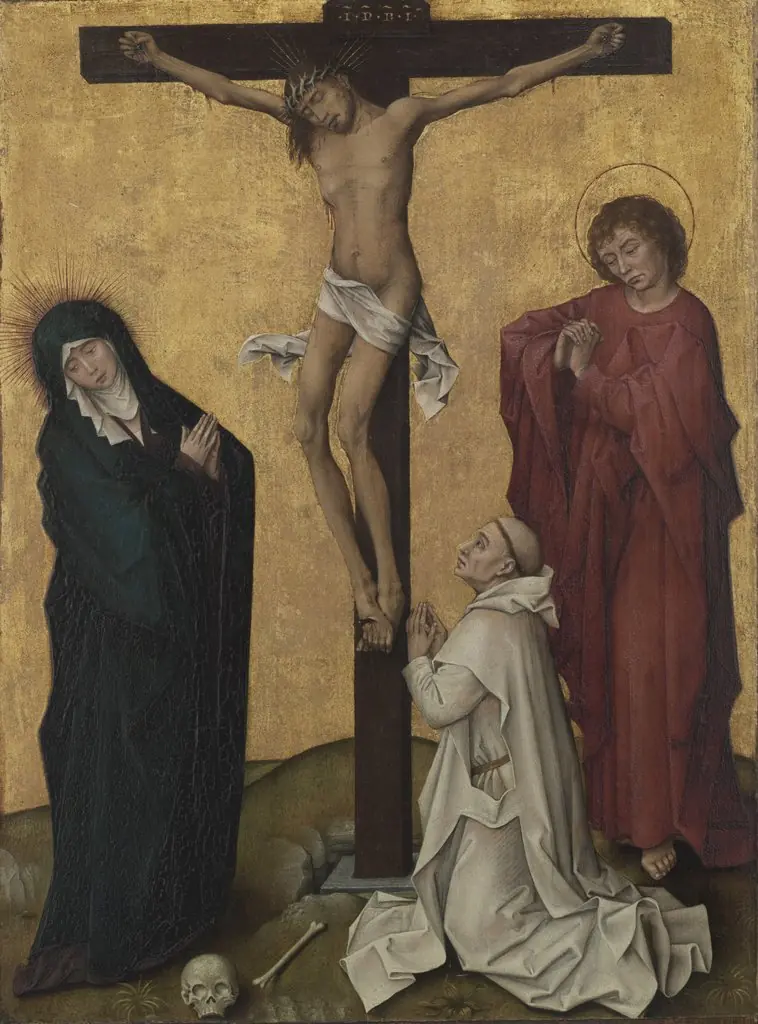
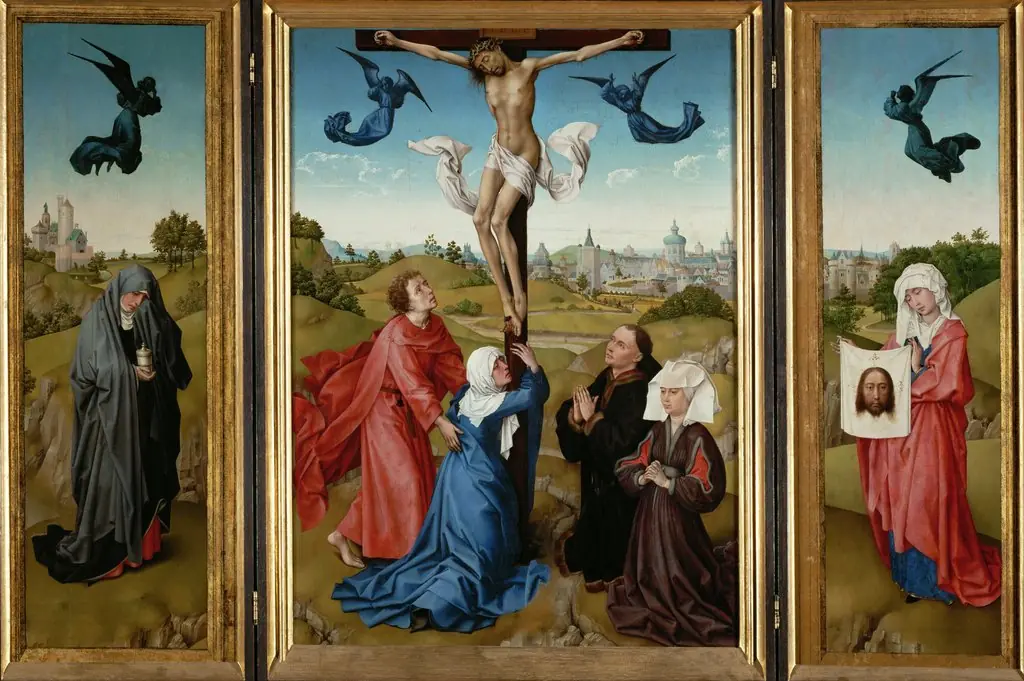
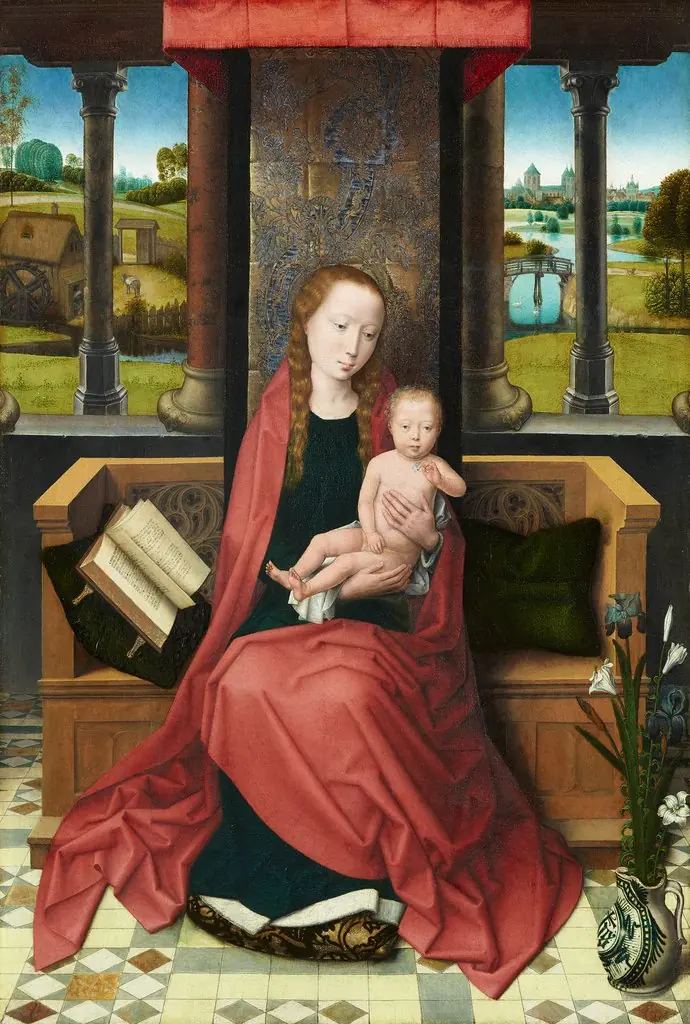 The Virgin and Child Enthroned
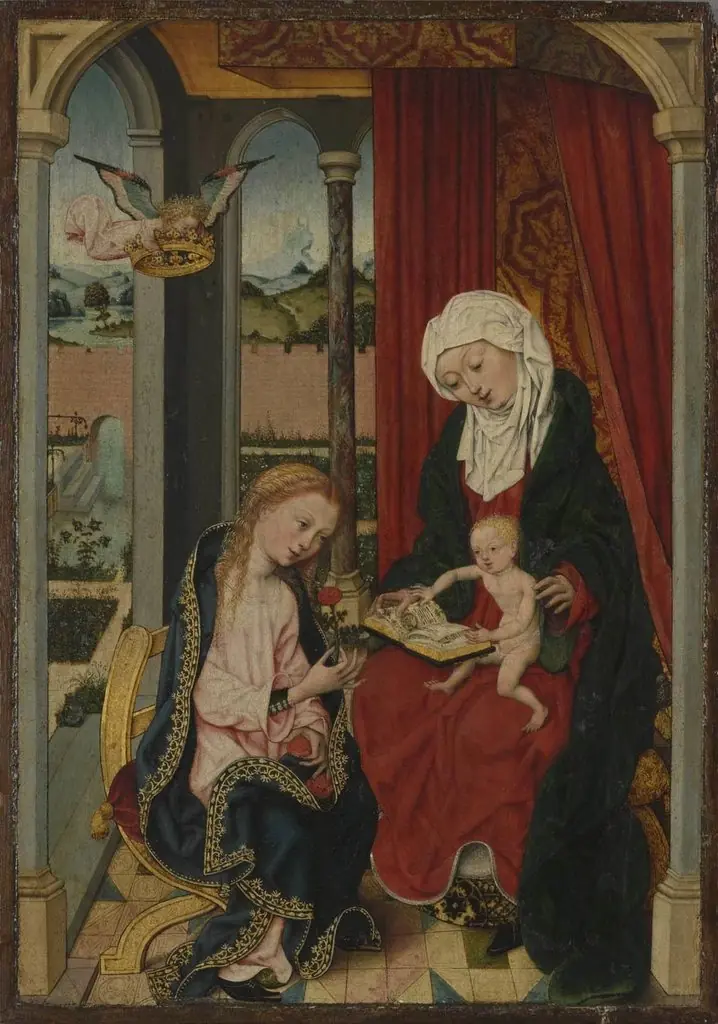 Virgin and Child with Saint Anne
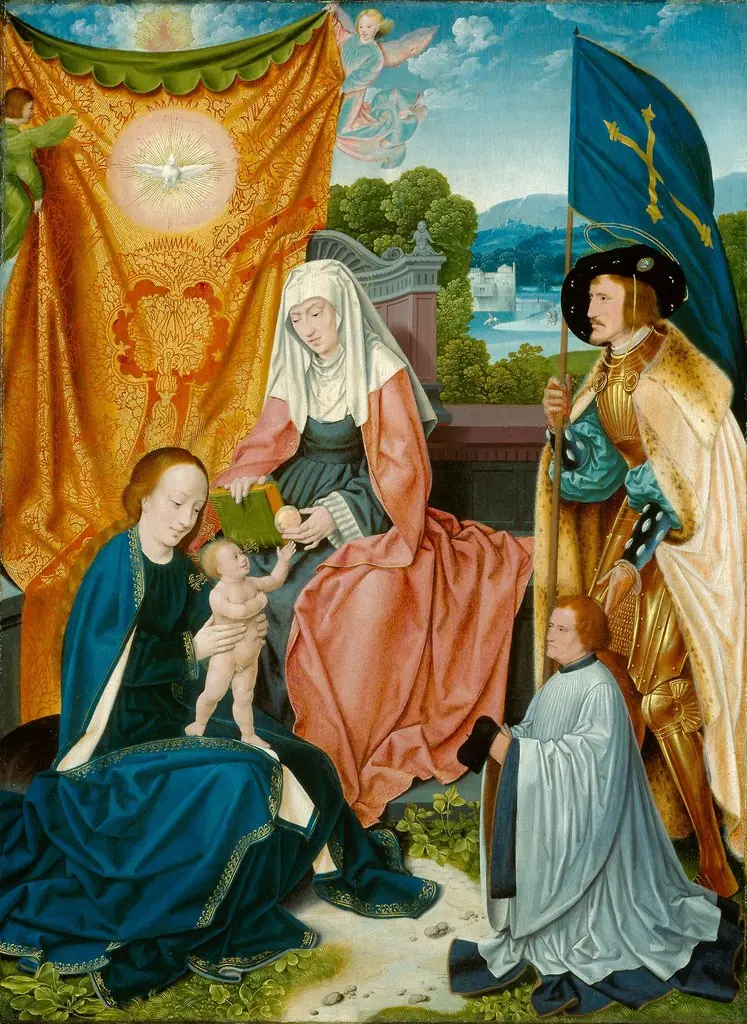 Virgin and Child with Saint Anne, Saint Gereon, and a Donor
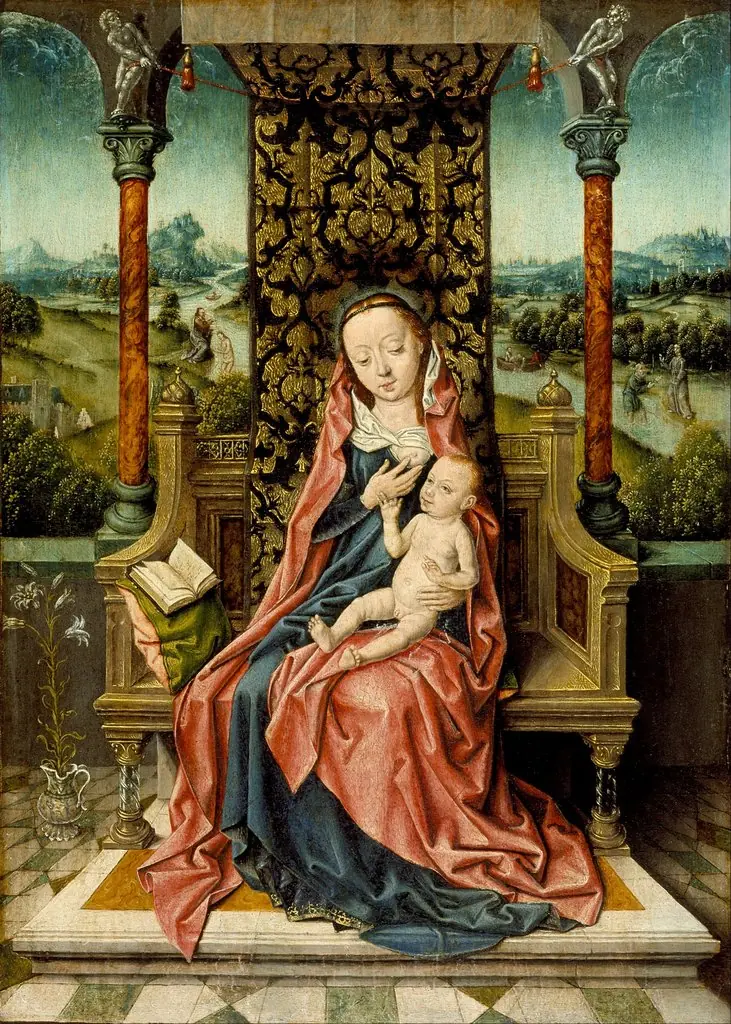 Madonna and Child Enthroned
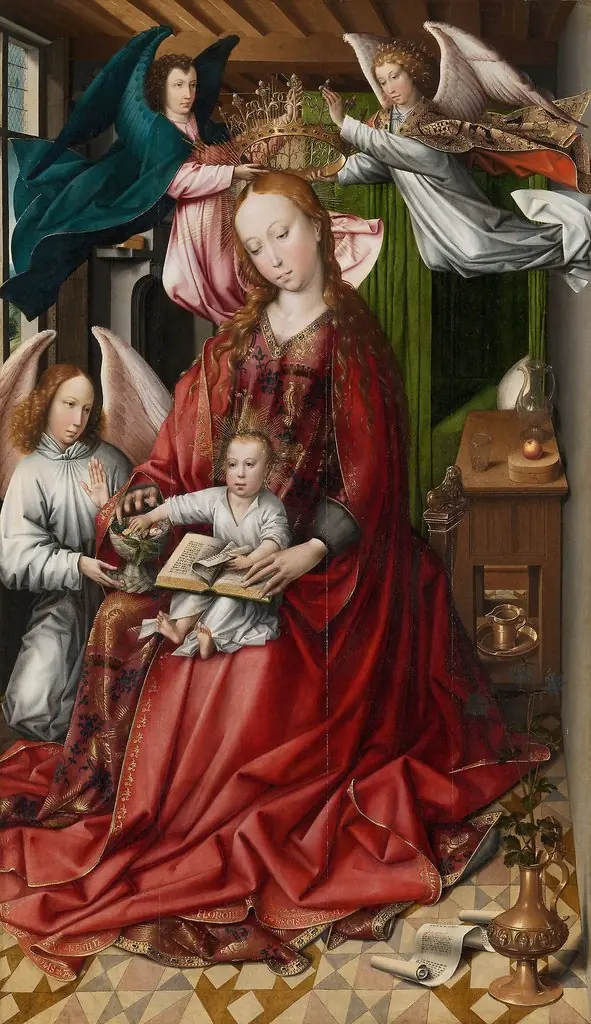 Virgin and Child Crowned by Angels
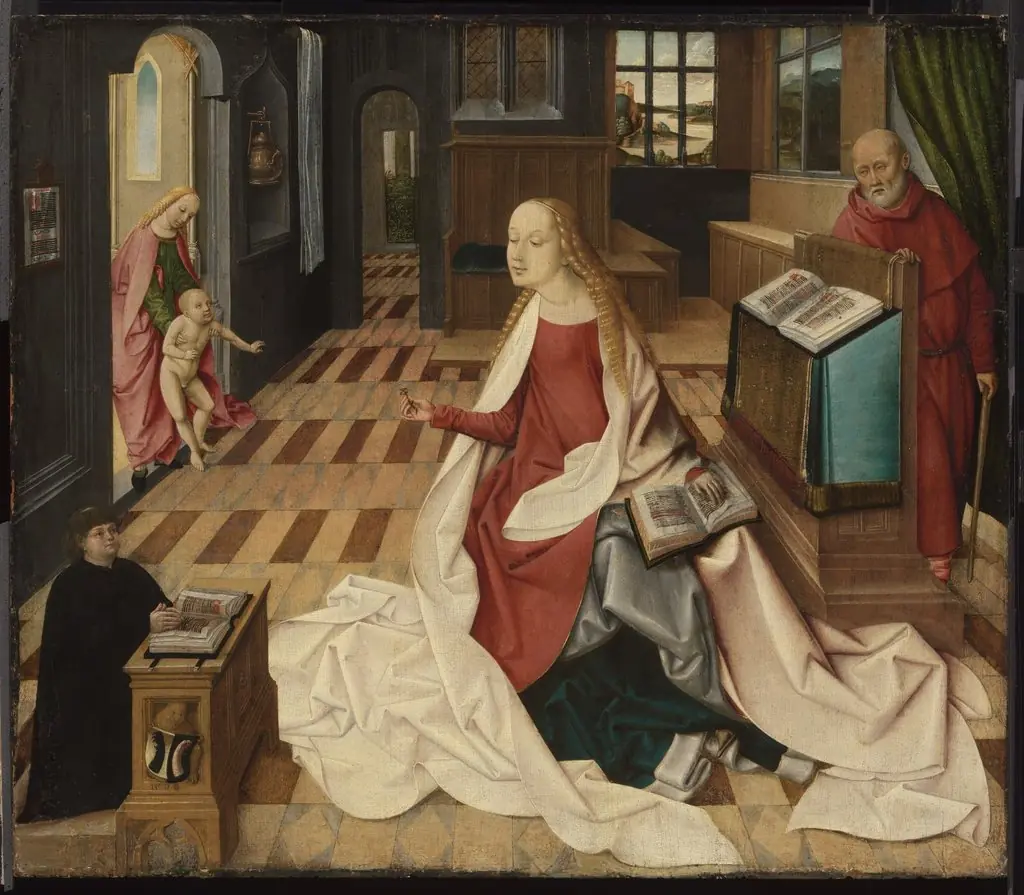 The Education of the Infant Christ
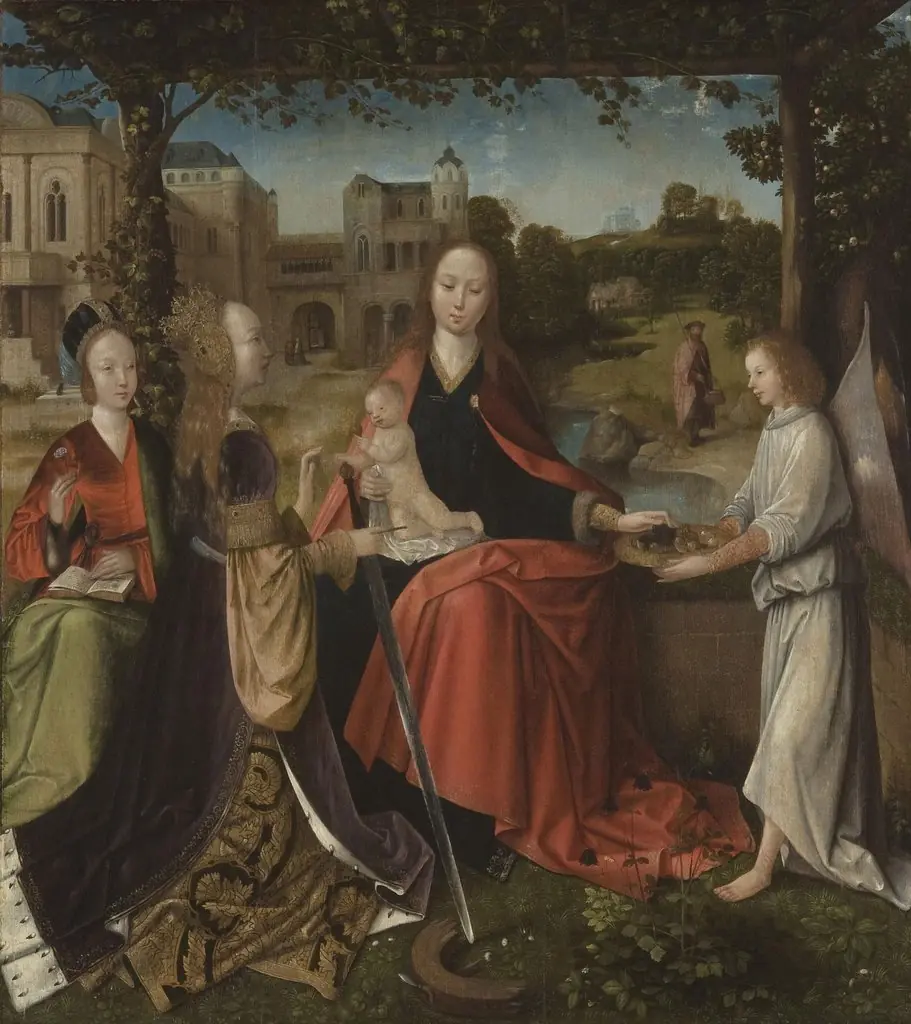 Virgin and Child, with Saint Catherine of Alexandria, a Female Saint, and an Angel
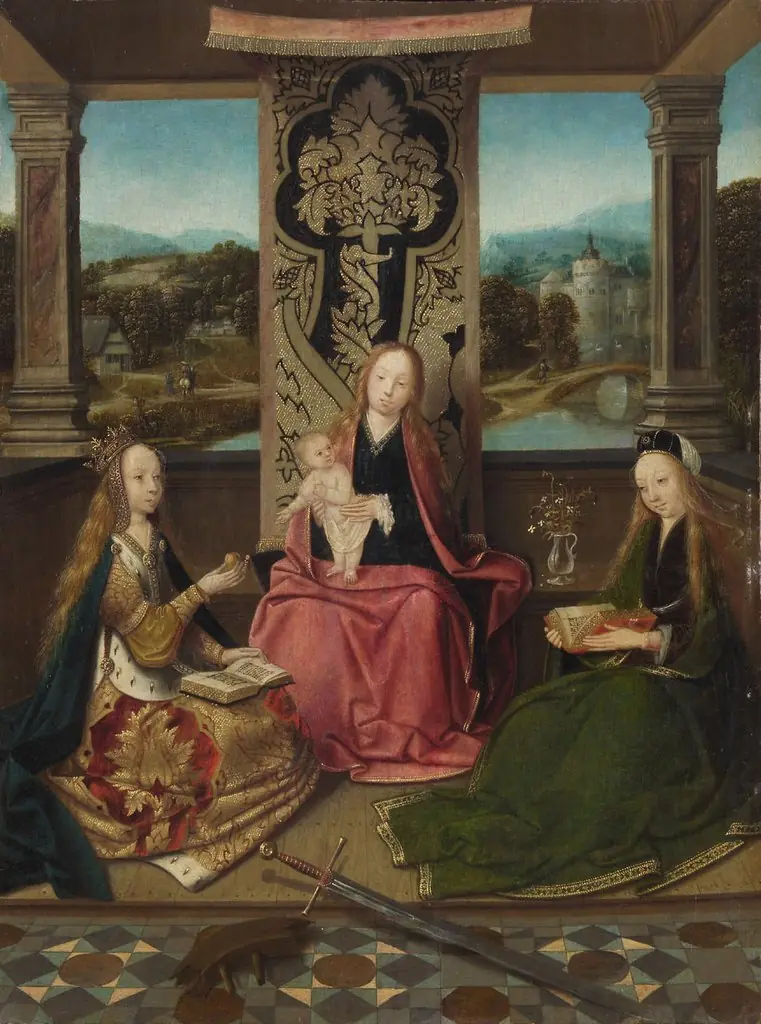 Madonna and Child with Saints Catherine and Barbara
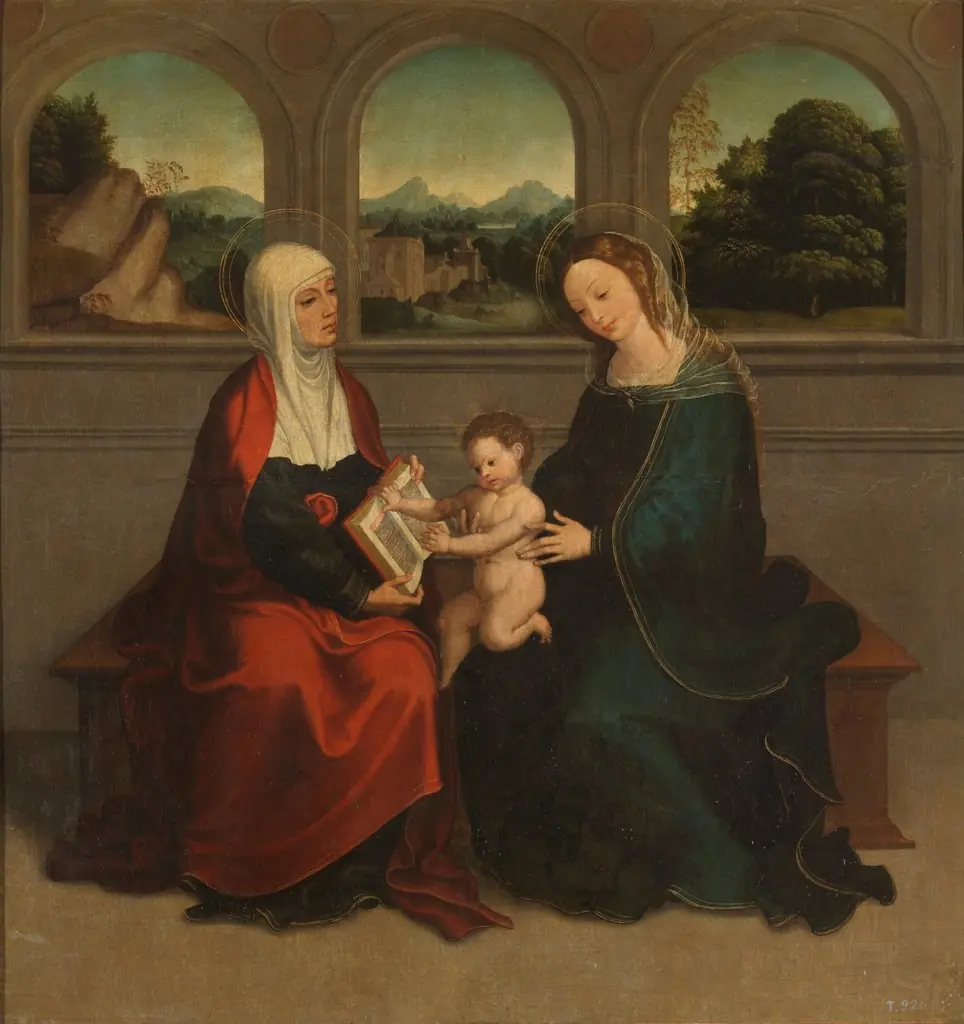 La Virgen el Niño y Santa Ana