Artwork
Christopher Grant Champlin
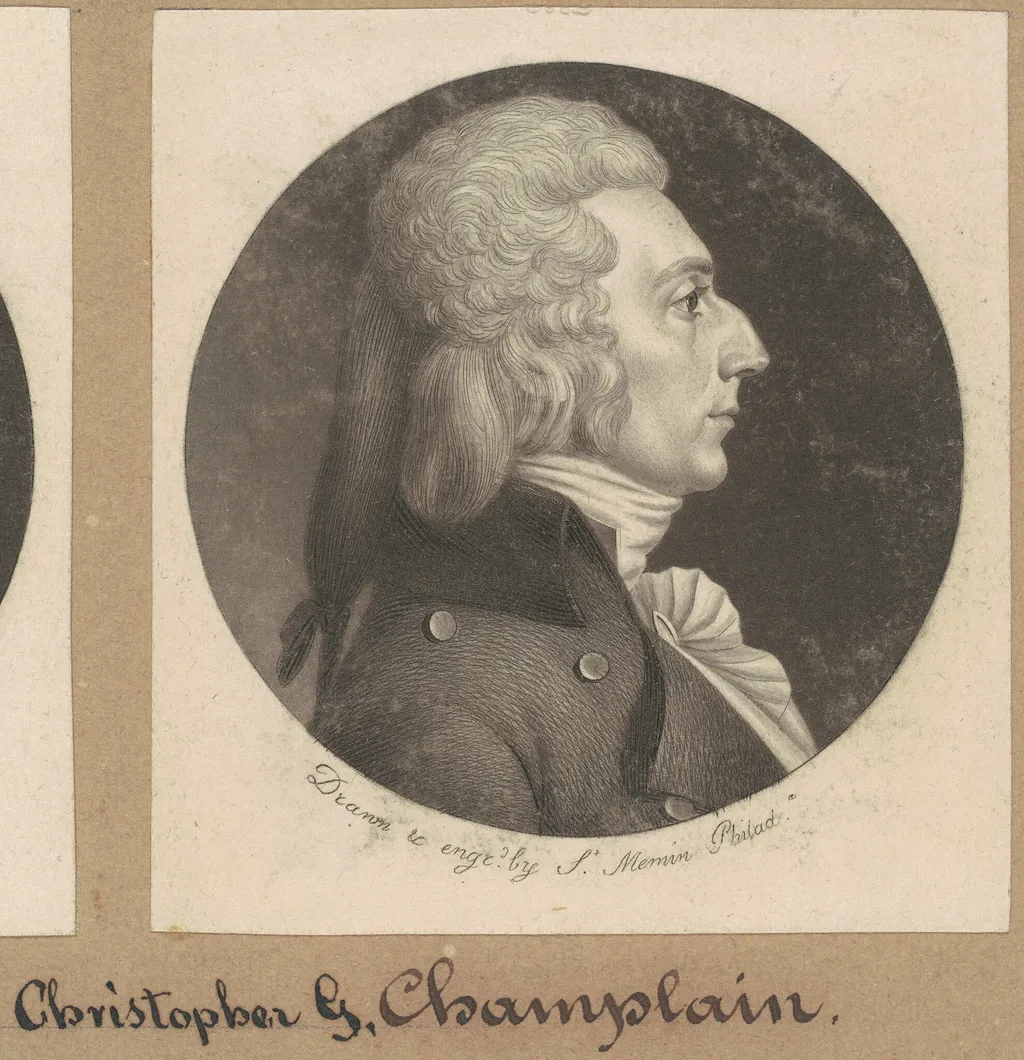
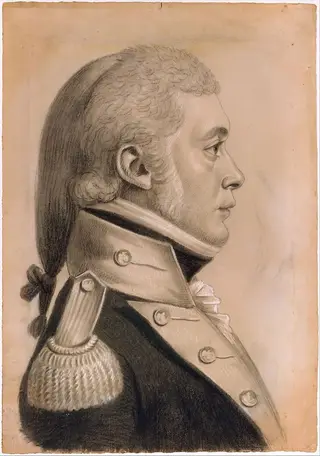
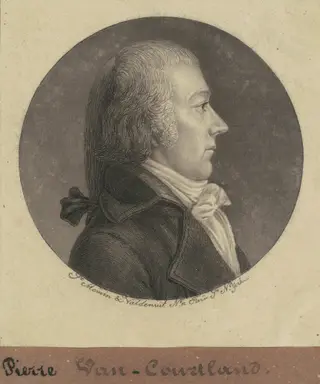
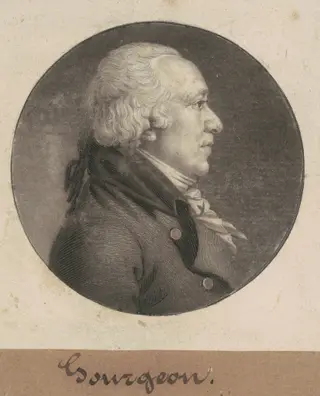
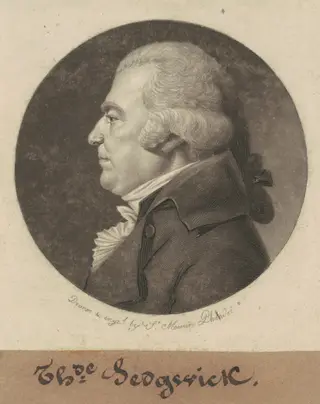
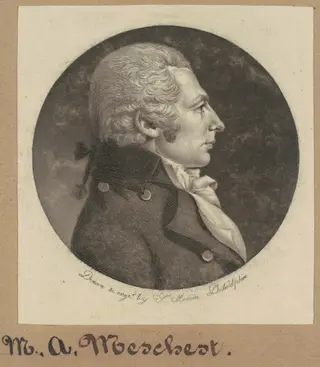
Christopher Grant Champlin is an ink print by the Romanticist artist Charles B. J. Févret de Saint-Mémin. It dates from 1800 and is held in the collection of the National Gallery of Art.
- Inscription
- Inscribed:lower center in plate: Drawn & engrd. by St. Memin Philada.; lower center mount in black ink by unknown hand: Christopher G. Champlain.
About this work
Overview
This 1800 print depicts Christopher Grant Champlin in formal attire, rendered in mezzotint and engraving on wove paper, later mounted to brown wove paper.
This 1800 print depicts Christopher Grant Champlin in formal attire, rendered in mezzotint and engraving on wove paper, later mounted to brown wove paper. Created by Charles Balthazar Julien Févret de Saint-Mémin, it belongs to the National Portrait Gallery’s collection. The work exemplifies the precision and tonal range achievable through intaglio techniques, capturing a dignified likeness with subtle gradations of light and shadow.
Subject & Meaning
Christopher Grant Champlin, a Rhode Island merchant and public figure, is portrayed with composure and stillness, facing the viewer directly. His formal dress and neutral expression convey social standing and restraint, typical of early American portraiture. The image serves less as a personal revelation than as a record of civic identity, reflecting the values of decorum and quiet authority in post-Revolutionary elite circles.
Technique & Style
Saint-Mémin employed mezzotint to achieve rich tonal depth, using a rocker to texture the metal plate with fine pits, then selectively scraping to create highlights. Engraving added sharp linear details to facial features and fabric folds. The combination allowed for both soft modeling and crisp definition, characteristic of his method. The result is a portrait that balances realism with the inherent delicacy of hand-inked intaglio printing.
History & Provenance
Executed in 1800, the print was made during Saint-Mémin’s time in the United States, where he produced numerous portraits of prominent figures. It entered the National Portrait Gallery’s holdings through established institutional acquisitions. The artist, who died in 1852, maintained a practice rooted in European engraving traditions, adapting them to American sitters during his decade-long residency.
Context
In the early 19th century, mezzotint was a favored medium for portraiture among American elites seeking refined, reproducible likenesses. Saint-Mémin’s work emerged amid a growing demand for visual records of civic leaders, coinciding with the nation’s efforts to define its own cultural identity. His technique bridged European craftsmanship and American subject matter, offering accessible images to a rising middle class.
Legacy
Saint-Mémin’s prints, including this one, remain among the most technically accomplished American portraits of the period. His systematic approach to portraiture influenced later printmakers and contributed to the standardization of likeness in public representation. Though not widely known today, his body of work provides critical insight into the visual culture of early national America.
Own this work as a print
Artist & collection
Artist
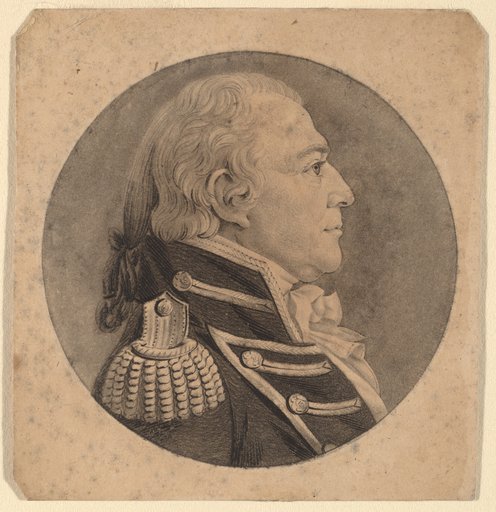
Charles B. J. Févret de Saint-Mémin
Charles Balthazar Julien Févret de Saint-Mémin (French pronunciation: ; 1770–1852) was a French portrait painter and museum director.