Artwork
Esperanza, Market
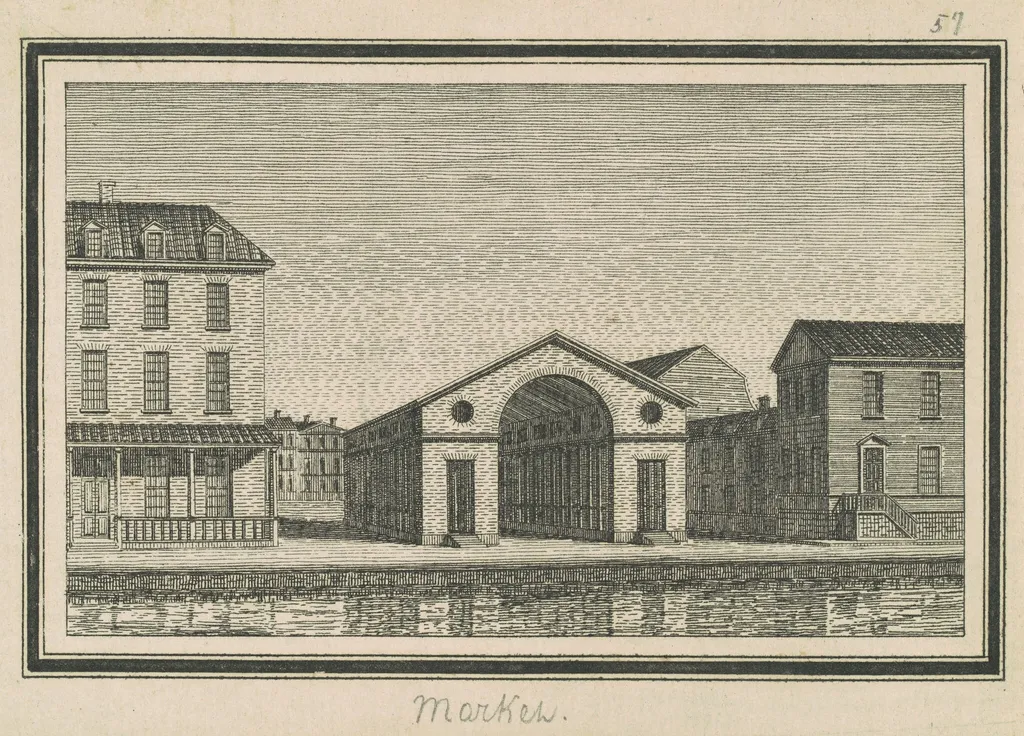
Esperanza, Market is an ink print by the Romanticist artist Charles B. J. Févret de Saint-Mémin. It dates from 1795 and is held in the collection of the National Gallery of Art.
- Inscription
- Inscribed:lower center in graphite by unknown hand: Market.
About this work
Overview
It belongs to the Corcoran Collection and presents a candid interior scene of a public drinking establishment in early 19th-century America.
Esperanza, Market is an 1801 print by Charles B. J. Févret de Saint-Mémin, created using etching and engraving on laid paper, later mounted to brown wove paper. It belongs to the Corcoran Collection and presents a candid interior scene of a public drinking establishment in early 19th-century America. The irregular dimensions reflect the handmade nature of the plate and paper, emphasizing its artisanal origin over standardized production.
Subject & Meaning
The scene captures a modest tavern interior, where three men gather at a wooden table near a window, engaged in quiet conversation. A woman behind the bar pours drinks, her presence central to the space’s function. No grand narrative is implied; instead, the work records an ordinary moment of social exchange, offering a glimpse into the rhythms of daily life in a growing American urban environment.
Technique & Style
Saint-Mémin combined etching and engraving to build the image: acid-bitten lines created soft tonal areas, while hand-engraved strokes defined sharper details. The uneven ink distribution across the plate gives the composition a tactile, atmospheric quality, enhancing the sense of movement and dim light. The method prioritizes observation over idealization, aligning with a documentary impulse in early American printmaking.
History & Provenance
Created in 1801, the print entered the Corcoran Collection in the 19th century and later passed to the National Gallery of Art following the Corcoran’s dissolution. Its survival reflects its status as a record of everyday American life rather than a celebrated portrait. No evidence suggests it was widely distributed; its rarity underscores its role as a personal or local record rather than a commercial product.
Context
In the early 1800s, taverns served as hubs for commerce, politics, and social interaction in American towns. Saint-Mémin, trained in France and active in the U.S., often documented people and places with precision. This print aligns with a broader trend among immigrant artists to record American customs, blending European technical training with native subject matter to form a new visual language.
Legacy
Though not widely exhibited during Saint-Mémin’s lifetime, Esperanza, Market now stands as a quiet testament to the value of ordinary scenes in early American art. It contributes to scholarly understanding of domestic and public spaces in the young republic. Its preservation highlights the importance of printmaking as a medium for capturing social history beyond formal portraiture.
Own this work as a print
Artist & collection
Artist
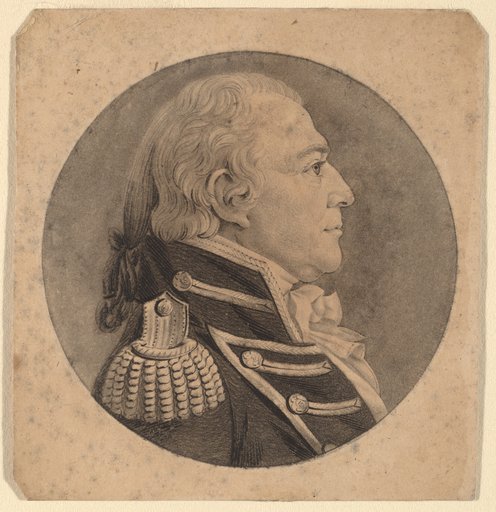
Charles B. J. Févret de Saint-Mémin
Charles Balthazar Julien Févret de Saint-Mémin (French pronunciation: ; 1770–1852) was a French portrait painter and museum director.

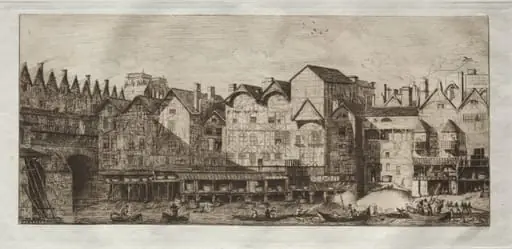 Partie de la cité vers la fin du XVIIe siècle
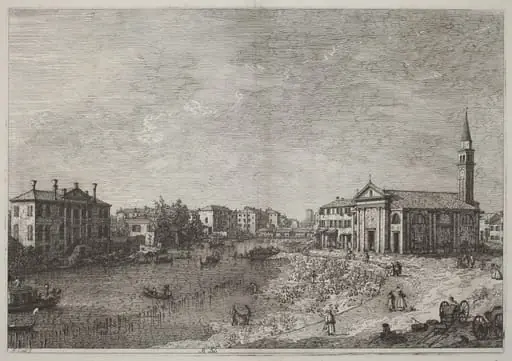 Al Dolo
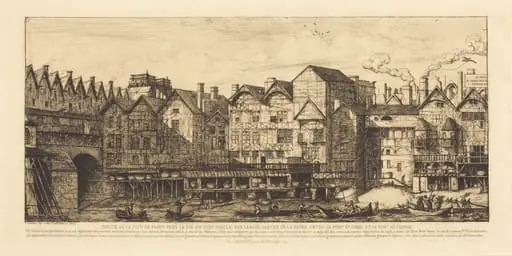 Partie de la Cité vers la fin du XVIIe siècle (View of the City of Paris Towards the Close of the XVIIth Century)
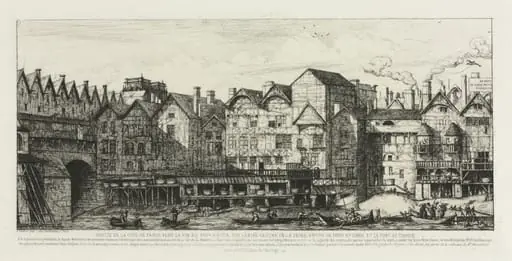 Part of the City of Paris at the End of the Seventeenth Century
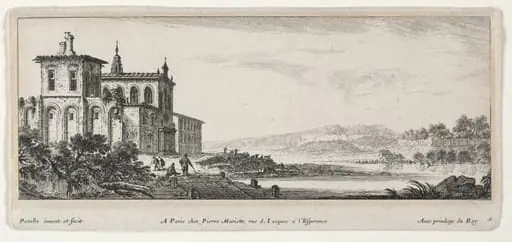 River Scene
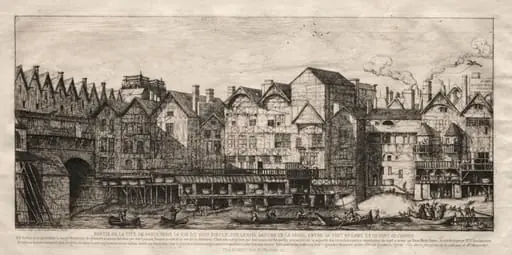 View of Part of the City of Paris, Towards the Close of the 17th Century
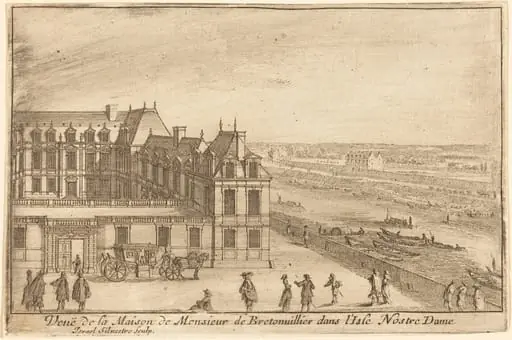 Veue de la Maison de Monsieur de Bretonuillerdans l'Isle Nostre Dame
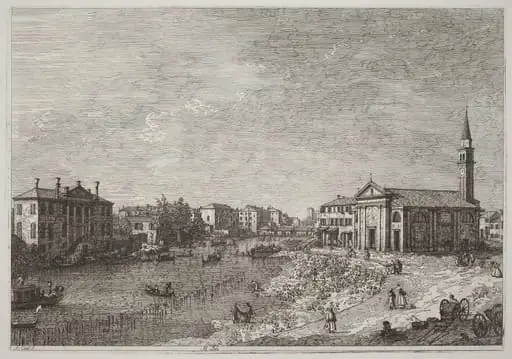 Al Dolo
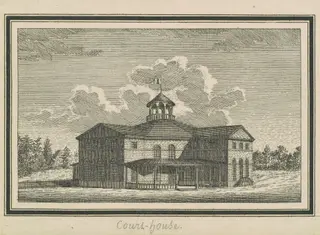 Esperanza, Courthouse