Artwork
Margaret Polk
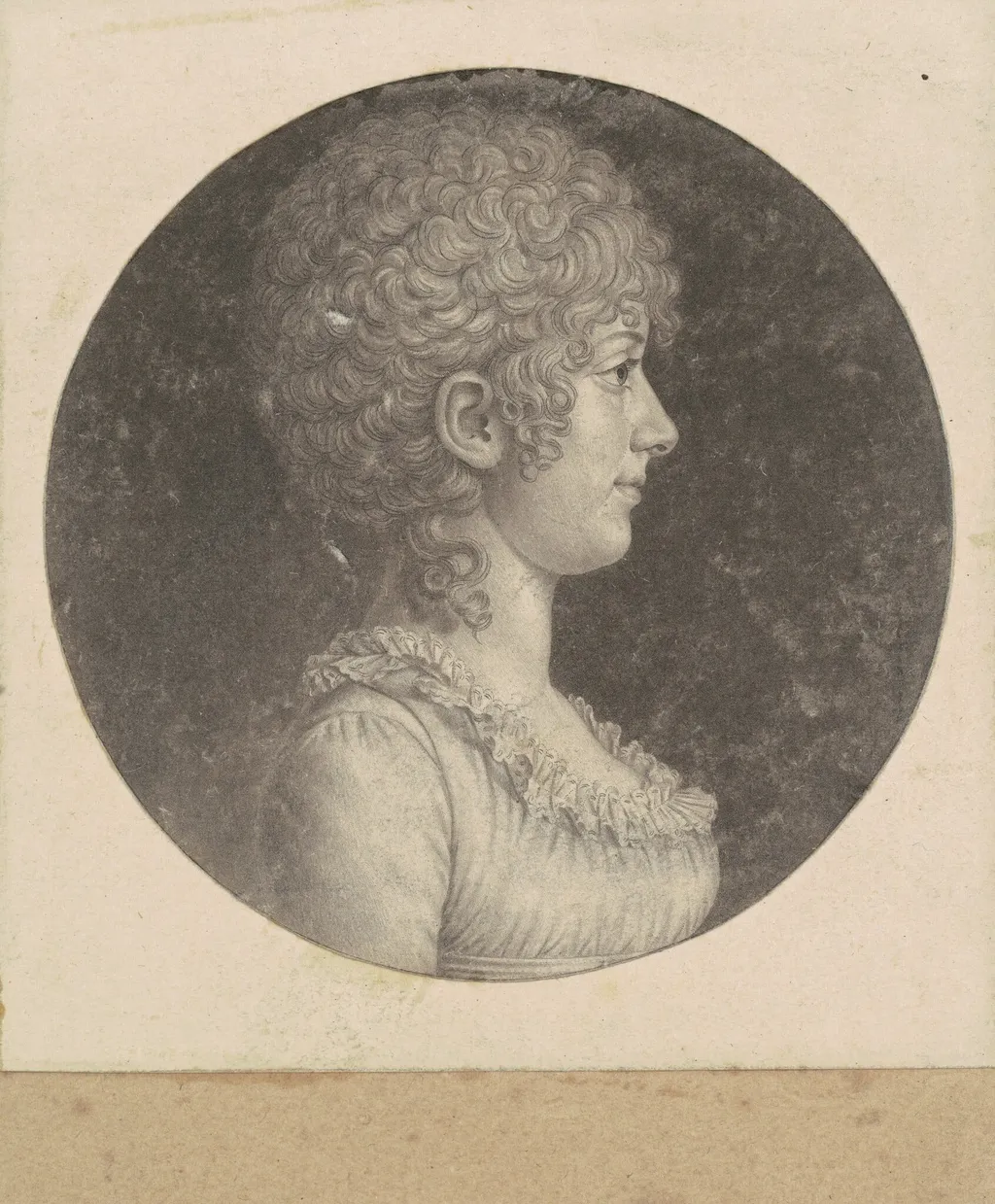
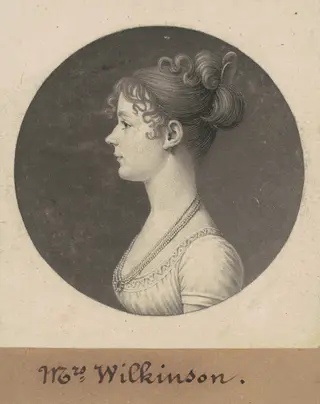
Margaret Polk is an ink print by the Romanticist artist Charles B. J. Févret de Saint-Mémin. It dates from 1800 and is held in the collection of the National Gallery of Art.
About this work
Overview
The high contrast between the illuminated skin and the deep blacks of the clothing creates a dramatic, sculptural effect characteristic of the medium.
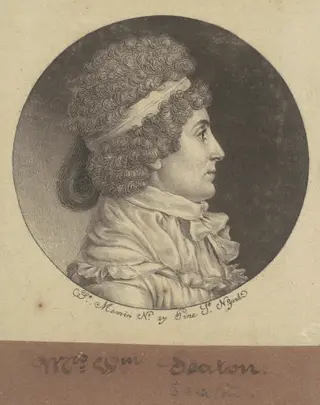
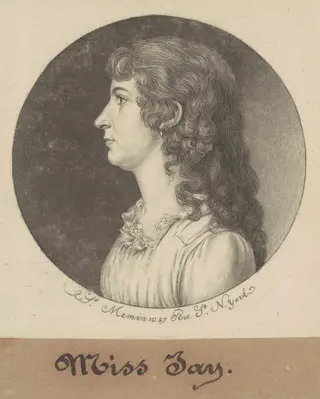
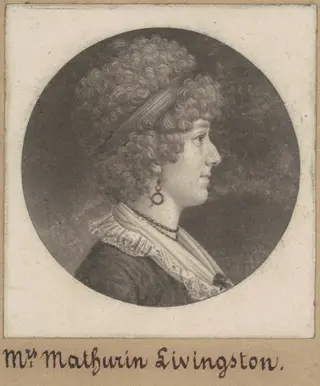
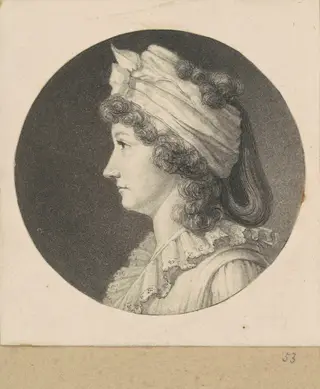
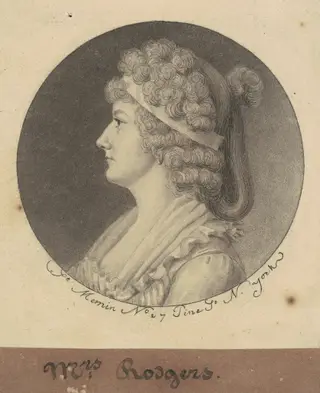
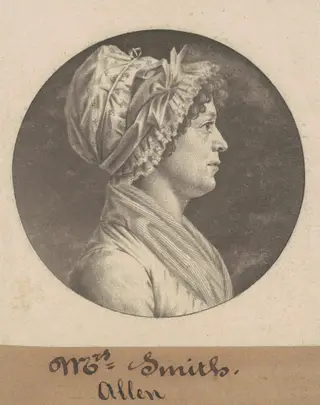
Created in 1800, this mezzotint and engraving depicts Margaret Polk, a portrait executed by Charles B. J. Févret de Saint-Mémin. The work presents the sitter in a bust-length format against a stark, unadorned background, emphasizing her facial features and attire. Saint-Mémin, a French émigré active in the United States during this period, is renowned for his distinctive profile and three-quarter view portraits that blend neoclassical precision with the tonal richness of mezzotint.
In this specific print, the artist utilizes fine lines to model the soft curls framing the subject's face and to render the texture of her dark dress and white collar. The high contrast between the illuminated skin and the deep blacks of the clothing creates a dramatic, sculptural effect characteristic of the medium. The image captures a calm, composed expression, reflecting the dignified portraiture style popular among the American elite at the turn of the nineteenth century.
Mounted on brown wove paper, the work stands as a significant example of Saint-Mémin's American period, demonstrating his technical mastery in translating his chalk drawings into reproducible prints that documented the likenesses of prominent figures of the early republic.
Subject & Meaning
The portrait shows a woman with gently coiled hair, dressed in a dark garment accented by a crisp white collar. Set against an unadorned background, her calm expression and delicately shaded hands convey a quiet dignity, suggesting the sitter’s social standing without overt symbolism.
Technique & Style
Saint‑Mémin employed the mezzotint process to achieve deep, velvety blacks and subtle tonal gradations, while the engraving adds precise linear detail to the facial features and attire. The interplay of rich shadows and fine lines gives the skin a three‑dimensional quality, characteristic of the medium’s capacity for smooth tonal transitions.
History & Provenance
During a period of extended residence in the United States, Saint‑Mémin produced a series of portrait prints of early‑19th‑century leaders and private citizens, introducing mezzotint to an American audience where it was then uncommon. This rarity, combined with the artist’s meticulous approach, has contributed to the work’s presence in the Corcoran Collection as a representative example of his American period.
Own this work as a print
Artist & collection
Artist
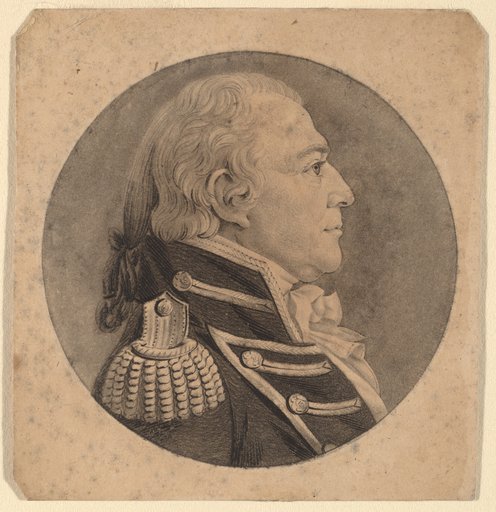
Charles B. J. Févret de Saint-Mémin
Charles Balthazar Julien Févret de Saint-Mémin (French pronunciation: ; 1770–1852) was a French portrait painter and museum director.