Artwork
Jane Barr Stuart Newton
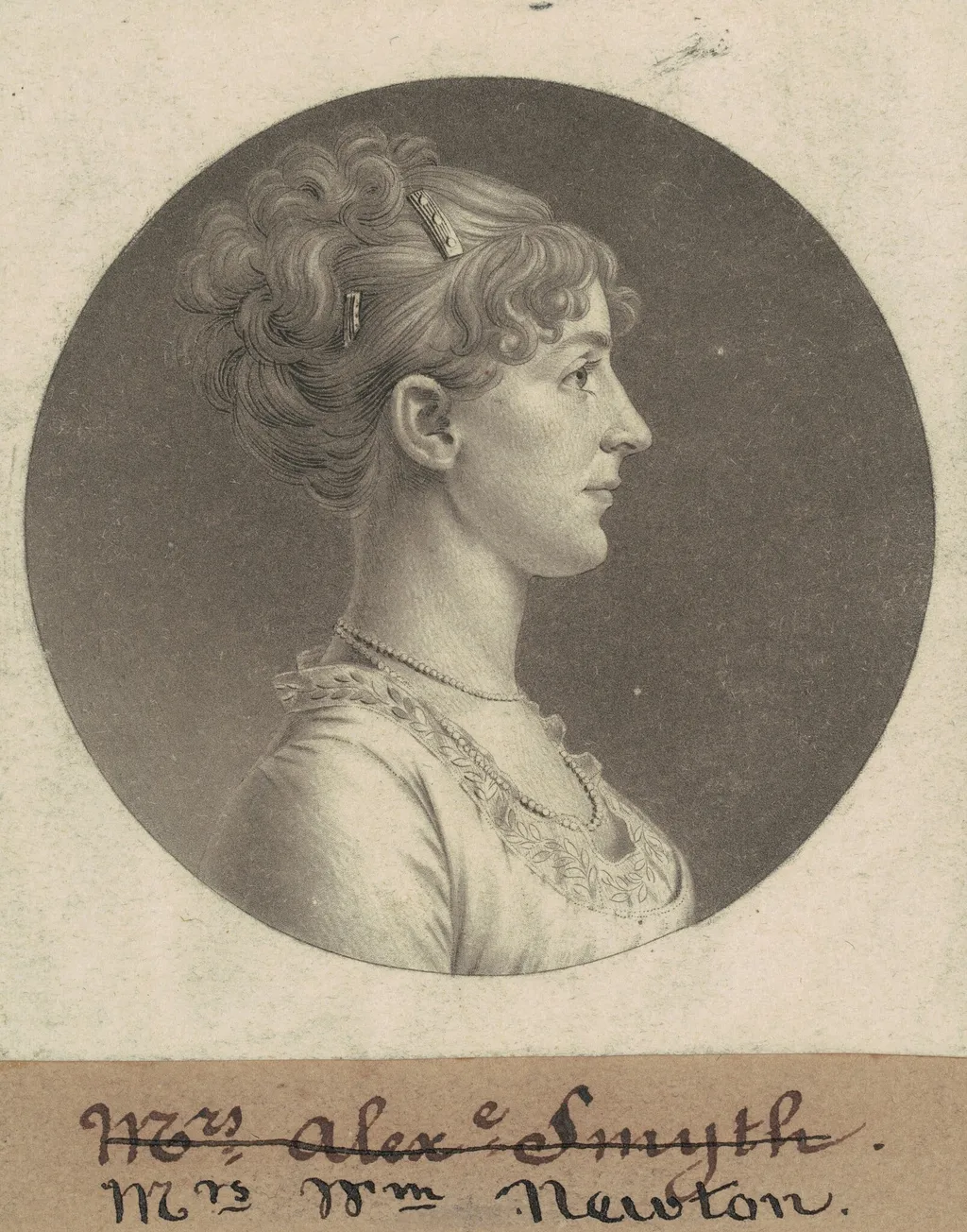
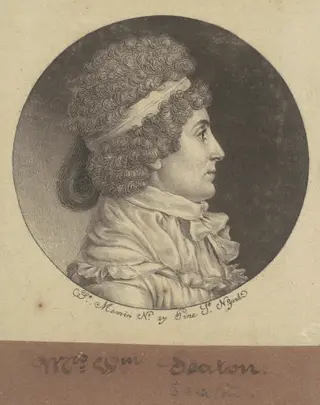
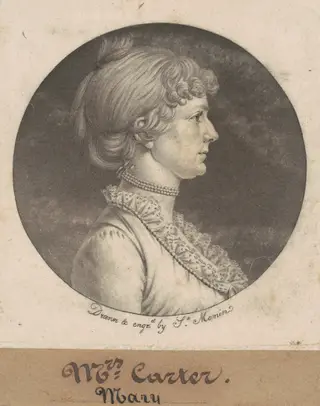
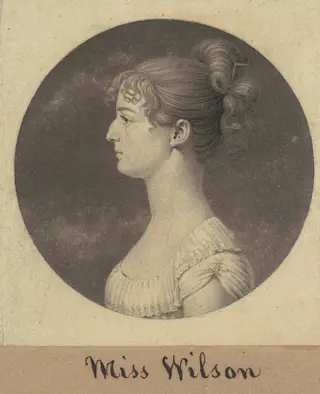
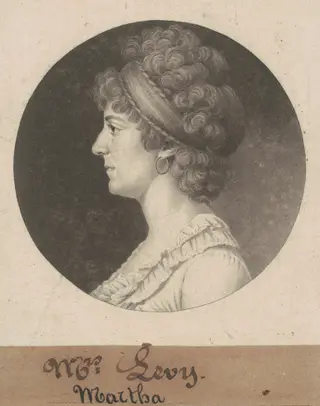
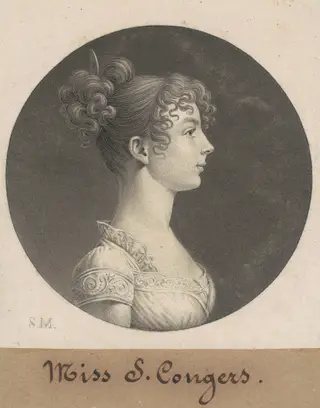
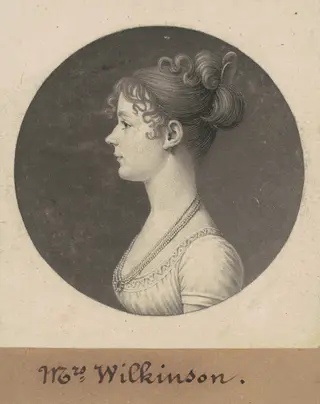
Jane Barr Stuart Newton is an ink print by the Romanticist artist Charles B. J. Févret de Saint-Mémin. It dates from 1805 and is held in the collection of the National Gallery of Art.
- Inscription
- Inscribed:upper center mount in graphite by unknown hand: x; upper center mount in black ink by unknown hand: (see page 63); lower center mount in black ink by unknown hand: Mrs. Alexe. Smyth. [strikethrough] / Mrs. Wm. Newton.
About this work
The artist worked the metal plate to create soft shadows on her skin and collar.
You see a woman in a simple dark dress with a white collar. Her hair is pulled back in loose waves. The artist used fine lines to show her face and clothes.
This print is from 1805. It’s not a painting, it’s an engraving and mezzotint made on paper. The artist worked the metal plate to create soft shadows on her skin and collar.
Look up Saint-Mémin, Charles B. J. Févret de for his other portraits.
Overview
Created in 1805, this mezzotint and engraving depicts Jane Barr Stuart Newton, a portrait executed by the French artist Charles B. J. Févret de Saint-Mémin. The work presents a bust-length view of the sitter against a plain background, characterized by her dark dress and contrasting white collar. Her hair is arranged in loose waves pulled back from her face.
Saint-Mémin, renowned for his neoclassical profile portraits, adapted his distinctive technique to this frontal presentation, utilizing fine lines and the tonal gradations of mezzotint to render the soft modeling of her features and the texture of her attire. The image is printed in black on wove paper and mounted to a brown wove paper support. This piece reflects the artist's period of activity in the United States, where he produced numerous portraits of prominent figures using his unique method of tracing profiles and translating them into engraved prints.
The work serves as a specific example of his ability to capture individual likeness through precise linear definition and subtle shading, bridging the gap between his earlier profile studies and more traditional frontal portraiture formats.
Subject & Meaning
The composition depicts a seated woman dressed in a plain dark gown with a contrasting white collar. Her hair is arranged in loose, pulled‑back waves, and the expression is rendered with delicate line work. The restrained attire and modest pose suggest a private, domestic portrait rather than a formal or allegorical representation.
Technique & Style
Saint‑Mémin employed both mezzotint and engraving on a single metal plate, allowing for a range of tonal effects. The mezzotint process creates soft, velvety shadows that model the sitter’s skin and fabric, while fine engraved lines define facial features and the texture of the clothing. The juxtaposition of these methods yields a nuanced, almost painterly surface within the constraints of print media.
History & Provenance
Produced in the early years of the 19th century, the print entered the Corcoran Collection, a major American art institution. Its attribution to Saint‑Mémin aligns with his known oeuvre of portraiture, which includes numerous likenesses rendered in similar mixed techniques. The work remains a documented example of his transatlantic activity during the post‑Revolutionary period.
Own this work as a print
Artist & collection
Artist
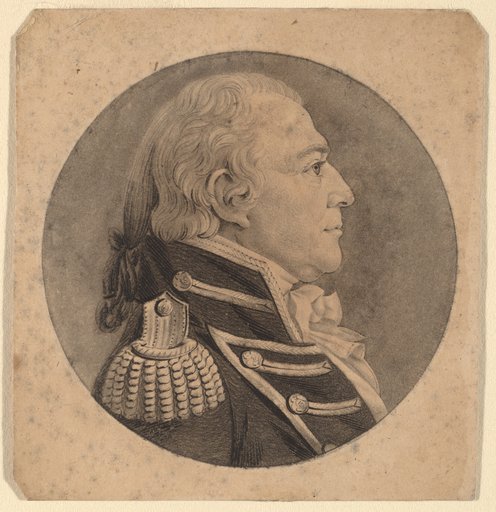
Charles B. J. Févret de Saint-Mémin
Charles Balthazar Julien Févret de Saint-Mémin (French pronunciation: ; 1770–1852) was a French portrait painter and museum director.