Artwork
Heraclitus and Democritus
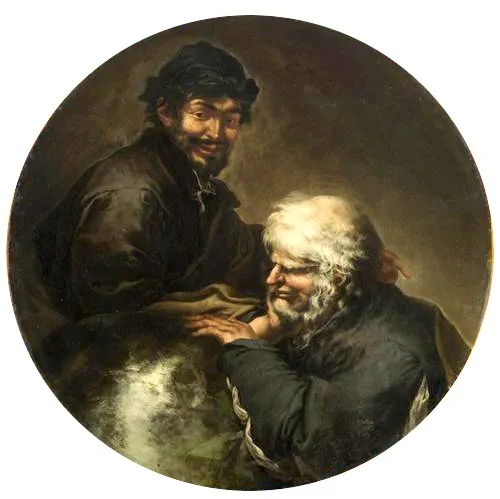
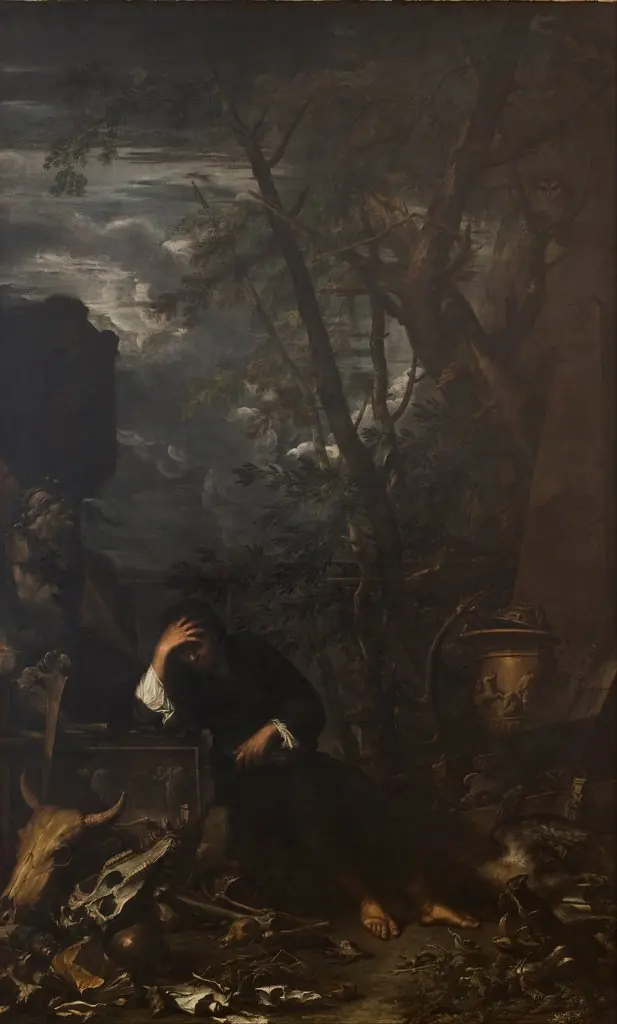
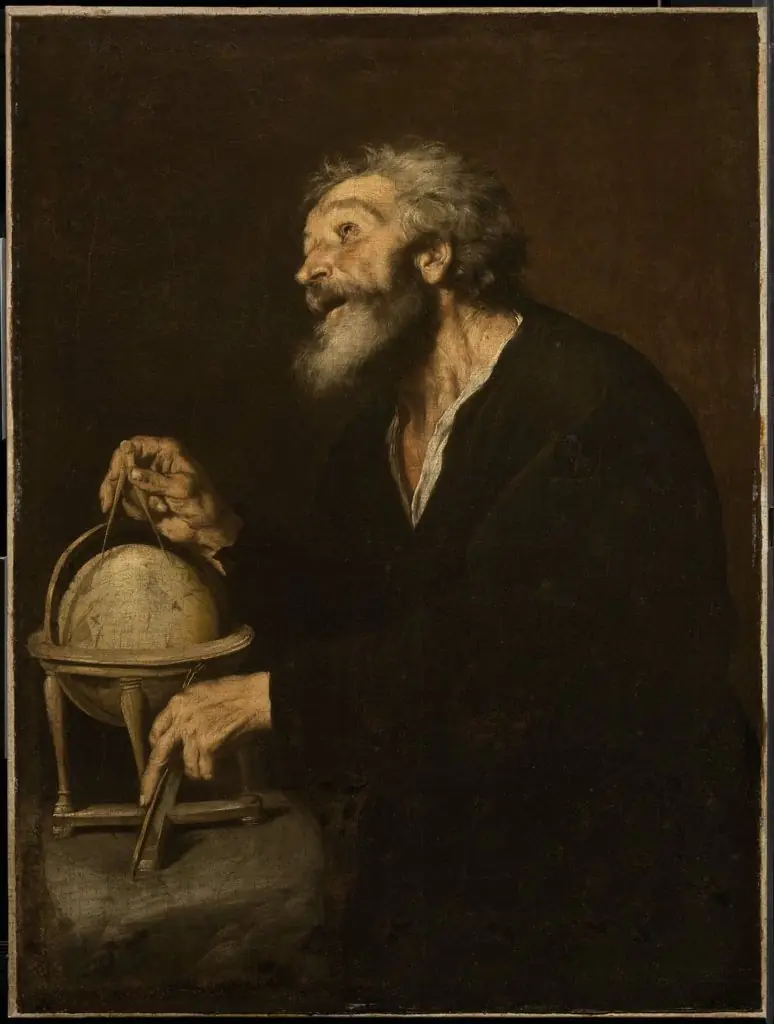
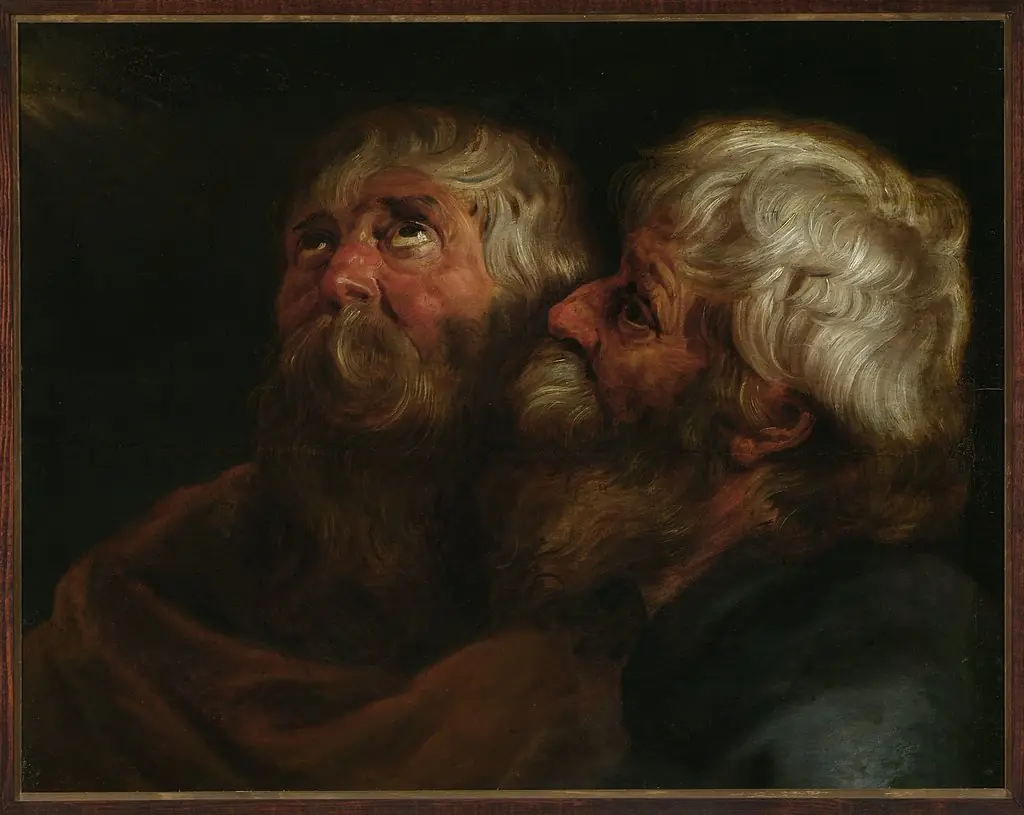
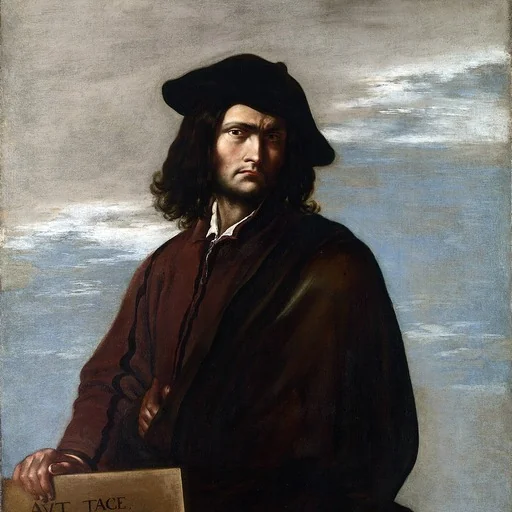
Heraclitus and Democritus is an oil painting by the Early Baroque Italian artist Salvator Rosa. It dates from 1647 and is held in the collection of the Kunsthistorisches Museum.
About this work
Overview
Painted in 1647, Heraclitus and Democritus is an oil-on-canvas work by Salvator Rosa, created during his time in Italy’s early Baroque art scene.
Painted in 1647, Heraclitus and Democritus is an oil-on-canvas work by Salvator Rosa, created during his time in Italy’s early Baroque art scene. The painting depicts two ancient Greek philosophers in a dim, atmospheric setting, emphasizing introspection over narrative action. Rosa’s approach diverges from classical idealism, favoring psychological depth and moody lighting characteristic of his personal style.
Subject & Meaning
The figures represent Heraclitus, the weeping philosopher, and Democritus, the laughing one, embodying contrasting views on human nature. Heraclitus, seated and brooding, reflects pessimism toward worldly folly; Democritus, standing with a faint smile, observes with amused detachment. Their juxtaposition invites contemplation on the duality of human experience, sorrow versus detachment, as interpreted through Renaissance humanist thought.
Technique & Style
Rosa employs chiaroscuro to isolate the philosophers’ faces and hands against a shadowy, undefined landscape. The lighting draws attention to their expressions while deepening the painting’s somber tone. Brushwork is deliberate yet unpolished, avoiding smooth idealization in favor of raw emotional texture. The composition’s asymmetry and confined space enhance the sense of isolation and inner turmoil.
History & Provenance
Commissioned during Rosa’s active years in Rome and Florence, the painting reflects his reputation as an intellectual painter unafraid of controversy. Though its early ownership is undocumented, it entered major collections by the 18th century. Rosa’s own writings suggest he identified with Heraclitus’s melancholy, aligning the work with his personal philosophy and literary interests.
Context
In mid-17th century Italy, philosophical themes were revived in art as part of a broader humanist revival. Rosa’s choice to depict these philosophers outside mythological or biblical frameworks was unusual. His focus on solitary contemplation aligned with emerging tastes for introspective subjects, contrasting with the grandeur favored by contemporaries like Caravaggio’s followers.
Legacy
The painting influenced later artists drawn to psychological portraiture and philosophical allegory, particularly in 18th-century Northern Europe. Its emphasis on inner life over external drama prefigured Romantic sensibilities. Though not widely exhibited in Rosa’s lifetime, it became a touchstone for those seeking art that conveyed intellectual weight through mood and gesture rather than narrative clarity.
Artist & collection
Artist
Salvator Rosa (1615 – 15 March 1673) is best known today as an Italian Baroque painter, whose romanticised landscapes and history paintings, often set in dark and untamed nature, exerted considerable influence from the 17th century into…