Artwork
Mary with the Child and Singing Angels
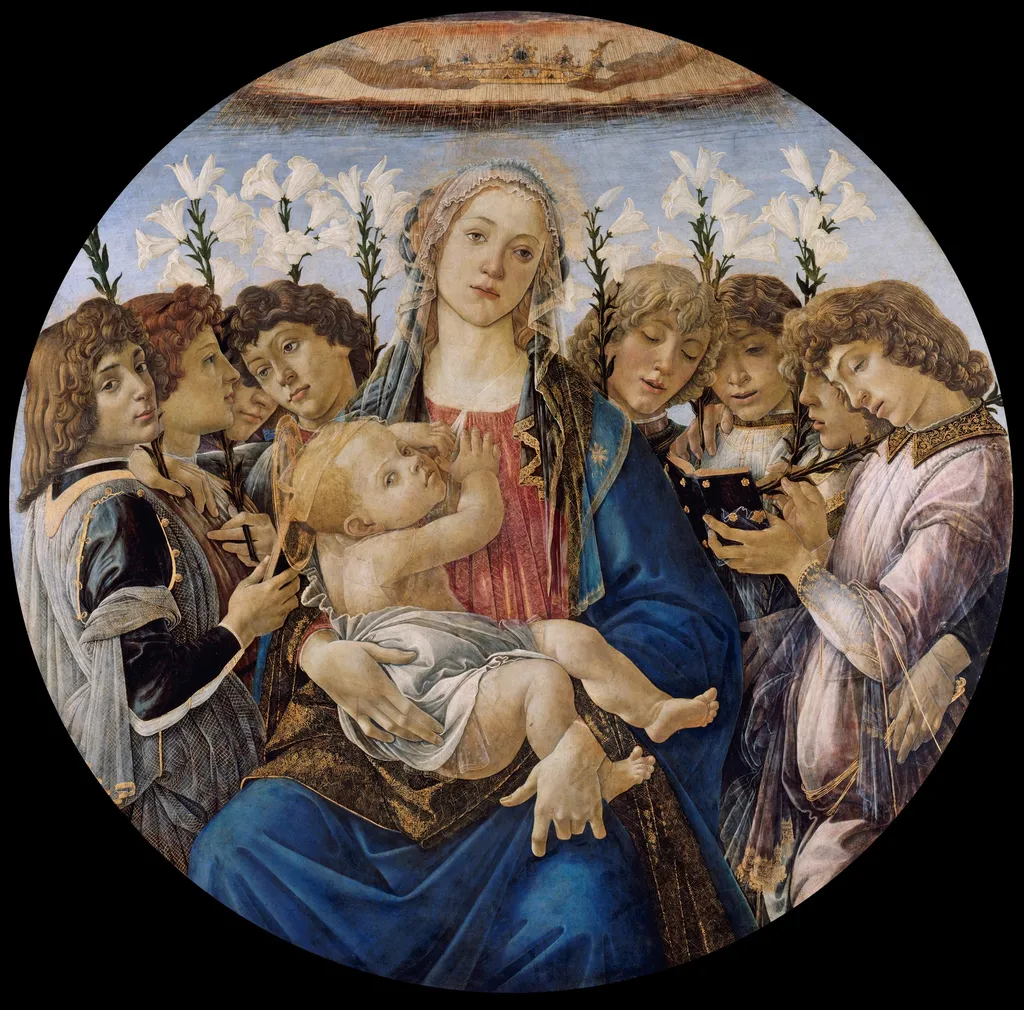
Mary with the Child and Singing Angels is an oil painting by the Early Renaissance artist Sandro Botticelli. It dates from 1490 and is held in the collection of the Gemäldegalerie Berlin.
About this work
Subject & Meaning
The four angels on the right are identified as singing angels, looking together at an open book to chant their hymns.
The composition centers on the Virgin Mary, who wears a deep blue mantle over a red dress and a translucent veil secured by a decorative band, with a faint halo encircling her head. She holds the nude Christ Child on her lap, who twists upward with one hand raised. Flanking the pair are eight youthful angels, four on each side. The four angels on the left hold tall white lilies, traditional symbols of Mary's purity. The four angels on the right are identified as singing angels, looking together at an open book to chant their hymns. One angel on the left holds a small round object, further enriching the devotional iconography of the scene.
Technique & Style
Botticelli employed oil paint on a poplar panel support to create this work. The circular composition is structured around the central figures, set against a pale blue sky with a gold-toned arched architectural element above. The palette features rich blues, pinks, golds, and whites, lending the painting a luminous quality. Botticelli's handling is characterized by soft modeling combined with fine linear detail, particularly evident in the rendering of the drapery and the curly hair of the angels. The surface of the painting exhibits fine craquelure throughout, reflecting its age and material history.
History & Provenance
The painting was created circa 1478 in Italy. It subsequently entered the collection of Atanazy Raczyński, from whom it derives its alternate name, the Raczynski Tondo, and remained with his heirs. In 1954, the work was jointly acquired by the German federal government and the states of Baden-Wurttemberg, Bavaria, Berlin, Bremen, Hamburg, Hesse, Lower Saxony, North Rhine-Westphalia, and Rhineland-Palatinate. Through this acquisition, the painting entered the collection of the Gemaldegalerie in Berlin, where it resides today.
Context
Botticelli painted this work during the 1470s, a decade when he was an independent master and his reputation soared. In addition to his famous mythological subjects, he produced a wide range of religious paintings, including numerous renditions of the Madonna and Child, often utilizing the tondo format. The linear grace and soft modeling seen in this painting are characteristic of Botticelli's Early Renaissance style, which defined his most successful period in the 1480s. By the 1490s, his style became more personal and mannered, moving in a direction opposite to the emerging High Renaissance style of Leonardo da Vinci and instead returning to more Gothic or archaic forms.
Legacy
Although Botticelli's posthumous reputation suffered for centuries, he was rediscovered in the late nineteenth century by the Pre-Raphaelites, who stimulated a reappraisal of his work and recognized the linear grace of his paintings. In a modern cultural afterlife, the four singing angels on the right side of this specific tondo were adapted for the cover of the French band Phoenix's seventh album, Alpha Zulu. For this contemporary iteration, the open book held by the angels was modified into a pink and blue digital book, bridging the Renaissance painting with a modern technological aesthetic.
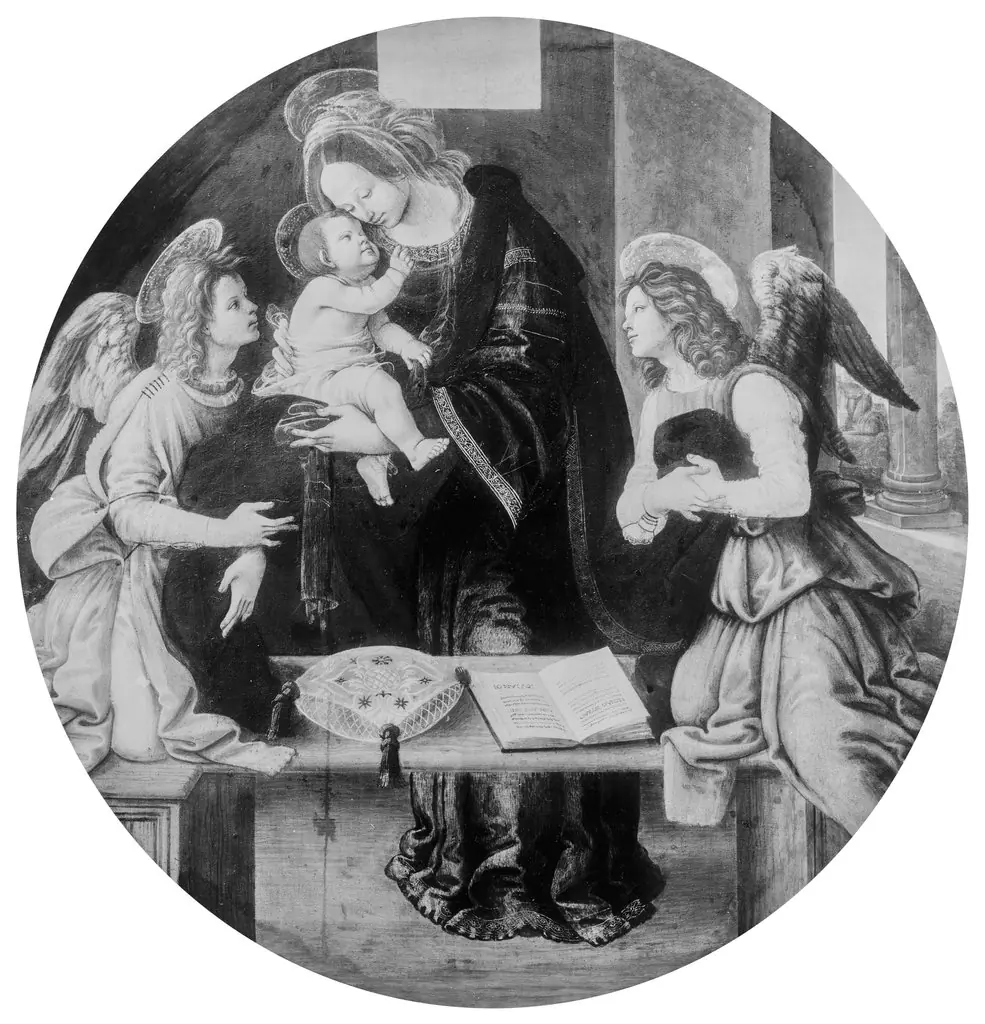
Own this work as a print
Artist & collection
Artist
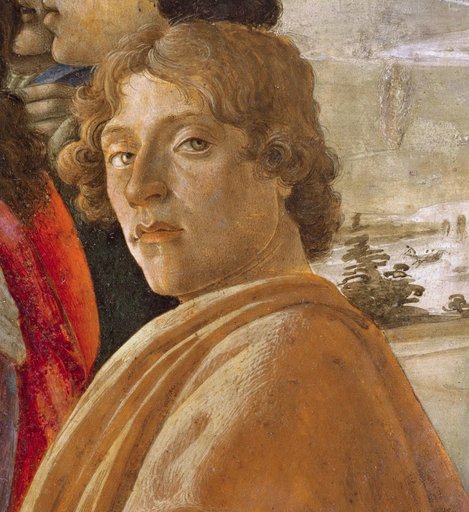
Alessandro di Mariano di Vanni Filipepi, better known as Sandro Botticelli or simply Botticelli, was an Italian painter of the Early Renaissance.

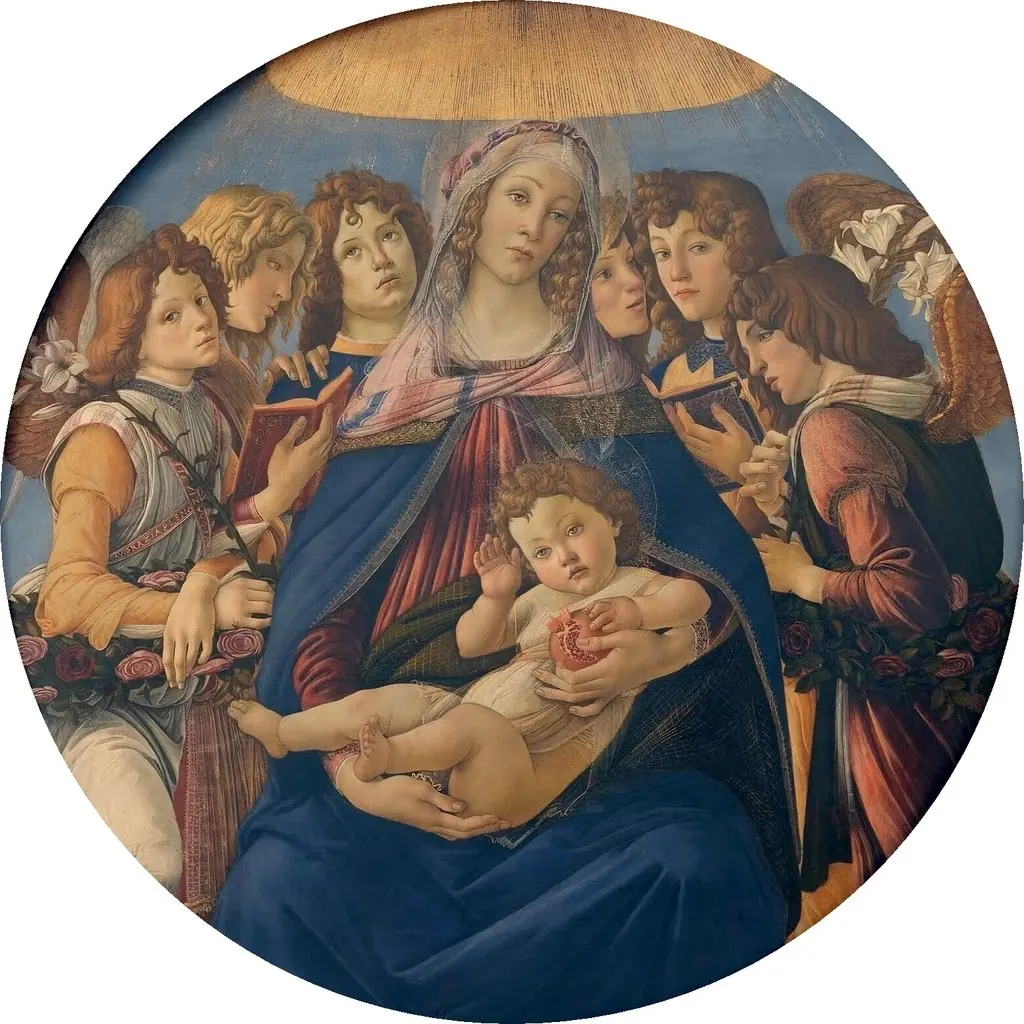 Madonna of the Pomegranate
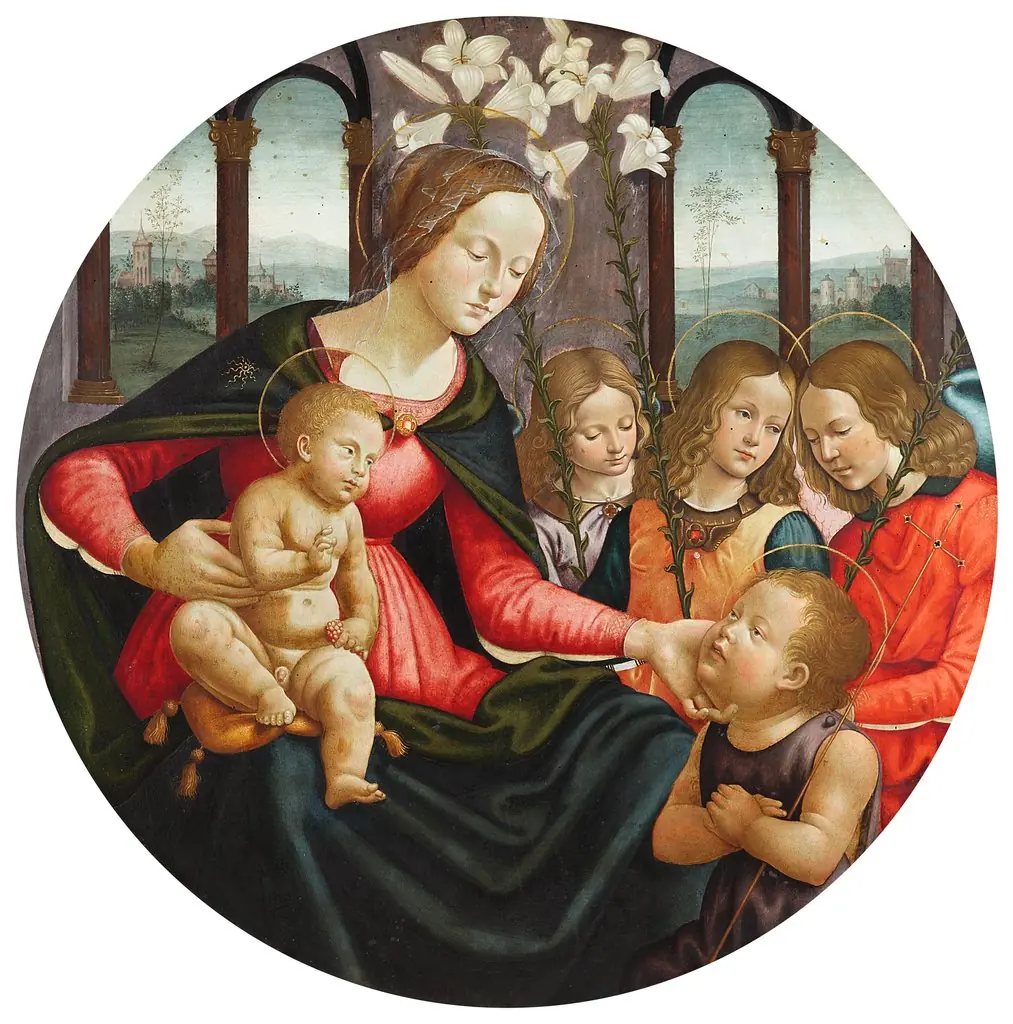 The Virgin and Blessing Child, Young St. John and three Angels
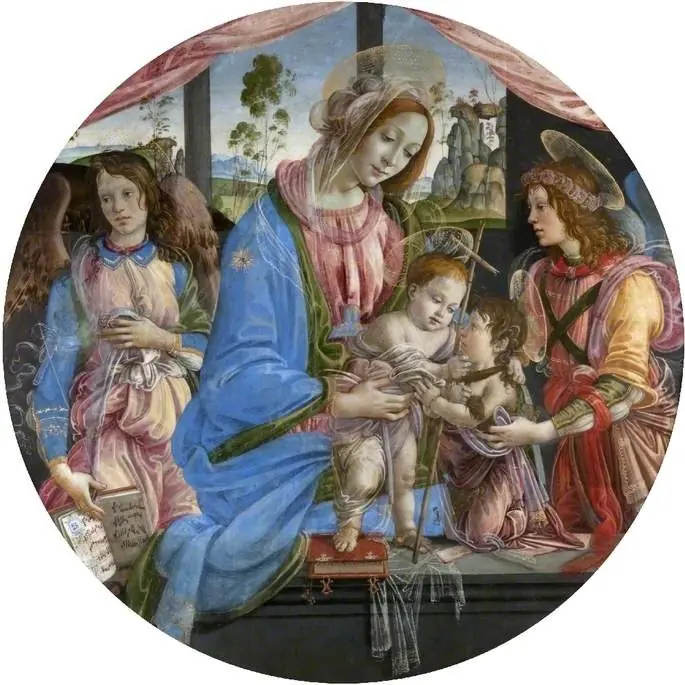 Virgin and Child with the Child Baptist and Two Angels
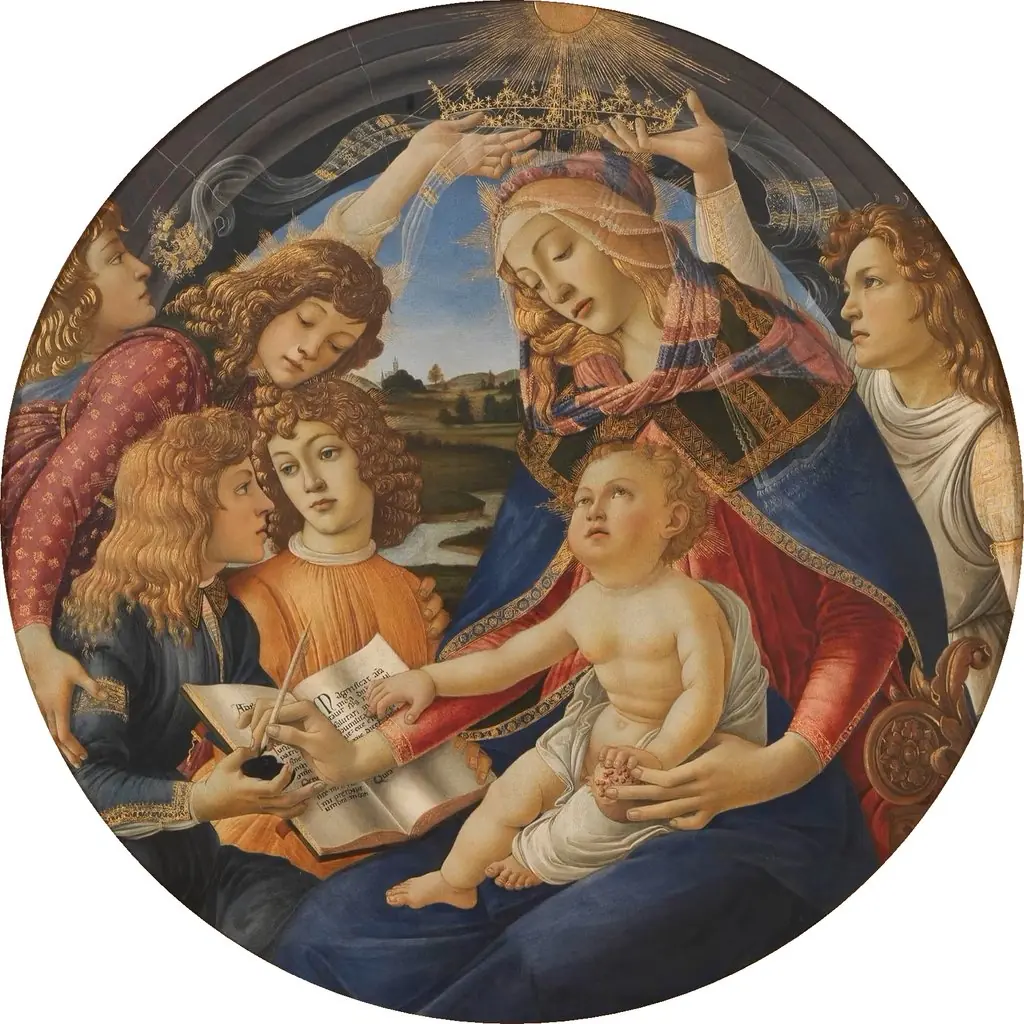 Madonna of the Magnificat
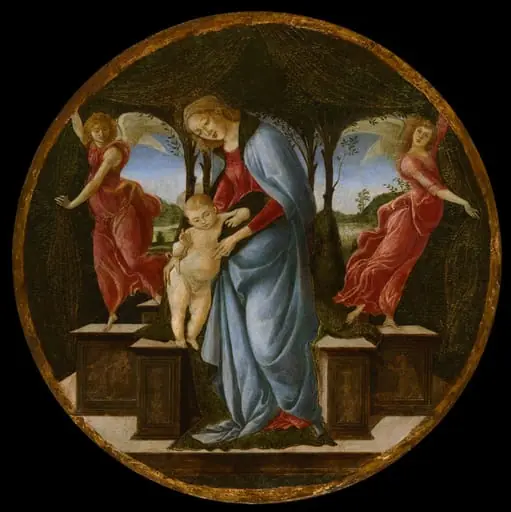 Virgin and Child with Two Angels
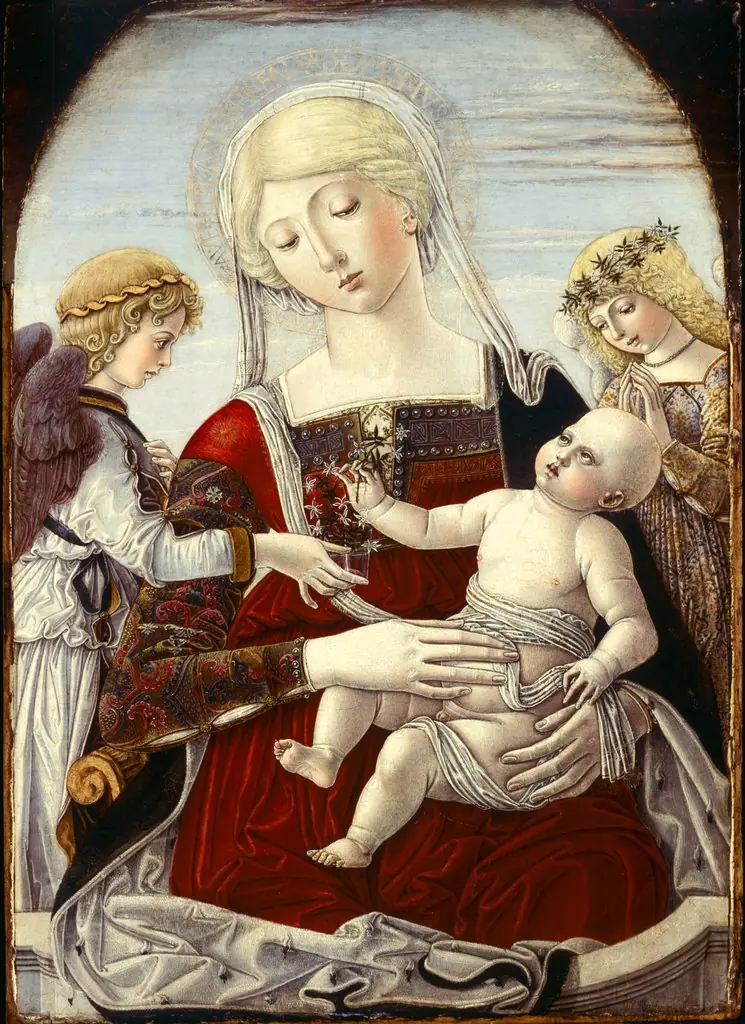 Virgin and Child with Angels
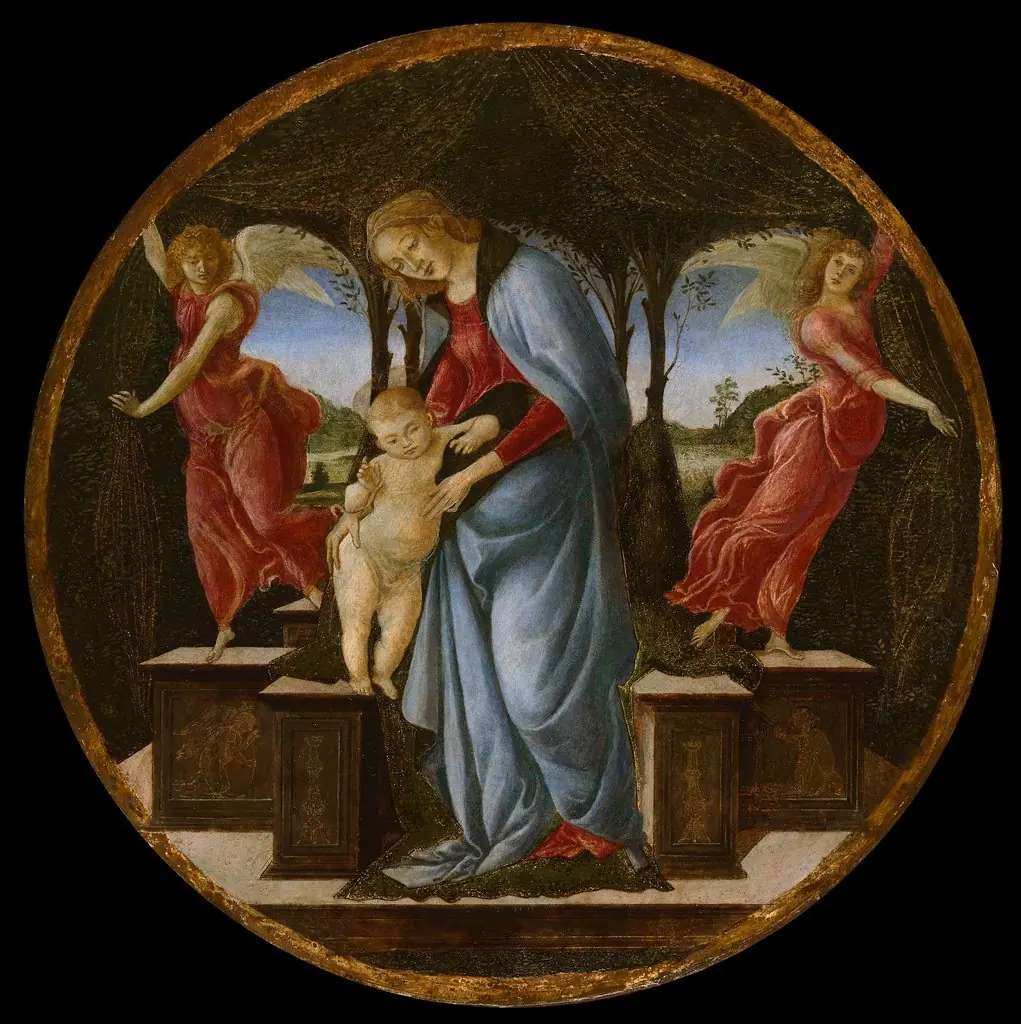 Virgin and Child with Two Angels
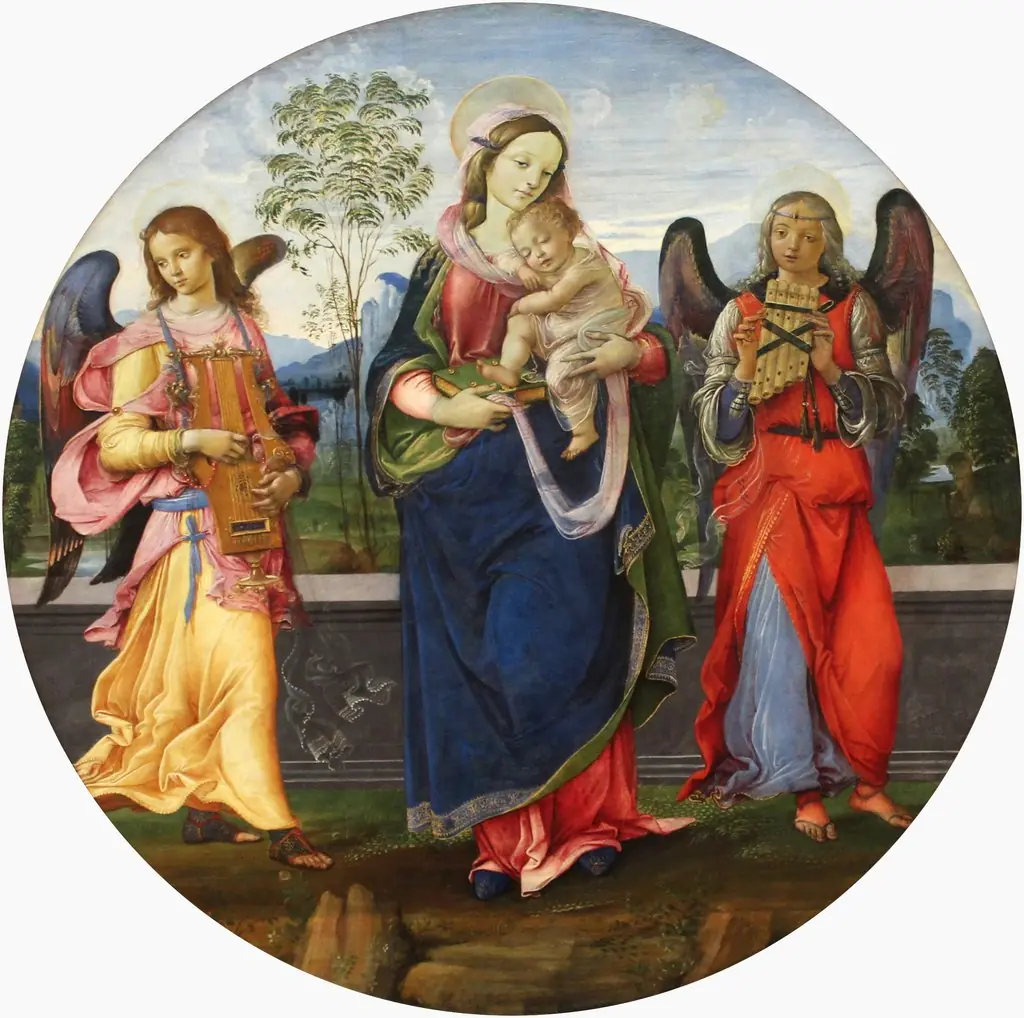 Madonna and Child with two angels playing music
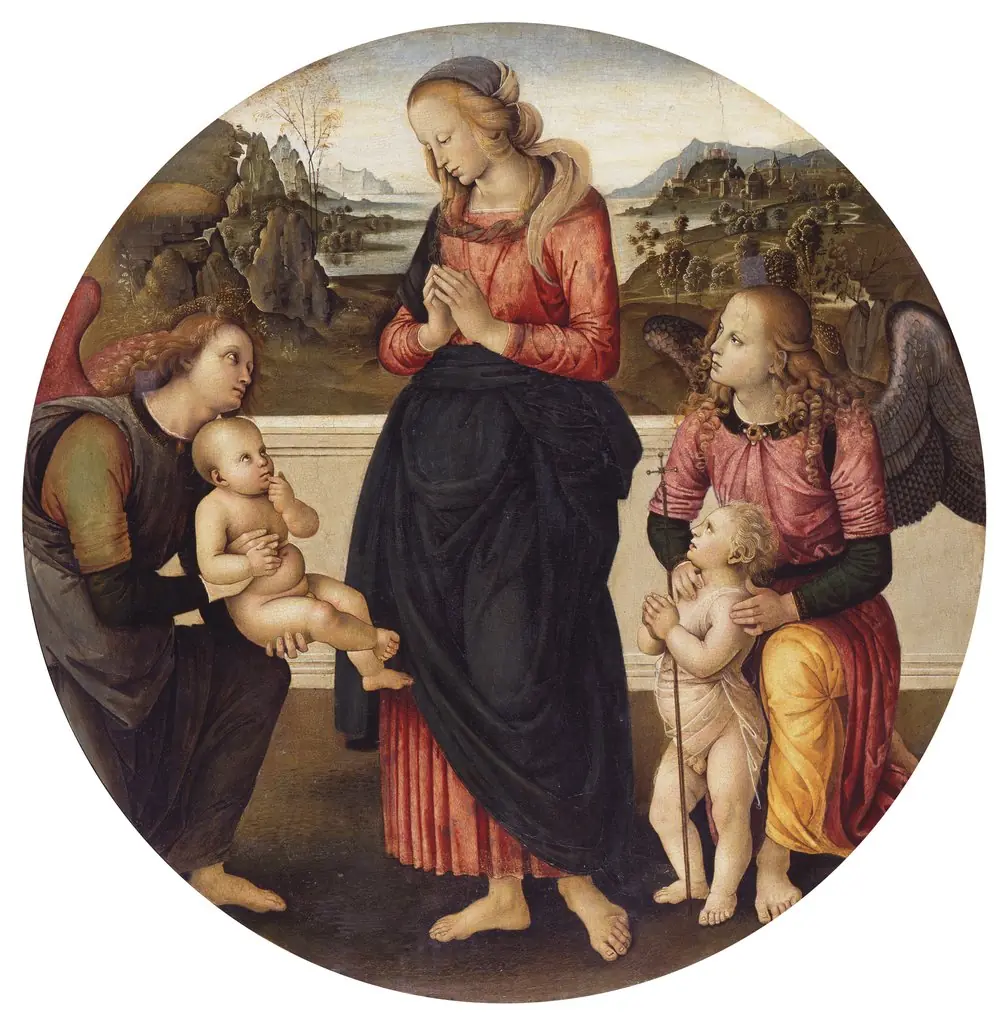 The Virgin Adoring the Child with John the Baptist as a Child and two Angels