Artwork
Madonna of the Pomegranate
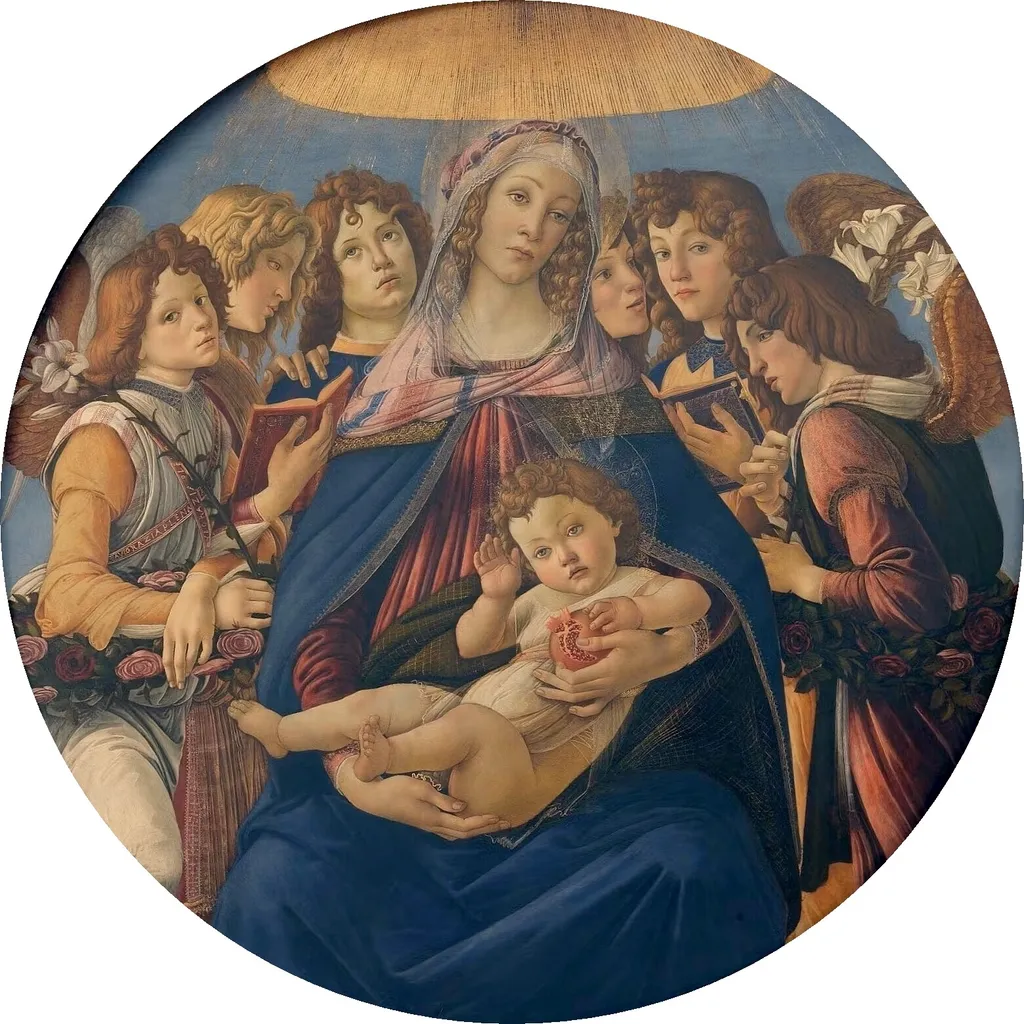
Madonna of the Pomegranate is a tempera painting by the High Renaissance artist Sandro Botticelli. It dates from 1494 and is held in the collection of the Uffizi Gallery.
About this work
Subject & Meaning
Additionally, the pomegranate represents fertility, abundance, and the unity of the Church, as its many seeds are contained within a single shell.
The painting depicts the Virgin Mary holding the Christ Child, surrounded symmetrically by six angels. The central figures jointly hold an open pomegranate, a key iconographic element. The fruit's red seeds symbolize the blood of Christ's Passion and foreshadow his future suffering and resurrection. Additionally, the pomegranate represents fertility, abundance, and the unity of the Church, as its many seeds are contained within a single shell. The angels flank the pair with white lilies and garlands of red and white roses; the latter allude to the Rosary and Mary's purity, while the red roses also reference the Passion. The melancholic expressions on the faces of Mary and Jesus serve as a reminder of the sorrow and torture the Child will endure, a theme known as Our Lady of Sorrows. A golden halo of light emanates above, signifying divine grace.
Technique & Style
The Madonna of the Pomegranate is executed in tempera on panel and takes the form of a tondo, a circular composition measuring 143.5 cm in diameter (Sources 2, 5, 6). Botticelli began with a careful freehand underdrawing in charcoal on the prepared panel before applying paint (Source 3). A key technical innovation in the work is the use of tempera grassa, in which egg yolk was modified with oil to yield a more transparent medium (Source 3).
Flesh tones are built up through thin opaque scumbles, with semi-transparent layers of whites, ochres, cinnabars, and red lakes superimposed to model pale, porcelain-like faces touched with faint pink on the cheeks, nose, and mouth; the Christ Child is rendered with more saturated cinnabar glazes and red lake accents (Source 3). The composition is strictly symmetrical, with three angels flanking each side of the central Virgin, and is unified by vertical shafts of golden light radiating from an oval aureole above the figures (Sources 3, 4, 6). The painting remains in its original carved wooden frame, decorated with gilded fleurs-de-lis on an azure ground (Source 4).
History & Provenance
The Madonna of the Pomegranate was created by Sandro Botticelli in 1487 as a tempera on panel tondo. According to a payment document recorded by Milanesi, the Magistrato dei Massai di Camera, an administrative body of the Florentine Republic, commissioned a tondo of the Madonna and Child in 1487 to decorate their Sala delle Udienze, located in the Palazzo Vecchio. The identification of that commission with the present painting was made in 1908 by the art historian Herbert Percy Horne, who recognized on the original carved frame, attributed to the workshop of Giuliano da Sangallo, the French fleur-de-lys on azure field, suggesting a public display celebrating the Medici alliance with France. The original payment document has not been located, which has led some scholars to propose alternative dates, ranging from before 1480 to after Botticelli's return from Rome around 1482. The painting is first securely documented in the 17th century as part of the collection of Cardinal Leopoldo de' Medici. After his death in 1675, it passed to the collection of the Grand Dukes of Tuscany, and it was transferred to the Uffizi Gallery in 1780, where it remains today. The Madonna of the Pomegranate is held in the Uffizi Gallery in Florence, where it has been part of the collection since 1780. Prior to this transfer, the work belonged to Cardinal Leopoldo de' Medici during the 17th century and entered the holdings of the Tuscan Grand Dukes following his death in 1675. The painting remains preserved in its original carved wooden frame, which features golden fleurs-de-lis on a blue background. Historical records indicate the work was likely commissioned in 1487 by the Massai di Camera magistrates for their Audience Hall, potentially located in the Palazzo Vecchio or Palazzo del Bargello. This identification relies on a payment document from 1487 and an analysis of the frame's heraldry by art historian Herbert Percy Horne in 1908.
Context
Scholars situate the *Madonna of the Pomegranate* within Botticelli’s mature Florentine period, aligning its 1487 commission for the Republic’s Massai di Camera with civic iconography linking grace and justice. The tondo’s formal rigor, symmetrical angels, measured light, and tempera grassa technique, reflects the artist’s assimilation of anatomical inquiry and contemporary studio practice, while its public placement in the Audience Hall framed the Virgin’s pomegranate as a sign of Christ’s Passion and Resurrection. Copies in Berlin, London, and Lyon attest to its pedagogical circulation, and later reception emphasized its restrained pathos and heraldic frame’s French fleur-de-lys, underscoring Medici diplomatic symbolism.
Legacy
The Madonna of the Pomegranate has been widely recognized as one of Botticelli’s most celebrated Marian images. Its symmetrical tondo format and refined use of tempera grassa became a touchstone for later Florentine painters, who produced numerous workshop replicas and variants in the sixteenth century, including copies now in Berlin, London, and Lyon.
By the seventeenth century, the painting entered the Medici collections and has remained in the Uffizi since 1780, anchoring its status as a canonical Florentine Renaissance icon. Art historians such as Herbert Percy Horne identified its public commission for the Florentine Republic’s Audience Hall, reinforcing its emblematic role in civic and religious iconography. Its heraldic frame with French fleurs-de-lys tied to Medici diplomacy further linked the work to civic virtue and justice, themes that echoed in later representations of civic Madonnas.
Own this work as a print
Artist & collection
Artist
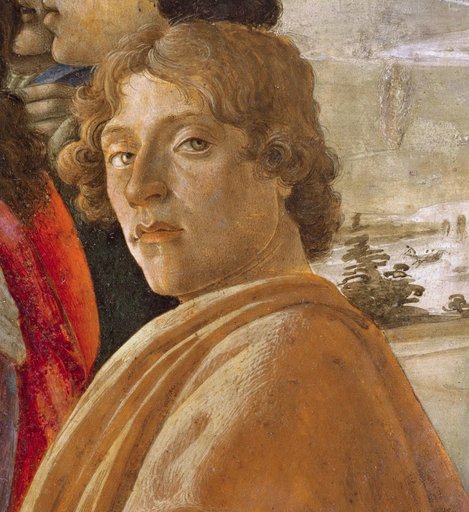
Alessandro di Mariano di Vanni Filipepi, better known as Sandro Botticelli or simply Botticelli, was an Italian painter of the Early Renaissance.

 Madonna of the Magnificat
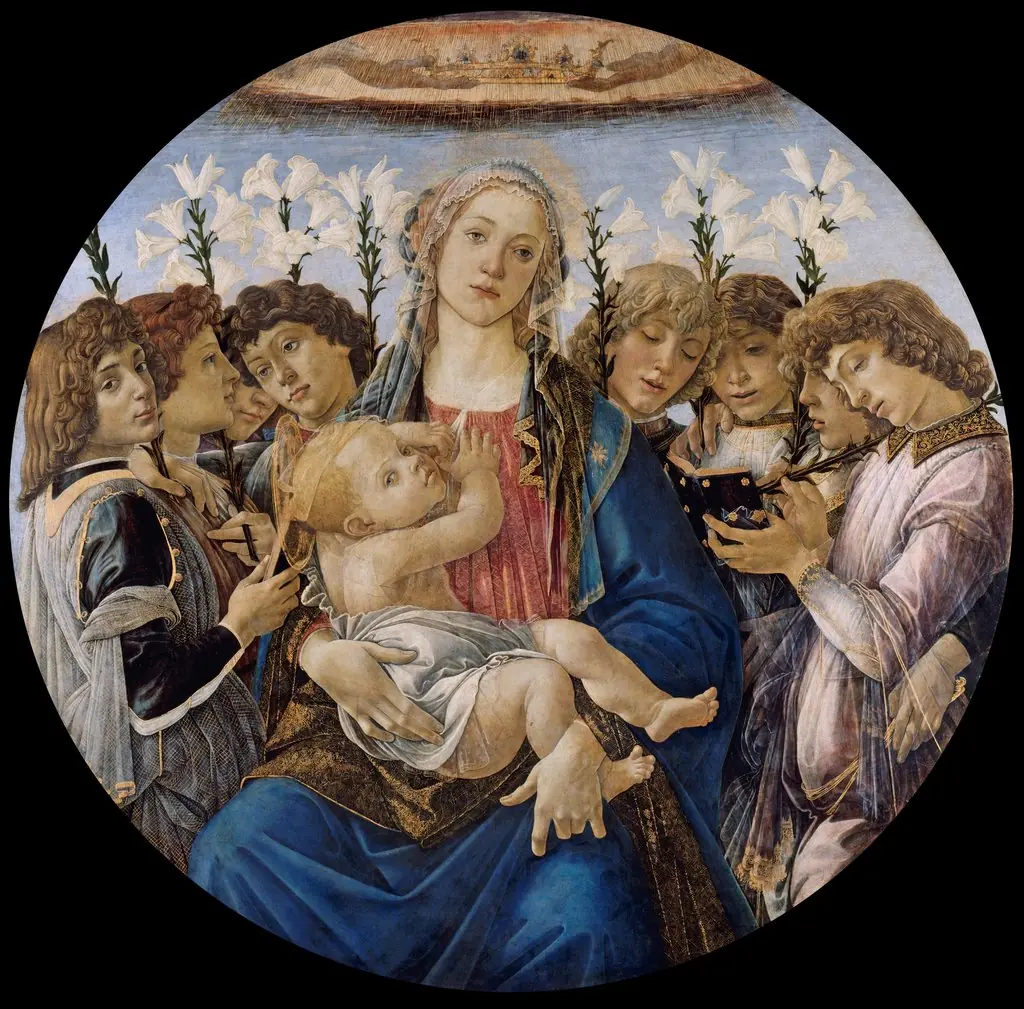 Mary with the Child and Singing Angels
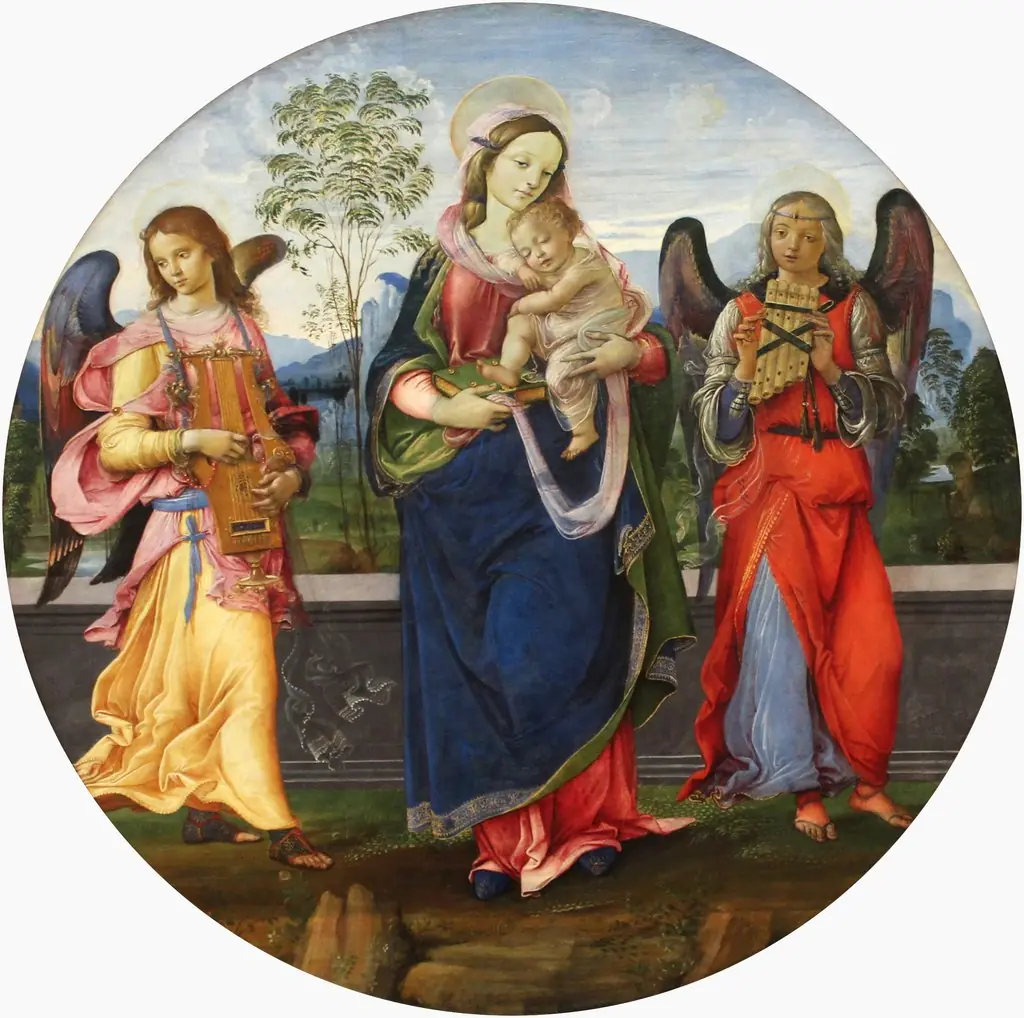 Madonna and Child with two angels playing music
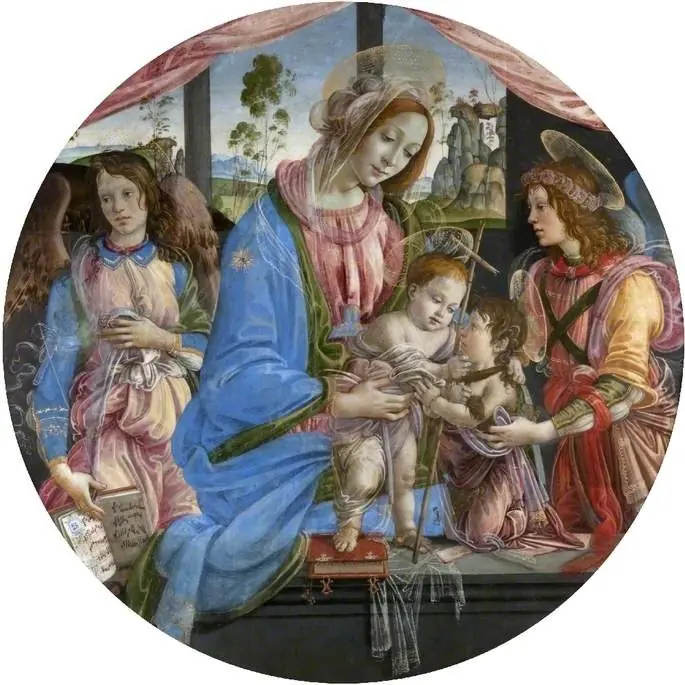 Virgin and Child with the Child Baptist and Two Angels
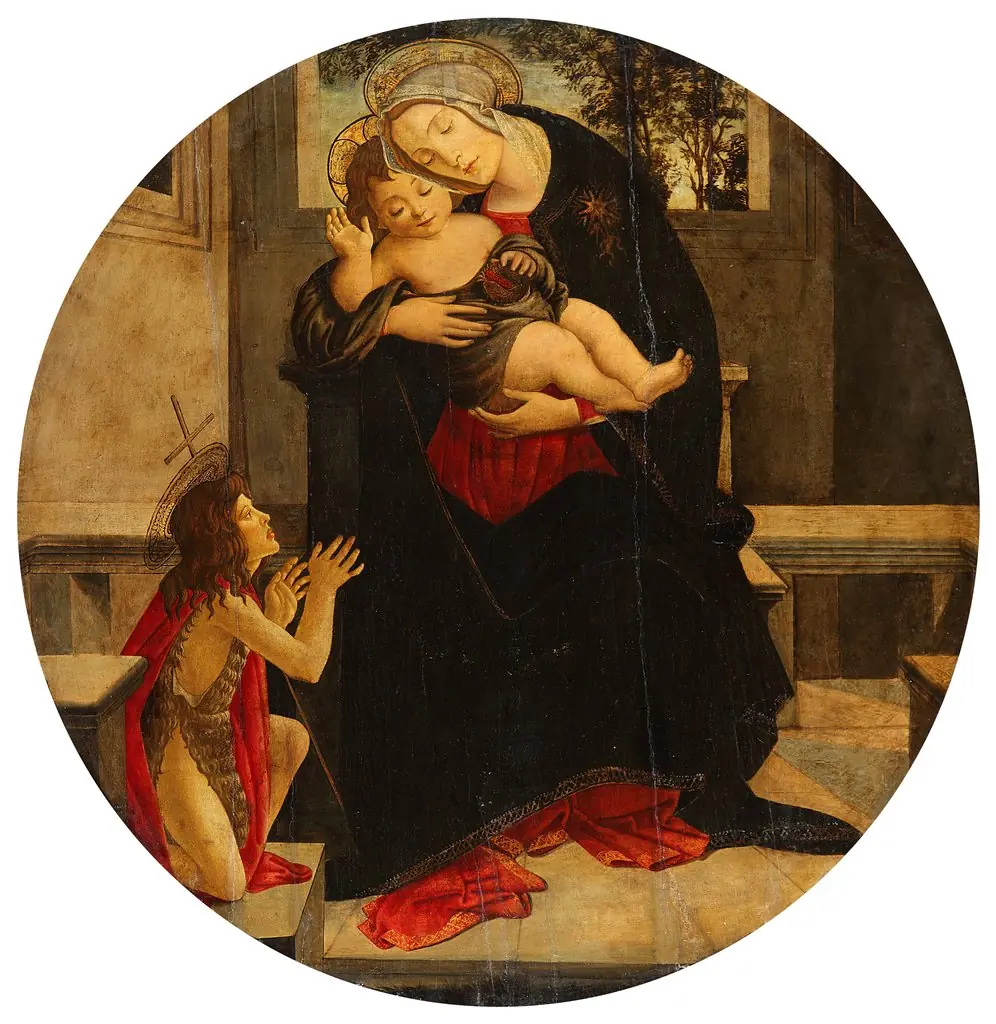 The Virgin and Child with the Young St. John (Tondo)
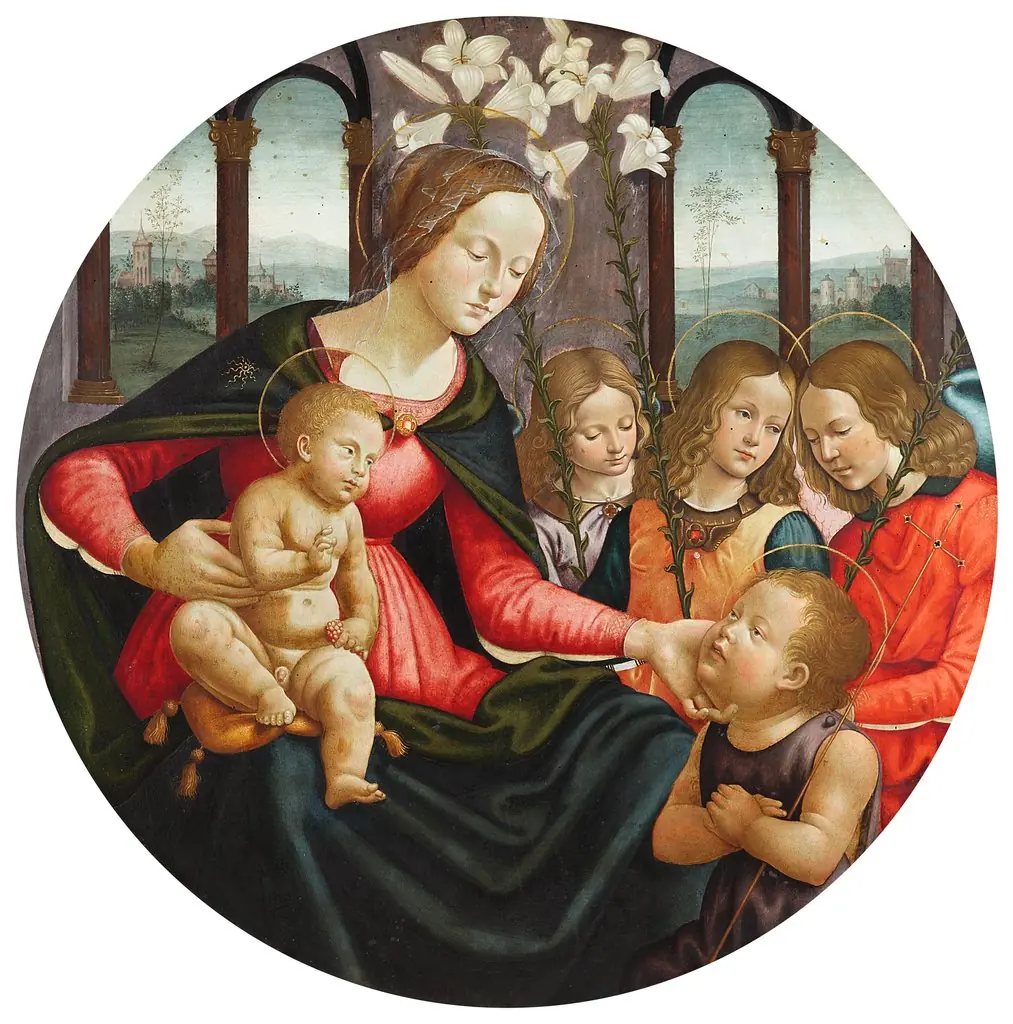 The Virgin and Blessing Child, Young St. John and three Angels
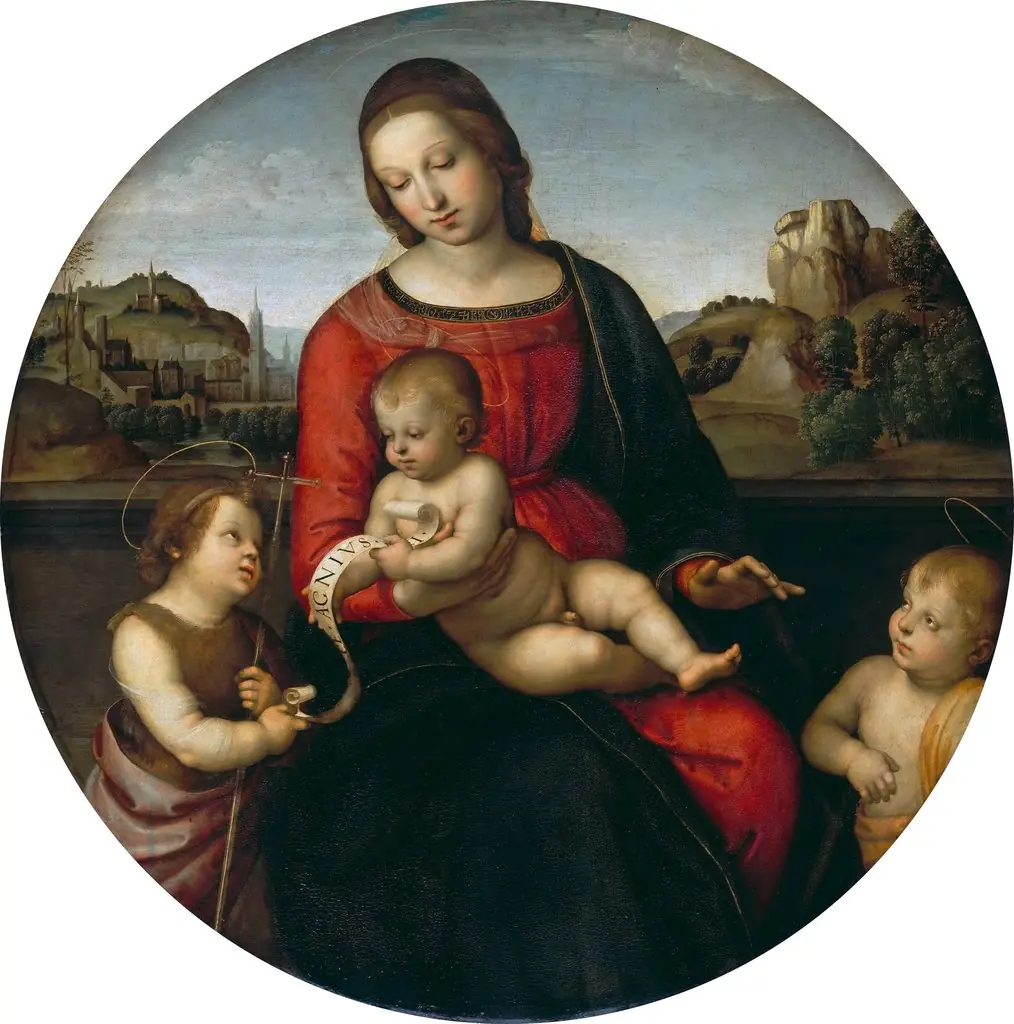 Terranuova Madonna
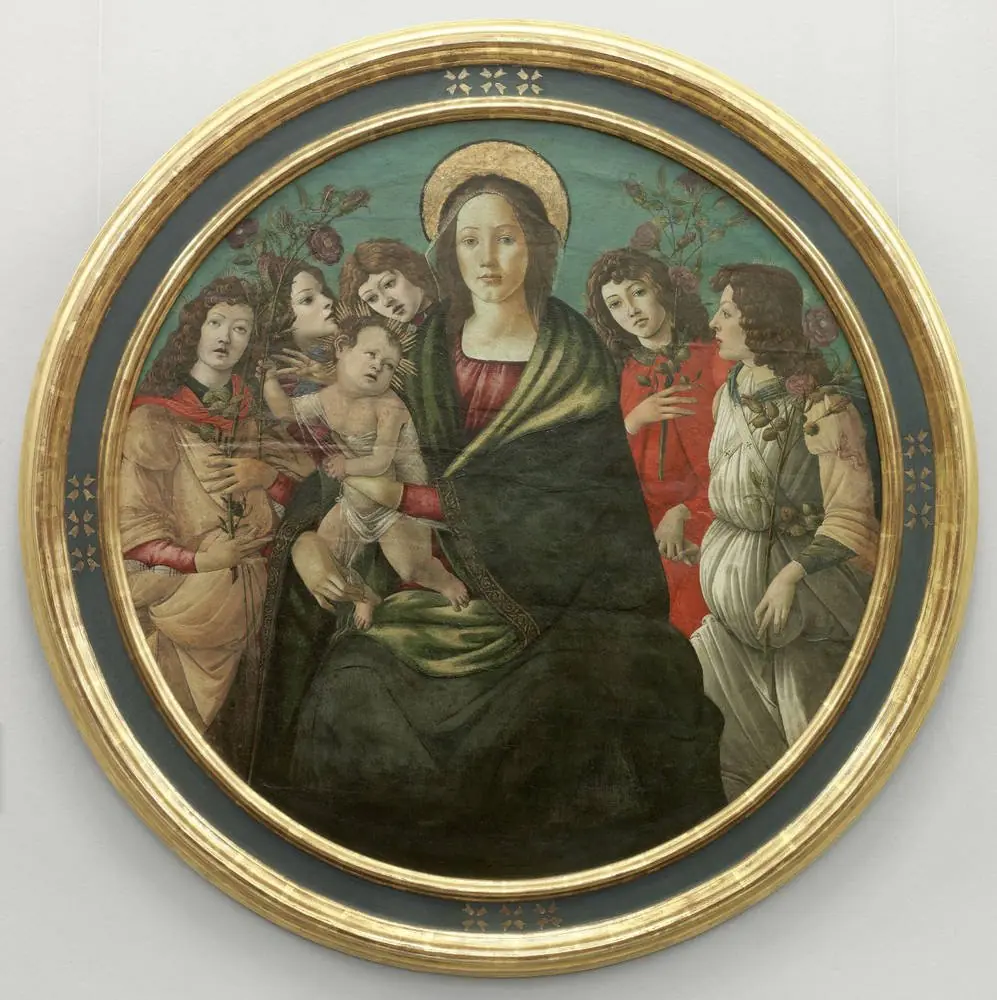 Maria mit dem Kind und Engeln
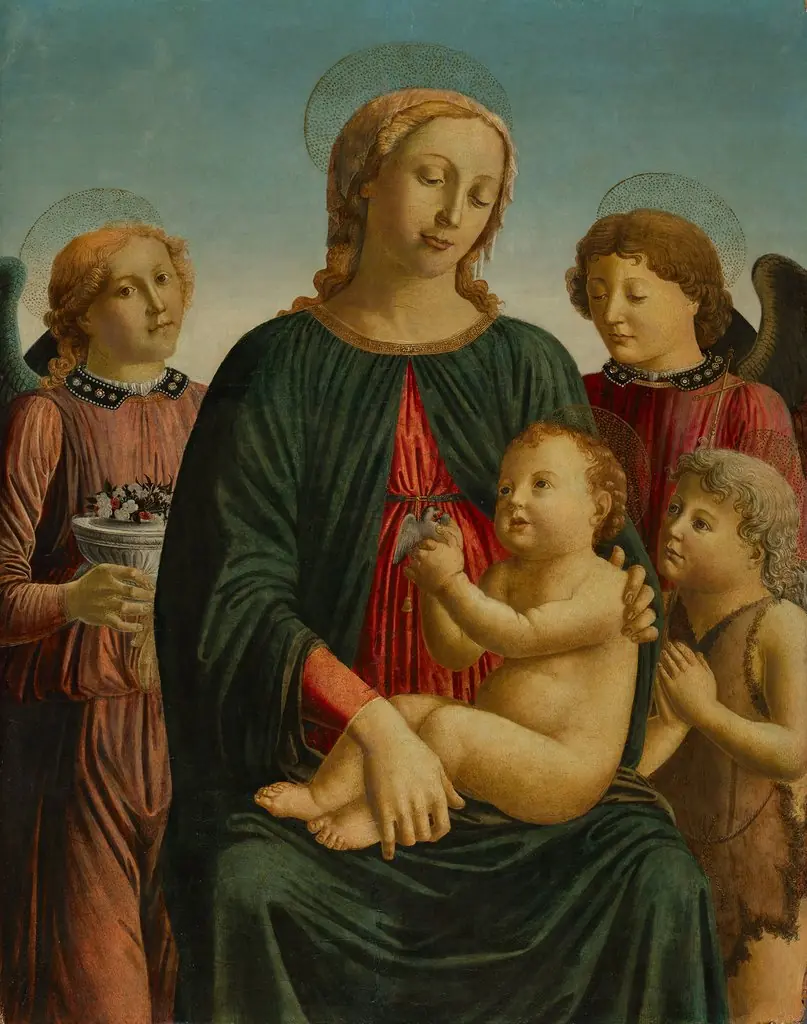 Mary with the Child, the Boy John Adoring the Child, and Two Saints
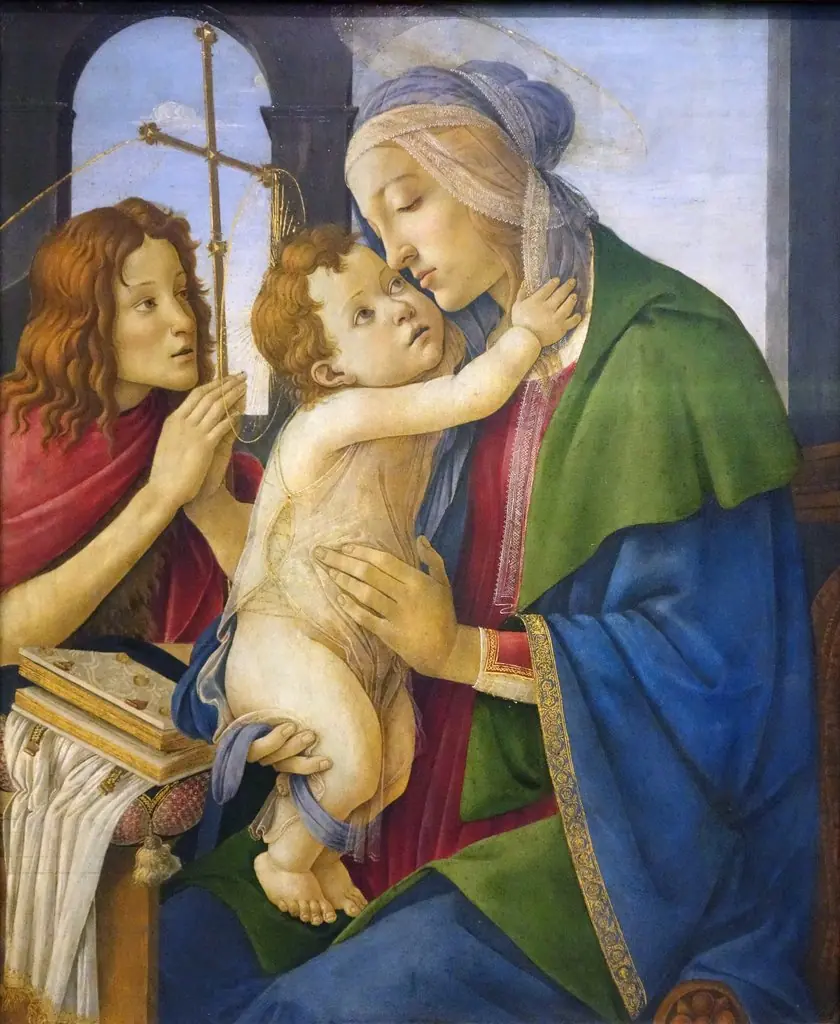 The Virgin and Child with the Young Saint John the Baptist
- Madonna of the Candelabra