Artwork
St Jerome
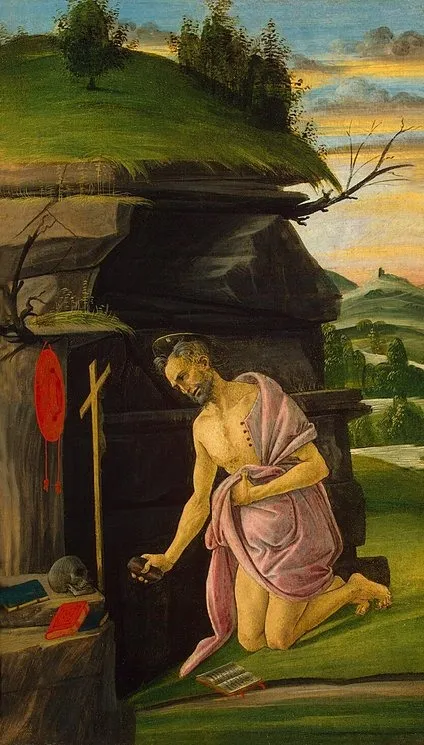
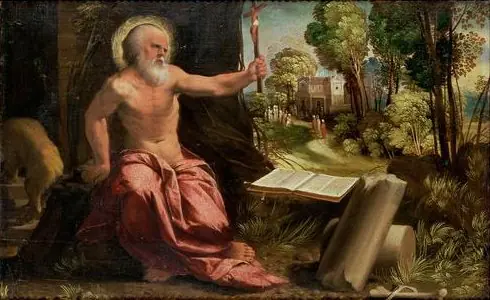
St Jerome is an unspecified painting by the Early Renaissance artist Sandro Botticelli. It dates from 1450 and is held in the collection of the Hermitage Museum.
About this work
Overview
The small scale and devotional nature of the image indicate it was intended for private religious reflection rather than public ecclesiastical display.
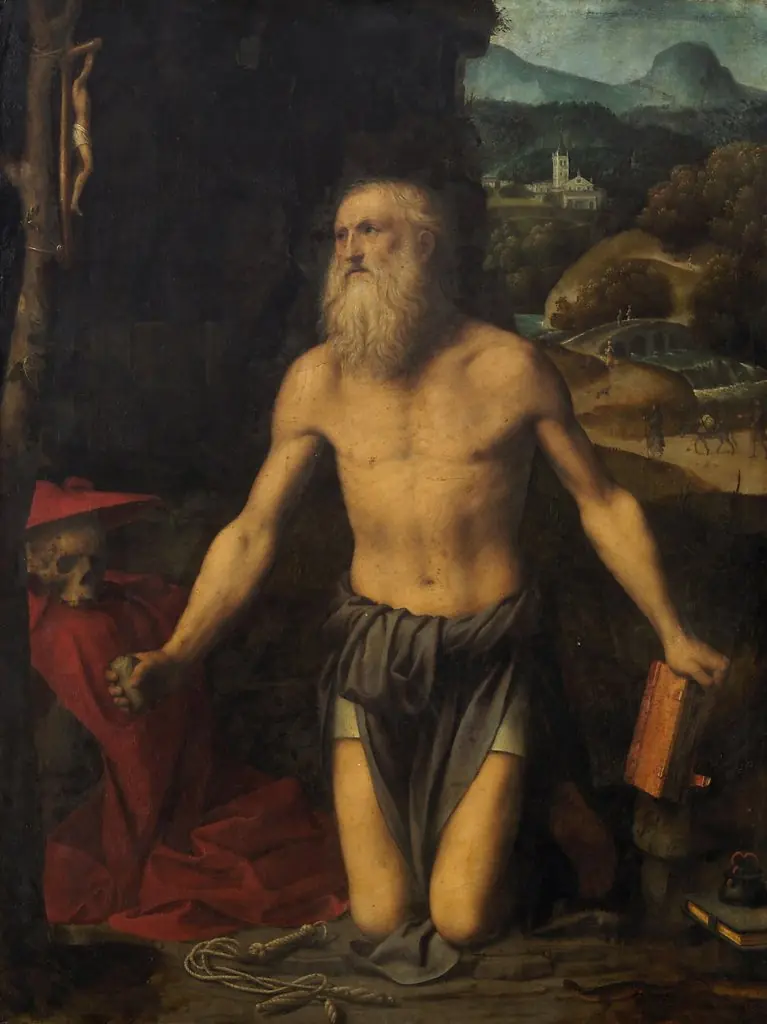
St Jerome is a religious painting by the Italian Early Renaissance master Sandro Botticelli. Created likely between 1498 and 1505, the work depicts the saint in a contemplative, ascetic state within a rocky wilderness. The painting was executed in tempera, originally on a wood panel, and measures 44.5 by 26 centimeters. It is currently held in the State Hermitage Museum in Saint Petersburg, Russia. The small scale and devotional nature of the image indicate it was intended for private religious reflection rather than public ecclesiastical display.
Subject & Meaning
The painting portrays Jerome of Stridon, the revered theologian and translator of the Bible into Latin, withdrawn to the desert for spiritual reflection. He appears as a gaunt, kneeling figure with a balding head, gray hair, and a beard, his head bowed and eyes cast downward. A thin golden halo encircles his head, signifying his sanctity. He wears a modest pink cloth draped around his lower body and left shoulder, emphasizing his asceticism. His right hand extends toward a small stone, an instrument of self-mortification, while his left hand presses against his chest in penitence. Surrounding him are traditional iconographic attributes: a wooden cross, a red cardinal's hat with dangling elements, a skull, and books, both closed and open, which reference his scholarly translation of the scriptures. A rough stone structure with a dark opening serves as his shelter, situating his spiritual struggle within a remote, rugged landscape.
Technique & Style
Botticelli executed the work using tempera, a medium typical of the Italian Renaissance, applying it with a smooth surface and fine detail that resembles tempera-like precision. The composition features clear contours and gradual tonal modeling, defining the figure and the natural environment with sharp delineation. Light falls evenly from the left, illuminating the saint and the foreground elements while leaving the cave interior deeply shadowed. The background reveals a meticulously rendered landscape of rolling green hills, scattered trees, a winding river, and distant mountains beneath a sky streaked with yellow and blue. The painting was originally executed on a wood panel, though it has since been transferred to canvas, a process that has preserved the delicate handling and precise outlining characteristic of Botticelli's approach.
History & Provenance
The exact date of the painting's creation remains uncertain, with scholarly estimates placing it between 1498 and 1505. The work entered the historical record as part of the Stroganov collection in Russia. It remained in the Stroganov Palace until 1922, when it was removed from the collection during the Soviet reorganization of private estates. Following its departure from the Stroganov Palace, the painting entered the state collections and was ultimately accessioned into the State Hermitage Museum in Saint Petersburg, where it resides today.
Context
Botticelli created this work during a period of intense psychological and religious turmoil in Florence, largely driven by the preaching of Fra Girolamo Savonarola. From 1490 onward, Savonarola's calls for penance and his apocalyptic warnings deeply affected the hypersensitive Botticelli, steering his art toward a severe, introspective religiosity. This shift is evident in the austere, anguished vision of the penitent Jerome, which contrasts with the refined classical themes of Botticelli's earlier career. The painting reflects the broader cultural pivot away from Medici patronage and toward a more austere spiritual focus, a crisis exacerbated by the artist's personal financial and familial disputes during the 1490s. Scholarly attention, including studies by Cristina Acidini Luchinat and André Chastel, has frequently situated this work within Botticelli's late output, emphasizing its tormented loneliness and mystical tension.
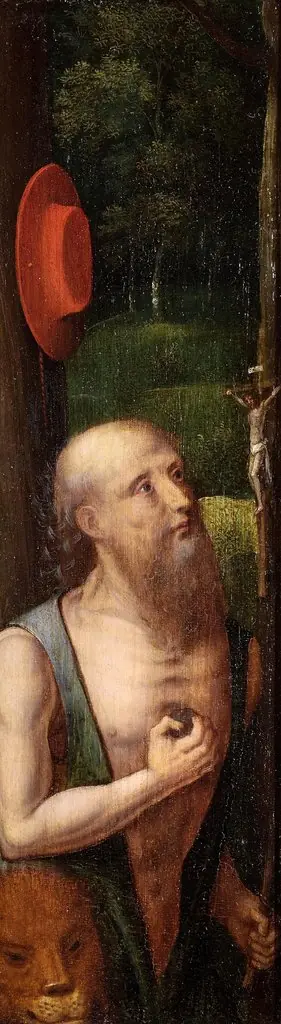
Artist & collection
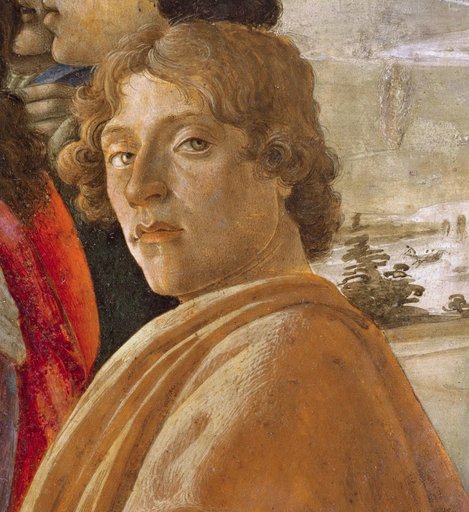
Artist
Alessandro di Mariano di Vanni Filipepi, better known as Sandro Botticelli or simply Botticelli, was an Italian painter of the Early Renaissance.

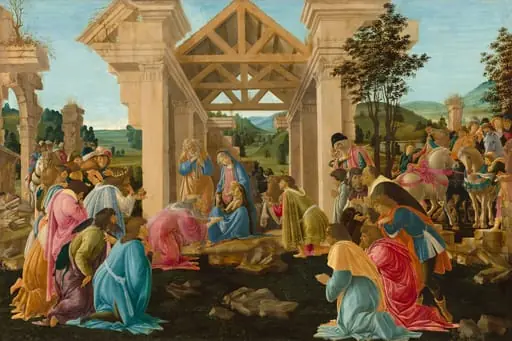
 Saint Jerome
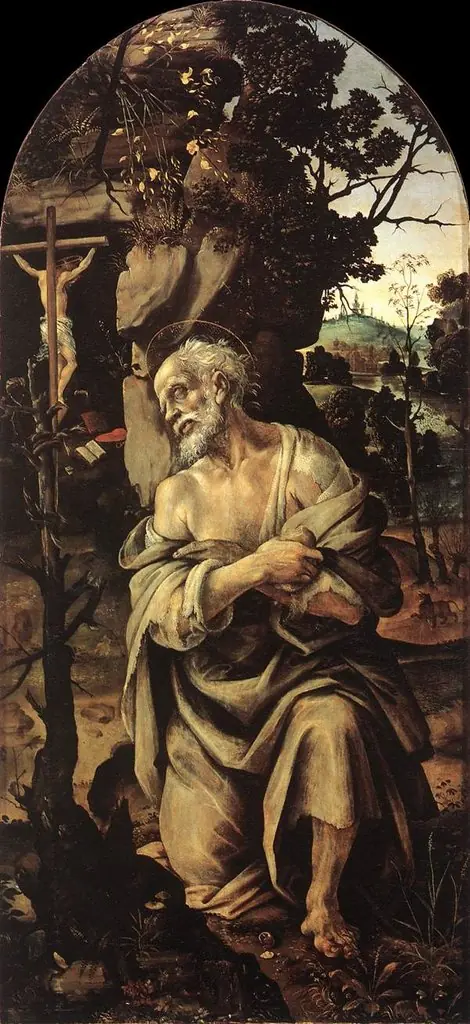 Saint Jerome
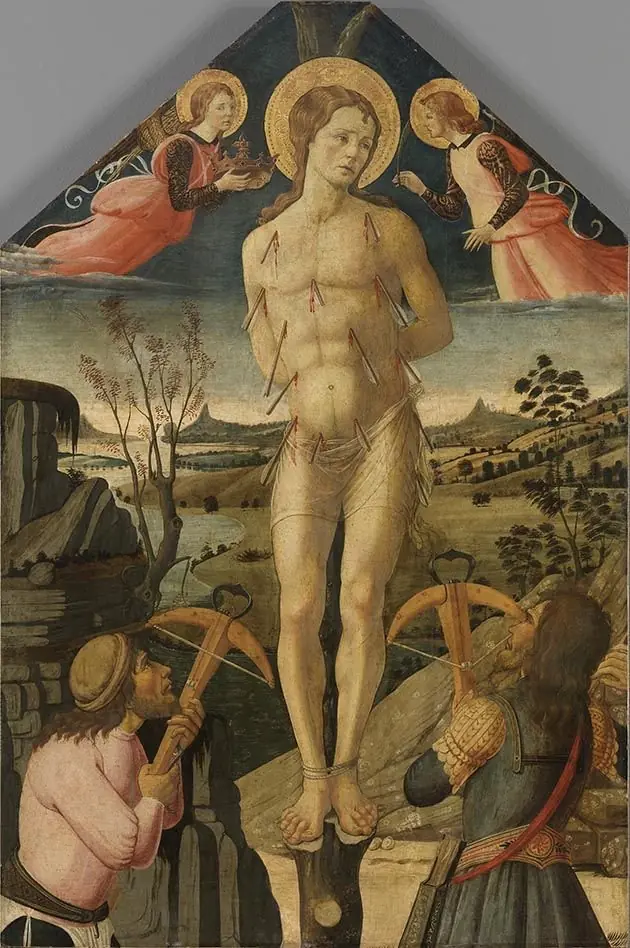 The martyrdom of Saint Sebastian
 St Jerome and St Francis; reverse, Mary Magdalene embracing The Cross
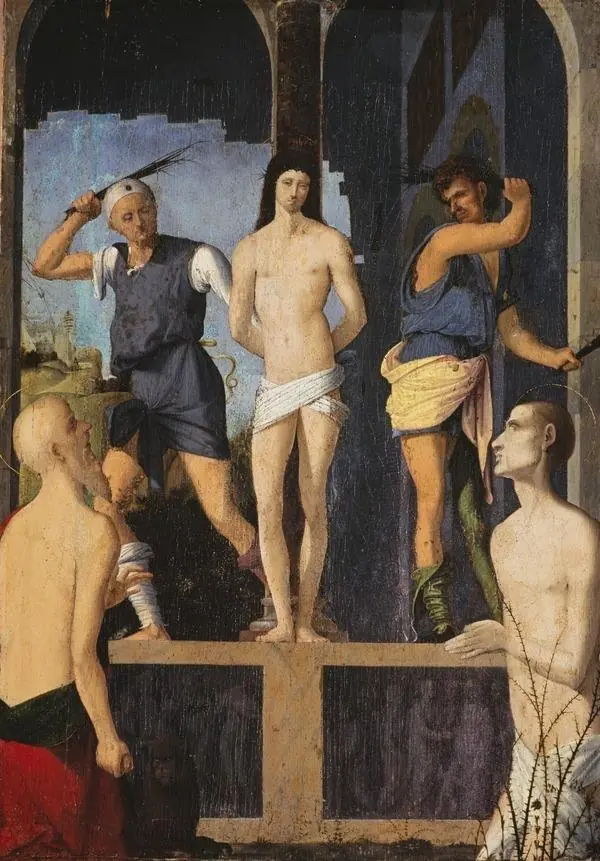 The Scourging of Christ with Saints Jerome and Benedict
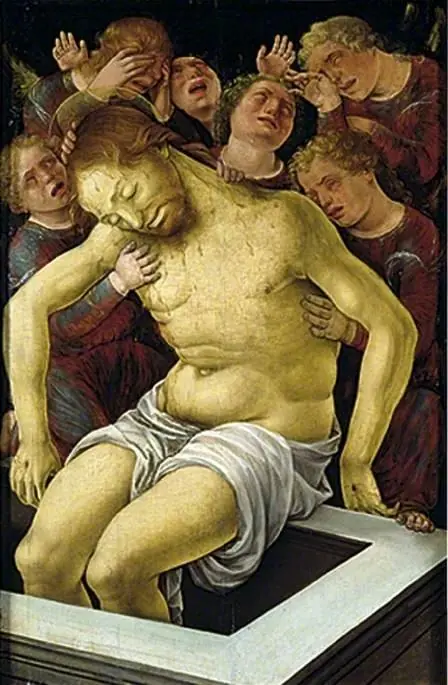 The dead Christ supported by mourning angels
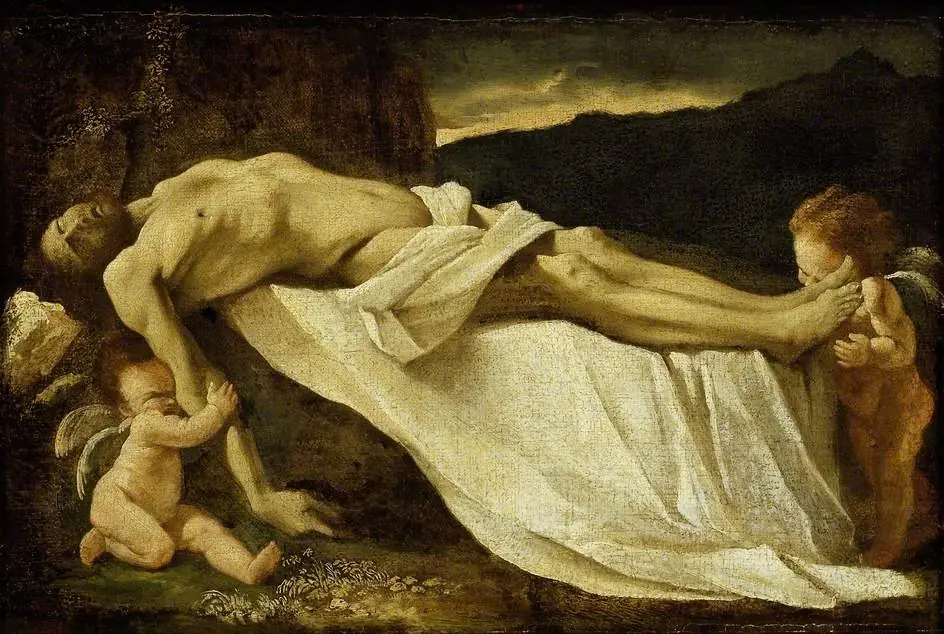 The Dead Christ mourned by Angels
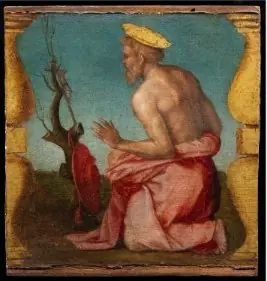 Saint Jerome
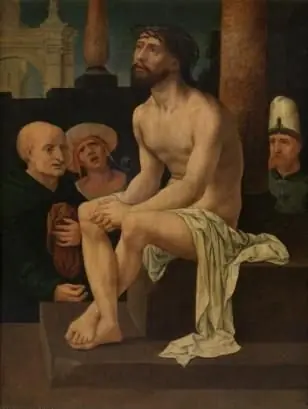 Christ sitting on the Cold Stone
 The Resurrection
 Saint Jerome
- St. Jerome