Artwork
Man with a Hoe
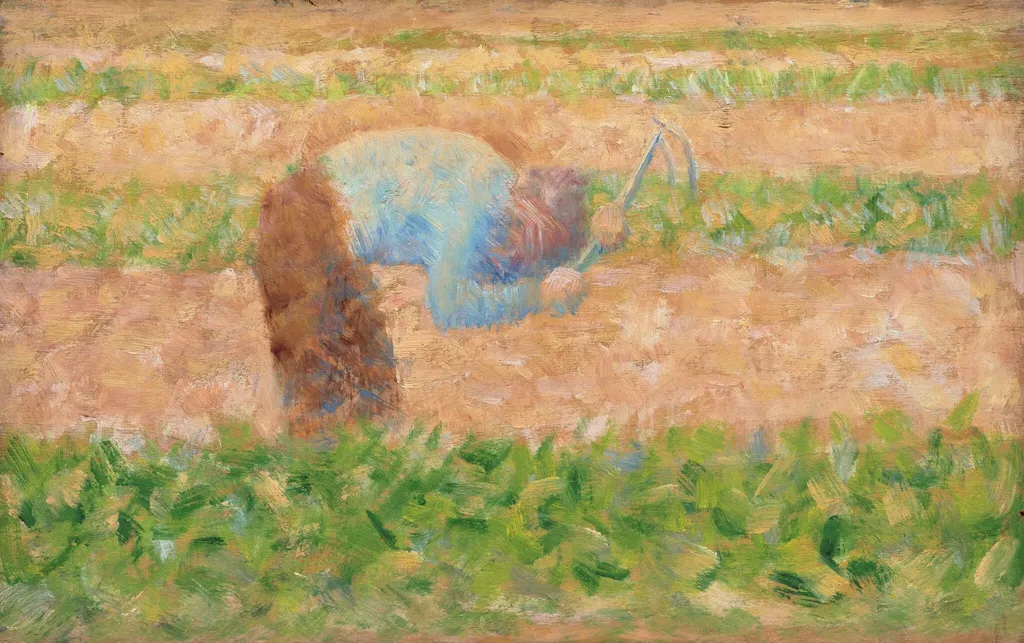
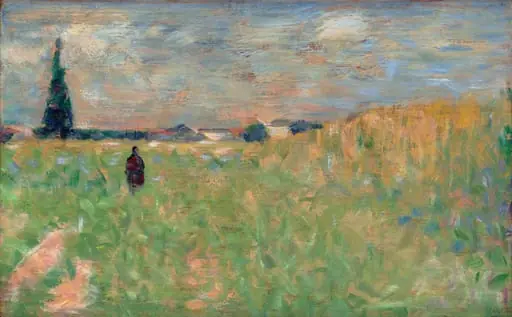
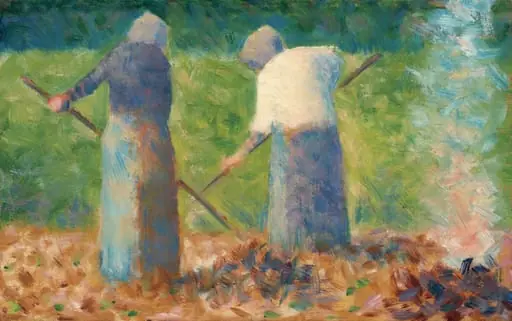
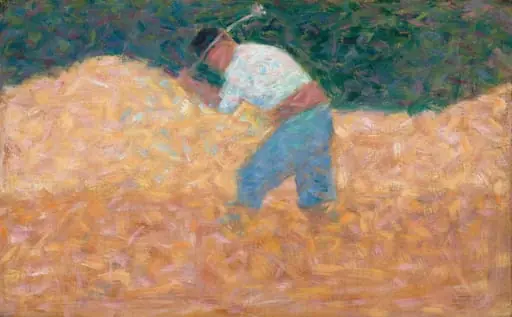
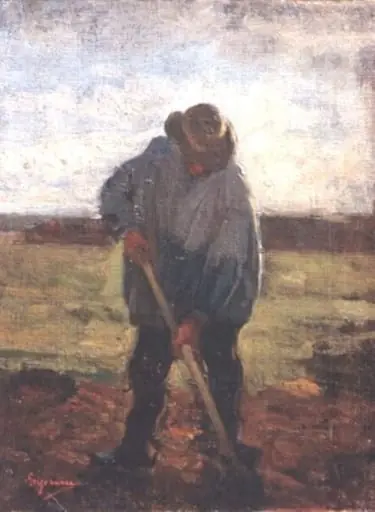
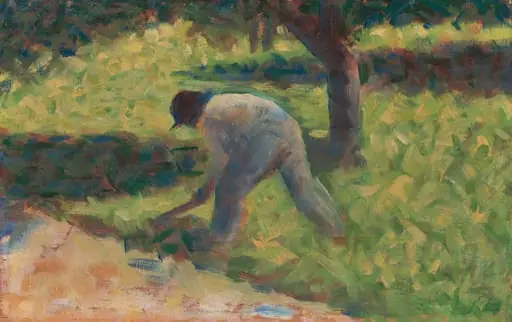
Man with a Hoe is an oil painting by the Impressionist artist Georges Seurat. It dates from 1882 and is held in the collection of the National Gallery of Art.
About this work
Technique & Style
Seurat applied his characteristic pointillist technique, building form and tonal variation through distinct dots of pure color rather than blended brushstrokes.
The painting is executed in oil on a wooden panel, measuring approximately 15.88 centimeters in height by 24.77 centimeters in width. Seurat applied his characteristic pointillist technique, building form and tonal variation through distinct dots of pure color rather than blended brushstrokes. This method creates a luminous surface where optical mixing defines depth and texture.
The handling of light and shadow follows the structured logic of divisionism, with each stroke placed deliberately to maximize vibrancy when viewed up close. The work’s condition remains stable, showing no significant degradation in the paint layer or support, consistent with its careful preservation at the National Gallery of Art.
History & Provenance
Georges Seurat painted Man with a Hoe in 1882 using oil on wood panel (15.88 cm x 24.77 cm). The work entered the collection of Paul Mellon of Upperville, Virginia, and was bequeathed to the National Gallery of Art in Washington, D.C., in 1999, with a life interest granted to his wife Rachel Lambert Mellon (1910-2014).
Man with a Hoe is held by the National Gallery of Art in Washington, D.C., where it entered the collection as part of the bequest of Paul Mellon (1907–1999) of Upperville, Virginia, in 1999, with a life interest retained by his wife, Rachel Lambert Mellon (1910–2014). The work, an 1882 oil on wood panel, has remained in the NGA's holdings since the termination of Mrs. Mellon's life interest.
No exhibition history is documented in the available sources.
Legacy
Man with a Hoe exerted significant posthumous influence as a symbol of modernist social realism. Though created in 1882, the painting's stark portrayal of labor resonated with later artists and movements advocating for agrarian subjects. Its inclusion in major collections like the National Gallery of Art cemented its institutional recognition, contributing to scholarly reassessments of Seurat's broader impact beyond pointillism.
The work's legacy is anchored in its representation within key American art institutions, particularly through bequests that preserved it in the public domain.
Overview
Georges Seurat’s early work Man with a Hoe, executed in oil on a wooden panel around 1882, presents a solitary agricultural figure. The composition centers on a laborer bent over a furrow, his back turned to the viewer, set against a muted landscape of grass and earth. The painting’s modest scale and restrained palette emphasize the everyday nature of the scene.
Subject & Meaning
The canvas captures a moment of manual toil: a man in a blue shirt and brown trousers works the soil with a hoe. By omitting the face, Seurat universalizes the figure, allowing the viewer to contemplate the dignity of rural labor. The tranquil posture and still surroundings suggest a quiet rhythm inherent to agrarian life.
Own this work as a print
Artist & collection
Artist
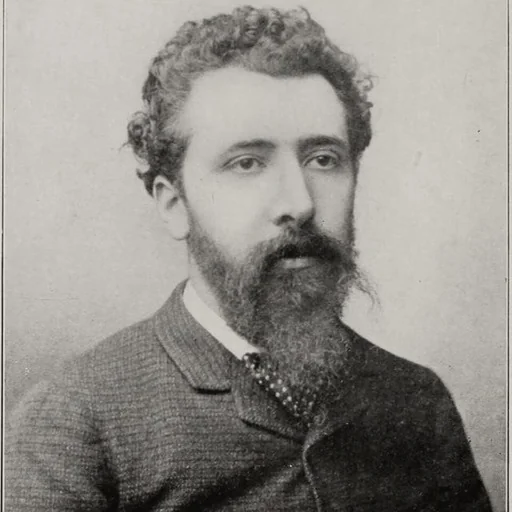
Georges Pierre Seurat (UK: SUR-ah, -ə, US: suu-RAH; French:; 2 December 1859 – 29 March 1891) was a French post-Impressionist artist.