Artwork
Diana auf der Jagd (angeblich)
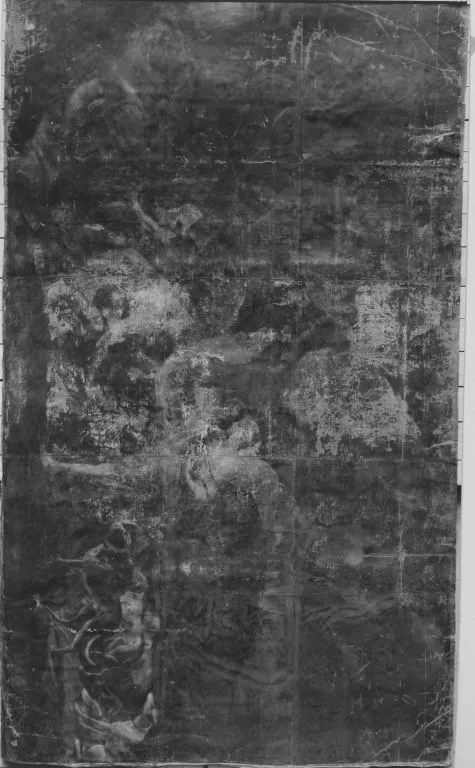
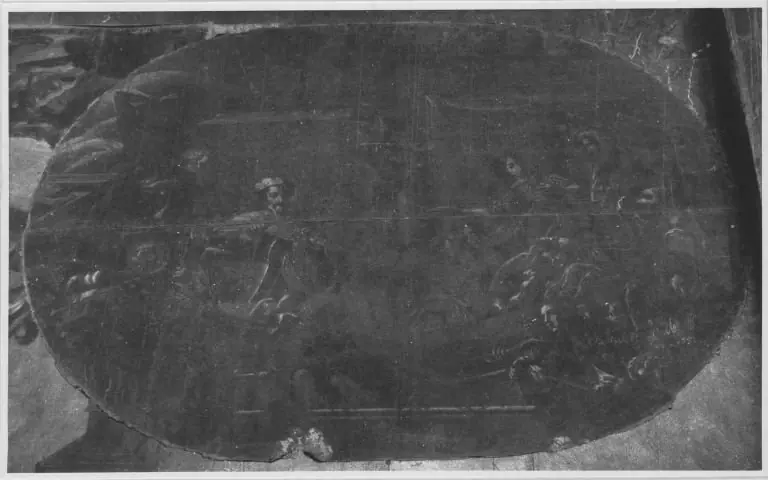
Diana auf der Jagd (angeblich) is an unspecified painting by the Early Baroque Italian artist Simon Vouet. It dates from 1619 and is held in the collection of the Bavarian State Painting Collections. Created in 1619, this canvas presents a nocturnal tableau centered on the goddess Diana.
About this work
Subject & Meaning
Created as a mythological painting, the work identifies the central figure explicitly as Diana, aligning with the genre's focus on classical narratives.
The artwork depicts the goddess Diana in the context of a mythological hunting scene. Created as a mythological painting, the work identifies the central figure explicitly as Diana, aligning with the genre's focus on classical narratives. The title, which translates to "Diana on the Hunt," underscores the subject's primary activity and role within the composition.
As a representation of the huntress goddess, the piece embodies the iconography associated with Diana's domain over nature and the chase.
History & Provenance
The painting Diana auf der Jagd, attributed to Simon Vouet, was created in 1619 and is classified as a mythological painting. It was acquired by the Bavarian State Painting Collections and is presently housed in the Alte Pinakothek, where it remains part of the institution's holdings.
The work entered the collection of the Bavarian State Painting Collections and has been exhibited there since its acquisition, reflecting a continuous ownership chain under the museum's stewardship.
The painting Diana auf der Jagd (alleged) by Simon Vouet, dated 1619, is housed in the Bavarian State Painting Collections at the Alte Pinakothek in Munich. It appears in the institution's catalog and has been exhibited there as part of its permanent display of mythological paintings.
The work is cataloged with a height of 390 cm and width of 640 cm, reflecting its large-scale format.
No further exhibition history beyond its display at the Alte Pinakothek is documented in the sources.
Overview
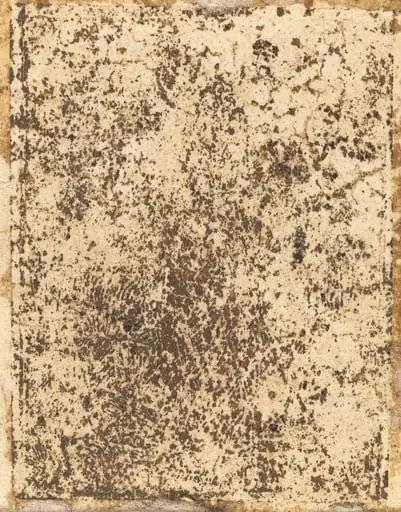
Created in 1619, this canvas presents a nocturnal tableau centered on the goddess Diana. The composition is dominated by deep shadows, with faint, luminous forms emerging from the darkness, giving the impression of figures caught in fleeting motion. The overall effect is one of ambiguity, as the outlines of bodies and faces dissolve into the surrounding gloom.
Technique & Style
Executed in the early Baroque idiom, the painting employs pronounced chiaroscuro, contrasting an almost black background with soft, backlit glows that delineate the forms. The handling reflects Vouet’s assimilation of Italian Baroque practices acquired during his years in Italy, emphasizing dramatic lighting and a sense of movement within a restrained palette.
Context
At the time of its creation, Vouet was instrumental in introducing Baroque aesthetics to French artistic circles. This painting exemplifies the transitional phase between the lingering Mannerist tendencies of the late Renaissance and the emerging dynamism of Baroque, marking a pivotal moment in the evolution of French visual culture.
Artist & collection
Artist
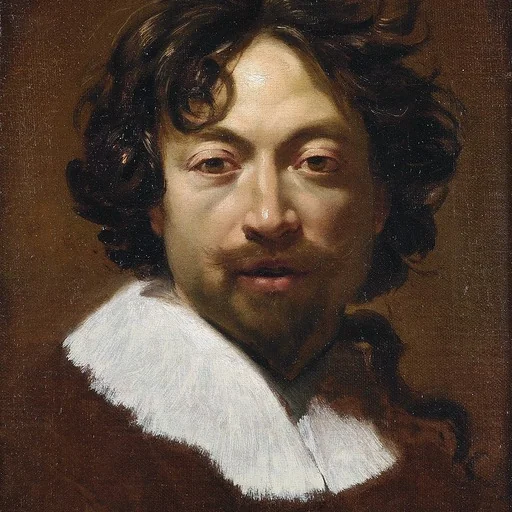
Simon Vouet (French pronunciation:; 9 January 1590 – 30 June 1649) was a French painter who studied and rose to prominence in Italy before being summoned by Louis XIII to serve as Premier peintre du Roi in France.

- Ein Wildschwein
 Kurfürst Maximilian I. von Bayern und Henriette Adelaide
 Schlachtenbild (zugeschrieben)
 Pluto entführt Proserpina (zugeschrieben)
 Untitled
 Erstürmung eines Kastells
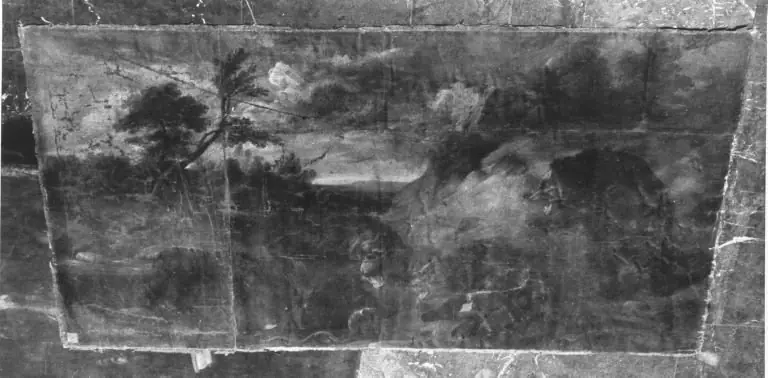 Bear Family with Snake
 Saint George
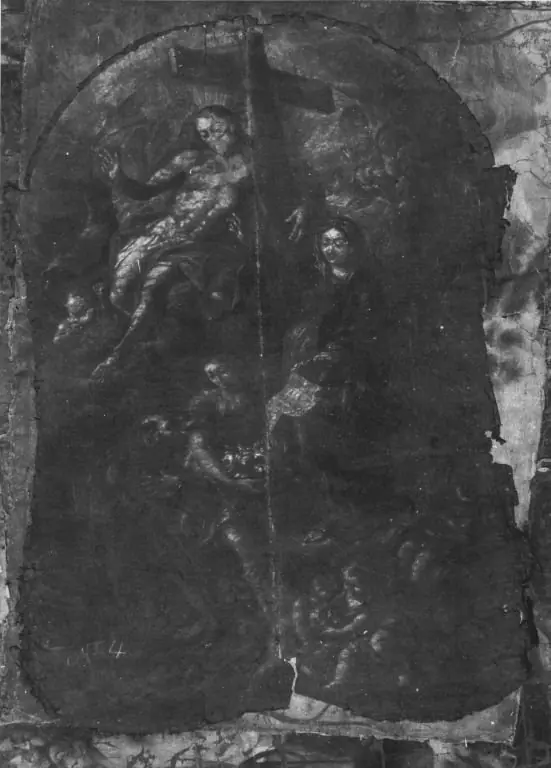 Vision des hl. Franziskus
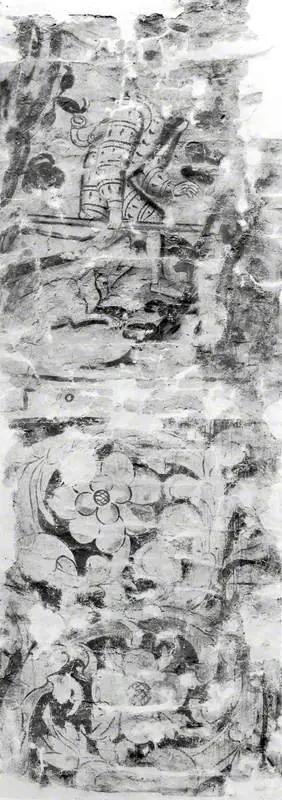 Man (possibly Actaeon) and a Hound Running (from Stodmarsh Court, Kent)
 Saint Catherine
 Icoana de factură catolică îl reprezintă pe sfântul Teodor Tiron (306 d. Hr) sărbătorit pe 17 februarie.Sf. Teodor înveșmântat ca oștean: coif cu pene, armura și mantie roșie. În dreapta ține un coif cu stânga sulița. În planul doi o biserică catolică. Pe fondul alb, de o parte și alta a sfântului câte tulpină cu o floare roșie. Cromatica: predomină roșul(inclusiv ca desen) albastru, bleu, negru, maro, auriu, verde deschis, verde închis, fond alb.Ramă îngustă, patru stinghiii îmbinate oblic la colțuri.