Artwork
Anna Maria Brodeau Thornton (Mrs. William Thornton)
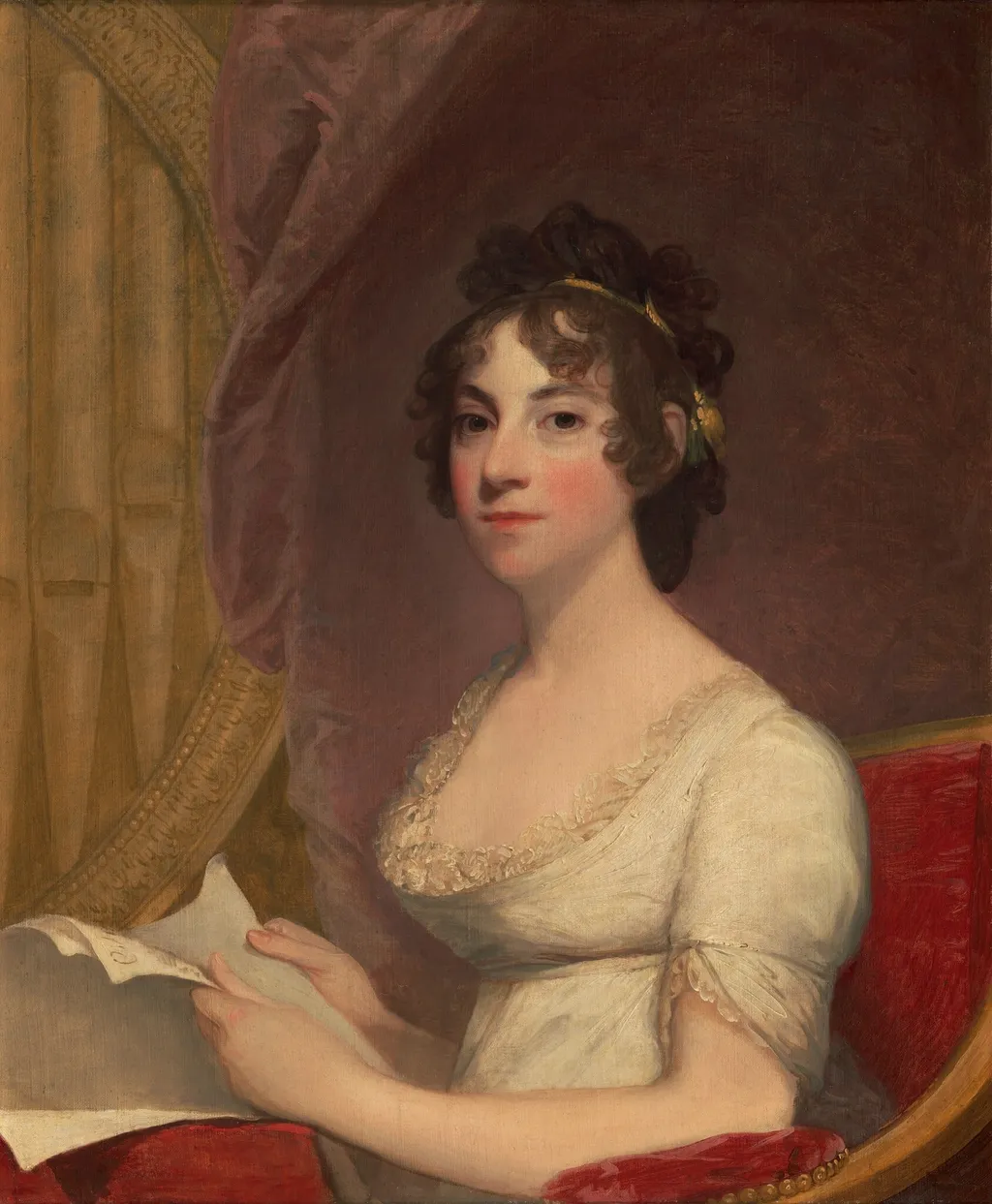
Anna Maria Brodeau Thornton (Mrs. William Thornton) is an oil painting by the American Impressionist artist Gilbert Stuart. It dates from 1804 and is held in the collection of the National Gallery of Art.
About this work
Technique & Style
The composition reflects the formal conventions of elite portraiture, emphasizing a composed pose and restrained palette.
The portrait is executed in oil on canvas, a standard support for early‑19th‑century portraiture that allowed the sitter’s likeness to be rendered with subtle tonal modulation and fine detail. The work measures approximately 73 cm by 61 cm, a size typical of full‑length studio portraits of the period. Stuart’s technique employed layered glazes of oil paint to build depth in the flesh tones and to capture the texture of the sitter’s dress, while the canvas support provided a smooth, taut surface for precise brushwork. The composition reflects the formal conventions of elite portraiture, emphasizing a composed pose and restrained palette.
History & Provenance
The work titled Anna Maria Brodeau Thornton (Mrs. William Thornton) is an oil on canvas portrait painted by Gilbert Stuart in 1804. It was created as a likeness of Anna Thornton, wife of Dr. William Thornton, and entered the Thornton family estate following her death in 1865. The painting passed through several generations of descendants, Adelaide Thomason Talbot, her daughter Mary Louisa Talbot, Virginia Collins Miller, and Anna Thornton Miller Murray, before being sold in January 1922 via Mary H. Sully to Art House, Inc., then to Thomas B. Clarke and subsequently through M. Knoedler & Co. to the A. W. Mellon Educational and Charitable Trust, which gifted it to the National Gallery of Art in 1942.
The portrait is currently held in the collection of the National Gallery of Art in Washington, D.C., specifically as part of the Andrew W. Mellon collection. The work entered the museum in 1942 as a gift from the A. W. Mellon Educational and Charitable Trust. This transfer followed its acquisition by the Trust in January 1936 from the estate of Thomas B. Clarke, who had purchased it in 1922.
While the painting's provenance traces its descent through the sitter's family from 1865 until its sale in the early twentieth century, specific inventory or accession numbers are not provided in the available records. The sources do not list any public exhibitions for this work prior to its accession by the National Gallery of Art.
Overview
Painted in 1804 by Gilbert Stuart, this oil on canvas portrait depicts Anna Maria Brodeau Thornton, the wife of architect William Thornton. The work presents the sitter in a three-quarter length view, seated in a wooden chair against a dark, neutral background that emphasizes her figure. She wears a high-waisted white muslin gown typical of the Federal period, accented with a sash and delicate jewelry.
In her left hand, she holds an open book, a common attribute in portraiture of the era used to signify literacy and intellectual refinement. Stuart renders the fabric with loose, confident brushstrokes that capture the texture of the muslin while maintaining a sense of movement. The face is modeled with the artist's characteristic attention to psychological presence, avoiding idealized stiffness in favor of a composed, direct gaze.
Created during Stuart's mature period in Washington, D.C., the painting reflects his ability to blend the grand manner of European portraiture with a distinct American sensibility. It stands as a significant document of the social elite in the early United States capital, capturing the dignity and domestic refinement of a prominent figure in the city's intellectual circles.
Subject & Meaning
The painting features Anna Maria Brodeau Thornton, depicted in a seated pose, holding a book. This detail, along with her refined dress, suggests an educated and cultured individual, characteristic of women of her social standing during the early 19th century. The portrait serves as a visual record of her identity and position within her contemporary society.
Own this work as a print
Artist & collection

Artist
Gilbert Stuart (né Stewart; December 3, 1755 – July 9, 1828) was an American painter born in the Rhode Island Colony who is widely considered one of America's foremost portraitists.

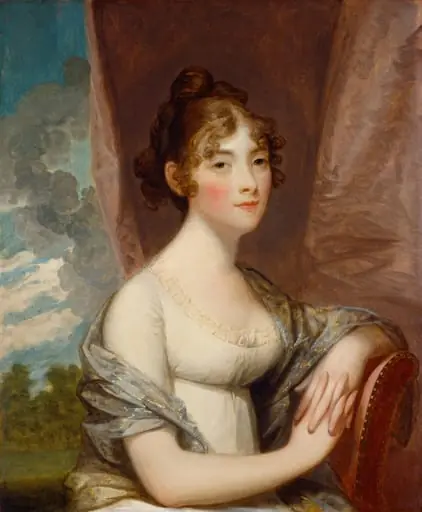 Ann Barry
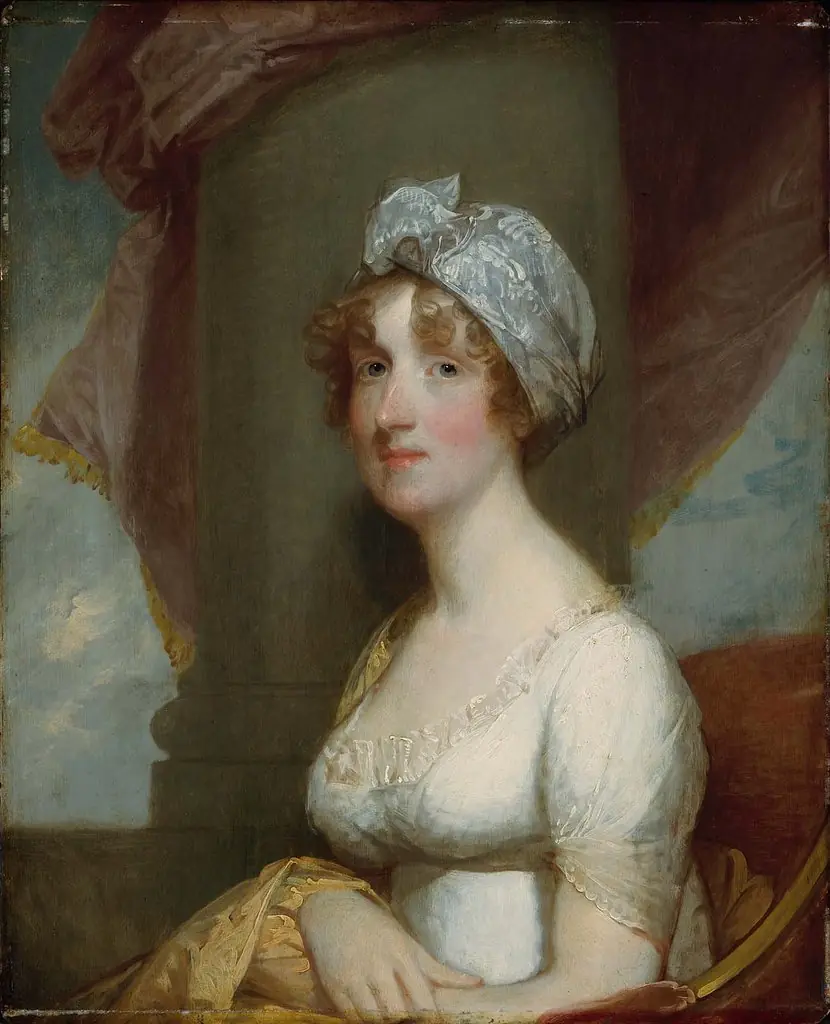 Mrs. Thomas Bartlett (Hannah Gray Wilson)
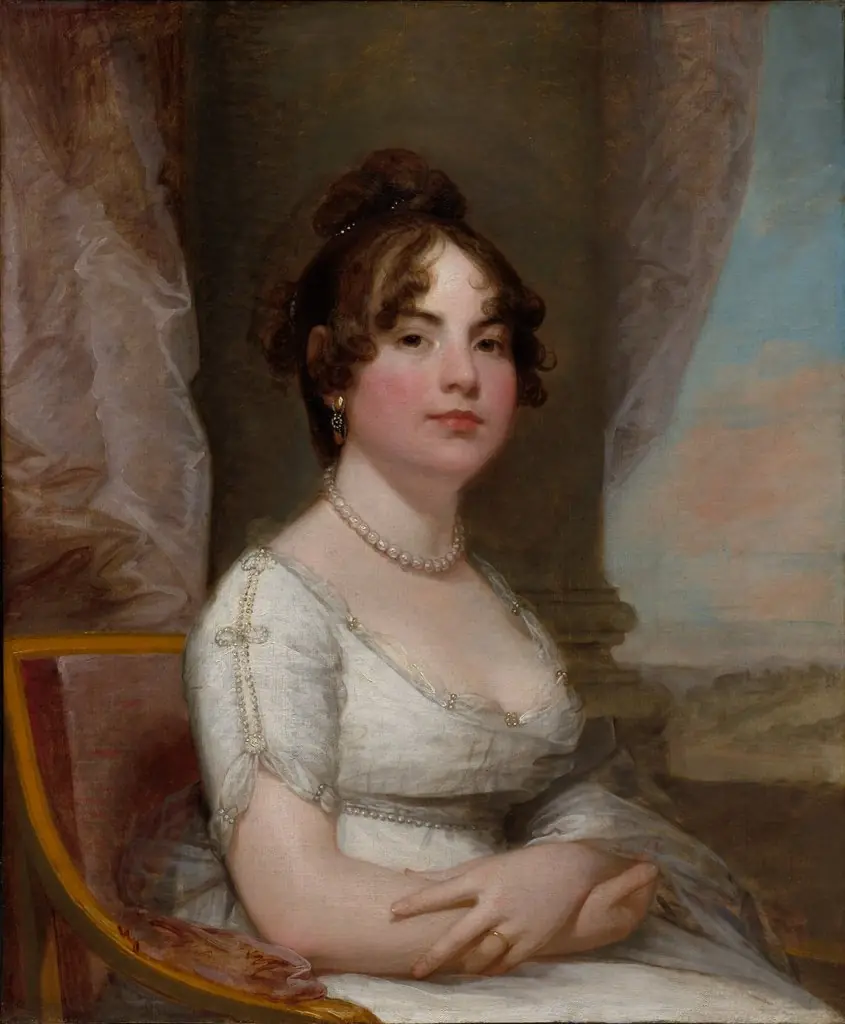 Elizabeth Beltzhoover Mason
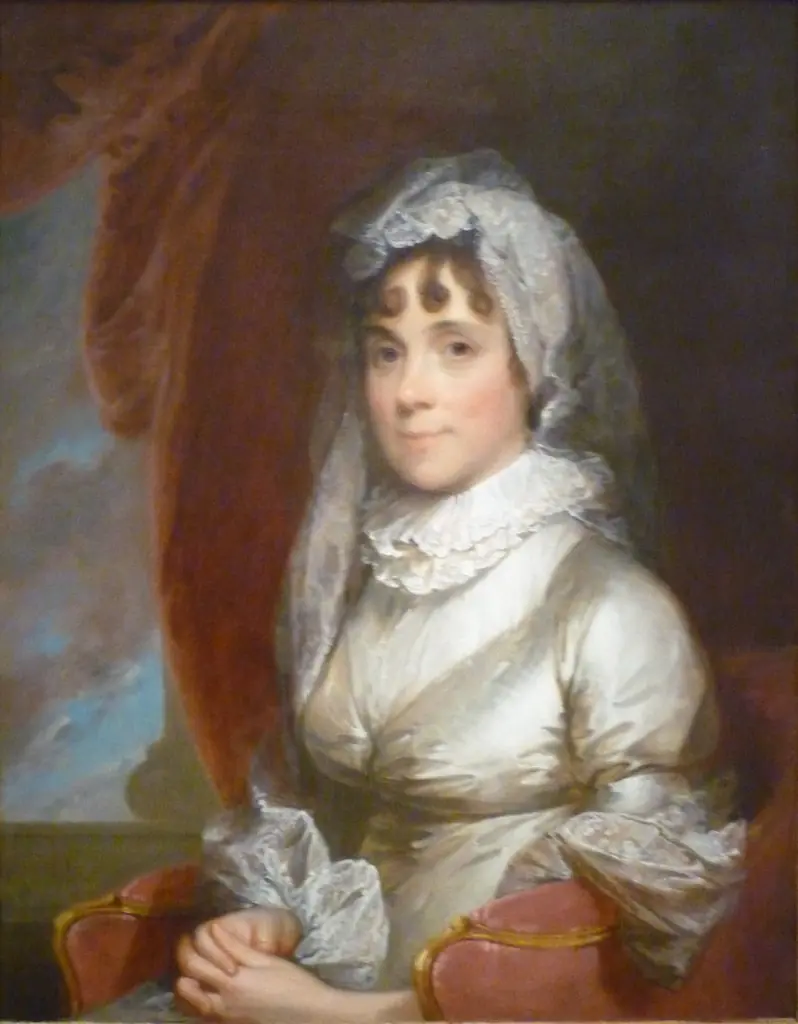 Portrait of Elizabeth Chipman Gray
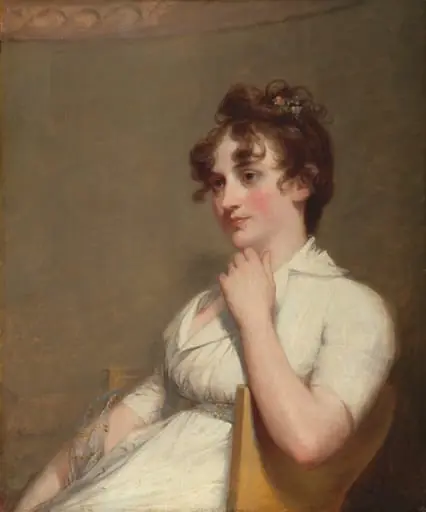 Eleanor Parke Custis Lewis (Mrs. Lawrence Lewis)
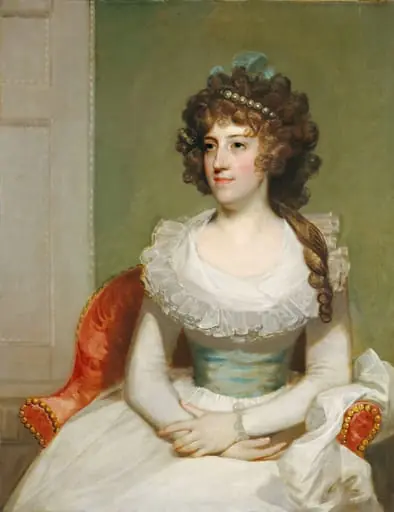 Matilda Caroline Cruger
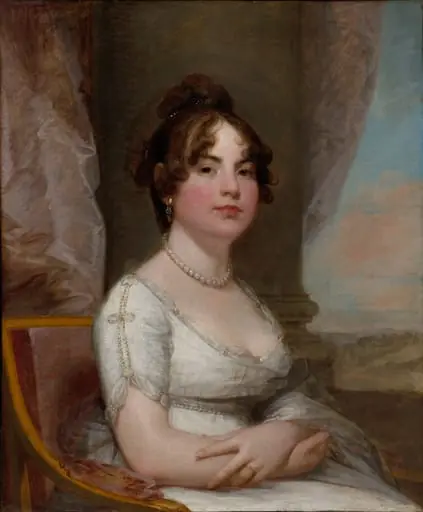 Elizabeth Beltzhoover Mason
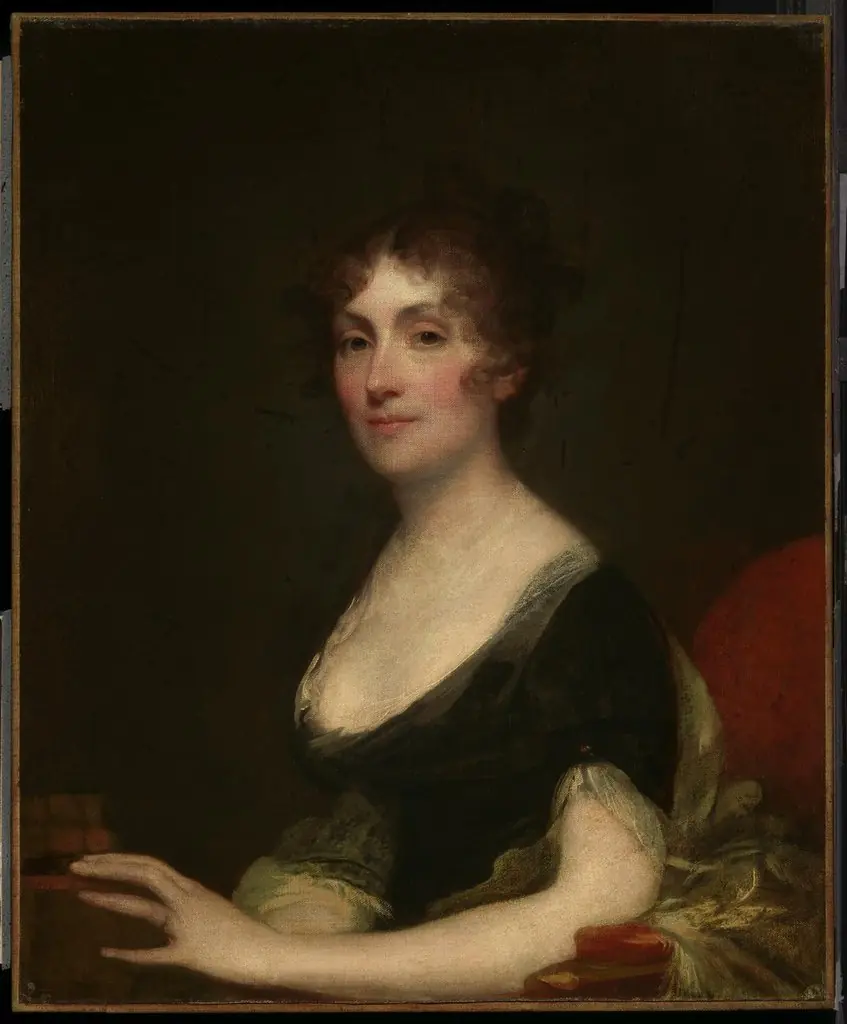 Mrs. Perez Morton (Sarah Wentworth Apthorp)
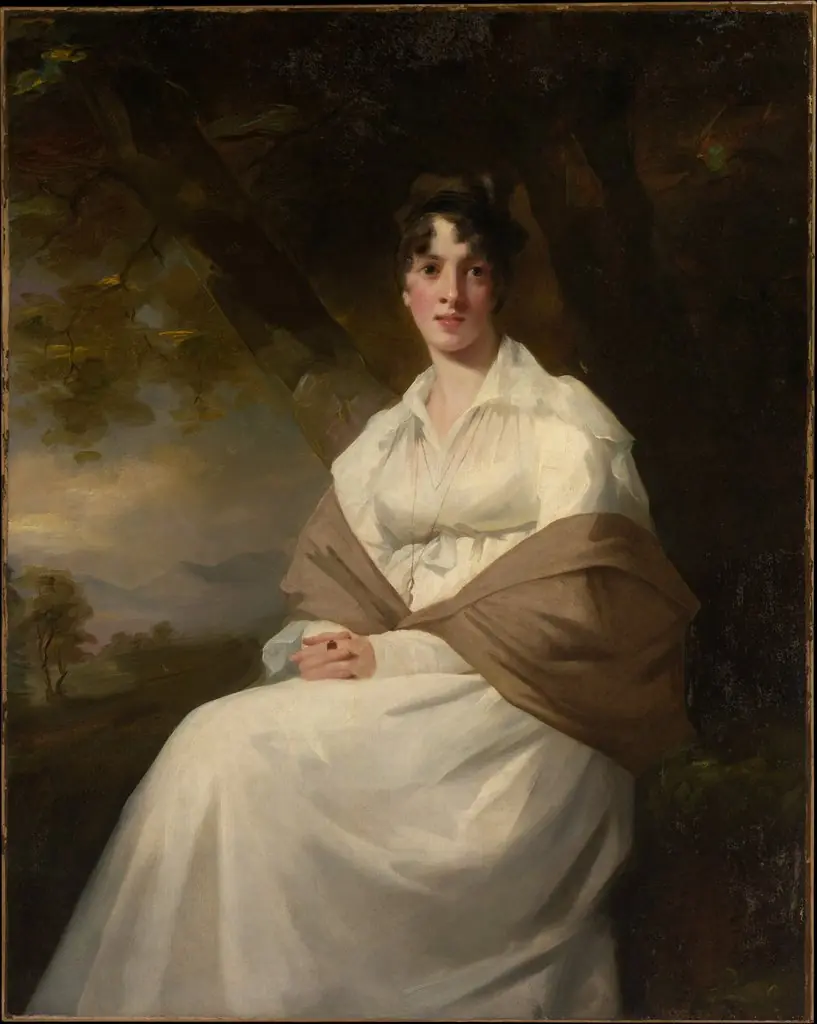 Lady Maitland (Catherine Connor, died 1865)
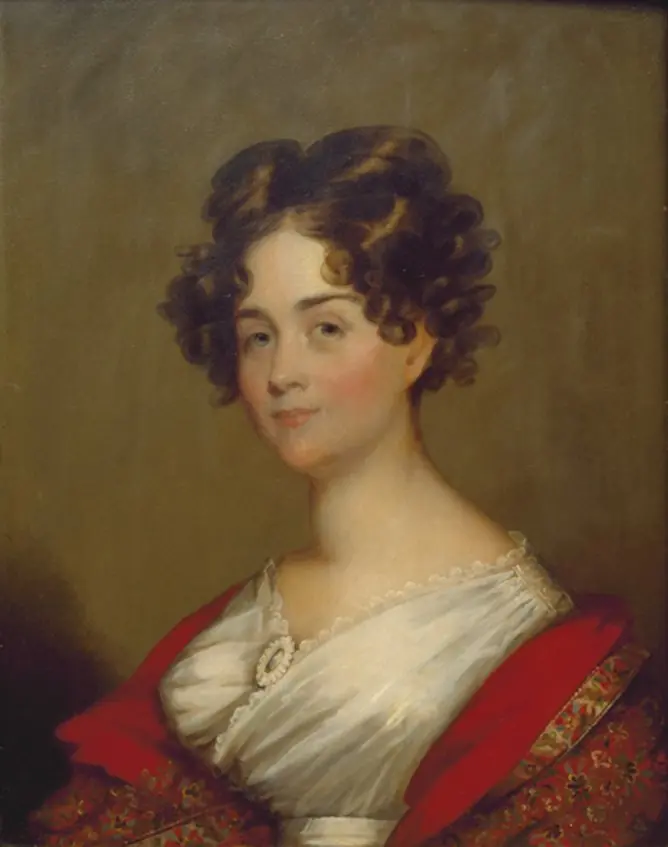 Portrait of Charlotte Story Forrester