Artwork
Benjamin Tappan
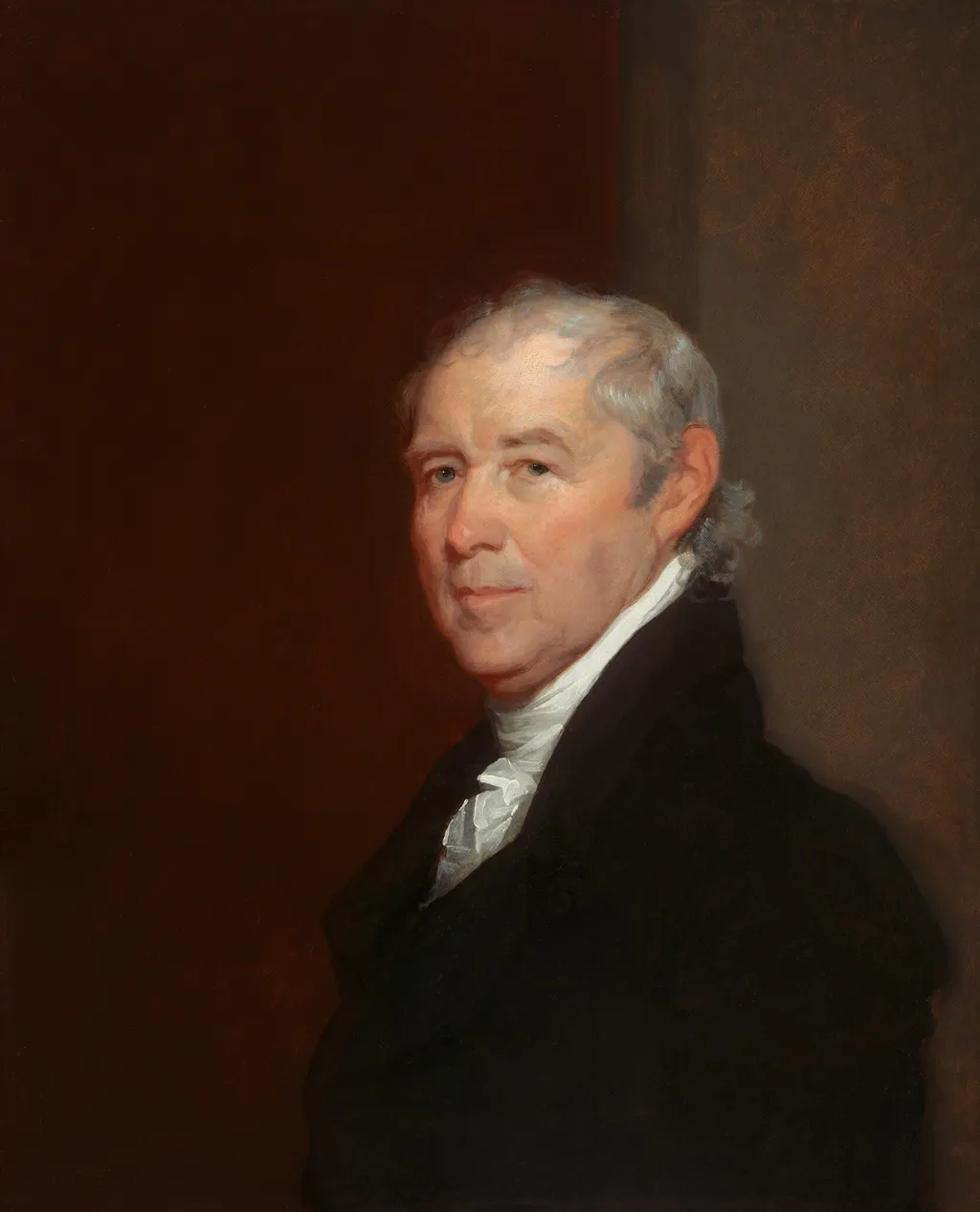
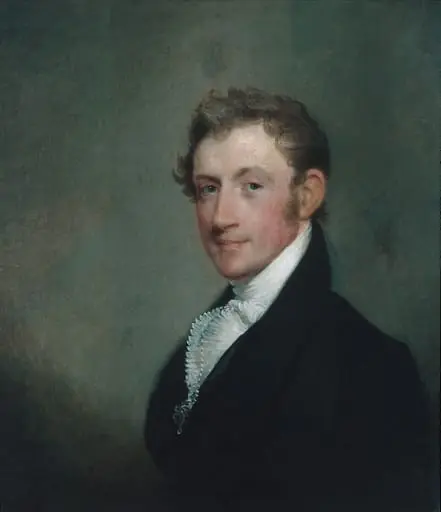
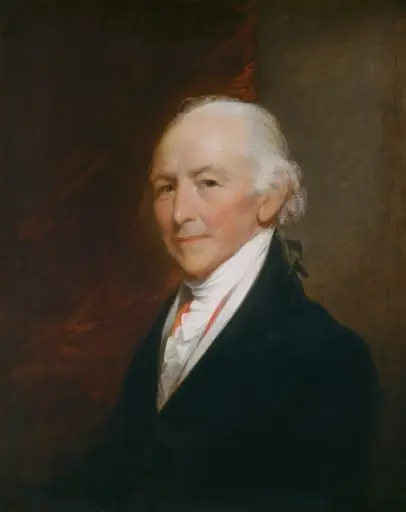
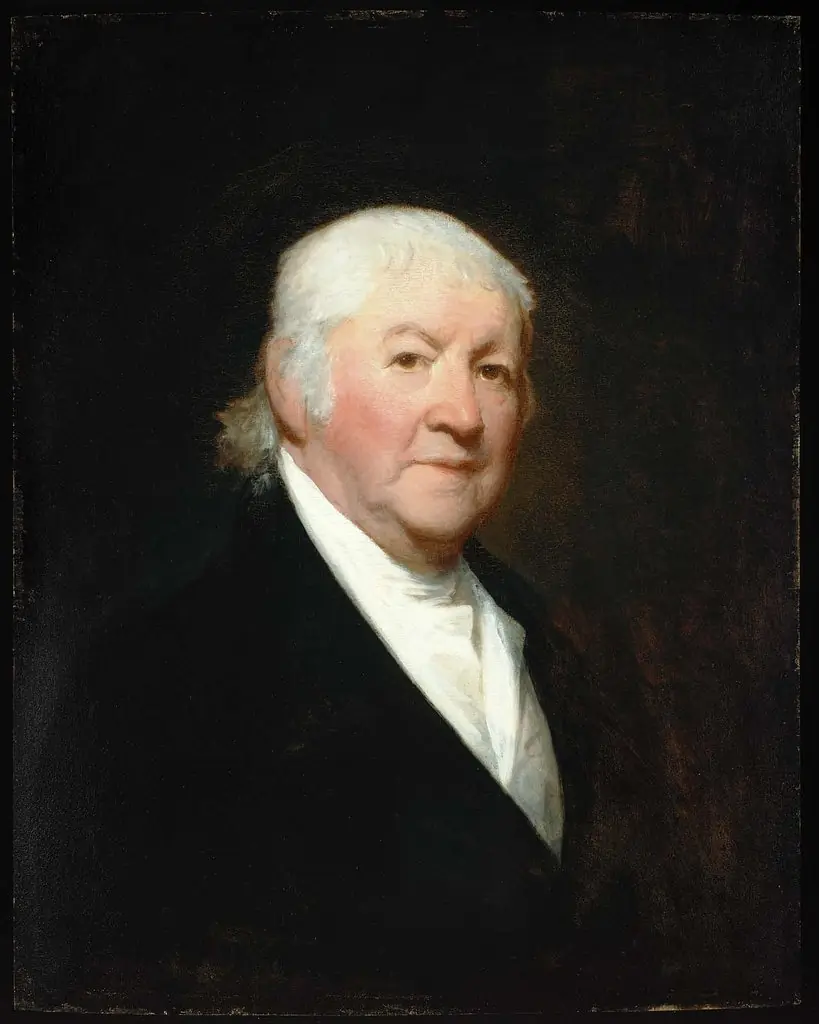
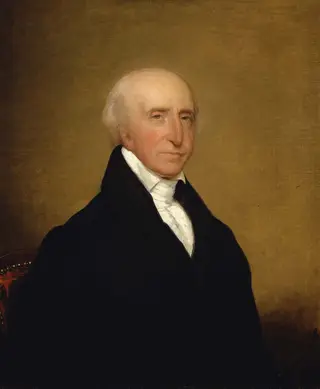
Benjamin Tappan is an oil painting by the American Impressionist artist Gilbert Stuart. It dates from 1814 and is held in the collection of the National Gallery of Art.
About this work
Technique & Style
Executed in 1814, the painting exemplifies Stuart’s mature portrait style, characterized by precise, linear draftsmanship and a restrained yet luminous palette.
The portrait of Benjamin Tappan by Gilbert Stuart employs oil paint on a wood panel support, measuring 72.5 cm in height and 58.7 cm in width. Executed in 1814, the painting exemplifies Stuart’s mature portrait style, characterized by precise, linear draftsmanship and a restrained yet luminous palette. The composition centers on a three-quarter view of Tappan’s head and shoulders, rendered with smooth, blended brushwork that accentuates the sitter’s facial features and the textures of his clothing.
The handling reflects Stuart’s signature approach to portraiture, balancing naturalistic detail with an emphasis on the sitter’s dignified presence. The wood panel support, typical of early 19th-century American portraiture, contributes to the work’s refined, intimate scale and stability.
History & Provenance
The portrait of Benjamin Tappan was executed by Gilbert Stuart in 1814 as an oil on wood panel. It remained in the Tappan family, passing from the sitter’s son Lewis Tappan to his daughter Julianna Aspinwell Tappan, then to sister Ellen A. A. Hulett and subsequently to her daughter Margaret Hulett, before being sold to John F. Braun in 1933. Braun’s collection later transferred the work to Clarence Winthrop Bowen, whose daughter Roxana Wentworth Bowen brought it to France, and in 1970 the painting was bequeathed to the National Gallery of Art.
The work is catalogued in the National Gallery’s records and listed on Wikidata with an inception date of 1814.
The portrait is held by the National Gallery of Art, Washington, D.C., where it is inventoried as accession number 1970.17.1. It entered the Gallery in 1970 as a bequest from Roxana Wentworth Bowen, Lady Gordon Vereker, who had inherited it from her father, Clarence Winthrop Bowen. The work’s exhibition history includes a loan to the Smithsonian’s National Gallery of Art in 1924, recorded on a label attached to the reverse of the panel.
Legacy
The portrait of Benjamin Tappan, painted by Gilbert Stuart in 1814, entered the National Gallery of Art in 1970 through a bequest, establishing it as a touchstone for scholarship on Stuart’s later portraiture and on early American political imagery. Its documented chain of ownership, from the sitter’s descendants to John F. Braun and finally to the Gallery, illustrates 19th‑century family stewardship and 20th‑century art market circulation, reinforcing the work’s recognized historical significance. As part of the Gallery’s permanent collection, the painting continues to inform exhibitions and academic studies, contributing to Tappan’s enduring reputation as a representative figure of the early Republic.
Overview
This oil on wood portrait, created by Gilbert Stuart in 1814, depicts Benjamin Tappan. The painting captures its subject seated, presenting a direct gaze to the viewer. Stuart's approach emphasizes a lifelike representation, focusing on the sitter's features and attire. The work exemplifies the artist's characteristic style in portraiture from the early 19th century.
Subject & Meaning
Benjamin Tappan is presented in a seated pose, dressed in period attire, and engages directly with the viewer through his steady gaze. This frontal orientation contributes to a sense of the sitter's presence and significance. Stuart's meticulous attention to facial details and the texture of the clothing enhances the portrait's realism, aiming to convey the individual character of the subject.
Own this work as a print
Artist & collection

Artist
Gilbert Stuart (né Stewart; December 3, 1755 – July 9, 1828) was an American painter born in the Rhode Island Colony who is widely considered one of America's foremost portraitists.