Artwork
William Thornton
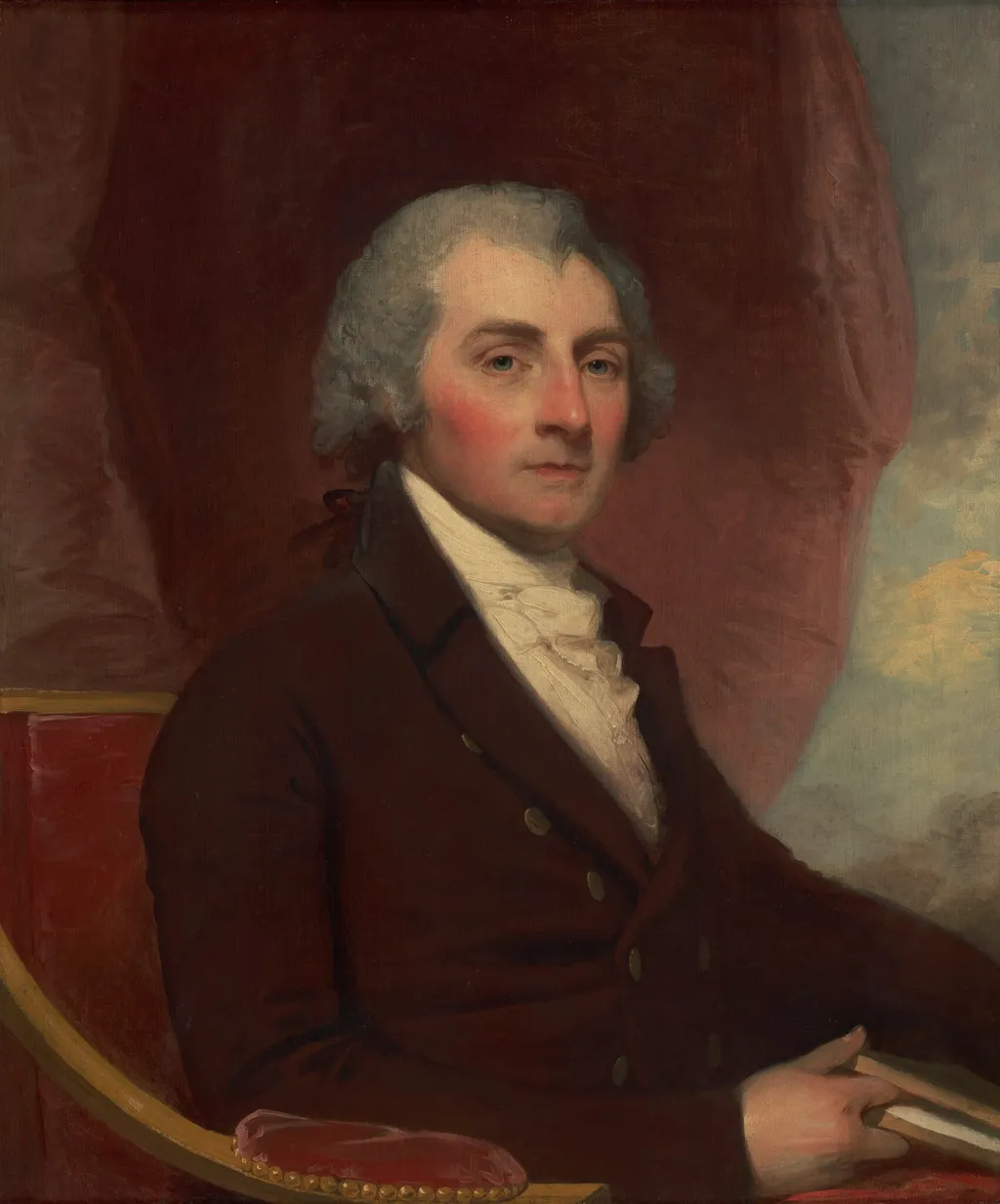
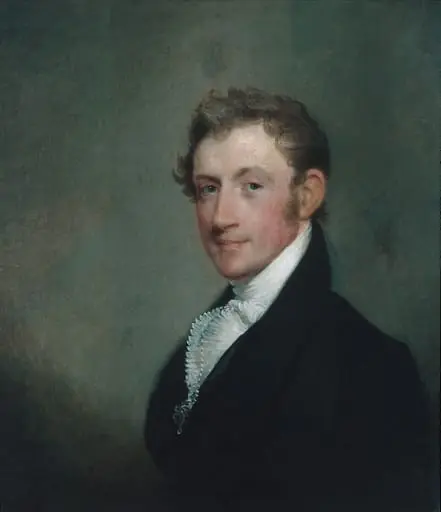
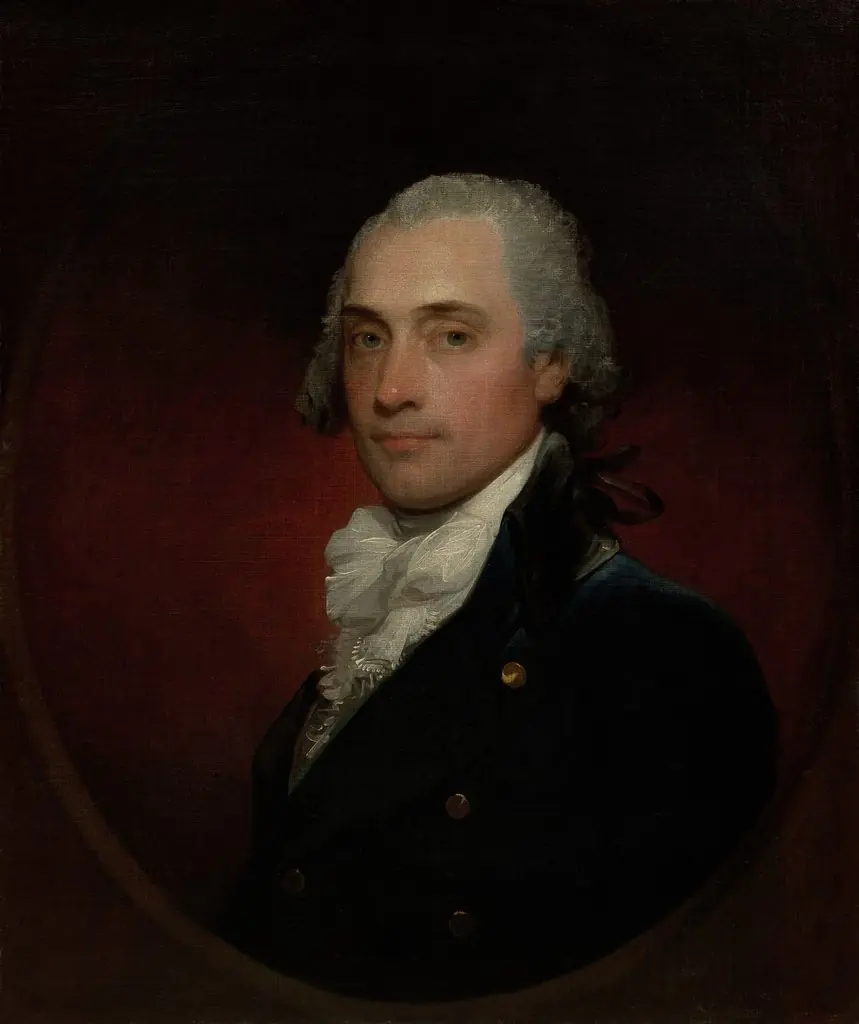
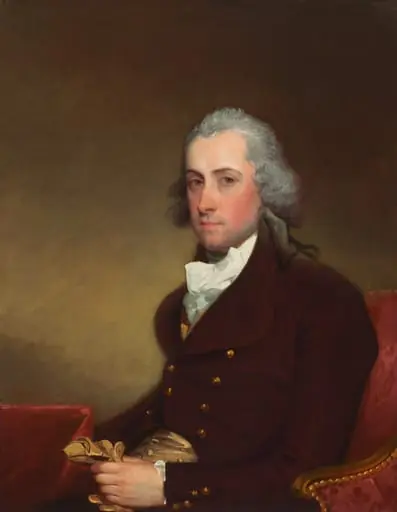
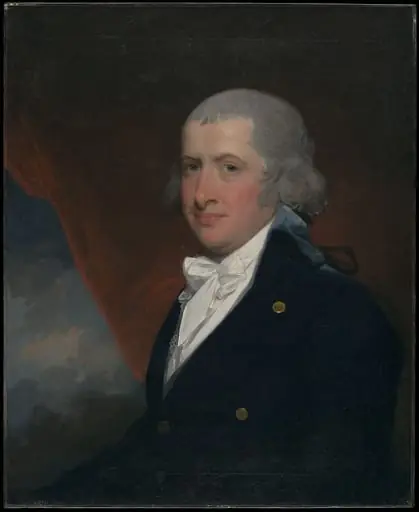
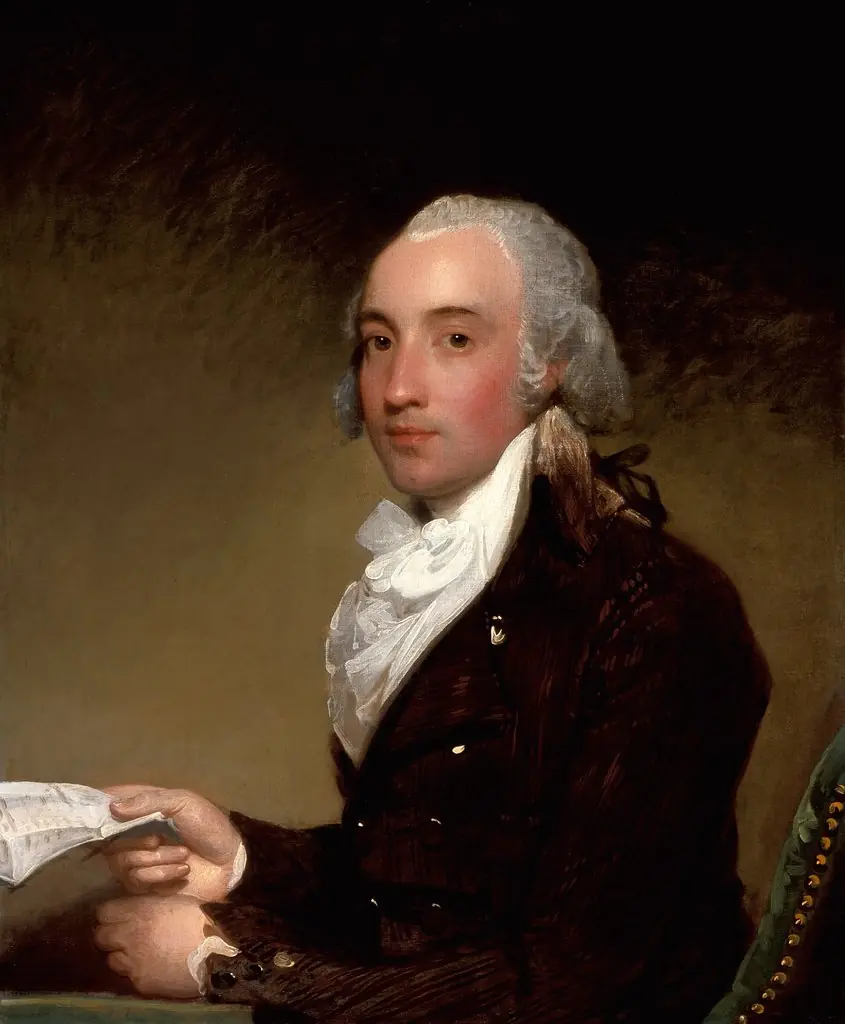
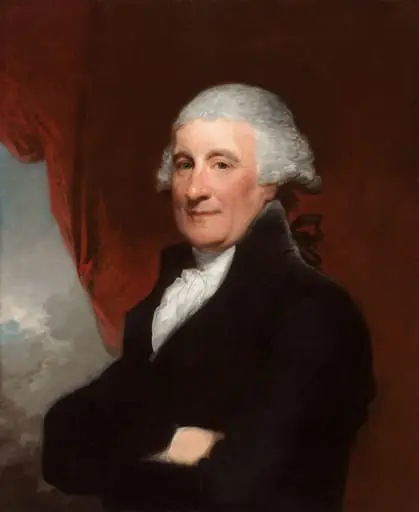
William Thornton is an oil painting by the American Impressionist artist Gilbert Stuart. It dates from 1804 and is held in the collection of the National Gallery of Art.
About this work
William Thornton wears a serious expression and formal dress. Gilbert Stuart's close attention to the features and clothing brings out a sense of the man's character. Oil on canvas, 1804.
Subject & Meaning
The work functions primarily as a documentary likeness, capturing the physical appearance of Thornton, who was a notable figure in Washington, D.
Painted by Gilbert Stuart in 1804, this oil on canvas is a formal portrait depicting William Thornton as its sole subject. The work functions primarily as a documentary likeness, capturing the physical appearance of Thornton, who was a notable figure in Washington, D.C. society. The provided records classify the piece strictly within the portrait genre, emphasizing its role in preserving the sitter's visage rather than conveying complex allegorical narratives or religious symbolism.
No specific iconographic elements, such as symbolic objects or background landscapes intended to represent abstract concepts, are detailed in the available documentation. Consequently, the painting's meaning is derived directly from its identity as a historical record of Thornton, commissioned or created during his lifetime and subsequently preserved through his family lineage before entering a major public collection.
Technique & Style
The portrait of William Thornton is executed in oil on canvas, a standard support for early‑19th‑century portraiture, and measures approximately 73.2 cm by 61.9 cm. It was painted by Gilbert Stuart in 1804 and depicts the subject in a conventional three‑quarter pose typical of his mature style, emphasizing fine facial detail and subtle modeling of light. The work’s condition appears stable, with the canvas support intact and the oil paint layer showing expected craquelure for its age. As part of the National Gallery of Art’s collection, the painting retains its original compositional balance and color palette, reflecting Stuart’s refined brushwork and the sitter’s dignified presence.
History & Provenance
Gilbert Stuart executed this oil-on-canvas portrait of William Thornton in 1804. Upon the death of the sitter's wife, Anna Maria Brodeau Thornton, in 1865, the work passed to her step-niece, Adelaide Thomason Talbot, as stipulated in Thornton's 1855 will. The painting subsequently descended through the Talbot family to Mary Louisa Talbot, then to Virginia Collins Miller, and finally to Anna Thornton Miller Murray in Leesburg, Virginia.
On January 4, 1922, an unidentified descendant sold the piece via dealer Mary H. Sully to Art House, Inc. Thomas B. Clarke of New York acquired it shortly thereafter. Following Clarke's death, his estate sold the portrait through M. Knoedler & Co. on January 29, 1936, to the A. W. Mellon Educational and Charitable Trust, which gifted it to the National Gallery of Art in 1942.
The portrait of William Thornton by Gilbert Stuart is held in the permanent collection of the National Gallery of Art in Washington, D.C., specifically within the Andrew W. Mellon collection. The work was accessioned by the museum in 1942 as a gift from The A. W. Mellon Educational and Charitable Trust, having been purchased earlier that year from the estate of Thomas B. Clarke. Prior to entering the national collection, the painting passed through several private hands, including the sitter's wife, Anna Maria Brodeau Thornton, and her descendants in Washington, D.C., Kentucky, and Virginia.
It was sold at auction in New York in 1922 and again in 1936 before its final transfer to the gallery. The provided sources do not list specific exhibition histories for this artwork.
Overview
Painted in 1804 by Gilbert Stuart, this oil on canvas portrait depicts William Thornton, a prominent American physician, inventor, and architect best known for designing the United States Capitol. Stuart, renowned for his likenesses of George Washington, portrays Thornton in a formal, three-quarter view against a dark, neutral background that isolates the sitter. The composition focuses on Thornton's intellectual presence, capturing a serious expression and a direct gaze that conveys the gravity of his public service roles as the first Architect of the Capitol and the first Superintendent of the United States Patent Office.
Stuart's technique demonstrates his characteristic economy of brushwork, particularly in the rendering of the face, where subtle modeling defines the bone structure and skin texture. The formal attire, consisting of a dark coat and white cravat, is rendered with sufficient detail to suggest status without distracting from the psychological depth of the subject. Executed during the height of Stuart's career, the work serves as a significant document of the early American republic's intellectual and political leadership, highlighting the multifaceted contributions of its founders.
Own this work as a print
Artist & collection

Artist
Gilbert Stuart (né Stewart; December 3, 1755 – July 9, 1828) was an American painter born in the Rhode Island Colony who is widely considered one of America's foremost portraitists.