Artwork
梅|Blowing Soap Bubbles Under the Plum Blossom
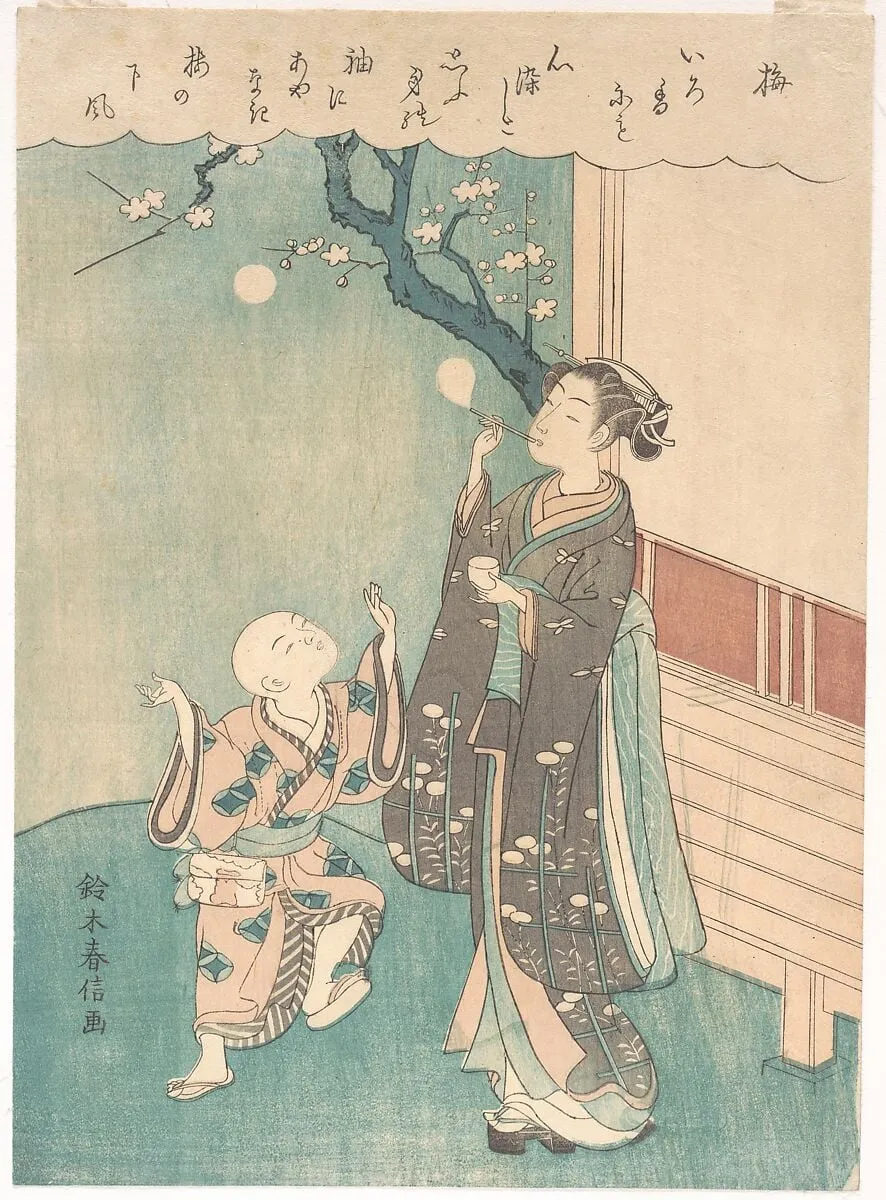
梅|Blowing Soap Bubbles Under the Plum Blossom is an ink print by the Baroque artist Suzuki Harunobu. It dates from 1748 and is held in the collection of the Metropolitan Museum of Art.
About this work
Subject & Meaning
Together, the imagery evokes the fragility of beauty and the passage of youth, inviting contemplation on the brief, luminous moments of existence.
Suzuki Harunobu’s Blowing Soap Bubbles Under the Plum Blossom centers on a young figure engaged in the ephemeral act of bubble-blowing, framed by the delicate branches of a plum tree (Prunus subg. Prunus). The plum blossom, a harbinger of early spring in Japanese culture, symbolizes renewal, resilience, and the fleeting nature of life, as it blooms while frost still lingers.
Soap bubbles, inherently transient, reinforce this theme of impermanence (mujō), a concept deeply embedded in Buddhist thought and frequently explored in ukiyo-e prints. Together, the imagery evokes the fragility of beauty and the passage of youth, inviting contemplation on the brief, luminous moments of existence.
Technique & Style
Blowing Soap Bubbles Under the Plum Blossom is a woodblock print executed in the nishiki-e style, utilizing ink and color applied to paper. As a work by Suzuki Harunobu, it exemplifies the ukiyo-e genre through its refined composition and vibrant palette. The image depicts a figure blowing soap bubbles beneath plum blossoms, demonstrating the artist's mastery in capturing delicate, transient moments.
The use of multiple blocks for color registration characterizes the technical sophistication of the print, allowing for subtle gradations and layered hues typical of mid-Edo period Japanese art.
Overview
Blowing Soap Bubbles Under the Plum Blossom is a woodblock print by the Edo-period artist Suzuki Harunobu, created circa 1748. The work depicts a woman and a young boy standing beneath a plum tree in full bloom, engaged in the playful activity of blowing soap bubbles. The composition balances the organic curves of the pink blossoms against the spherical transparency of the bubbles, which Harunobu rendered with delicate gradations of color to suggest their iridescence and fragility.
Executed in the nishiki-e (brocade picture) style, this piece utilizes multiple carved blocks to achieve a rich palette of soft pinks, blues, and greens, marking a significant technical advancement in Japanese printmaking. As one of the earliest surviving examples of full-color woodblock printing, the work demonstrates Harunobu's pioneering role in transitioning from the earlier sumizuri-e (monochrome) and benizuri-e (red-accented) methods. The scene captures a moment of quiet domestic leisure, characteristic of the ukiyo-e focus on the floating world of urban life and seasonal pleasures.
This print solidified Harunobu's reputation for lyrical elegance and technical innovation, influencing the development of the genre for subsequent generations of artists.
History & Provenance
Created in the mid‑eighteenth century, the print belongs to a period when full‑color woodblock printing was emerging in Japan. It is attributed to Harunazu, a pioneering ukiyo‑e artist, and survives in several museum collections, illustrating the spread of the nishiki-e technique during the Edo era.
Artist & collection

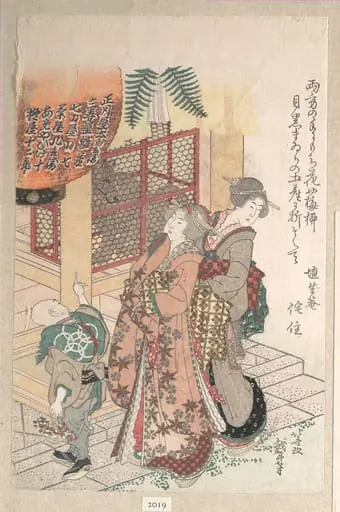 初詣|Young Women Visiting a Shinto Shrine
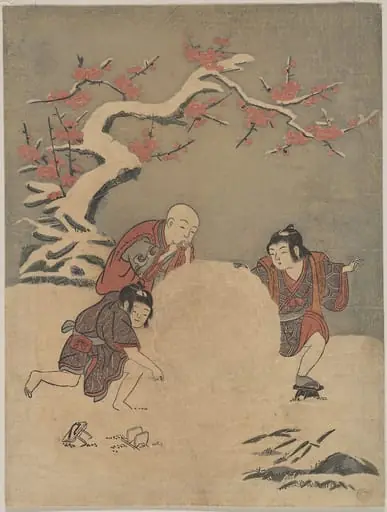 Untitled
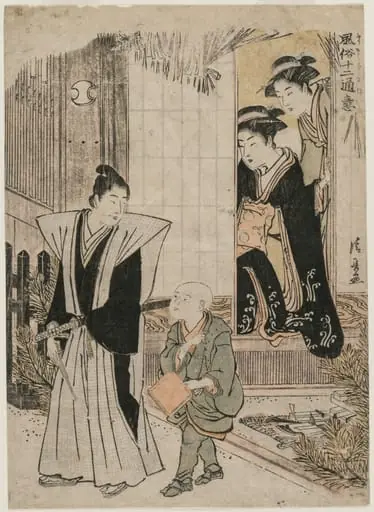 The First Month (from the series Popular Presentations)
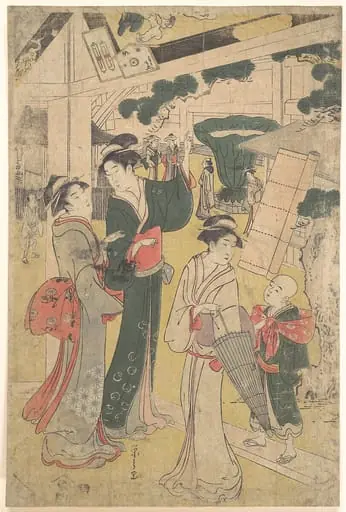 Untitled
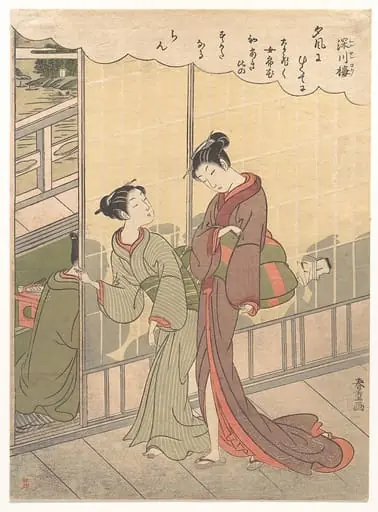 Untitled
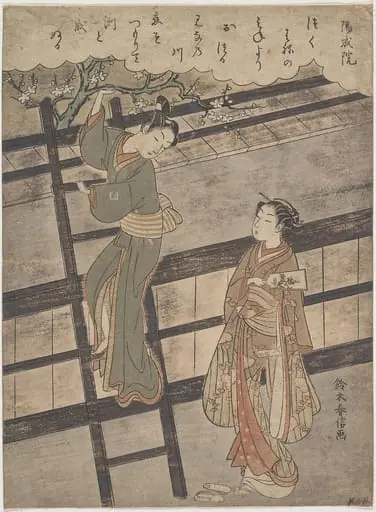 百人一首 陽成院|Yozei no In
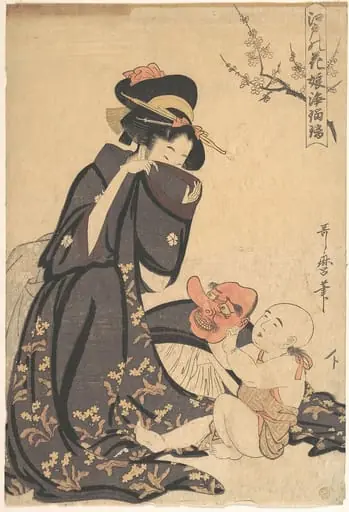 江戸の花 娘浄瑠璃|A Woman Playing with a Young Boy
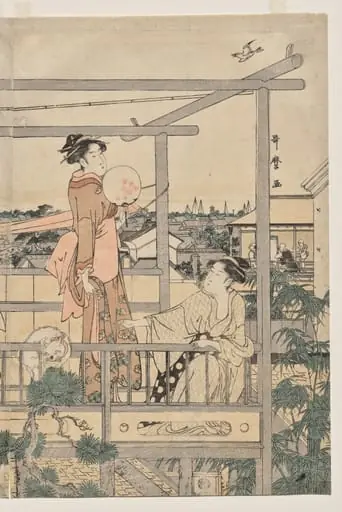 Women Hanging Laundry to Dry on a Balcony
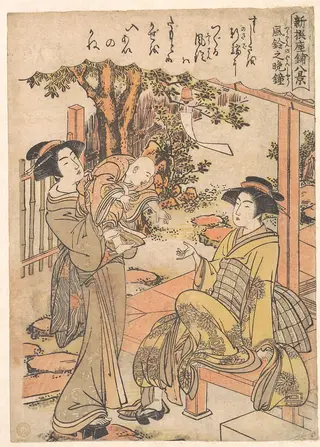 Untitled
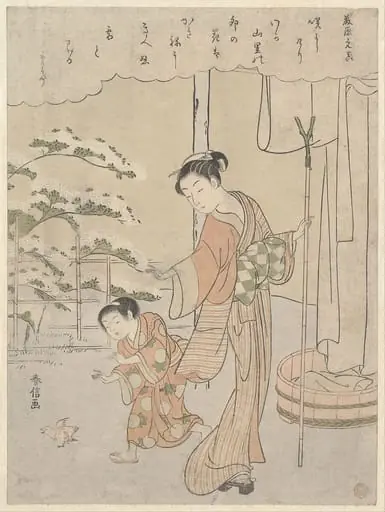 百人一首 藤原元真|Poem by Fujiwara no Motozane (ca. 860) from the Series Thirty-Six Poets
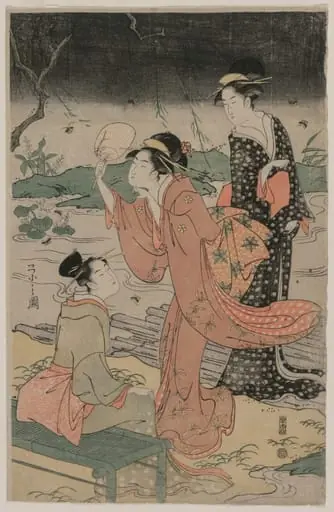 Women Beside a Stream Chasing Fireflies
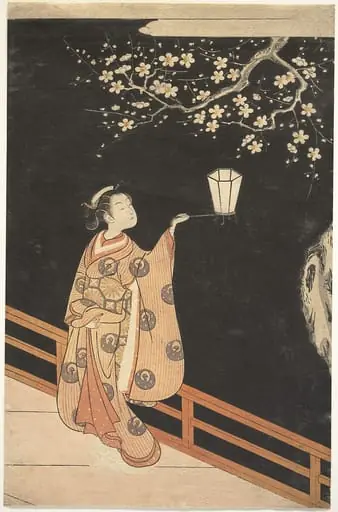
- 鈴木春信画 夜の梅|Woman Admiring Plum Blossoms at Night