Artwork
百人一首 僧正遍昭|Poem by Henjō Sojō
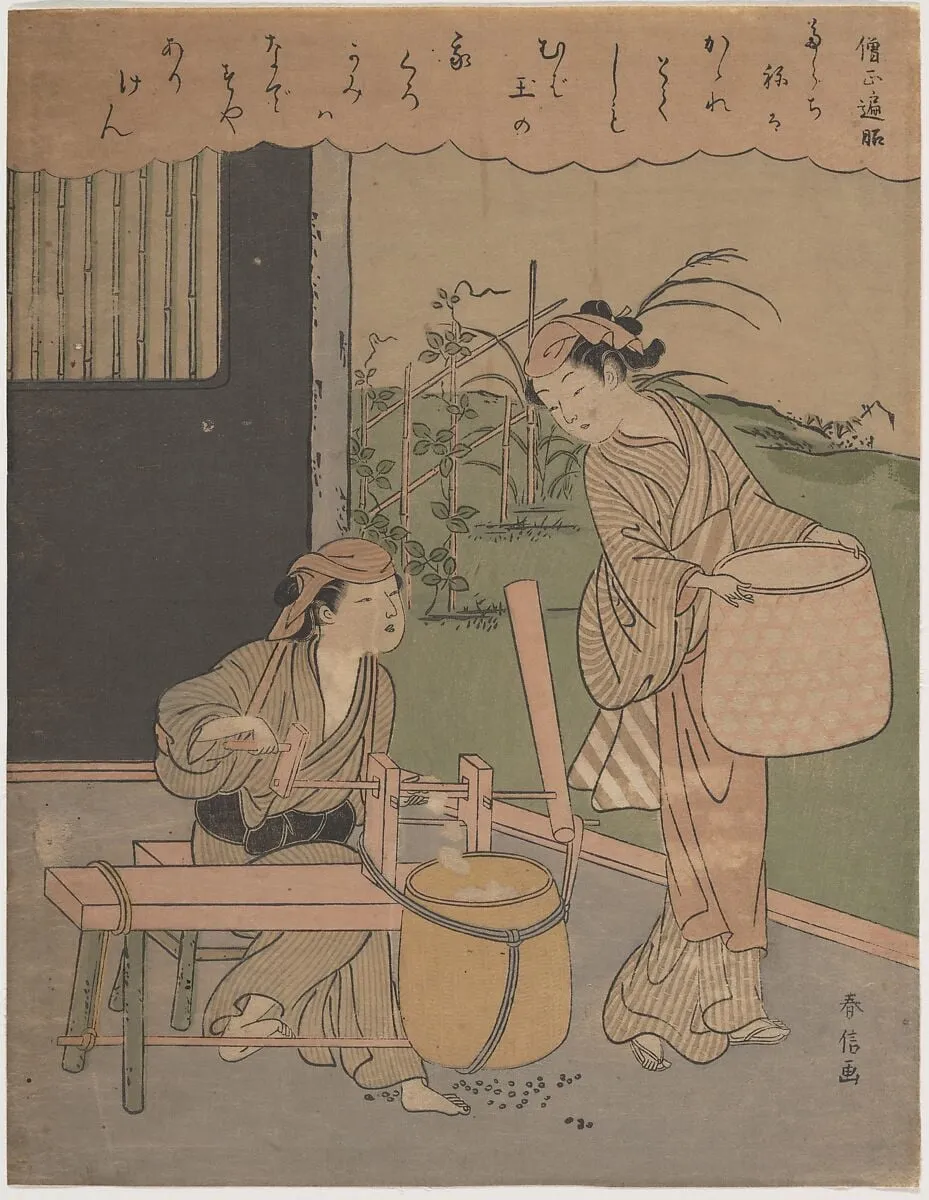
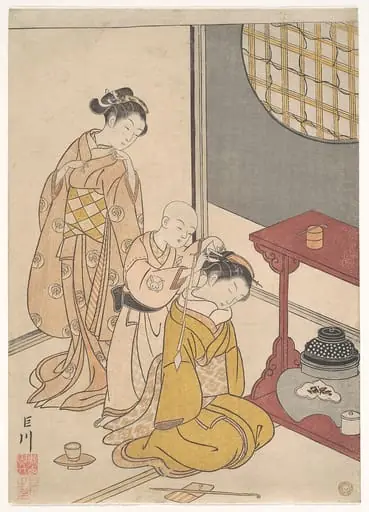
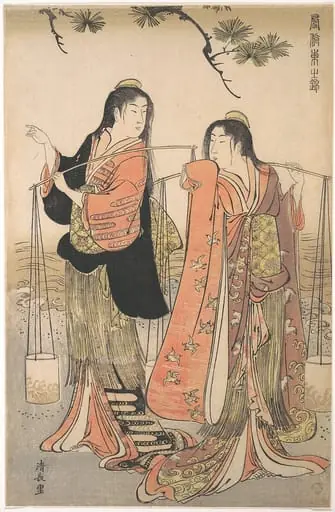
百人一首 僧正遍昭|Poem by Henjō Sojō is an ink print by the Romanticist artist Suzuki Harunobu. It dates from 1766 and is held in the collection of the Metropolitan Museum of Art.
About this work
Overview
The composition reflects the ukiyo-e tradition’s focus on intimate, everyday moments, rendered with delicate lines and restrained tonality.
This woodblock print, created around 1766 by Suzuki Harunobu, is part of the 'Hyakunin Isshu' series, which illustrates poems from a classical anthology of Japanese waka. Rendered in ink and subtle color on paper, it depicts a quiet interior scene with two figures engaged in daily activity. The composition reflects the ukiyo-e tradition’s focus on intimate, everyday moments, rendered with delicate lines and restrained tonality.
Subject & Meaning
The print illustrates a poem by Henjō Sojō, a Heian-period monk and poet, whose verse evokes transience and quiet reflection. The two figures, a seated person using a tool and a standing figure with a basket, suggest domestic labor, possibly related to preparing or storing seasonal items. The scene conveys stillness and contemplation, aligning with the poem’s theme of impermanence, subtly reinforced by the presence of a single plant near the window.
Technique & Style
Harunobu employed nishiki-e, a multicolor woodblock technique that allowed for nuanced gradations and soft hues. The lines are fine and fluid, defining forms without harshness, while the palette favors muted earth tones and pale washes. The spatial arrangement is shallow, with a window suggesting depth but maintaining an intimate, enclosed atmosphere. This approach enhances the poem’s introspective mood through visual restraint.
History & Provenance
The print was produced during the height of Harunobu’s career, when he revolutionized color printing in ukiyo-e. It was likely distributed as part of a set of 100 prints, each corresponding to a poem in the 'Hyakunin Isshu' anthology. The work entered The Metropolitan Museum of Art’s collection through established channels of Japanese art acquisition in the early 20th century, preserving its original condition and context.
Context
In mid-18th century Edo, the 'Hyakunin Isshu' was widely studied and reproduced, reflecting a cultural revival of classical poetry among urban elites. Harunobu’s prints made these literary traditions accessible through visual storytelling, blending literary refinement with popular art. His focus on domestic interiors and quiet figures catered to a growing audience seeking emotional resonance over spectacle.
Legacy
Harunobu’s 'Hyakunin Isshu' series influenced later ukiyo-e artists by demonstrating how poetry and print could harmonize. The series helped elevate woodblock prints from mere commercial products to vehicles for literary and aesthetic expression. Today, these prints remain key examples of how Edo-period artists translated classical culture into accessible, emotionally nuanced imagery.
Artist & collection

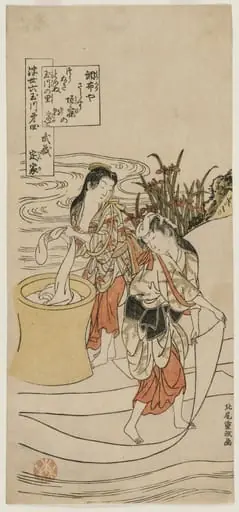 The Chofu Tama River in Musashi Province (from the series The Six Tama Rivers of the Floating World)
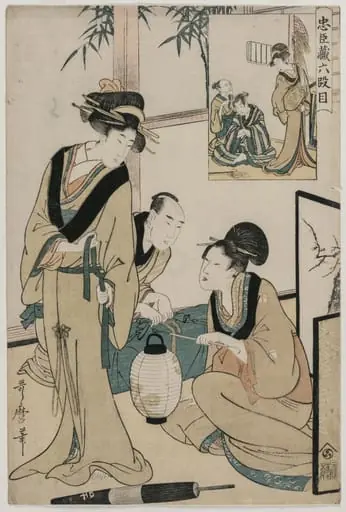 Chushingura: Act VI of The Storehouse of Loyalty
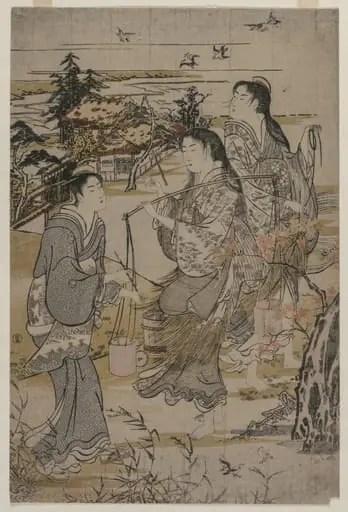 Women with Salt Pails; The Noda Tama River in Mutsu Province, from an untitled series of the Six Tama Rivers
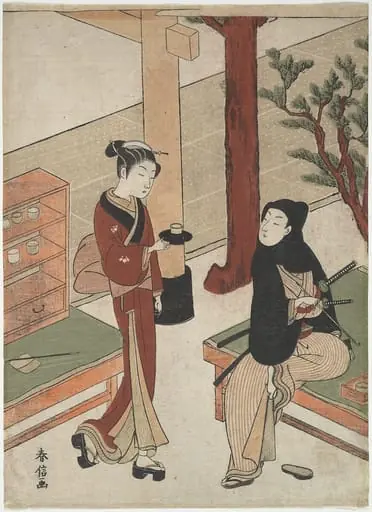 Untitled
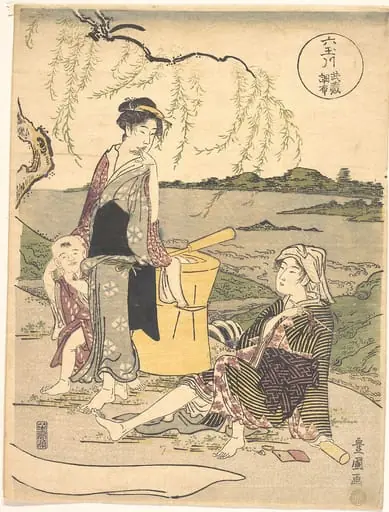 Untitled
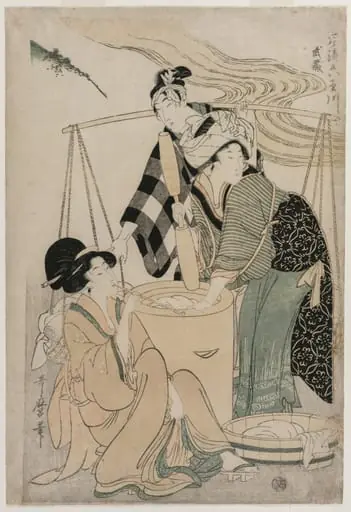 Settsu Province from the series Fashionable Six Jewel Rivers (Furyu Mu Tamagawa)
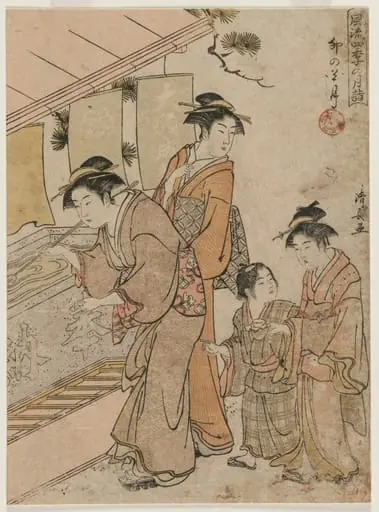 The Fourth Month (from the series Fashionable Monthly Visits to Temples in the Four Seasons)
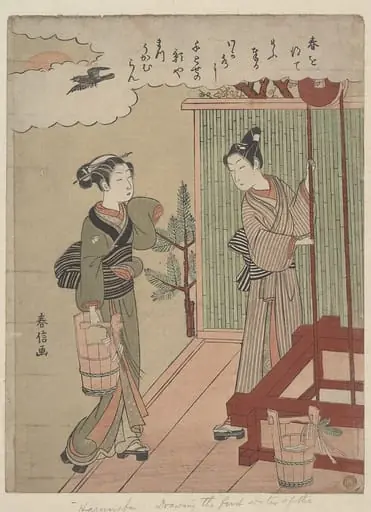 鈴木春信画 若水を汲む男女|Drawing the First Water of the New Year
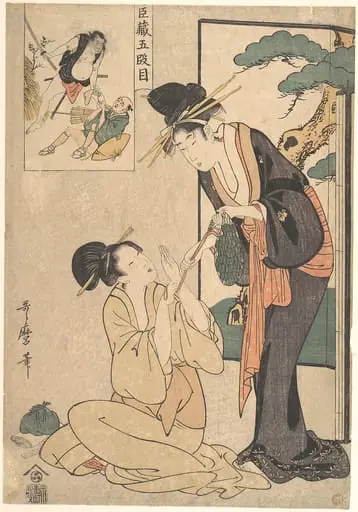 忠臣蔵五段目|A Woman Snatching a Bag of Sweetmeats from Her MotHer
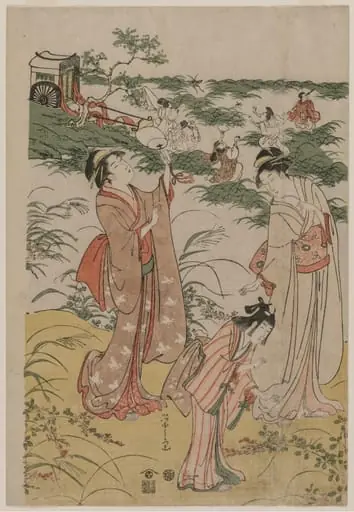 Women Chasing Crickets on an Autumn Moor
 Shiokumi|The Dance of the Beach Maidens from the series Brocade of the East
- 百人一首 藤原元真|Poem by Fujiwara no Motozane (ca. 860) from the Series Thirty-Six Poets