Artwork
Untitled
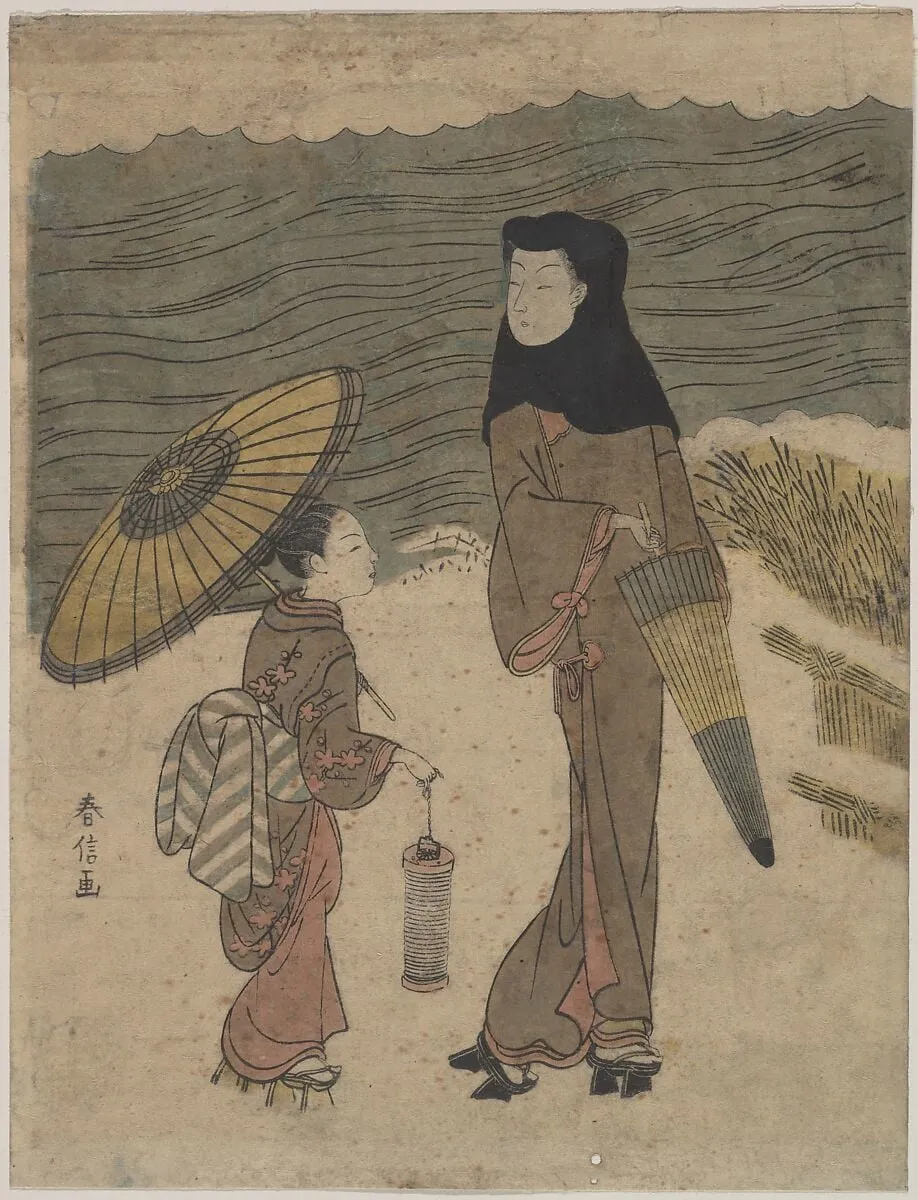
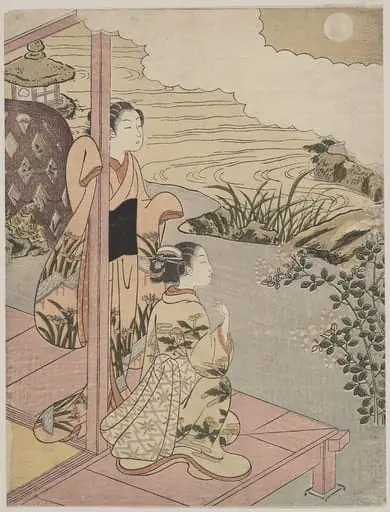
Untitled is an ink print by the Baroque artist Suzuki Harunobu. It dates from 1760 and is held in the collection of the Metropolitan Museum of Art.
About this work
Subject & Meaning
These elements collectively illustrate the aesthetic of the ukiyo-e genre, specifically the nishiki-e style developed by Suzuki Harunobu.
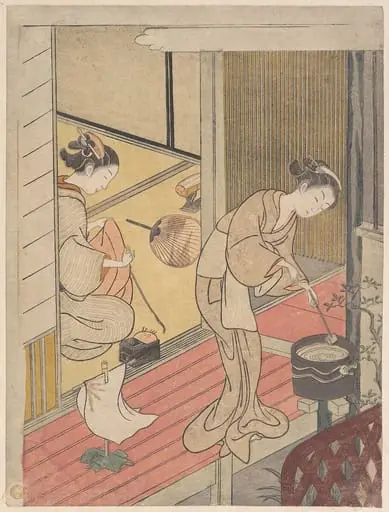
The woodblock print depicts a scene featuring a Kamuro, a young female attendant, alongside a yūjo, or courtesan, set within the pleasure quarters of Edo-period Japan. The composition includes specific cultural artifacts such as a wagasa (paper umbrella), a chōchin (paper lantern), and geta (wooden sandals), which ground the figures in their social and physical environment. These elements collectively illustrate the aesthetic of the ukiyo-e genre, specifically the nishiki-e style developed by Suzuki Harunobu.
The work captures a moment of daily life and fashion, emphasizing the visual culture of the floating world through its detailed rendering of attire and accessories.
Technique & Style
Created in 1760, this work is a woodblock print executed in ink and color on paper. Classified within the ukiyo-e tradition, it is specifically identified as a nishiki-e, a full-color printing technique characteristic of the artist's period. The formal composition depicts a Kamuro alongside traditional objects including a wagasa, chōchin, geta, and yūjo. The physical support measures 25.4 cm in height and 19.4 cm in width.
History & Provenance
Untitled is a woodblock print by Suzuki Harunobu, created in 1760. The work depicts a young woman with a parasol, clogs, and a lantern, reflecting typical ukiyo-e subjects of the period. It is part of the Metropolitan Museum of Art's collection, listed under the genre ukiyo-e and the material paper with ink. The print measures 25.4 cm in height and 19.4 cm in width.
Overview
Created in 1760, this woodblock print by Suzuki Harunobu presents a brief, everyday scene rendered in ink and color on paper. The composition centers on a woman in a vivid kimono, sheltering herself with a paper umbrella while standing on wet ground, accompanied by two partially concealed girls.
Context
The work belongs to a period when ukiyo-e artists increasingly depicted ordinary scenes, moving beyond the earlier focus on courtesans and actors. The inclusion of everyday objects such as umbrellas and geta underscores the shift toward representing the lived experience of Edo’s urban residents.
Artist & collection

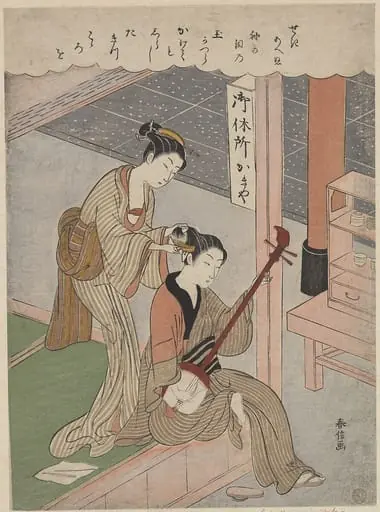
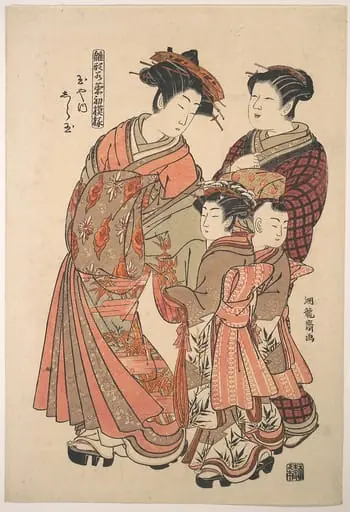
- 『雛形若菜初模様 玉や内 しら玉』|The Courtesan Shiratama of the Tamaya Brothel, from the series “A Pat-tern Book of the Year’s First Designs, Fresh as Spring Herbs” (“Hinagata wakana hatsu moyō”)
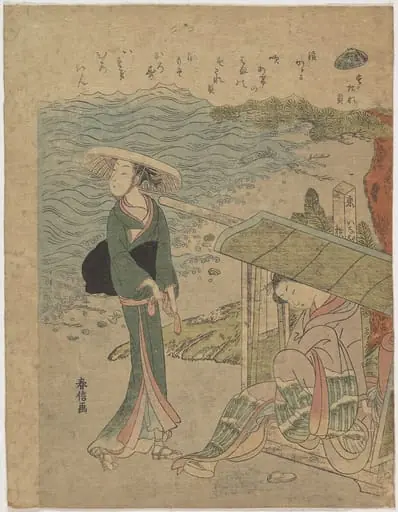 すだれ貝|The Curtain Clam
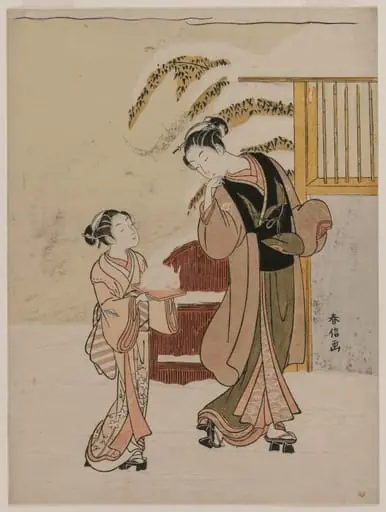 Young Woman Admiring a Snow Rabbit
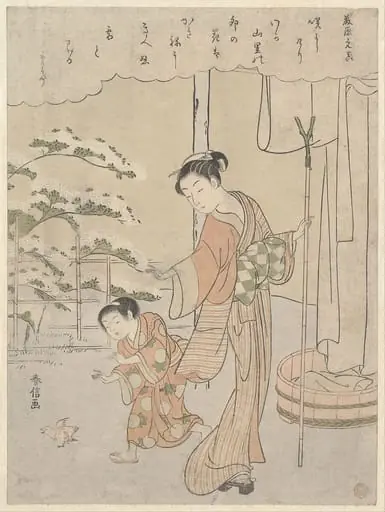 百人一首 藤原元真|Poem by Fujiwara no Motozane (ca. 860) from the Series Thirty-Six Poets
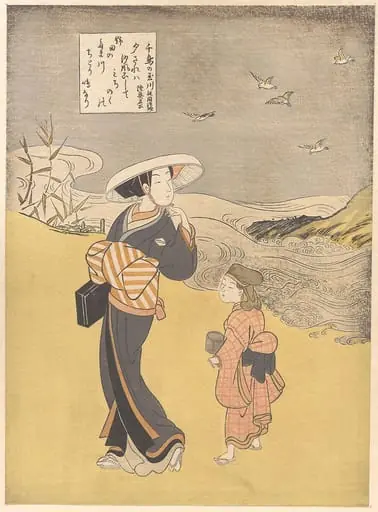 六玉川 「千鳥の玉川 陸奥名所」|“The Jewel River of Plovers, a Famous Place in Mutsu Province,” from the series Six Jewel Rivers (Mu Tamagawa: Chidori no Tamagawa, Mutsu meisho)
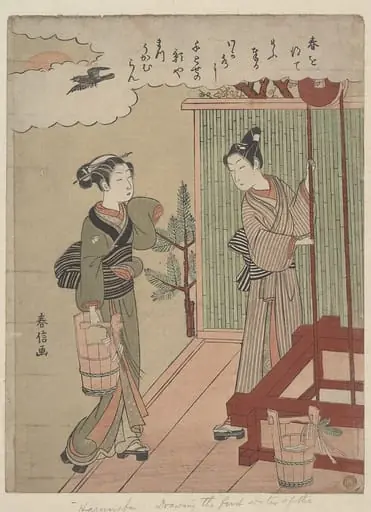 鈴木春信画 若水を汲む男女|Drawing the First Water of the New Year
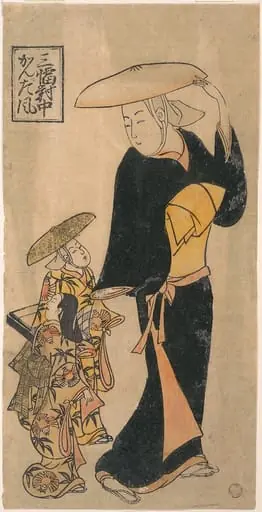 Untitled
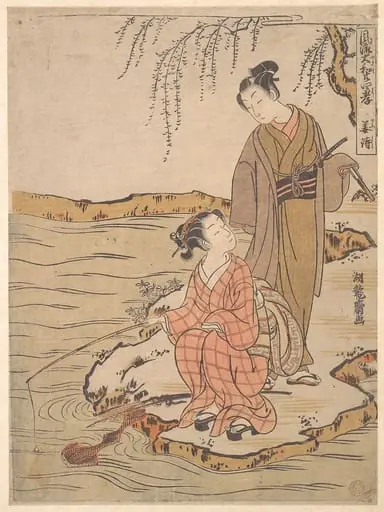 Untitled
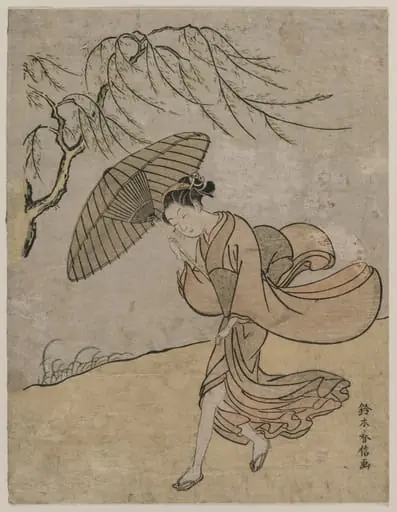 Woman Running Past a Willow Tree in a Breeze
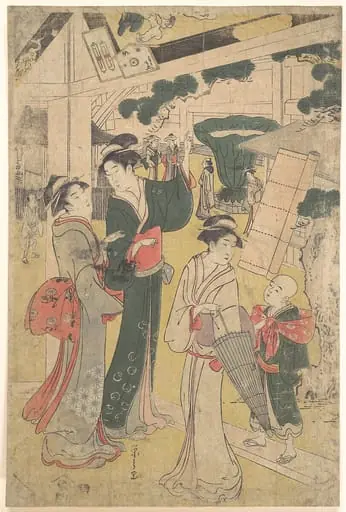 Untitled
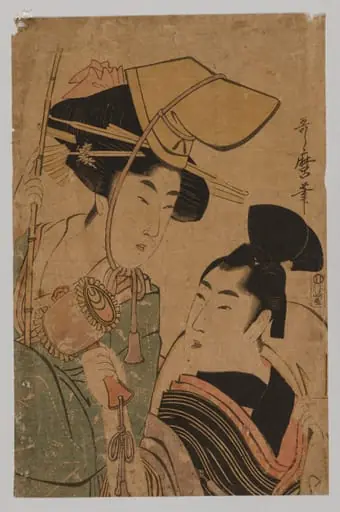 Woman Representing Good Fortune
 Untitled