Artwork
すだれ貝|The Curtain Clam
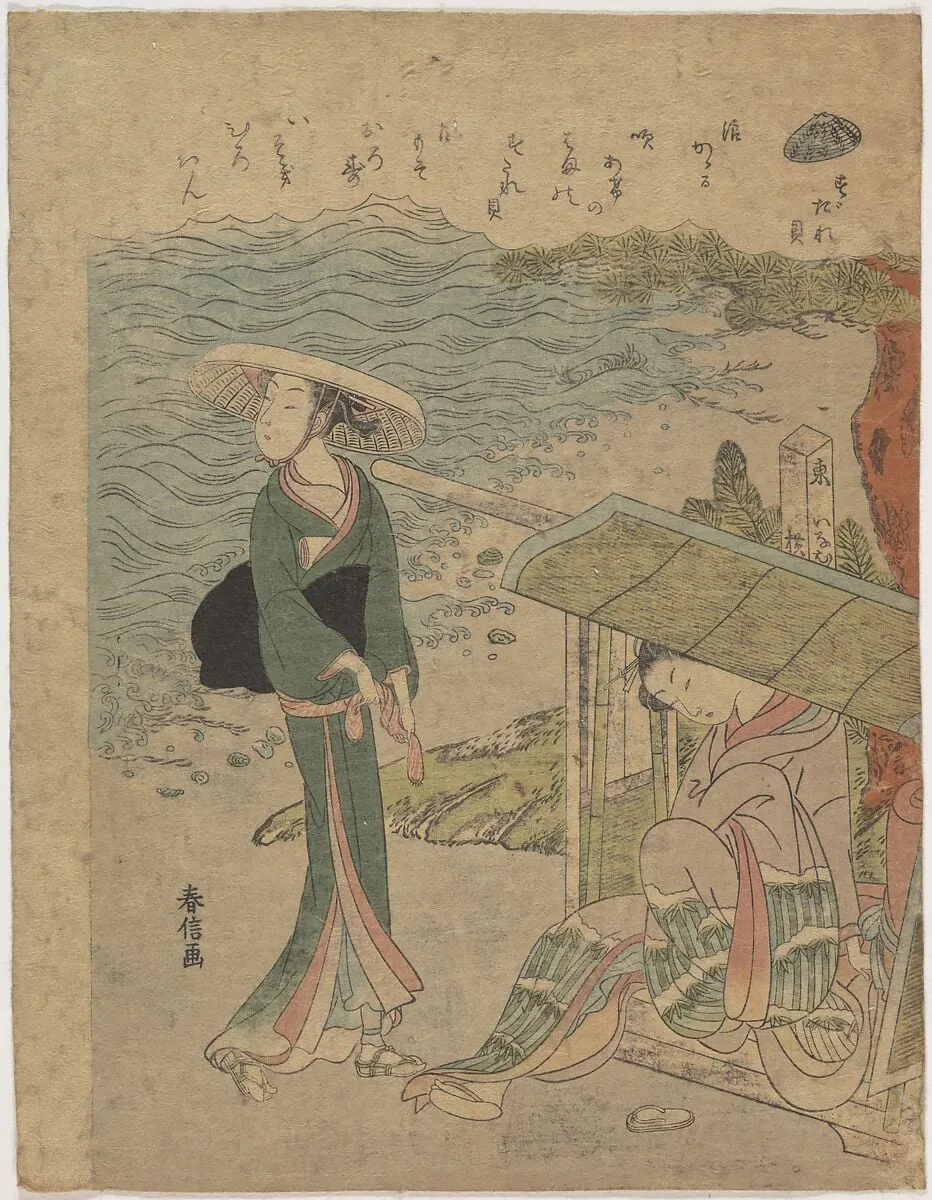
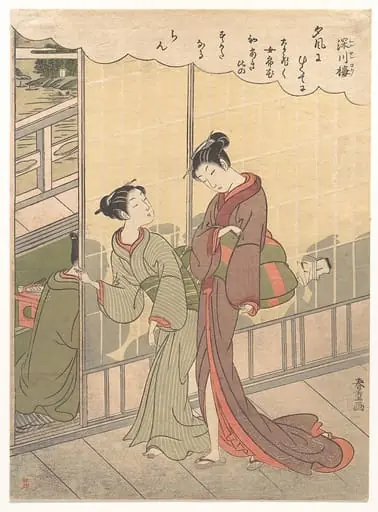
すだれ貝|The Curtain Clam is an ink print by the Baroque artist Suzuki Harunobu. It dates from 1748 and is held in the collection of the Metropolitan Museum of Art.
About this work
Overview
The Curtain Clam (Sudaregai) is a woodblock print by the Japanese ukiyo-e artist Suzuki Harunobu (1725-1770), produced during the Edo period (1615-1868).
The Curtain Clam (Sudaregai) is a woodblock print by the Japanese ukiyo-e artist Suzuki Harunobu (1725-1770), produced during the Edo period (1615-1868). Executed in ink and color on paper, the print measures 11 1/4 inches in height and 8 9/16 inches in width (28.6 × 21.7 cm). It belongs to the genre of nishiki-e (full-color prints) and is classified as a mitate-e, a type of image that employs poetic allusion. The work is held in the collection of the Metropolitan Museum of Art in New York, where it entered as part of the H. O. Havemeyer Collection through the bequest of Mrs. H. O. Havemeyer in 1929 (object number JP1635). The print is significant as an example of Harunobu's delicate color harmonies and his role in developing the multicolor woodblock print technique in mid-18th-century Japan.
Subject & Meaning
The print depicts two women on a shoreline beside stylized waves, engaged in what appears to be a spring outing. One woman stands wearing a wide straw hat and a dark green kimono with pink trim, holding a small object in her right hand and looking toward the second woman. The seated figure, positioned beneath a small slanted shelter, leans forward with her head bowed, wearing layered garments in pale pink, green, and white. A pair of sandals lies on the ground near her. The scene includes a small stone marker with vertical text near the shelter, and Japanese calligraphy runs across the top of the image with a small shell illustration in the upper right corner. The title refers to the sudare, a type of bamboo blind or curtain, which the Metropolitan Museum's curatorial notes identify as covering the window of the palanquin that carried these courtesans to the shore. The clam shell itself functions as a multivalent symbol: its shape evokes domestic interiors and female reclusiveness, while the pearl-producing oyster suggests feminine beauty. The accompanying poem speaks of gathering shells hurriedly as waves wash onto shore, reinforcing the seasonal, recreational nature of the excursion. The work thus operates on multiple registers, depicting a leisure activity while embedding social commentary about the confined spaces and economic dependency of women in Edo-period Japan.
Technique & Style
The Curtain Clam exemplifies the nishiki-e technique that Harunobu helped pioneer, employing multiple woodblocks to achieve subtle gradations of color. The palette is notably subdued, consisting of soft greens, pinks, blues, and beige on aged paper. The technique relies on flat color areas with fine black outlines, characteristic of woodblock printing, with no strong shadows and even, diffuse light throughout. The production of such subtle color transitions required precise carving, careful registration, and layered ink application, demanding collaboration among artists, carvers, printers, and publishers. The composition is vertically oriented, with the standing figure occupying the left side and the seated figure the lower right, creating a balanced but dynamic arrangement against early in the development of full-color printing. The gentle handling of color and the tranquil atmosphere distinguish this work within Harunobu's oeuvre and within Edo-period printmaking more broadly.
History & Provenance
The print was created during the mid-18th century, within the Edo period, by Suzuki Harunobu, who was active from approximately 1725 to 1770. The work was acquired by the Metropolitan Museum of Art as part of the H. O. Havemeyer Collection, entering the museum through the bequest of Mrs. H. O. Havemeyer in 1929. It bears the object number JP1635 and is housed in the museum's Department of Asian Art. The print has been made available through the museum's Open Access program, which provides public domain images for unrestricted commercial and noncommercial use. No specific exhibition history is recorded in the available sources beyond its inclusion in the permanent collection.
Context
Suzuki Harunobu was a central figure in the development of ukiyo-e during the mid-Edo period, credited with perfecting the nishiki-e technique that allowed for full-color printing. The Curtain Clam belongs to a broader tradition of mitate-e, prints that employ visual and poetic allusion to create layered meaning. The work reflects popular Edo-period pastimes such as seasonal outings to admire blossoms or visit temples, activities that were frequently depicted in ukiyo-e prints and consumed by a growing urban audience. The print's production supported an extensive economy of craftspeople, bookshops, and patrons who reproduced and distributed such images widely. Art historical scholarship has increasingly focused on the social dimensions of such genre scenes, examining how representations of women in idyllic settings simultaneously mask and reveal the economic constraints and gendered social structures of Edo-period Japan. The Metropolitan Museum's curatorial interpretation explicitly invites consideration of how status and gender roles are inscribed within these seemingly peaceful images of leisure.
Legacy
The Curtain Clam remains an important touchstone for understanding both the technical achievements and the social complexities of Harunobu's work. As part of the Metropolitan Museum's collection, it continues to serve as a resource for scholars and students of Japanese art, made accessible through the museum's Open Access API. The print's afterlife in contemporary scholarship reflects broader shifts in art historical methodology, from formal appreciation of color and composition toward critical examinations of how such images construct and reflect gendered and class-based social relations. The work's continued presence in museum collections and digital archives ensures its role in ongoing dialogues about the function of art within society, the economics of print production, and the representation of women in Edo-period visual culture.
Artist & collection

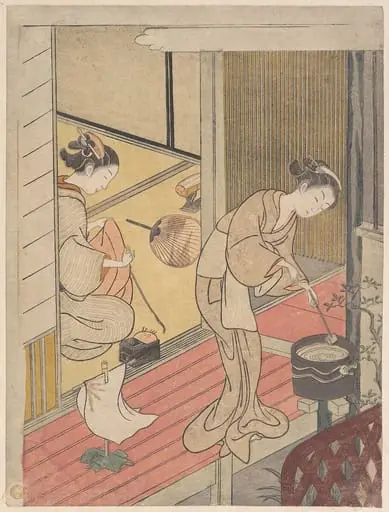
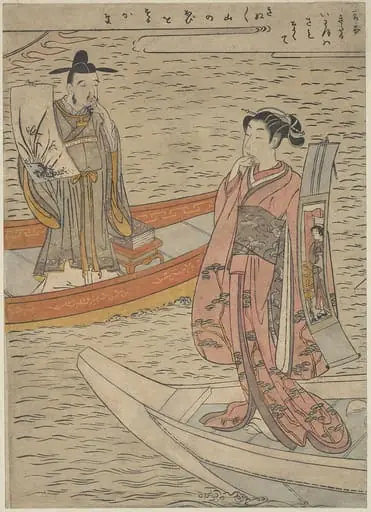
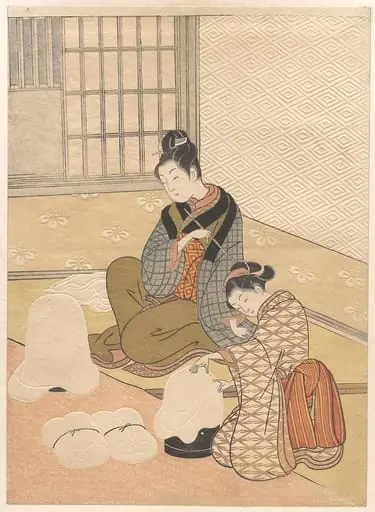
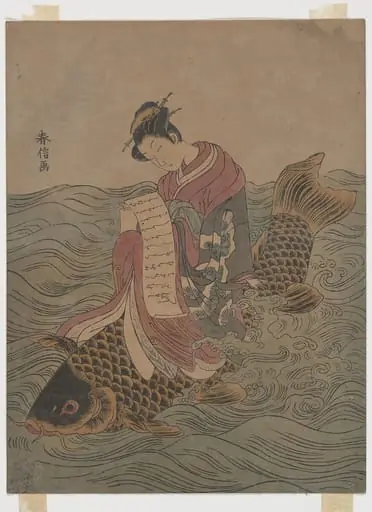
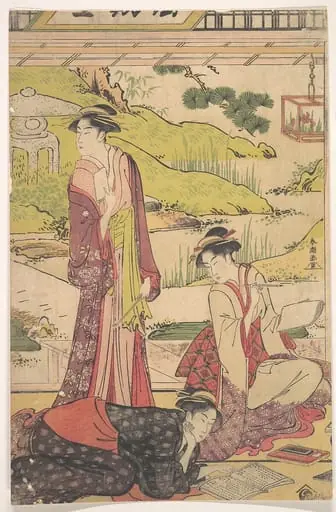
- あやめ燈籠図|Three Women Enjoying Literary Pursuits
 Untitled
 鈴木春信画 若水を汲む男女|Drawing the First Water of the New Year
 Untitled
 Man and Two Women at the Sea Shore
 「風流六く歌仙紀友則 十」|“Two Young Women on a Verandah Watching Plovers,” from the series Stylish Six Poetic Immortals (Fūryū rokkasen: Ki no Tomonori, jū)
 初詣|Young Women Visiting a Shinto Shrine
 Untitled
 Umemi Tsuki|Plum-Seeing Month: Second Month
 No Title
 Woman with Papers in Mouth and Fan in Hand
 Untitled