Artwork
Untitled
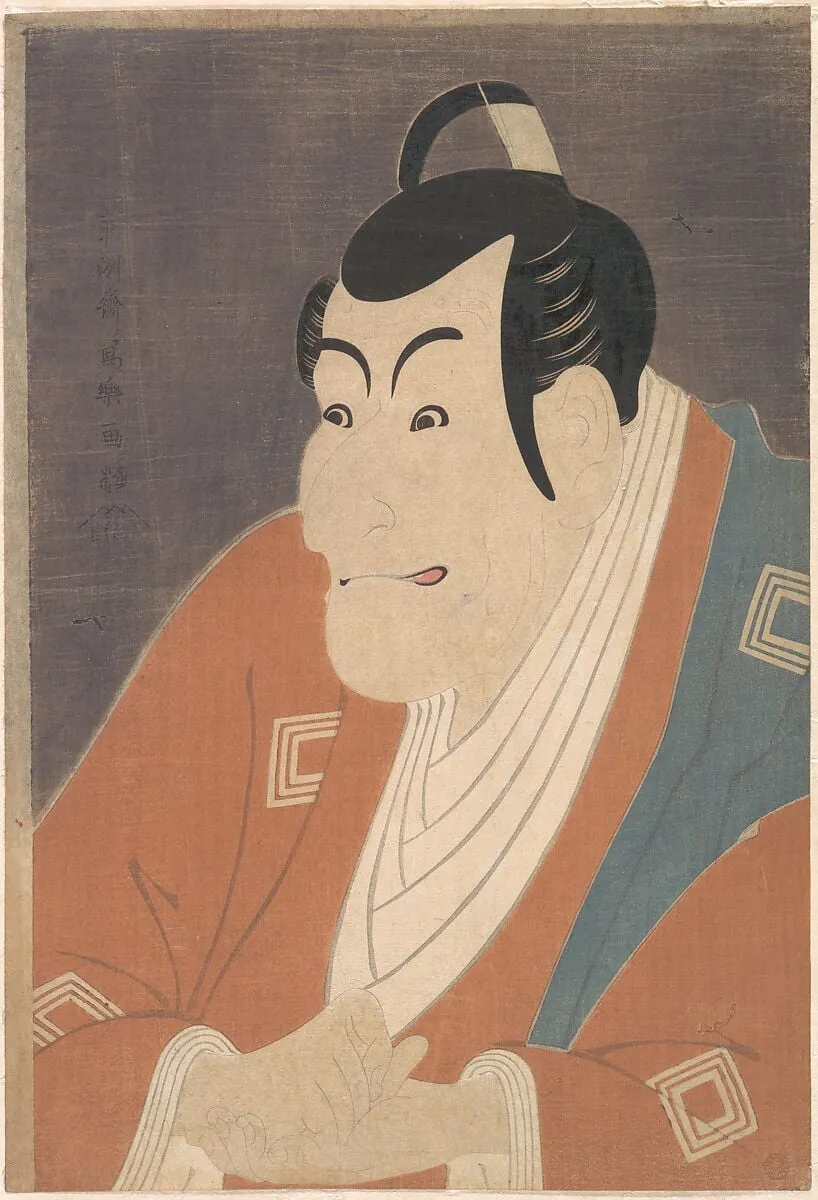
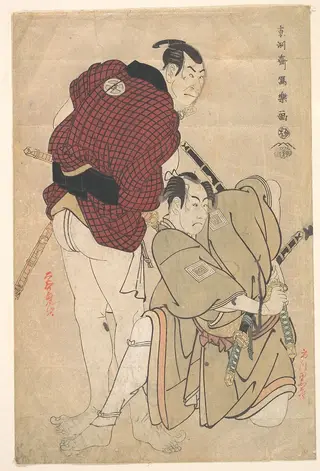
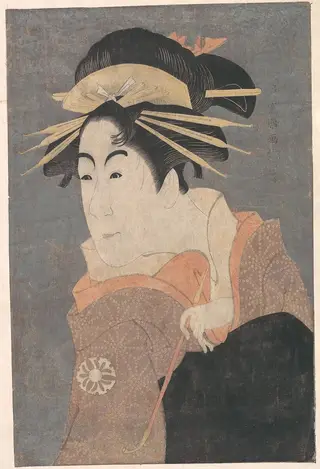
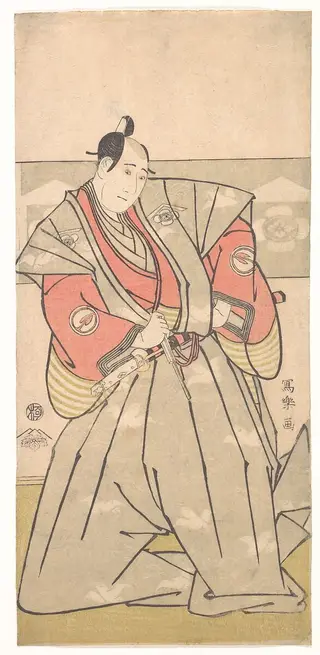
Untitled is an ink print by the Impressionist artist Tōshūsai Sharaku. It is held in the collection of the Metropolitan Museum of Art.
- Accession no.
- JP733
About this work
Look up more prints of actors to see how Sharaku turned stage poses into bold, quick images.
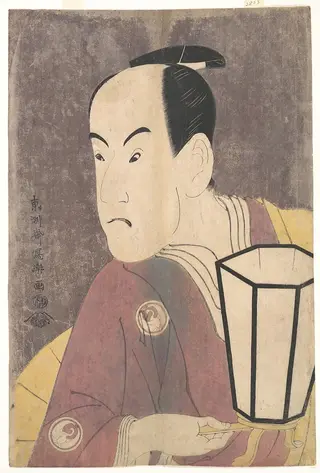
A man in a dark robe glares at you, his face twisted in anger. His eyebrows are sharp, his mouth tight. The background is plain, so your eyes stay on him.
This print is one of Sharaku’s actor portraits. He made them for just ten months in 1794, then vanished. No one knows why he stopped or where he went. The faces he drew feel exaggerated, almost like cartoons, but they show real emotions.
Look up more prints of actors to see how Sharaku turned stage poses into bold, quick images.
Subject & Meaning
The print portrays the celebrated kabuki actor Ichikawa Danjūrō V in a dynamic pose, rendered with exaggerated facial features characteristic of Sharaku’s style. The work functions as a yakusha-e portrait, emphasizing theatricality and the individuality of the performer within the ukiyo-e tradition. Its composition and iconography highlight the cultural significance of actor imagery in Edo-period Japan, reflecting both contemporary audience fascination and Sharaku’s innovative approach to portraiture.
Technique & Style
The impression is a polychrome woodblock print (nishiki-e) created in 1794 using ink and mineral-based pigments on paper. It belongs to the ōkubi-e genre, characterized by large, expressive head-and-shoulders compositions that dominate the vertical format.
The print’s vertical orientation measures 36.5 cm in height and 24 cm in width. Its composition centers on a single male figure, rendered with Sharaku’s distinctive, incisive line and asymmetrical, close-cropped framing. The facial features are sharply delineated, with exaggerated expressions and individualized physiognomic traits, while the garment details employ delicate gradations of color and subtle embossing to suggest texture.
History & Provenance
Untitled is a woodblock print created by Tōshūsai Sharaku in 1794, depicting the actor Ichikawa Danjūrō V. As a yakusha-e ōkubi-e, it was produced during Sharaku’s brief but active period in Edo. The print entered museum collections and is now held by the Brooklyn Museum, the Metropolitan Museum of Art, and the Library of Congress, reflecting its acquisition history over the twentieth and twenty‑first centuries. No record of a specific commission survives.
Overview
This woodblock print, executed in ink and color on paper, presents a solitary figure in a dark robe whose expression is dominated by a fierce, tightly‑drawn mouth and sharply angled eyebrows. The stark, unadorned background isolates the subject, directing the viewer’s attention to the intensity of his gaze and the exaggerated emotional charge of his visage.
Context
The portrait is part of a larger body of Edo‑period prints that documented contemporary kabuki theater. Sharaku’s approach differed from his peers by focusing on psychological depth rather than idealised beauty, translating theatrical gestures into compact, visually striking compositions that resonated with a public fascinated by the drama of the stage.
Artist & collection

 Untitled
 Untitled
 Untitled
 Untitled
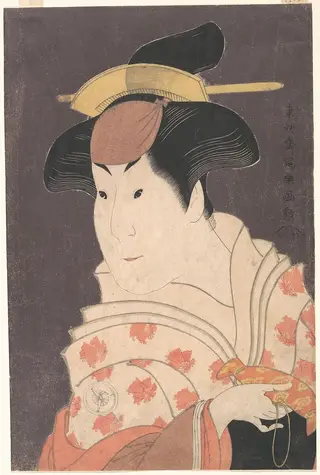 東洲斎写楽画 四代岩井半四郎の重の井 『恋女房染分手綱』|Iwai Hanshirō IV as Shigenoi in the Play "Koinyōbō Somewake Tazuna"
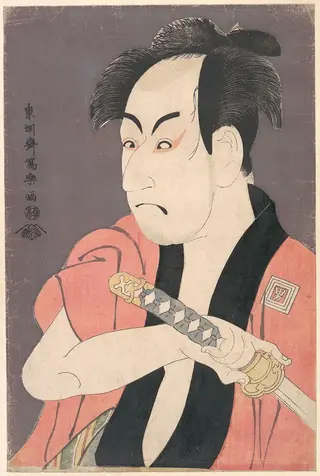 東洲斎写楽画 初代市川男女蔵の奴一平 『恋女房染分手綱』|Ichikawa Omezō I in the Role of Yakko Ippei from the Play "Koinyōbō somewake tazuna"
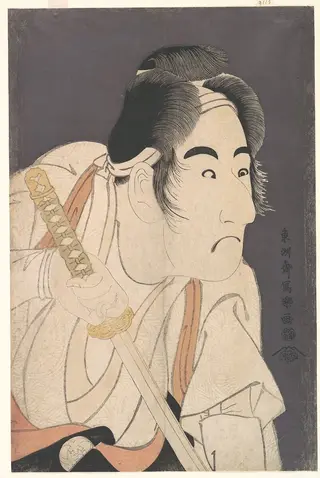 東洲斎写楽画 二世坂東三津五郎の石井源蔵 『花菖蒲文禄曽我』|Bandō Mitsugorō II as Ishii Genzō in the Play "Hana-ayame Bunroku Soga"
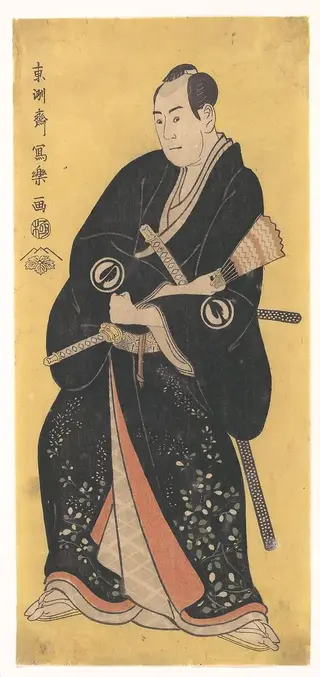 Untitled
- Ichikawa Ebizō IV (Danjurō) as Takemura Sadanoshin in The Loving Wife's Parti-Colored Reins
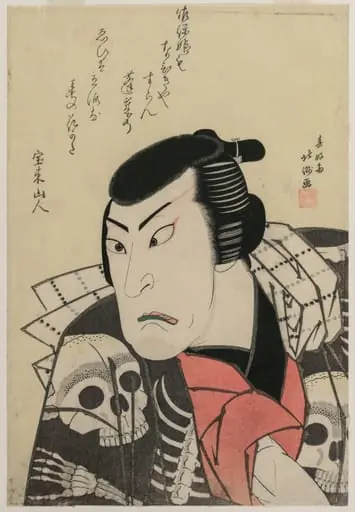 Actor Ichikawa Ebijūrō I as Tōken (China Dog) Jūbei, in the play Red and Purple, Rich Dyes of Osaka (Benimurasaki ai de someage)
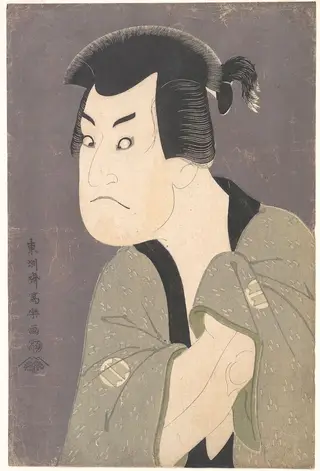 東洲斎写楽画 三世坂田半五郎の藤川水右衛門 『花菖蒲文禄曽我』|Sakata Hangorō III as Fujikawa Mizuemon in the Play "Hana Ayame Bunroku Soga"
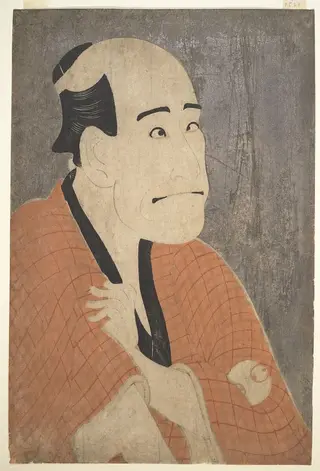 Untitled
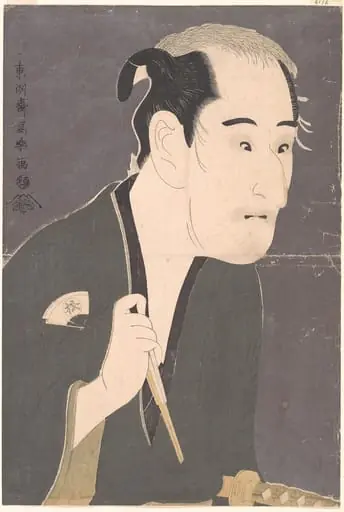 東洲斎写楽画 尾上松助の松下酒之進 『敵討乗合話』|Onoe Matsusuke I as Matsushita Mikinojō in the Play "Katakiuchi noriyaibanashi"
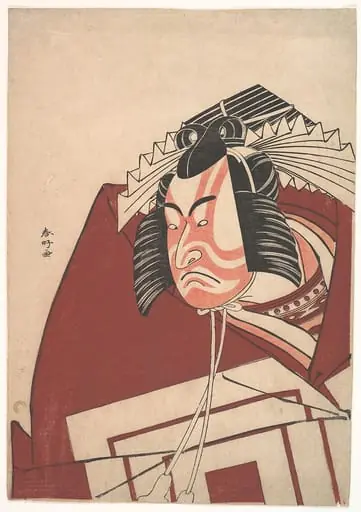 勝川春好画 二代目市川門之助|Ichikawa Monnosuke II in a Shibaraku Performance
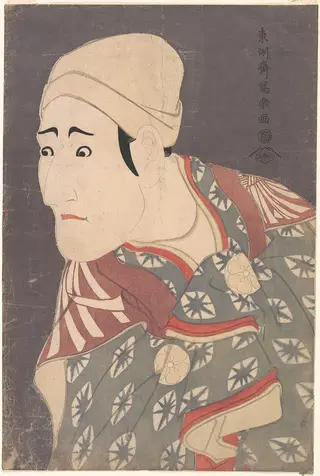 八代目守田勘弥の鴬の次郎作|Kabuki Actor Morita Kan’ya VIII as the Palanquin-Bearer in the Play A Medley of Tales of Revenge (Katakiuchi noriaibanashi)
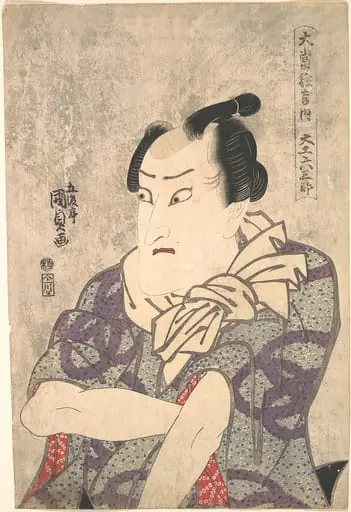 O Ateri Kyogen Uchi|Wild Words - a Play
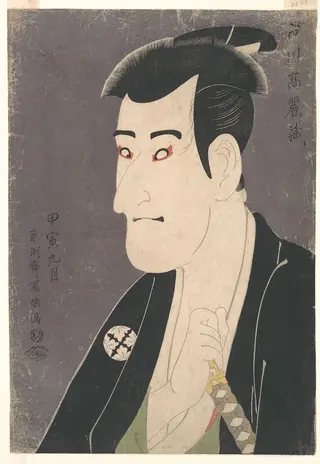 三代目市川高麗蔵の志賀大七|Kabuki Actor Ichikawa Komazō III as Shiga Daishichi in the Play A Medley of Tales of Revenge (Katakiuchi noriaibanashi)
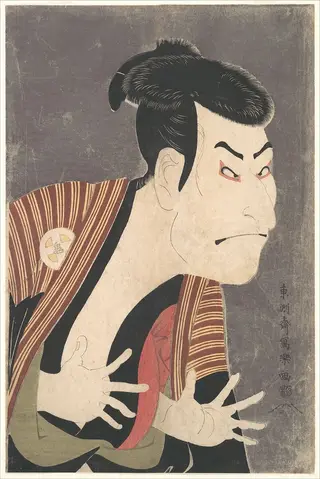 東洲斎写楽画 三代目大谷鬼次の奴江戸兵衛|Kabuki Actor Ōtani Oniji III as Yakko Edobei
 Untitled
 Untitled