Artwork
Ichikawa Ebizō IV (Danjurō) as Takemura Sadanoshin in The Loving Wife's Parti-Colored Reins
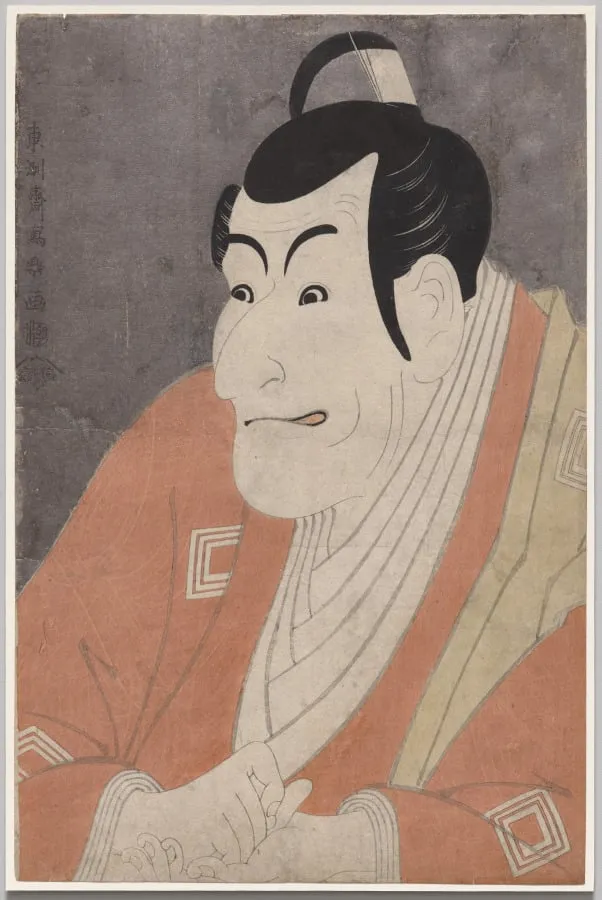
Ichikawa Ebizō IV (Danjurō) as Takemura Sadanoshin in The Loving Wife's Parti-Colored Reins is a print by the Romanticist artist Tōshūsai Sharaku. It dates from 1794 and is held in the collection of the Cleveland Museum of Art.
- Accession no.
- 1930.205
- Credit line
- Bequest of Edward L. Whittemore
About this work
Overview
This woodblock print depicts Ichikawa Ebizō IV in the role of Takemura Sadanoshin, a character from the Kabuki play The Loving Wife's Parti-Colored Reins.
This woodblock print depicts Ichikawa Ebizō IV in the role of Takemura Sadanoshin, a character from the Kabuki play The Loving Wife's Parti-Colored Reins. Produced during the late 18th century, it belongs to the yakusha-e tradition, portraits of popular actors in dramatic roles. Such prints were widely circulated among theater enthusiasts as collectible mementos, capturing fleeting performances in a medium that bridged art and popular culture.
Subject & Meaning
The scene portrays a father’s final encounter with his daughter before her exile for an illicit romance. Takemura Sadanoshin’s intense expression and clenched sword convey suppressed grief and moral conflict. The moment is charged with emotional restraint, typical of Kabuki’s dramatic conventions, where inner turmoil is externalized through posture and costume rather than dialogue. The father’s silent presence underscores the tragedy of familial duty clashing with personal love.
Technique & Style
The print employs bold, contrasting colors, vibrant red and black patterns on the robe, set against a flat gold background that eliminates spatial distraction and focuses attention on the actor’s face. The use of strong outlines and stylized shading enhances the theatricality of the pose, while the angular composition mirrors the rigid formality of Kabuki’s mie poses. The artist’s limited palette and sharp contours reflect the aesthetic priorities of ukiyo-e portraiture at the time.
History & Provenance
The print was created during Ichikawa Ebizō IV’s peak years as a leading Kabuki actor, though the artist responsible produced only a brief series before disappearing from the record. The reason for his sudden cessation of work remains unknown. Such prints were typically commissioned by publishers and sold in urban centers like Edo, where theater culture thrived. Their ephemeral nature meant many were discarded after use, making surviving examples rare.
Context
Kabuki theater emerged in the early Edo period as a form of popular entertainment, blending dance, music, and stylized drama. By the late 1700s, it had developed elaborate narratives and highly codified performance techniques. Actor portraits like this one served both as advertising and as personal mementos for devoted fans.
The genre reflected broader societal interests in celebrity, emotion, and the transient beauty of performance, themes central to ukiyo-e as a whole.
Legacy
Though the artist’s career was brief, this print exemplifies the height of yakusha-e production during the Edo period. It contributed to the enduring visual language of Kabuki representation, influencing later generations of printmakers. The work remains a key reference for understanding how performance, identity, and emotion were rendered in Japanese popular art, preserving the memory of actors whose lives were otherwise undocumented.
Artist & collection

 Untitled
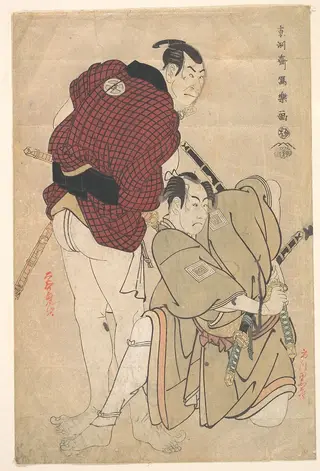 Untitled
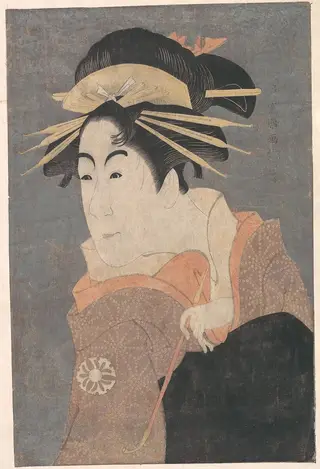 Untitled
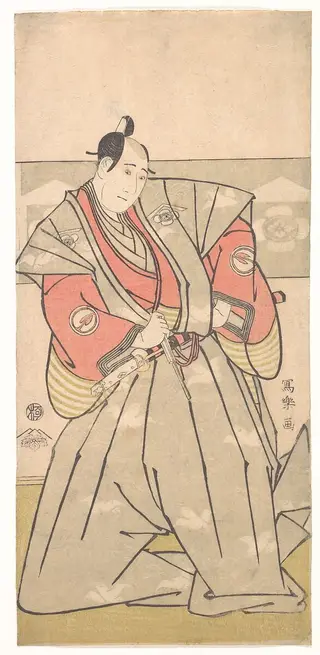 Untitled
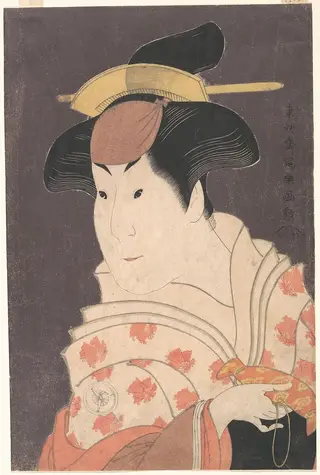 東洲斎写楽画 四代岩井半四郎の重の井 『恋女房染分手綱』|Iwai Hanshirō IV as Shigenoi in the Play "Koinyōbō Somewake Tazuna"
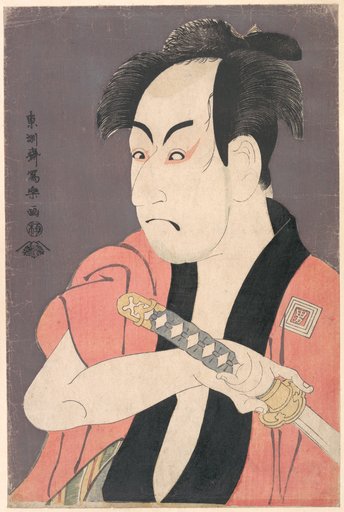
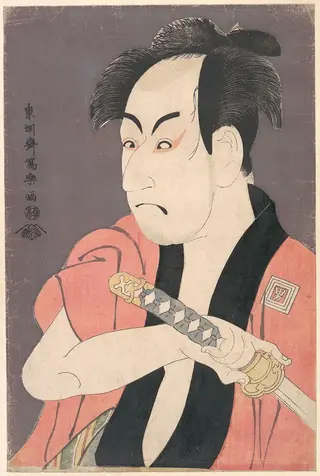 東洲斎写楽画 初代市川男女蔵の奴一平 『恋女房染分手綱』|Ichikawa Omezō I in the Role of Yakko Ippei from the Play "Koinyōbō somewake tazuna"
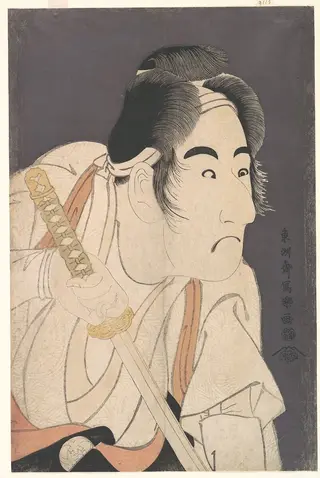 東洲斎写楽画 二世坂東三津五郎の石井源蔵 『花菖蒲文禄曽我』|Bandō Mitsugorō II as Ishii Genzō in the Play "Hana-ayame Bunroku Soga"
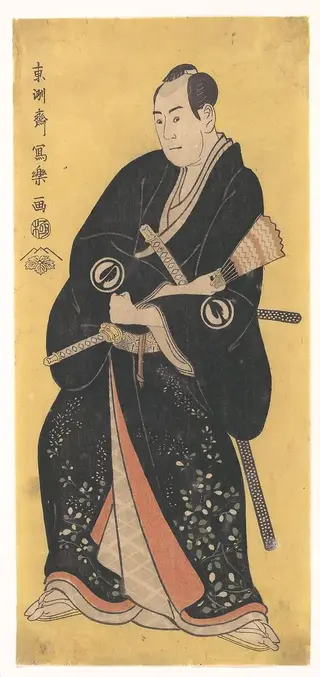 Untitled
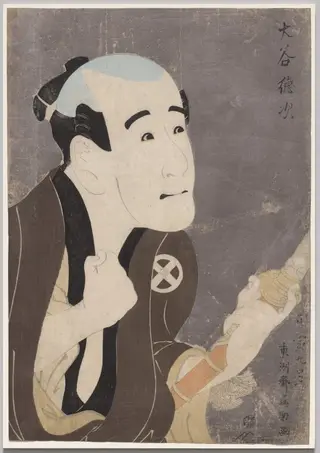
- Otani Tokuji I as the Retainer Sodesuke in "Flowering Irises: A Soga Vendetta of the Bunroku Era"
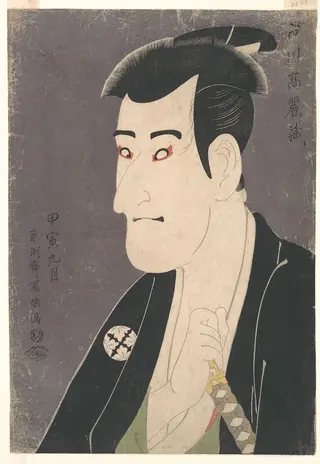 三代目市川高麗蔵の志賀大七|Kabuki Actor Ichikawa Komazō III as Shiga Daishichi in the Play A Medley of Tales of Revenge (Katakiuchi noriaibanashi)
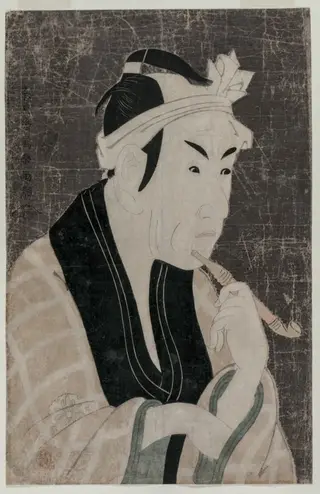 Matsumoto Koshiro IV as Gorobei, the Fish Seller from Sanya
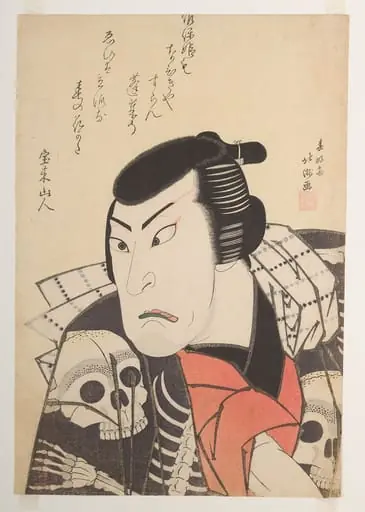 春好斎北洲画 初代市川鰕十郎 「紅紫大坂潤」|Kabuki Actor Ichikawa Ebijūrō I as Tōken (China Dog) Jūbei, in the play Benimurasaki ai de someage (Red and Purple, Rich Dyes of Osaka)
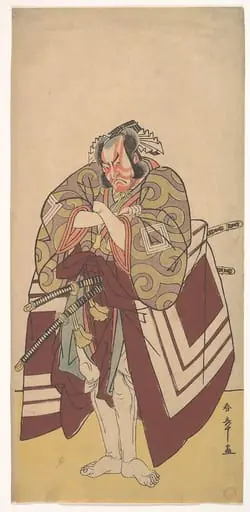 五代目市川団十郎|Kabuki Actor Ichikawa Danjūrō V in a Shibaraku (Stop Right There!) Role
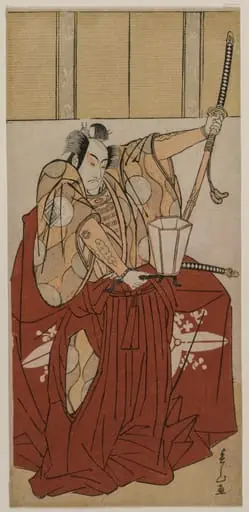 Ichikawa Monnosuke II as Urabe no Suetake