Artwork
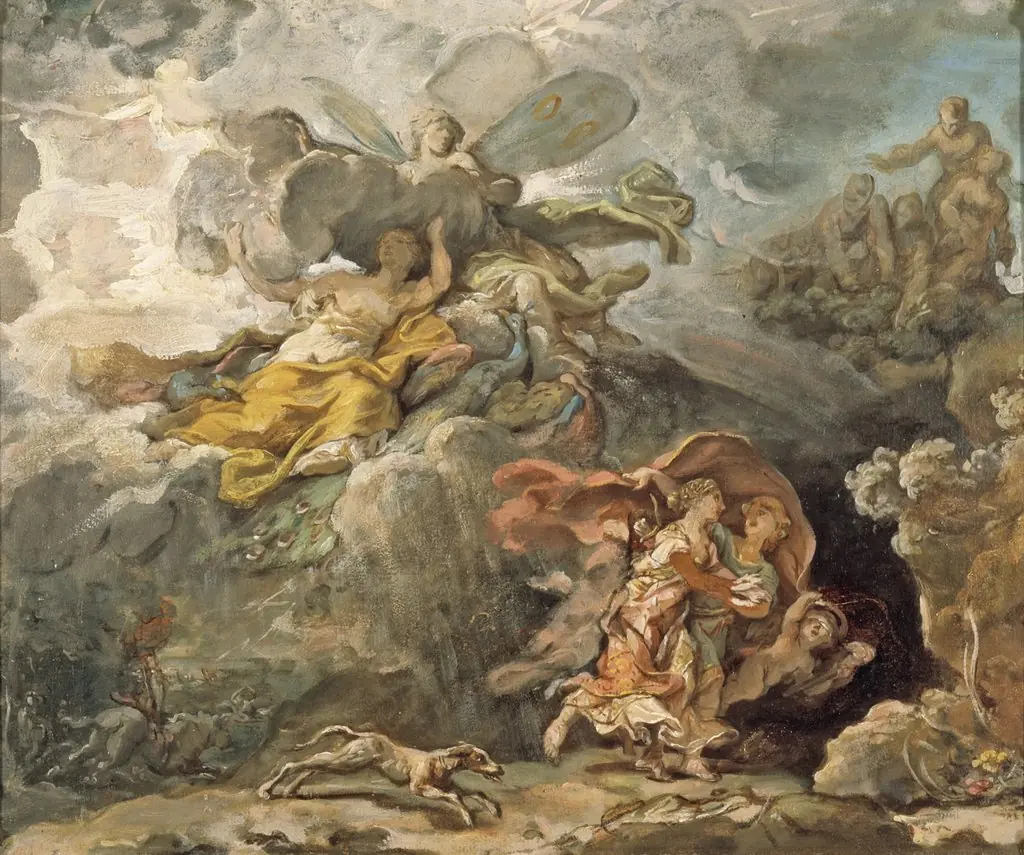
Diana and Virtus Punish Venus and Bacchus
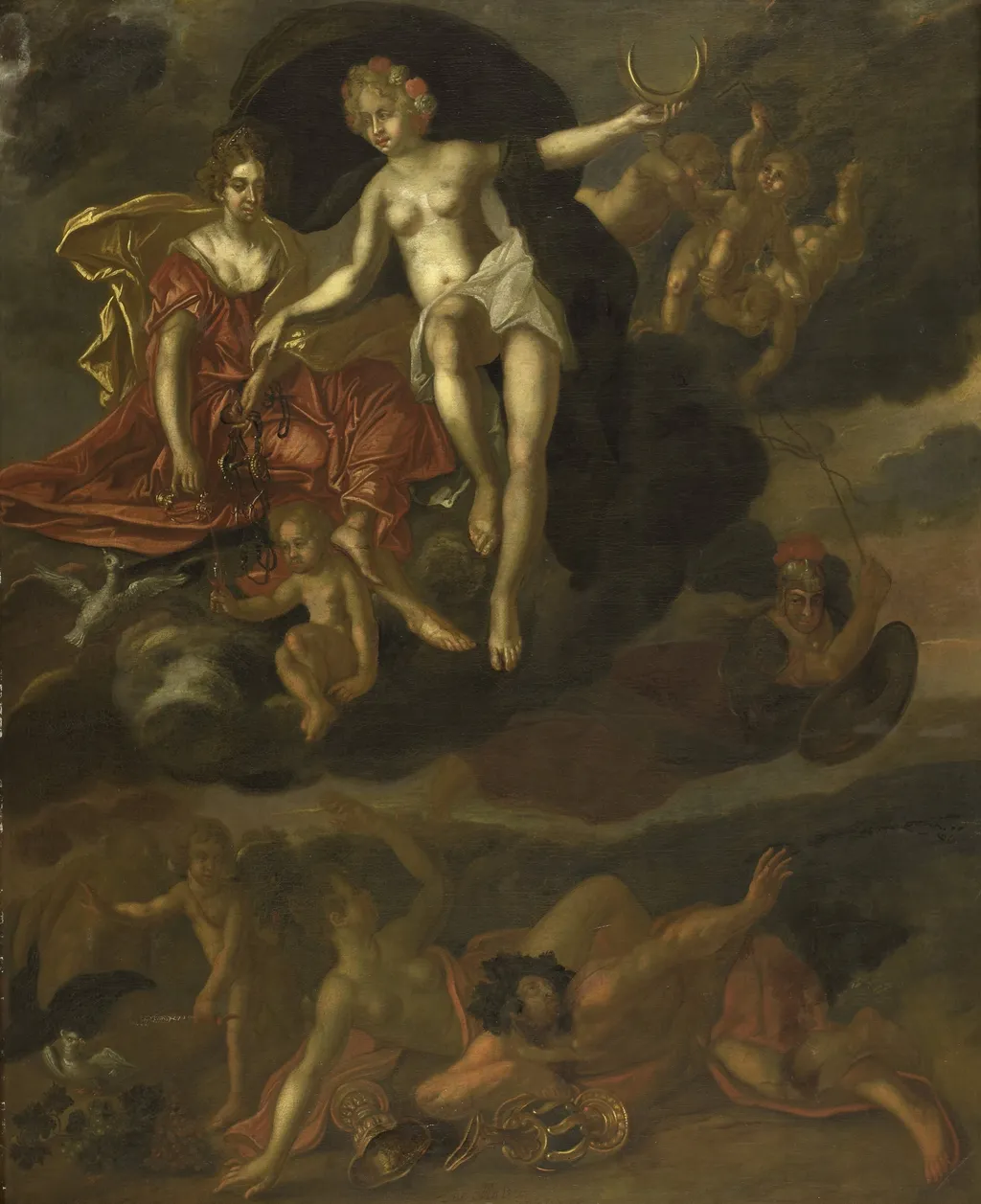
Diana and Virtus Punish Venus and Bacchus is an oil painting by the Dutch Golden Age artist T. van Malsen. It dates from 1698 and is held in the collection of the Rijksmuseum. Created in 1698 by the Dutch painter T.
About this work
Technique & Style
The painting is executed in oil on canvas, with the support measuring 192 cm in height and 157 cm in width.
The painting is executed in oil on canvas, with the support measuring 192 cm in height and 157 cm in width. The handling reflects a late 17th-century Dutch approach, evident in the smooth modeling of figures and controlled chiaroscuro that heightens the dramatic confrontation between the protagonists. Stylistically, the composition aligns with the period's mythological genre, featuring classical figures rendered with restrained naturalism and a subdued palette dominated by earth tones and cool highlights.
The scene's symmetrical arrangement underscores the moral allegory, with Diana and Virtus positioned as agents of punishment over Venus and Bacchus, whose intoxicated languor contrasts with their stern demeanor.
History & Provenance
Diana and Virtus Punish Venus and Bacchus was created in 1698 by the artist T. van Malsen. The work entered the collection of the Rijksmuseum, where it remains today. Its dimensions are recorded as 192 cm in height and 157 cm in width, and it is classified as a mythological painting on canvas using oil paint. No specific accession number or exhibition history is provided in the available records.
Legacy
The painting Diana and Virtus Punish Venus and Bacchus by T. van Malsen, created in 1698, has been part of the Rijksmuseum collection, where it contributes to scholarly discussions on Baroque interpretations of classical mythology. Its depiction of mythological figures is referenced in studies of 17th- and early 18th-century narrative painting and the evolution of moral allegory in Dutch art. Scholars note its role in shaping visual representations of virtue and excess, contributing to broader analyses of moralizing art in the late 17th century.
Overview
Created in 1698 by the Dutch painter T. van Malsen, this oil on canvas presents a mythological tableau titled Diana and Virtus Punish Venus and Bacchus. The work is part of the Rijksmuseum’s collection and illustrates a dramatic encounter among classical deities, rendered in a richly colored, nocturnal setting.
Subject & Meaning
The composition brings together the huntress Diana, the personified virtue Virtus, and the love and wine gods Venus and Bacchus. Diana and Virtus appear to chastise the indulgent pair, suggesting a moral contrast between chastity and restraint versus sensual excess. A infant clutching a string of pearls adds a subtle note of innocence amid the tension.
Context
The work reflects the era’s fascination with moralizing narratives drawn from antiquity, a trend that allowed painters to explore virtue versus vice within a familiar mythic framework. By juxtaposing the austere Diana with the indulgent Venus and Bacchus, van Malsen engages contemporary debates about temperance and the role of art in moral instruction.
Own this work as a print
Artist & collection
Artist
Dutch painter from the late 1600s who worked in a style heavy on mythological figures and dramatic contrasts of light.

 The Ecstasy of the Magdalen
 Juno asks Aeolus to destroy Aeneas's ships
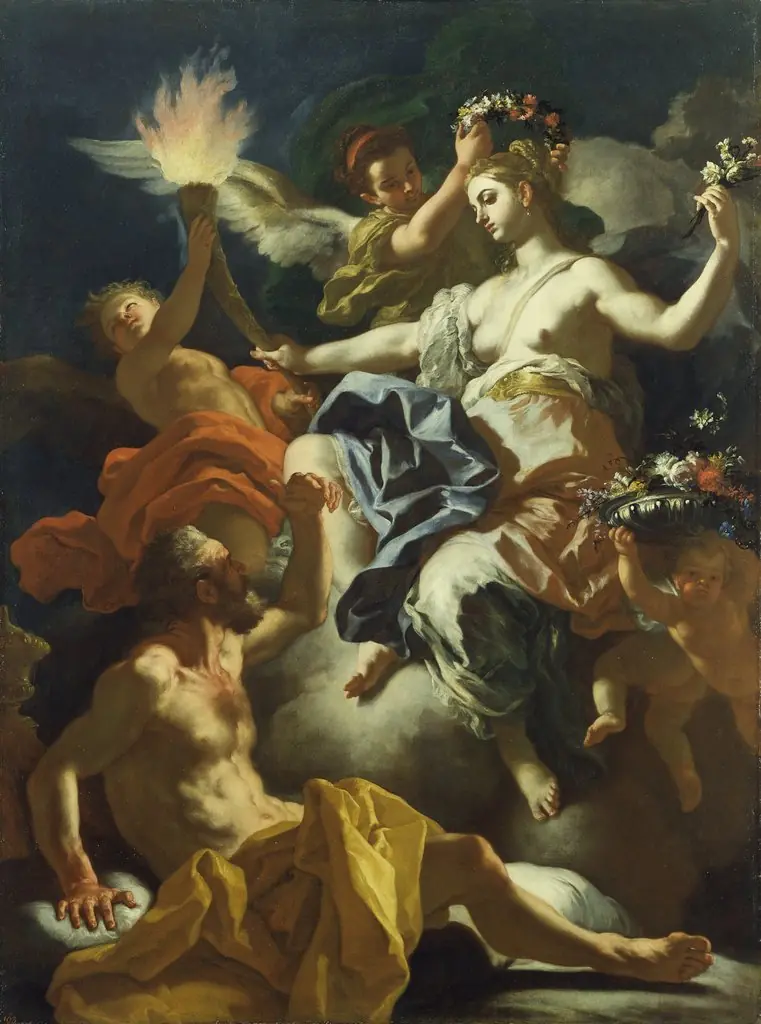 Aurora Taking Leave of Tithonus
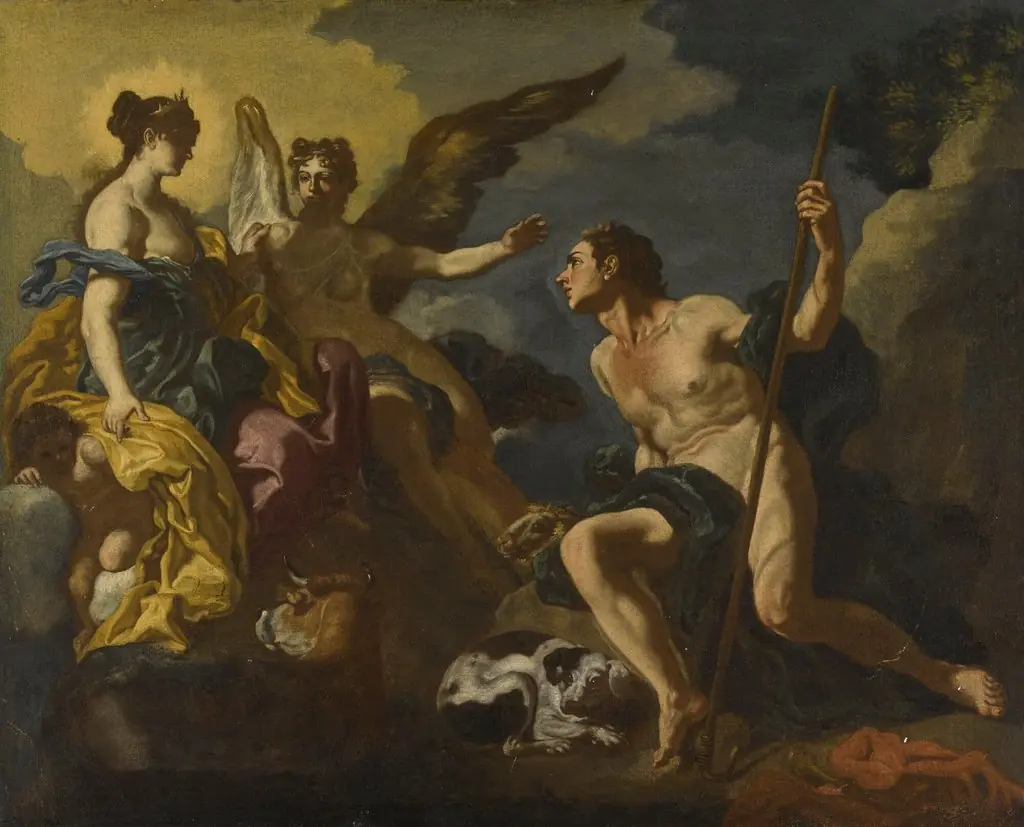 Juno, Io and Argus
 Study for "The Assumption of the Virgin" for San Augustín, Seville
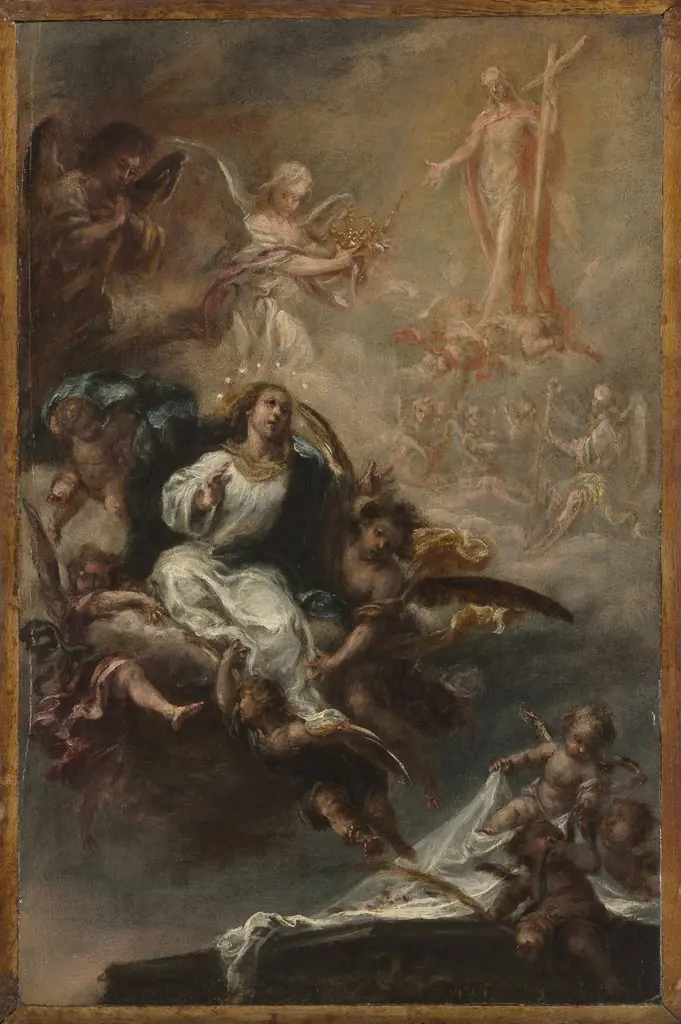 Study for "The Assumption of the Virgin" for San Augustín, Seville
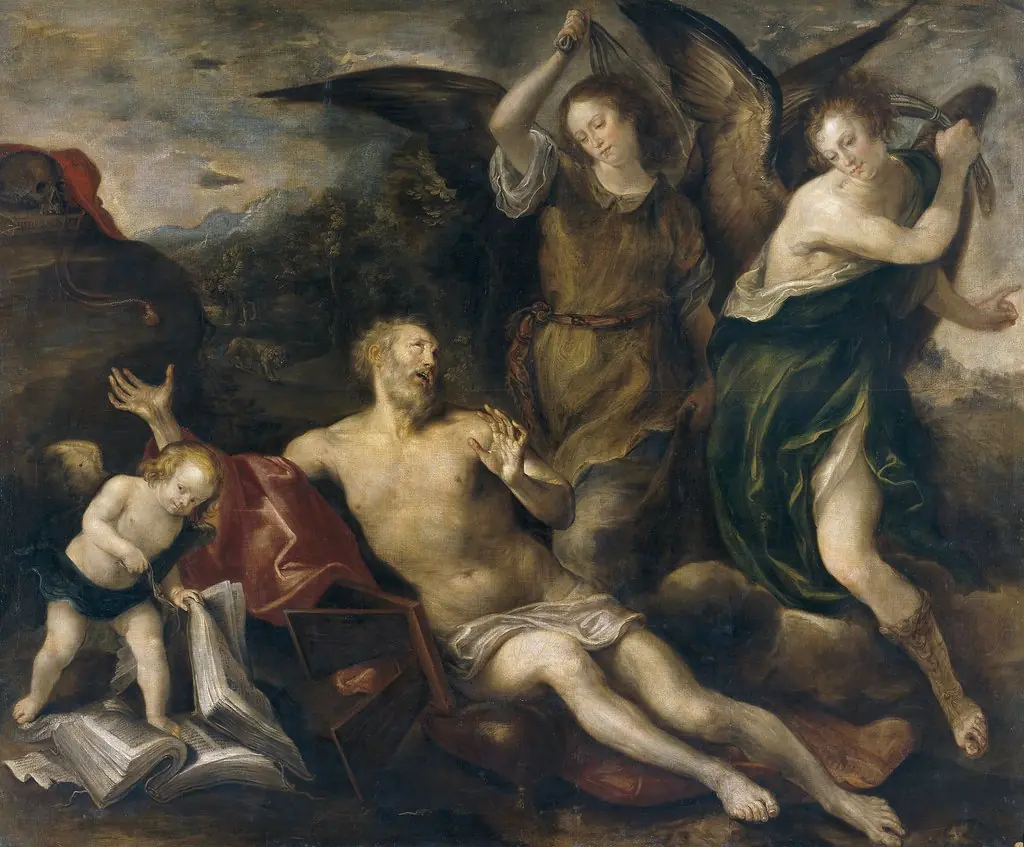 Saint Jerome Whipped by Angels
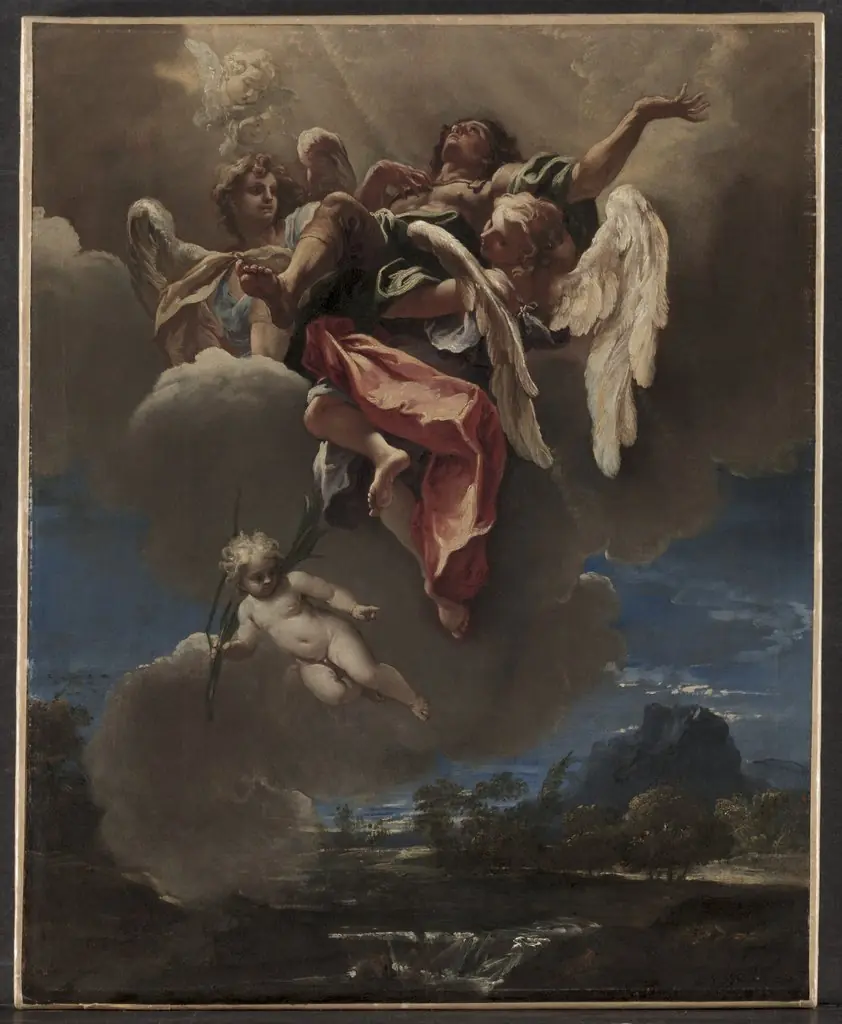 Study for "An Apotheosis of a Saint" (for San Bernardino dei Morti, Milan)
 The Apotheosis of Aeneas
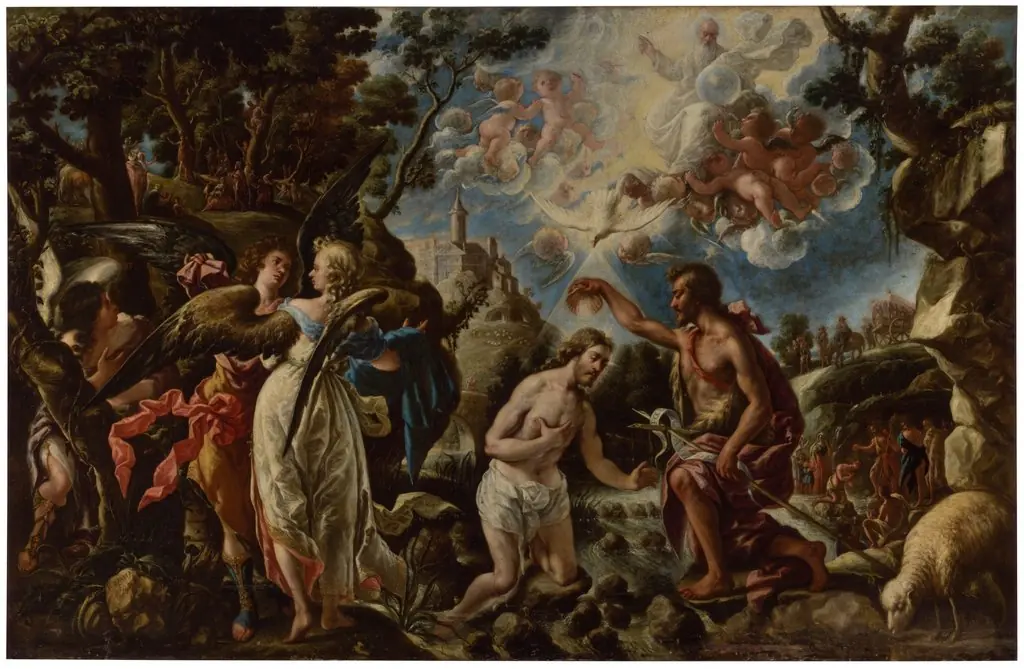 El Bautismo de Cristo
 Aeneas and Dido Fleeing the Storm
- Diana and Endymion