Artwork
墨竹扇面図|Bamboo and Rocks by a Stream
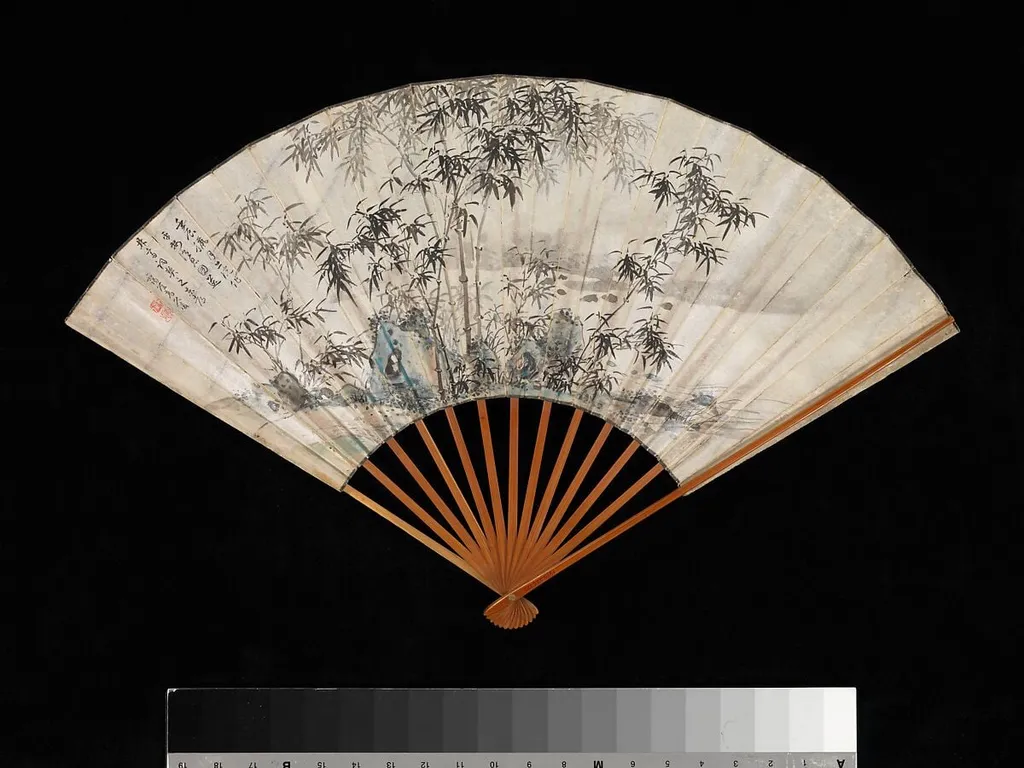
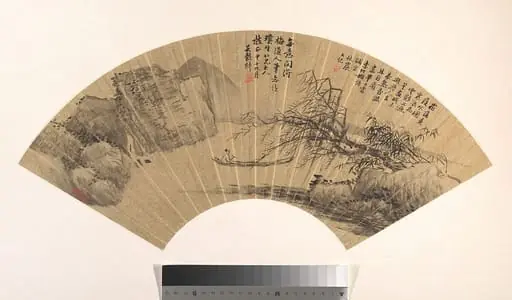
墨竹扇面図|Bamboo and Rocks by a Stream is an ink painting by the Nihonga artist Takaku Aigai. It dates from 1832 and is held in the collection of the Metropolitan Museum of Art.
About this work
Subject & Meaning
Rendered in ink on paper on a folding fan, it exemplifies the landscape genre within Japanese painting of the early 19th century.
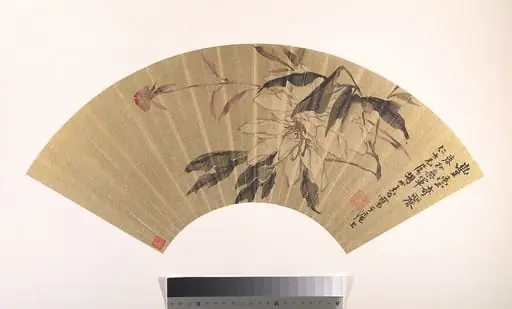
The work portrays a naturalistic scene of bamboo stalks and rocks beside a flowing stream, identified as Bambusoideae. Rendered in ink on paper on a folding fan, it exemplifies the landscape genre within Japanese painting of the early 19th century. The composition emphasizes the delicate rendering of vegetation and the tranquil atmosphere typical of Edo‑period literati art.
The piece was created by Takaku Aigai in 1832 and is part of the Metropolitan Museum of Art's collection.
Technique & Style
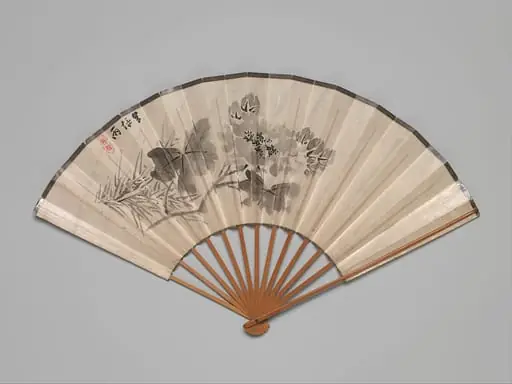
Takaku Aigai executed Bamboo and Rocks by a Stream in 1832 using ink on paper mounted on a folding fan with wood ribs. The work belongs to the landscape genre, depicting bamboo (Bambusoideae) in a natural setting. The fan format, measuring 28.7 cm in height and 45.7 cm in width, dictated a compact, horizontal composition that required economical brushwork and careful spatial planning.
Aigai's ink technique exploits tonal gradations, ranging from wet, diluted washes to drier, darker strokes, to model the bamboo stalks, leaves, and rocks beside the stream. The choice of monochrome ink rather than color aligns with East Asian literati conventions that privilege expressive brushwork and tonal subtlety over chromatic description. The wood ribs provide structural support while integrating into the overall aesthetic of the functional object.
History & Provenance
Created in 1832 by the Japanese artist Takaku Aigai, this folding fan painting depicts bamboo and rocks. The work, executed in ink on paper with wood ribs, originated in Japan. While specific details regarding its original commission or intermediate ownership history are not provided in the available records, the piece is currently held in the collection of the Metropolitan Museum of Art.
The artwork's inception is firmly dated to the beginning of 1832, marking its place within Aigai's early nineteenth-century output.
The work is held by the Metropolitan Museum of Art, New York, where it is catalogued as an ink on paper folding fan with wood ribs. Its dimensions are recorded as 28.7 cm in height and 45.7 cm in width. The painting has been exhibited at the museum as part of its permanent collection display, though no specific exhibition records are provided in the cited sources.
Overview
Takaku Aigai's Bamboo and Rocks by a Stream, created in 1832, is an ink painting rendered on a folding fan. This artwork showcases a common subject in East Asian art, depicting a natural landscape on a functional object. The composition features a single bamboo stalk arching over smooth rocks and a thin stream, executed entirely in black ink. Designed for portability, the fan was intended for personal use rather than permanent wall display.
Artist & collection