Artwork
Listening to the Qin
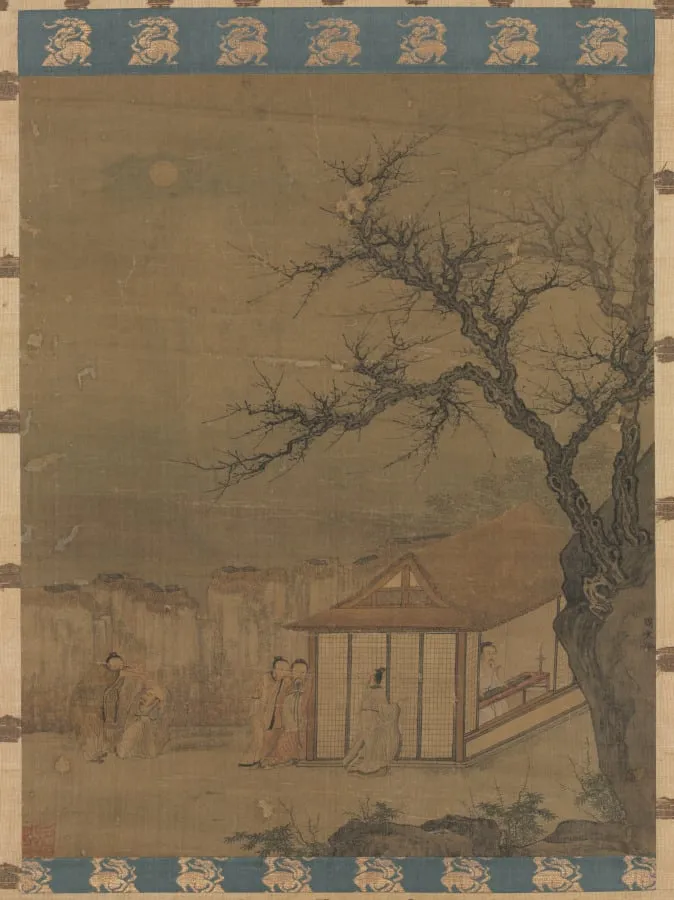
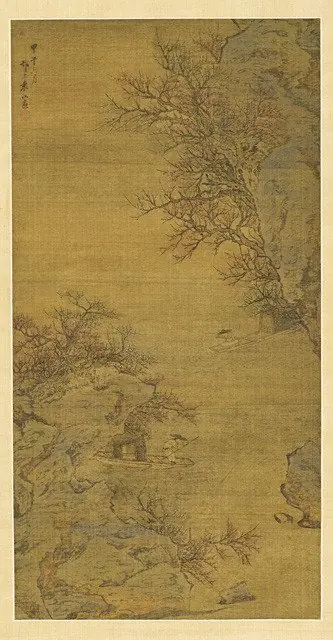
Listening to the Qin is an unspecified painting by the Ming dynasty painting artist Tang Yin. It dates from 1496 and is held in the collection of the Cleveland Museum of Art.
- Accession no.
- 1977.199
- Credit line
- Gift of Herbert F. Leisy in memory of his wife, Helen Stamp Leisy
About this work
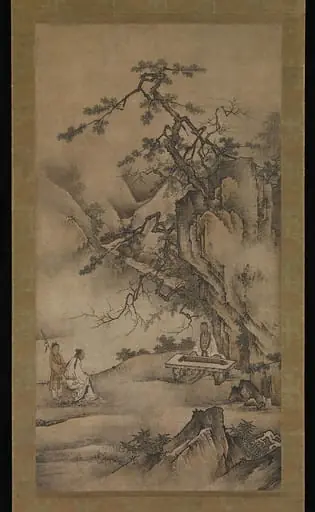
This painting shows a moment from an old Chinese story about Ji Kang, a musician whose playing was so beautiful it summoned spirits.
You see a man sitting under a tree, playing a long wooden instrument called a guqin. Two ghostly figures rise from the ground beside him, drawn by the music.
This painting shows a moment from an old Chinese story about Ji Kang, a musician whose playing was so beautiful it summoned spirits. The artist, Tang Yin, lived during the Ming Dynasty, when painters often illustrated famous tales.
To see more works like this, look up china, ming dynasty (1368–1644).
Overview
This painting by Tang Yin captures a legendary moment from the life of Ji Kang, a third-century scholar and guqin virtuoso. It illustrates the belief that his music possessed supernatural power, drawing forth spirits from the earth. Rendered in ink and color on silk, the scene unfolds under a full moon, blending natural stillness with ethereal intervention, characteristic of Ming-era literati painting.
Subject & Meaning
The scene depicts Ji Kang seated beneath a tree, playing the guqin as two spectral figures emerge from the ground, guided by unseen forces. Other spirits, half-visible, gather nearby, drawn by the music’s resonance. The imagery reflects Daoist notions of harmony between human artistry and the unseen world, suggesting that profound music can bridge mortal and spiritual realms.
Technique & Style
Tang Yin employs delicate ink washes and subtle color accents to distinguish the earthly from the spectral. The musician and trees are rendered with controlled brushwork, while the spirits are suggested through faint outlines and translucent layers, evoking their otherworldly nature. The composition balances asymmetry with quiet rhythm, typical of Ming literati aesthetics that valued restraint and poetic suggestion.
History & Provenance
Created during the Ming Dynasty, the work reflects Tang Yin’s engagement with classical literary themes after his failed civil service career. Though specific early ownership records are sparse, the painting aligns with a broader Ming trend of reviving Han and Wei-era tales to express personal ideals of intellectual freedom and artistic transcendence.
Context
In Ming China, literati painters often turned to ancient legends to convey moral and spiritual values outside official Confucian norms. Ji Kang’s story, associated with nonconformity and musical genius, resonated with scholars disillusioned by court politics. Tang Yin’s depiction aligns with this cultural current, using myth to explore solitude, creativity, and the metaphysical power of art.
Legacy
The painting endures as an example of how Ming artists reinterpreted historical narratives through personal expression. It influenced later depictions of musicians and spirits in Chinese art, reinforcing the guqin’s symbolic role as an instrument of spiritual communion. Its quiet intensity continues to inform interpretations of literati painting’s philosophical depth.
Artist & collection

Artist
Tang Yin (Chinese: 唐寅; pinyin: Táng Yín; Cantonese Yale: Tong Yan; 6 March 1470 – 7 January 1524), courtesy name Bohu (伯虎) and Ziwei (子畏), was a Chinese painter, calligrapher, and poet of the Ming dynasty period.