Artwork
Selections from the New Collection of Japanese Poems from Ancient and Modern Times (Shinkokin wakashū) with Printed Designs of Chinese Lions and Crab Finger Grass

Selections from the New Collection of Japanese Poems from Ancient and Modern Times (Shinkokin wakashū) with Printed Designs of Chinese Lions and Crab Finger Grass is an unspecified painting by the Nanga artist Tawaraya Sōtatsu. It dates from 1610 and is held in the collection of the Cleveland Museum of Art.
About this work
History & Provenance
It is presently held by the Cleveland Museum of Art, where it bears the accession number 1966.
The work is a collaborative piece created around 1610, with calligraphy attributed to Hon'ami Kōetsu and printed designs of Chinese lions and crab finger grass by Tawara Sōtatsu. It is presently held by the Cleveland Museum of Art, where it bears the accession number 1966.118 and has been part of the museum's collection since its acquisition in 1966. No earlier ownership records or commission details are documented in the available sources.
Context
Tawara Sōtatsu created this handscroll in 1610 for the Shinkokin wakashū anthology, pairing Chinese lion and crab illustrations with classical Japanese poems. The work appears in the Cleveland Museum of Art's collection and has been studied within the broader context of early Edo-period painting, particularly regarding the influence of Hon'ami Kōetsu's calligraphic style on Tawara's compositional approach. Its dual focus on poetic text and symbolic animal imagery reflects contemporary aesthetic interests in nature and literary tradition.
Overview
Created in 1610, this hand‑scroll painting by Tawara Sōtatsu presents a selection of Japanese poems accompanied by decorative motifs of stylized Chinese lions and crab‑finger grass. Executed on a long, narrow surface, the work combines delicate linear patterns with sparse black calligraphic characters, set against a muted palette of pale blue, cream and earthy tones.
Subject & Meaning
The scroll juxtaposes literary excerpts from the Shinkokin wakashū anthology with ornamental imagery, reflecting the Edo‑period practice of integrating poetry and visual art. The lion motifs, drawn from Chinese symbolism, convey strength and protection, while the crab‑finger grass suggests natural vitality, together framing the verses within a decorative, contemplative context.
Technique & Style
Sōtatsu employs his characteristic tarashikomi method, allowing pigments to bleed and create subtle tonal variations within the tangled, brush‑rendered lines that resemble grass or branches. The fine, irregular strokes are rendered in light brown and gray, while the calligraphic text appears in stark black ink, emphasizing a restrained yet expressive Rinpa aesthetic.

Artist & collection

Artist
Tawaraya Sōtatsu (俵屋 宗達; c. 1570 – c. 1640) was a Japanese furniture designer and painter of the Rinpa school. Sōtatsu is best known for his decorations of calligraphic works by his partner Hon'ami Kōetsu (1558–1637),…

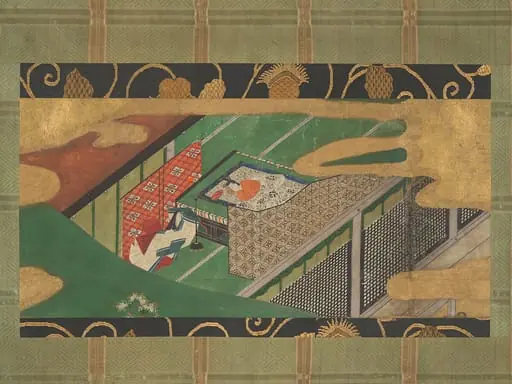 伝俵屋宗達筆 源氏物語図「宿木」 |“Trees Encoiled in Vines of Ivy” (Yadorigi)
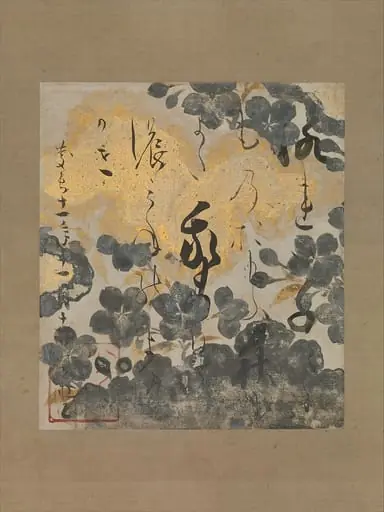 本阿見光悦書・俵屋宗達下絵 桜下絵和歌色紙 鴨長明|Poem by Kamo no Chōmei with Underpainting of Cherry Blossoms
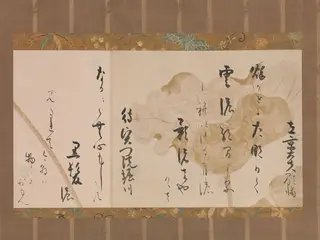 本阿弥光悦書・俵屋宗達下絵 小倉百人一首和歌巻断簡|Two Poems from One Hundred Poems by One Hundred Poets
 Untitled
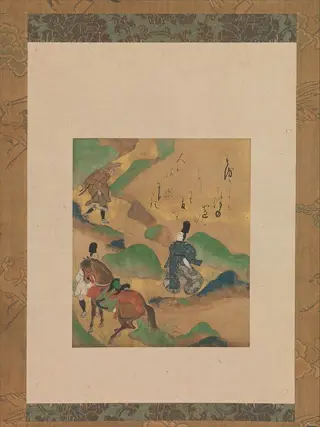 Untitled
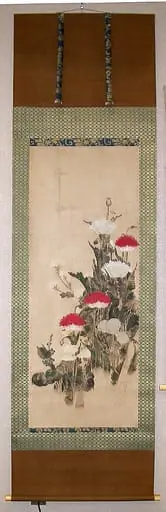 Untitled
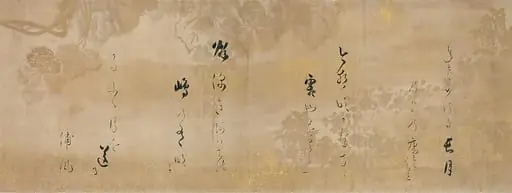 本阿弥光悦書 木版下絵和歌巻断簡|Twelve Poems from the New Collection of Poems Ancient and Modern
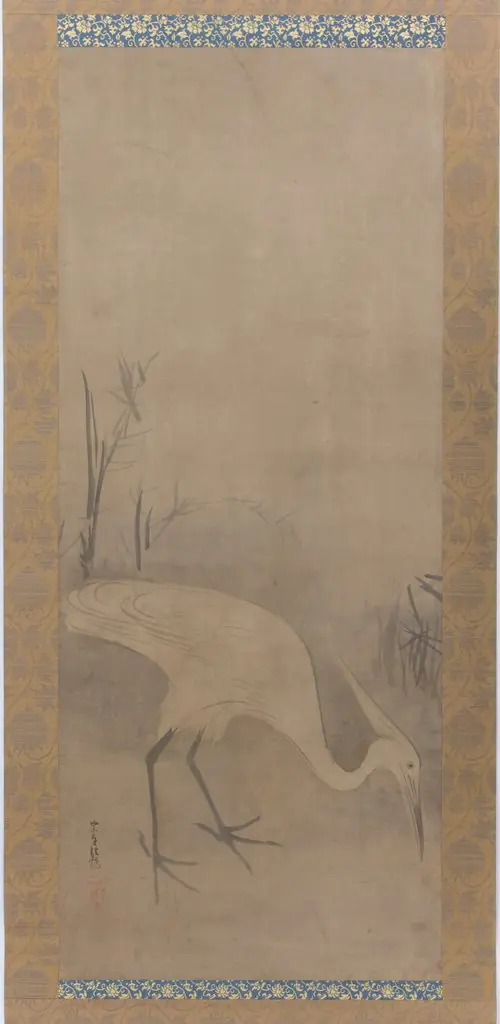 White Heron (Shirosagi zu)
- Rocks, Orchid, and Bamboo
 Flowers of the Four Seasons 四季花卉圖
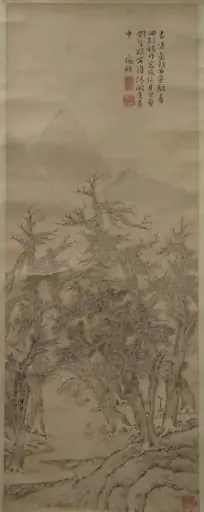 清 佚名 倣文徵明 深林調茗 軸|Scholar Seated in Grove
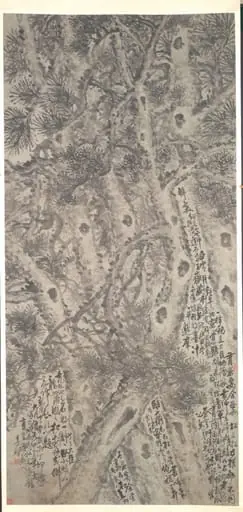 Five Pine Trees
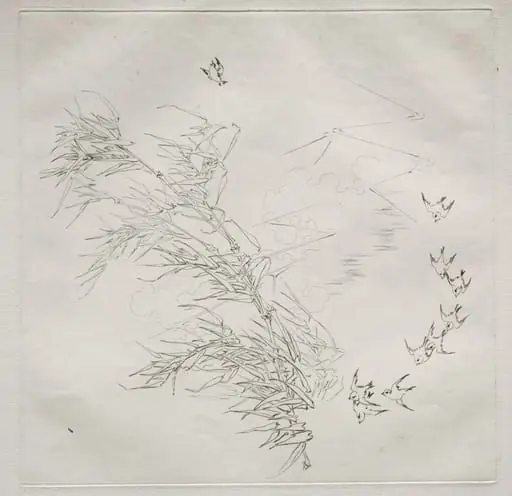 Parisian Service (Haviland service): The Storm (no. 8)
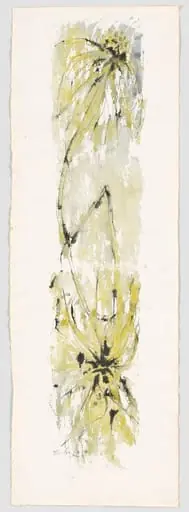 Untitled
 Palingenesis
 傳南宋 蘇軾 墨竹圖 卷|Bamboo
 清 鄭燮 蘭竹圖 卷|Orchids and bamboo
 Insects and Bamboo
 Parisian Service (Haviland service): The Moon (no. 5)
 Japanese and Chinese Poems about the Four Seasons