Artwork
The merchant hears of his wife’s unfaithfulness (above); the unfaithful wife performs penance by plucking her hair (below), from a Tuti-nama (Tales of a Parrot): First Night
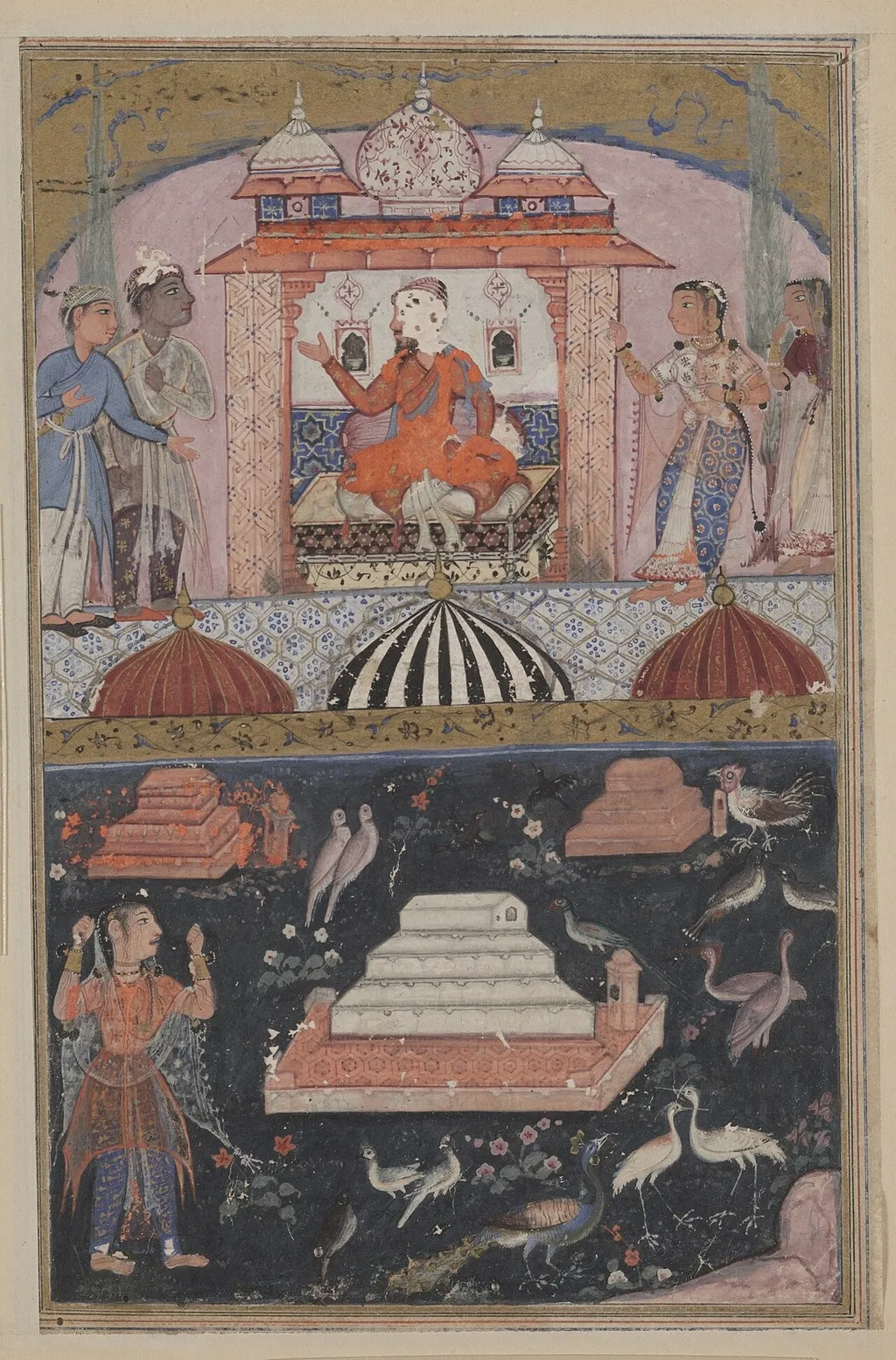
The merchant hears of his wife’s unfaithfulness (above); the unfaithful wife performs penance by plucking her hair (below), from a Tuti-nama (Tales of a Parrot): First Night is an unspecified painting. It dates from 1560 and is held in the collection of the Cleveland Museum of Art. The work is a double‑scene painting taken from the Persian illustrated manuscript known as the Tuti‑nama, or Tales of a Parrot.
About this work
Subject & Meaning
This painting illustrates a dual narrative scene from the First Night of the Tuti-nama (Tales of a Parrot), a Persian literary work.
This painting illustrates a dual narrative scene from the First Night of the Tuti-nama (Tales of a Parrot), a Persian literary work. The composition is vertically divided to depict two sequential moments: the upper register shows a merchant learning of his wife's infidelity, while the lower register portrays the wife performing an act of penance by plucking out her own hair. Created in 1560 within the Mughal Empire, the work visualizes the moral themes of the text, specifically the consequences of betrayal and the intensity of remorse.
The iconography relies on the stark contrast between the husband's discovery of the truth and the wife's extreme physical demonstration of regret, serving as a visual lesson on fidelity and repentance found in the parrot's tales.
Technique & Style
The scene depicting the merchant learning of his wife's infidelity and her act of penitence by plucking her hair is rendered as a miniature painting on paper, typical of Mughal manuscript illumination from the mid-sixteenth century. Executed in tempera and ink on a fine support, the work demonstrates delicate line work, muted earth-toned pigments, and intricate detailing characteristic of Persianate narrative illustration. The composition emphasizes emotional tension through gesture and drapery, while the stylized forms and flattened spatial depth reflect manuscript painting conventions of the period.
The piece is attributed to an anonymous artist working within the Mughal imperial workshop, likely under royal patronage, and is executed on a rectangular paper support with traces of gilding along borders. Though minor foxing appears on the edges, the surface remains largely intact, preserving the vibrancy of pigments. The stylistic fusion of Persian narrative traditions with Indian naturalism marks a synthesis of artistic influences within the Mughal visual lexicon.
History & Provenance
This miniature belongs to the dispersed Cleveland Museum of Art Tuti-nama manuscript, a Mughal copy of the Persian Tuṭī-nāma produced in the mid-16th century. The Cleveland sheet is dated 1560 and attributed to an anonymous Mughal painter.
The manuscript was acquired by the Cleveland Museum of Art in 1962 as part of a larger group of folios (accession 1962.279.10.b), placing it in the museum’s permanent collection. Its Mughal origin situates the work within the imperial ateliers of Akbar’s reign, where such illustrated manuscripts were commissioned as narrative cycles rather than as single, independent paintings.
The painting is held in the collection of the Cleveland Museum of Art in Cleveland, United States. It is cataloged under the accession number 1962.279.10.b. The work was created in 1560 within the Mughal Empire. No specific exhibition history or loan records are provided in the available sources.
Overview
The work is a double‑scene painting taken from the Persian illustrated manuscript known as the Tuti‑nama, or Tales of a Parrot. The upper register portrays a merchant learning of his wife’s infidelity, while the lower register shows the same woman performing a penitential act by pulling out her hair. Both scenes are rendered in vivid hues and are separated by distinct background colors.
Context
The Tuti‑nama, compiled in the 14th‑15th centuries, is a collection of moral tales illustrated for elite patrons. This particular illustration belongs to the episode titled “First Night,” which explores themes of marital fidelity, guilt, and atonement. The work reflects the broader cultural practice of using narrative art to convey ethical lessons within courtly literature.
Legacy
As an example of Persian miniature painting, the piece illustrates the genre’s capacity to combine storytelling with elaborate visual design. Its vivid coloration and dual‑scene composition have informed later studies of manuscript illustration, highlighting how artists balanced narrative clarity with decorative complexity.
Artist & collection

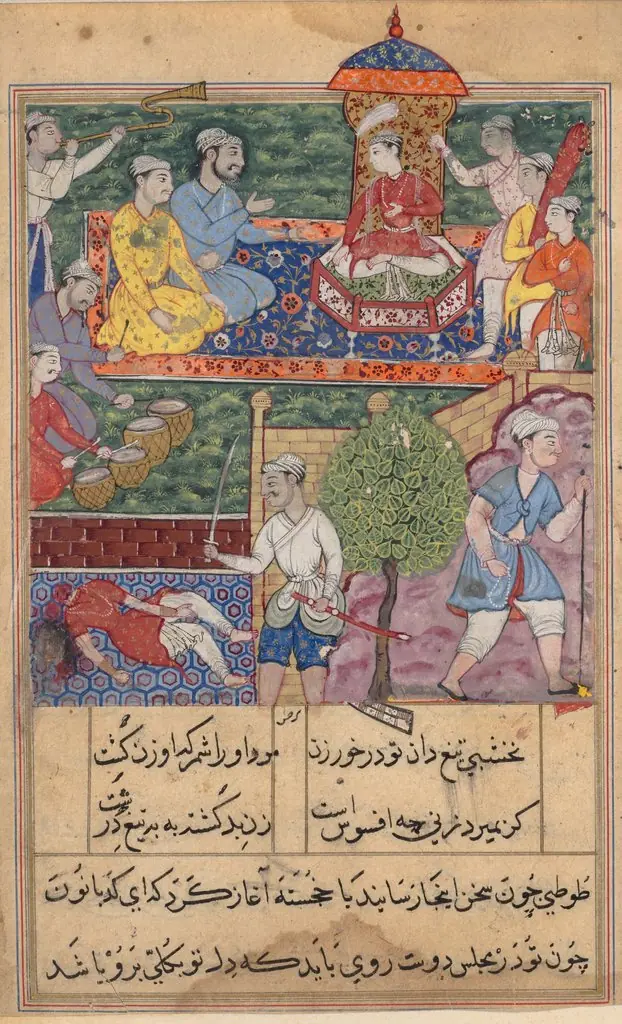 Page from Tales of a Parrot (Tuti-nama): text page
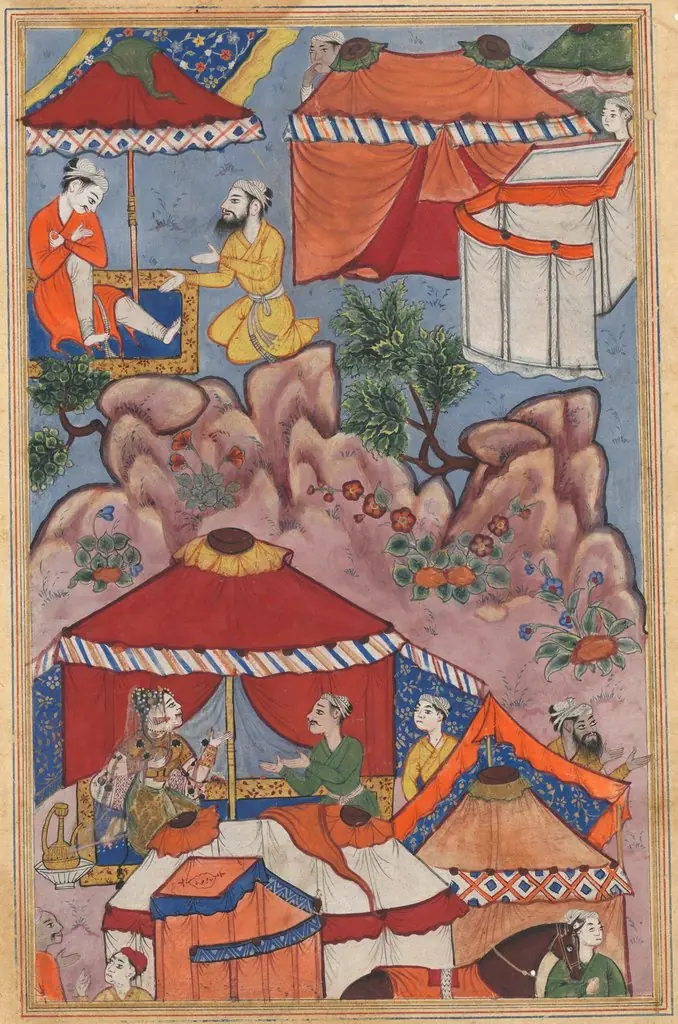 Bashir confides his love for Habbaza to an Arab friend, and sends him to her with a message, from a Tuti-nama (Tales of a Parrot): Twenty-fourth Night
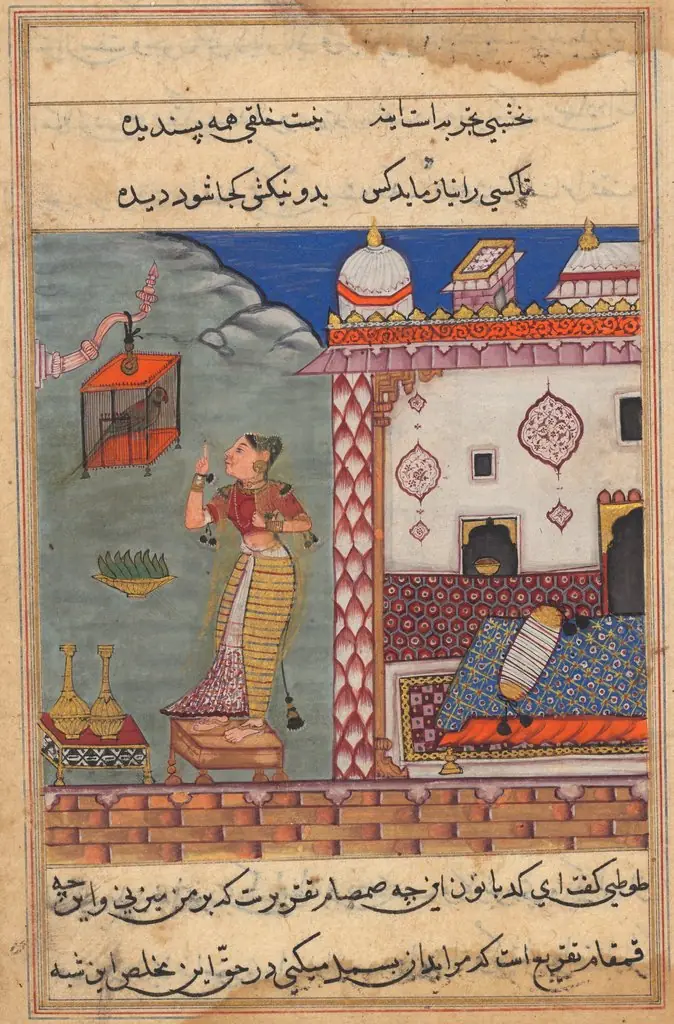 The Parrot Addresses Khujasta at the Beginning of the Twenty-seventh Night, form a Tuti-nama (Tales of a Parrot)
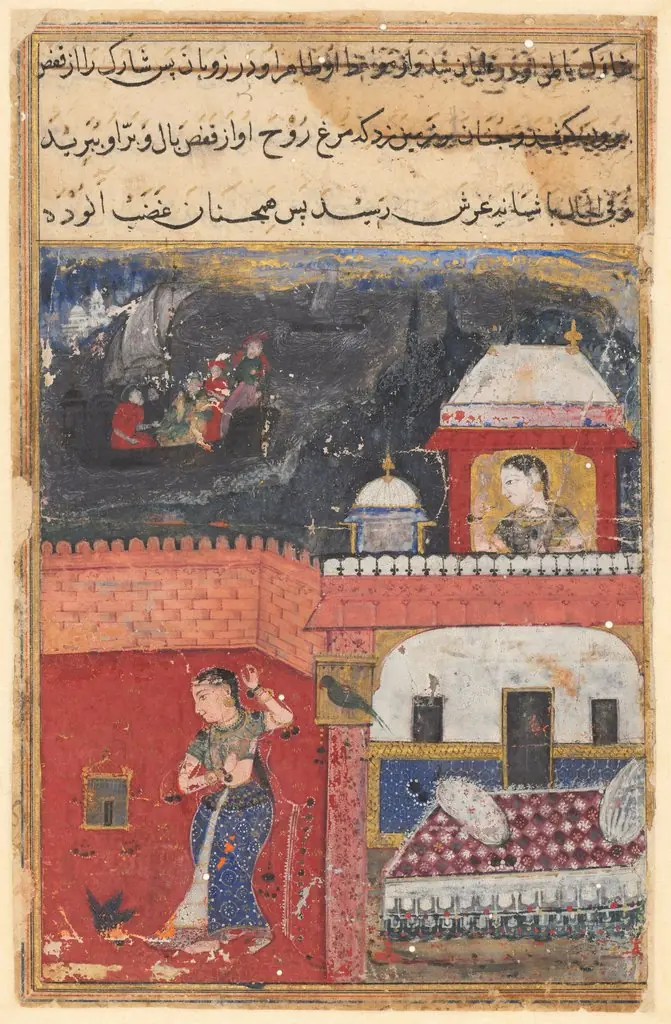 Khujasta kills the pet mynah who advises her not to be unfaithful to Maymun, her husband, from a Tuti-nama (Tales of the Parrot): First Night
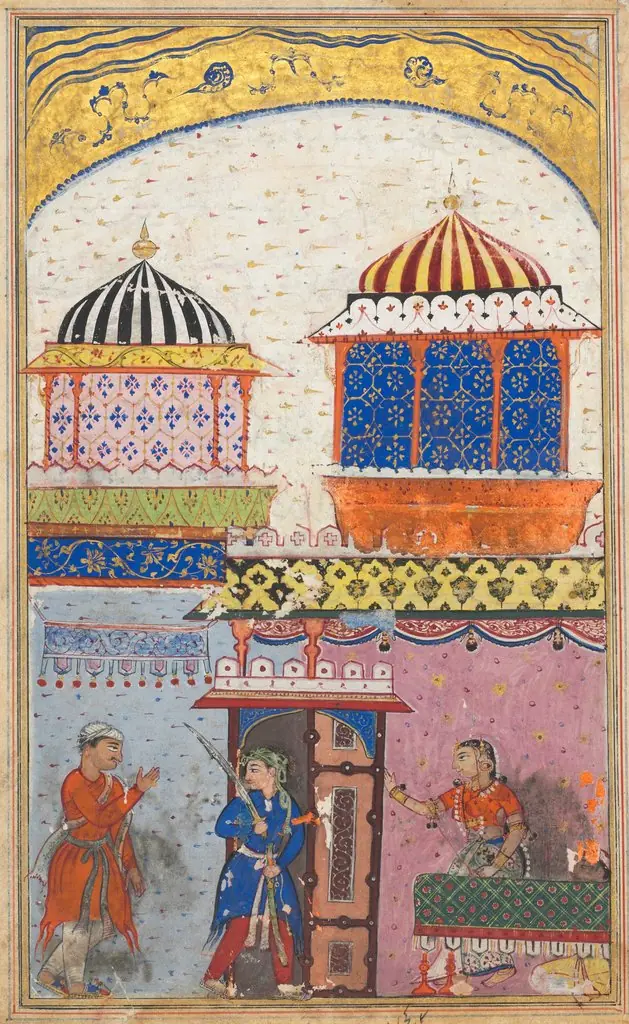 A woman asks her lover to leave her house, brandishing his sword and feigning rage in order to deceive her husband who has just arrived, from a Tuti-nama (Tales of a Parrot): Eighth Night
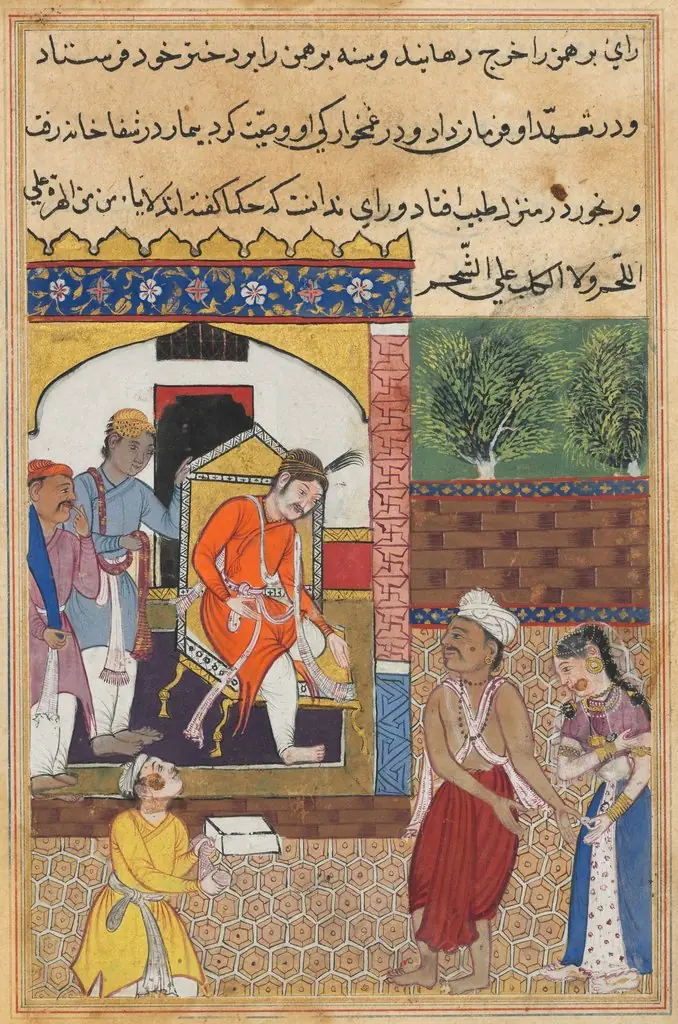 The magician, disguised as a Brahman, visits the king of Babylon, from a Tuti-nama (Tales of a Parrot): Thirty-fifth Night
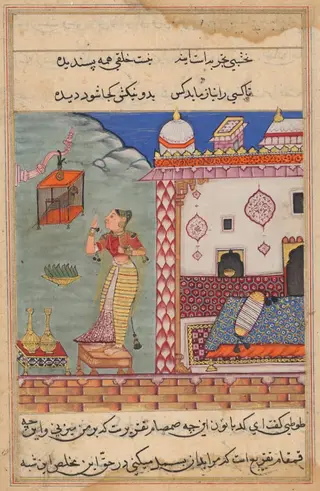 The Parrot Addresses Khujasta at the Beginning of the Twenty-seventh Night, form a Tuti-nama (Tales of a Parrot)
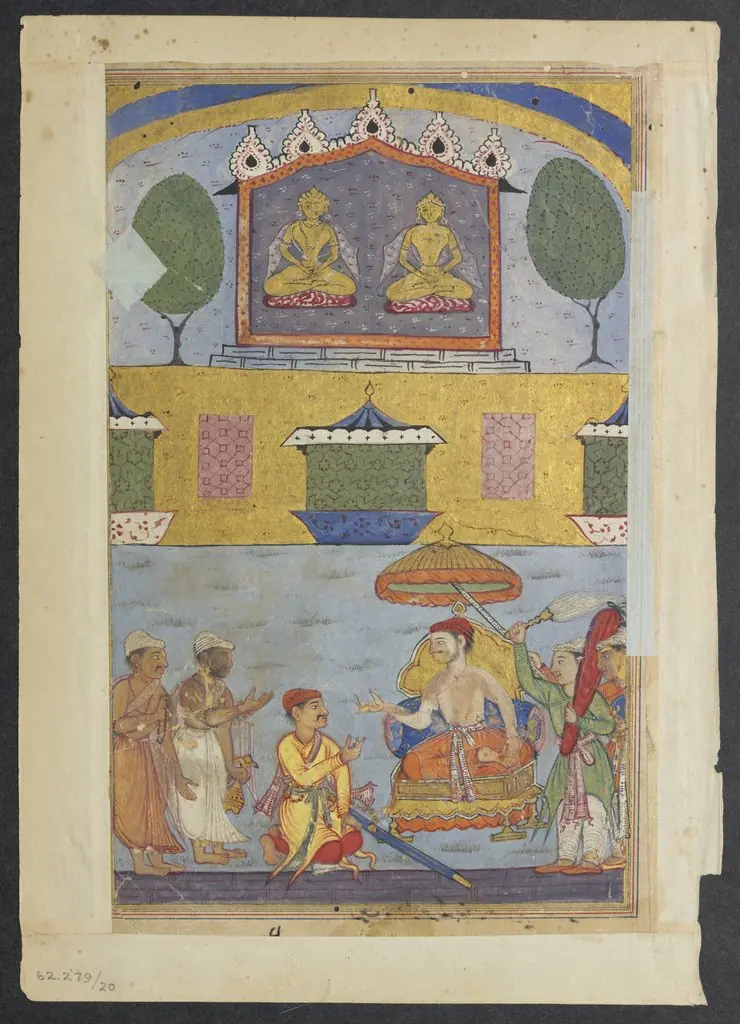 The goldsmith and the carpenter inform the king of a dream in which the golden images plan to desert the city for lack of worshippers, from a Tuti-nama (Tales of a Parrot): Third Night
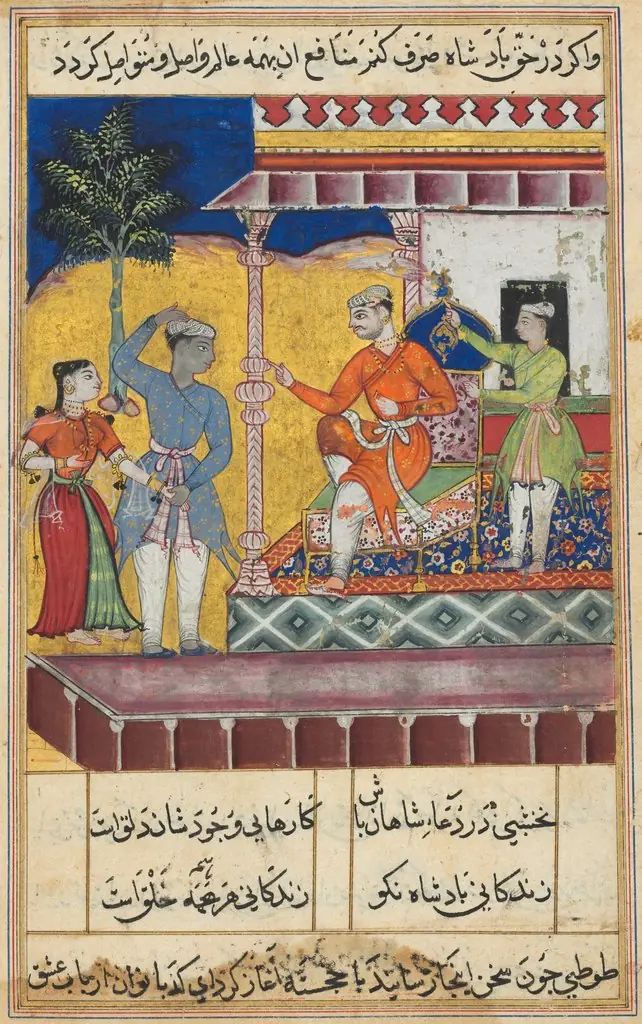 The rejuvenated old man and the daughter of the king of the jinns take leave of the King of Kings, from a Tuti-nama (Tales of a Parrot): Seventh Night
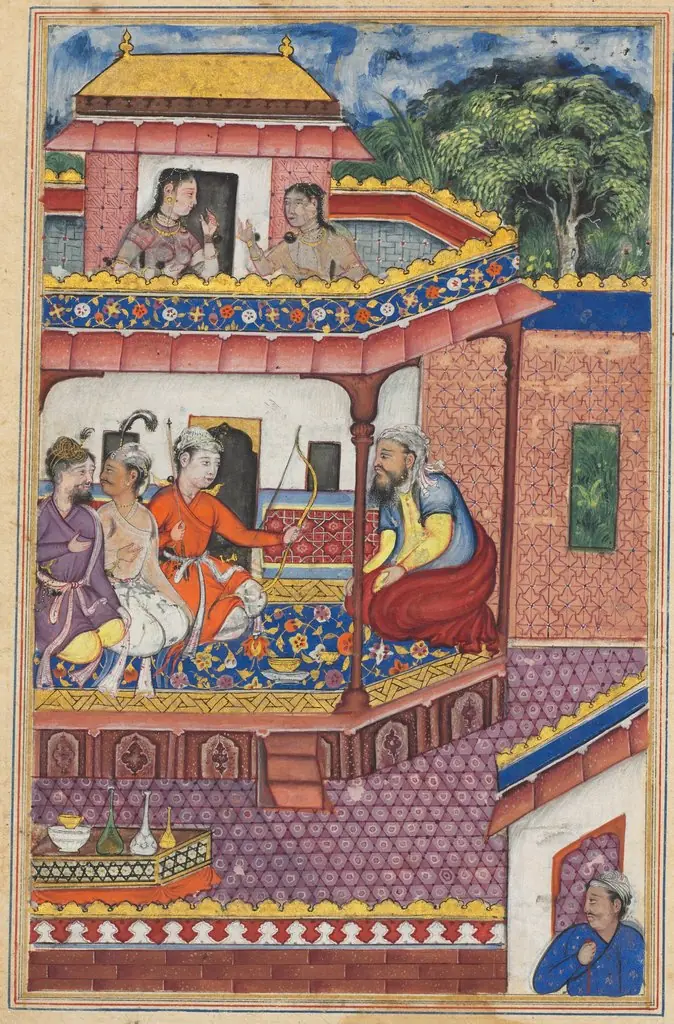 The three young men present themselves as suitors for the hand of Zuhra, the daughter of the merchant of Kabul, from a Tuti-nama (Tales of a Parrot): Thirty-fourth Night