Artwork
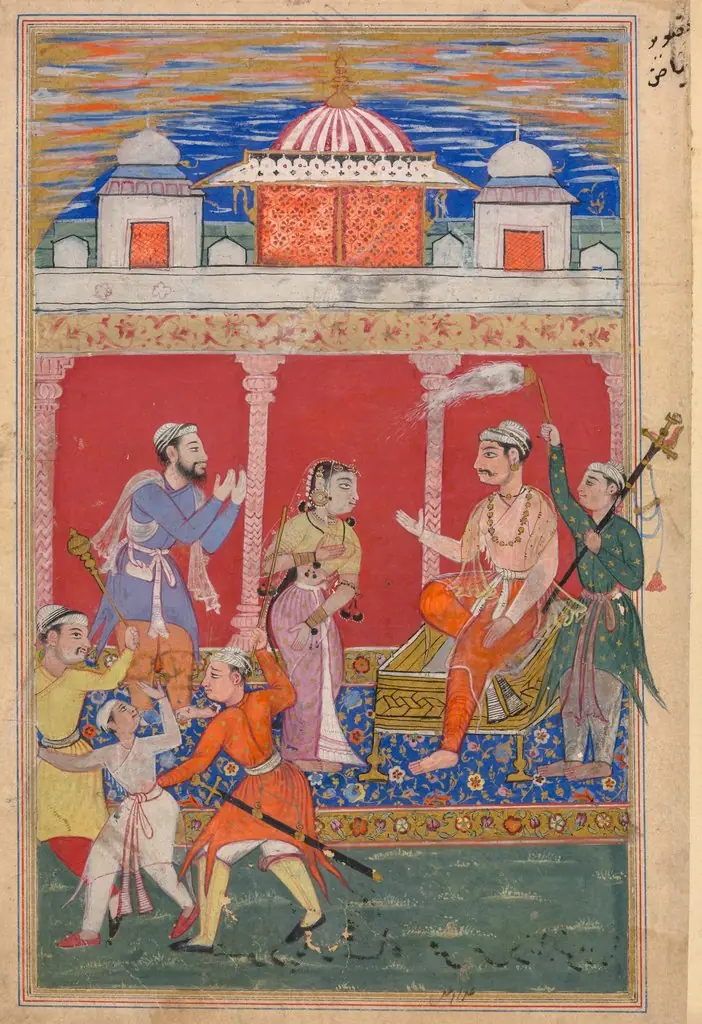
The goldsmith and the carpenter inform the king of a dream in which the golden images plan to desert the city for lack of worshippers, from a Tuti-nama (Tales of a Parrot): Third Night
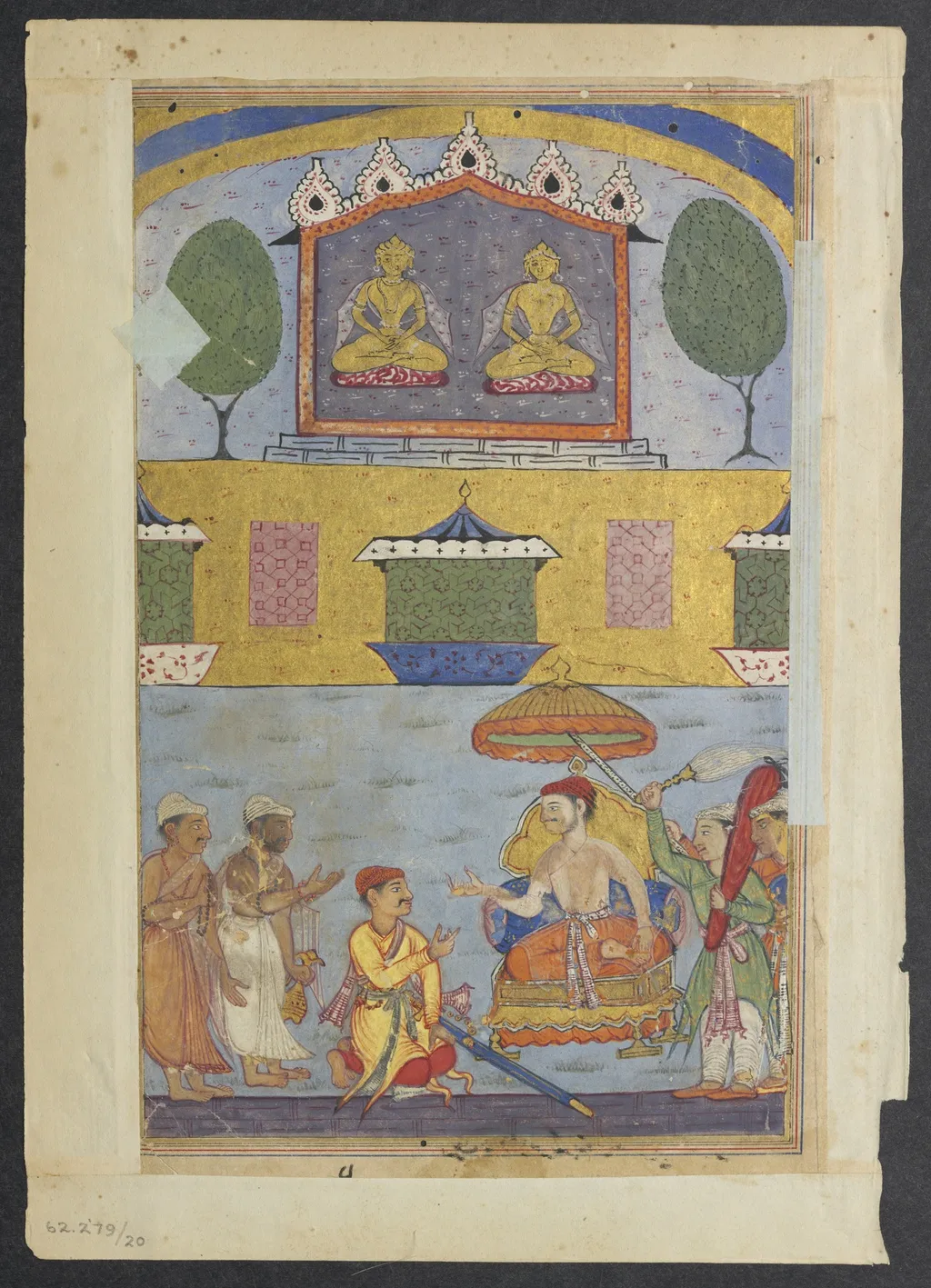
The goldsmith and the carpenter inform the king of a dream in which the golden images plan to desert the city for lack of worshippers, from a Tuti-nama (Tales of a Parrot): Third Night is an unspecified painting. It dates from 1560 and is held in the collection of the Cleveland Museum of Art. The work depicts a narrative scene from the medieval Persian collection Tuti‑nama (Tales of a Parrot).
About this work
Subject & Meaning
The composition captures the tension between the material value of the golden idols and their dependence on human reverence to remain in the city.
The painting illustrates a narrative scene from the Third Night of the Tuti-nama (Tales of a Parrot), depicting the moment a goldsmith and a carpenter report a dream to a king. In this vision, golden images intended for worship plan to abandon the city due to a lack of devotees. Created within the Mughal Empire in 1560, the work visualizes a specific episode where the physical absence of worshippers threatens the spiritual presence of the divine statues.
The composition captures the tension between the material value of the golden idols and their dependence on human reverence to remain in the city. This narrative moment serves as an allegory for the relationship between the faithful and the sacred objects they venerate.
History & Provenance
The painting was created in 1560 within the Mughal Empire, as recorded in its cataloguing data. It is classified as a painting and is part of the collection of the Cleveland Museum of Art, where it is held under accession number 1962.279.20.a, identifying it as a folio of the Tuti-nama manuscript. No details of a commissioning patron, prior ownership, or intermediate provenance are documented in the available sources, and no specific exhibition history for this folio is recorded.
Overview
The work depicts a narrative scene from the medieval Persian collection Tuti‑nama (Tales of a Parrot). In the upper register, two golden figures sit within a temple‑like enclosure, while a king reclines on a bed beneath a red canopy in the lower register. Surrounding the monarch, five attendants in vivid robes gesture, point, and converse, one holding a fan and another indicating the golden images.
Technique & Style
Executed in a flat, brightly colored palette, the composition relies on clear outlines and stylized figures rather than realistic modeling. The division into upper and lower registers, the use of decorative patterns on clothing, and the simplified architectural backdrop reflect a manuscript illustration aesthetic adapted to a painted format.
Context
The narrative aligns with broader Persian literary traditions that employ dream visions to convey ethical lessons. Golden statues as symbols of divine authority appear in other contemporary texts, linking the visual motif to themes of piety, patronage, and the consequences of neglecting sacred duties.
Artist & collection

- The goldsmith and the carpenter inform the king of a dream in which the golden images plan to desert the city for lack of worshippers, from a Tuti-nama (Tales of a Parrot): Third Night
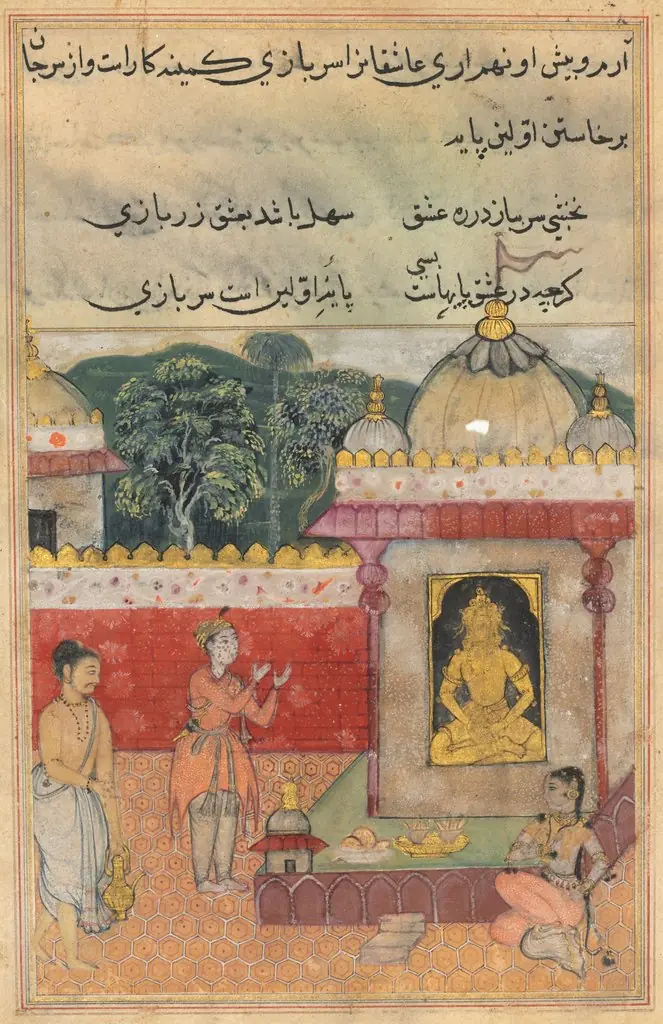 The Raja’s son vows to sever his head and offer it to the image if he is united with the princess he has seen in the temple, from a Tuti-nama (Tales of a Parrot): Thirty-fourth Night
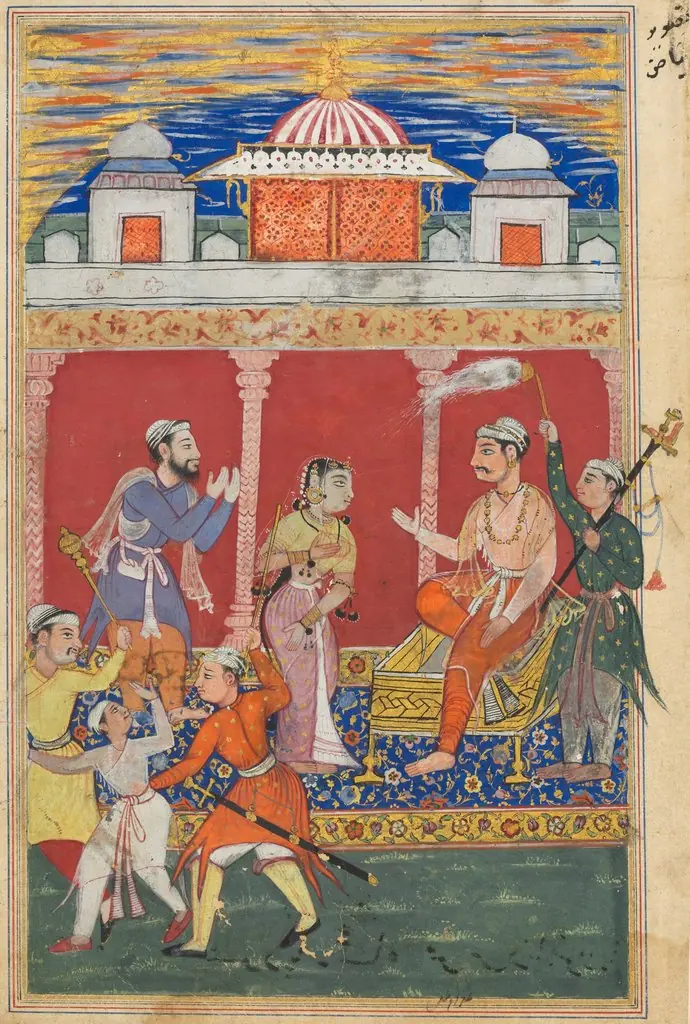 The prince’s ordeal continues, he is ordered away to be executed for the fifth time, from a Tuti-nama (Tales of a Parrot): Eighth Night
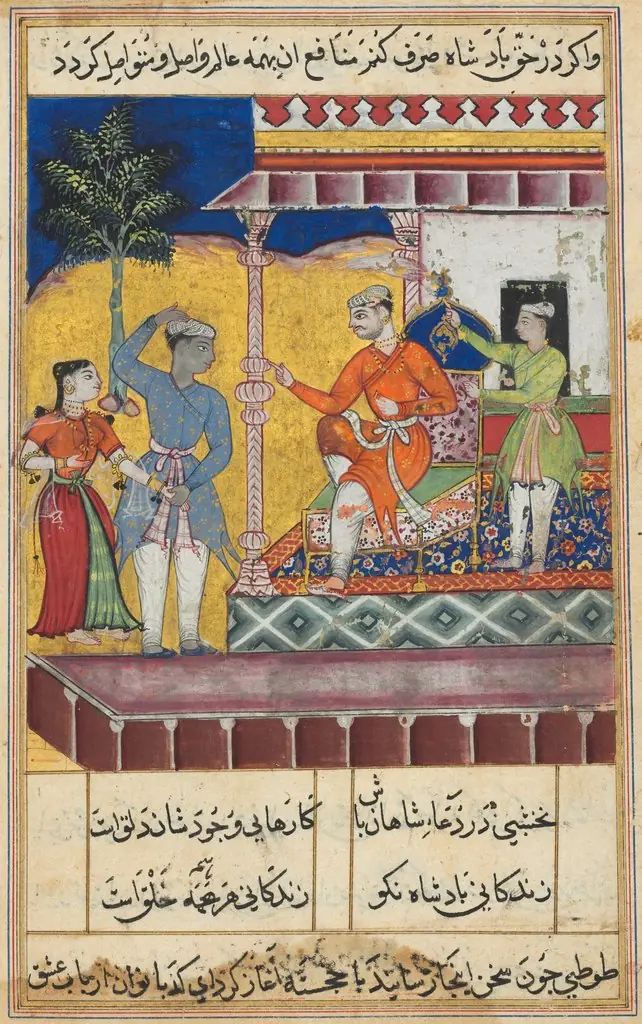 The rejuvenated old man and the daughter of the king of the jinns take leave of the King of Kings, from a Tuti-nama (Tales of a Parrot): Seventh Night
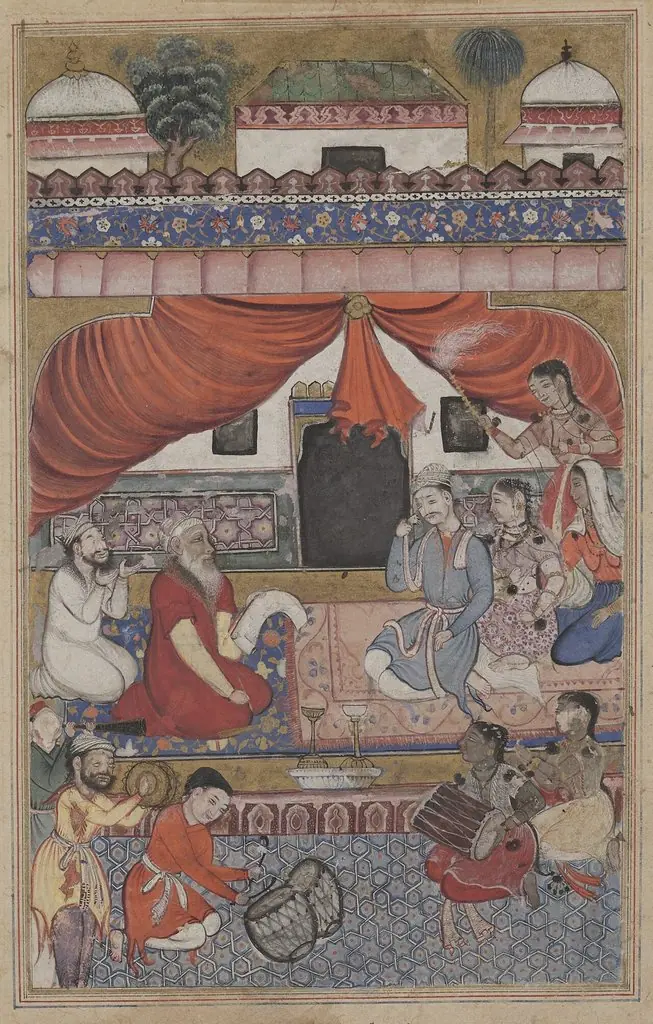 Preparation for the marriage of Mahmuda to the Young Vizier, from a Tuti-nama (Tales of a Parrot): Thirty-third Night
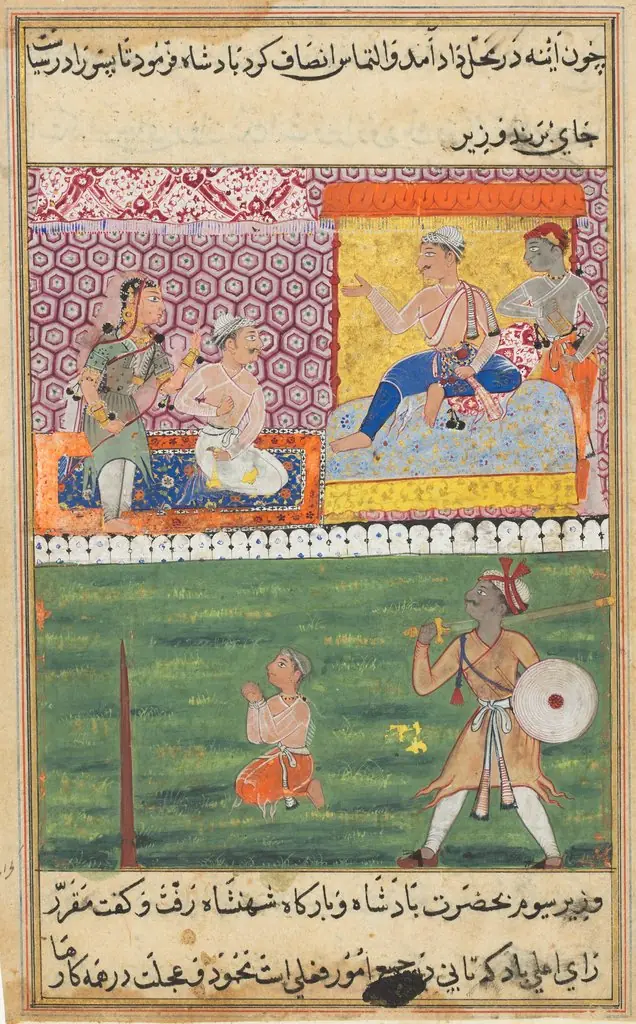 The handmaiden again appeals for justice and the prince is led to the place of execution for the third time, from a Tuti-nama (Tales of a Parrot): Eighth Night