Artwork
The Parrot Addresses Khujasta at the Beginning of the Twenty-seventh Night, form a Tuti-nama (Tales of a Parrot)
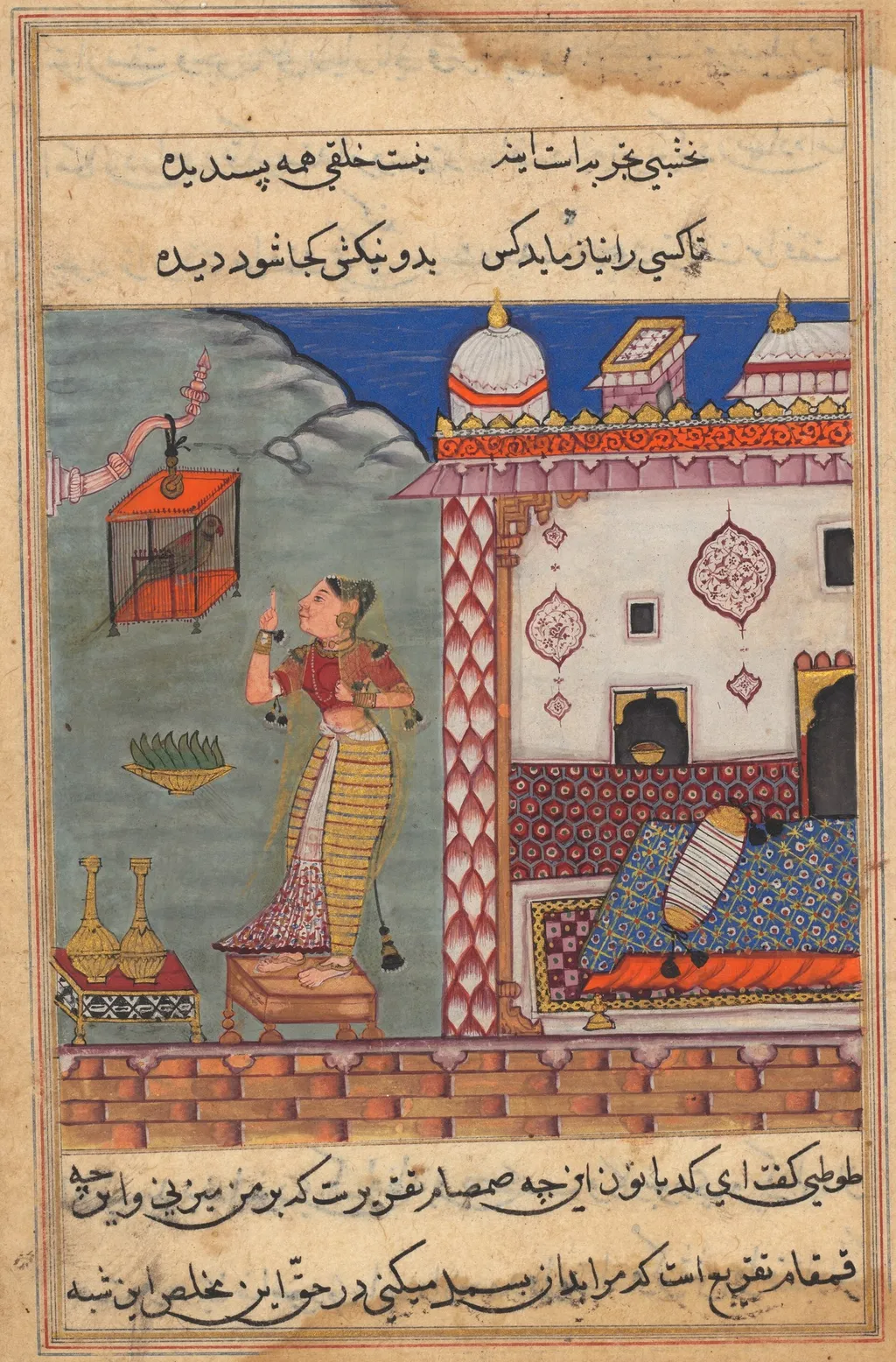
The Parrot Addresses Khujasta at the Beginning of the Twenty-seventh Night, form a Tuti-nama (Tales of a Parrot) is an unspecified painting. It dates from 1560 and is held in the collection of the Cleveland Museum of Art.
About this work
History & Provenance
The work entered the Cleveland Museum of Art in 1962 as part of a donation, where it remains in the permanent collection (accession number 1962.
This painting was produced in the Mughal Empire around 1560, aligning with the early reign of Emperor Akbar when illustrated manuscript projects flourished at court workshops.
The work entered the Cleveland Museum of Art in 1962 as part of a donation, where it remains in the permanent collection (accession number 1962.279.185.a).
The painting is held in the collection of the Cleveland Museum of Art, where it is catalogued under inventory number 1962.279.185.a. Produced in 1560 within the Mughal Empire, the work entered the museum's holdings and is classified as a painting. No exhibition history is documented in the available sources.
Overview
The work depicts a woman on a balcony, her red blouse contrasting with a striped skirt, as she gestures upward toward a caged parrot suspended from a hook. A white cloth drapes over her left shoulder, and a low decorative wall frames the scene against a blue sky dotted with clouds. The composition emphasizes the interaction between the figure and the bird, creating a quiet, intimate moment.
Subject & Meaning
The figure appears to be addressing the parrot, perhaps reciting the opening of the twenty‑seventh night from the Persian narrative collection known as the Tuti‑nama, or "Tales of a Parrot." The gesture of pointing upward suggests a communicative act, linking human speech with the bird’s symbolic role as a messenger or storyteller within the literary tradition.
Technique & Style
Rendered in a balanced palette of vivid reds, muted stripes, and sky blues, the painting employs clear outlines and decorative motifs on the balcony wall. The suspended cage introduces a subtle sense of movement, while the flat background and stylized forms reflect a synthesis of courtly illustration and narrative painting typical of Persian manuscript art.
Context
The scene draws from a popular literary genre in which a parrot narrates moral tales to a human audience. Such illustrations were commonly included in illuminated manuscripts to accompany poetic recitations, situating the work within a broader tradition of visual storytelling that bridges literary and decorative arts.
Artist & collection

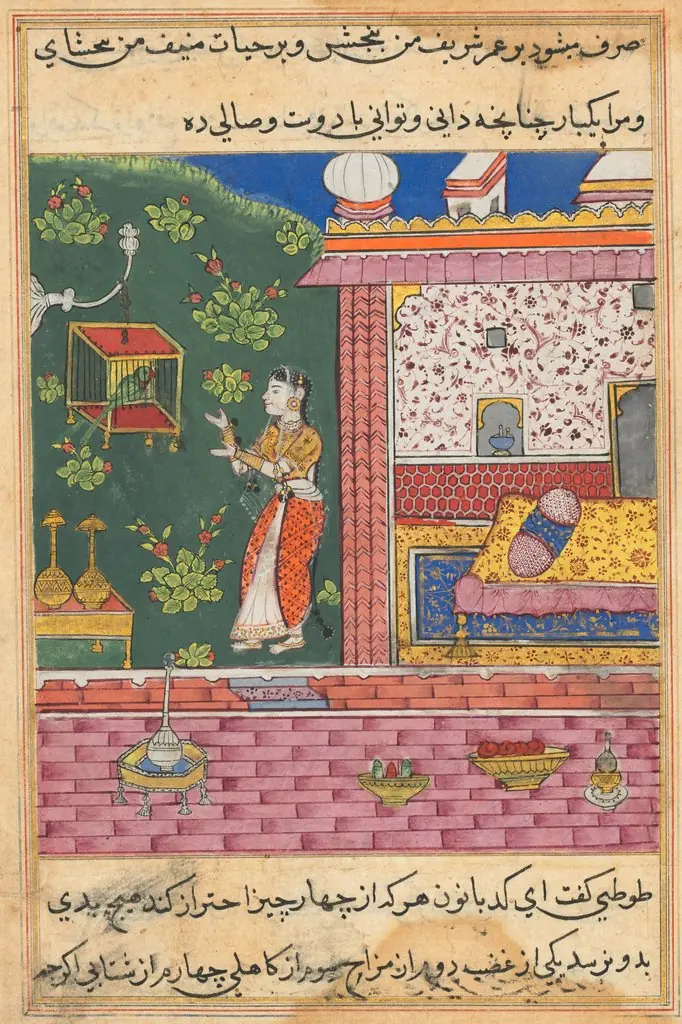
- The Parrot Addresses Khujasta at the Beginning of the Thirtieth Night, from a Tuti-nama (Tales of a Parrot)
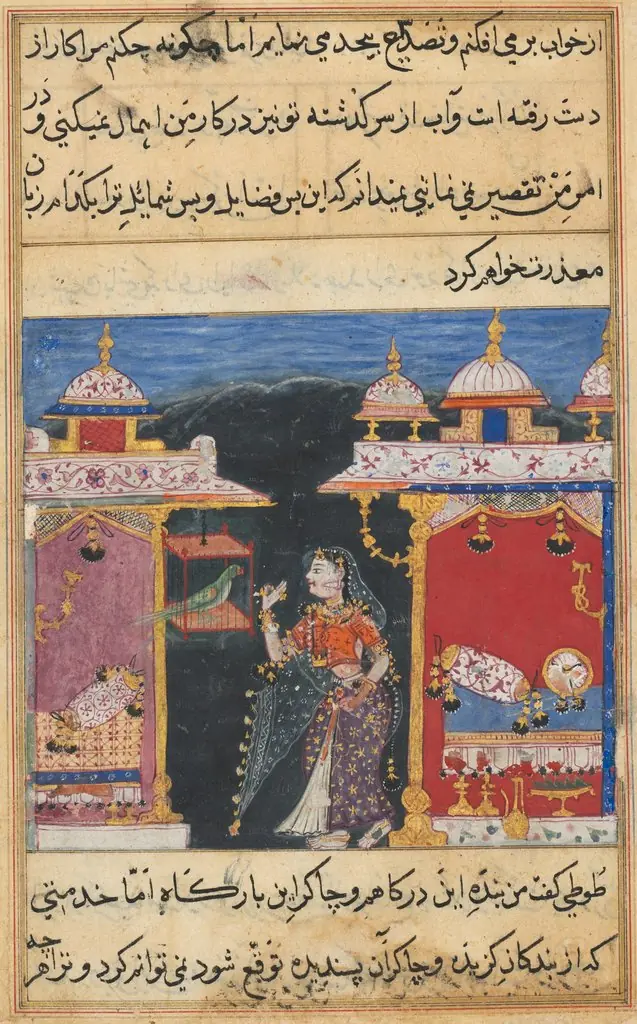 The Parrot Addresses Khujasta at the Beginning of the Seventh Night, from a Tuti-nama (Tales of a Parrot)
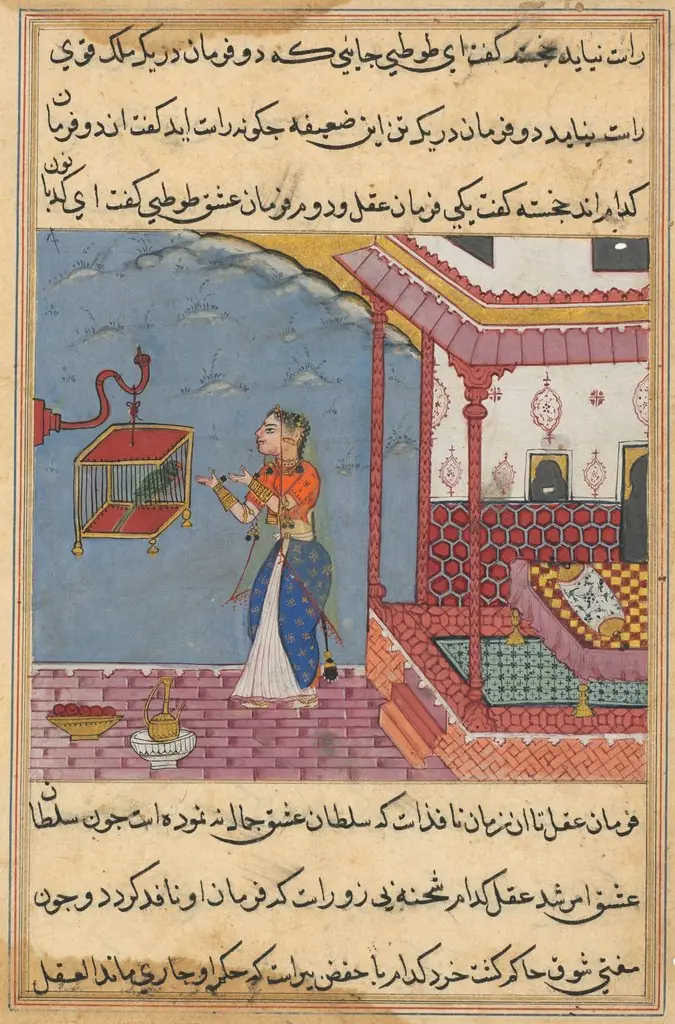 The Parrot Addresses Khujasta at the Beginning of the Twenty-Fourth Night, from a Tuti-nama (Tales of a Parrot)
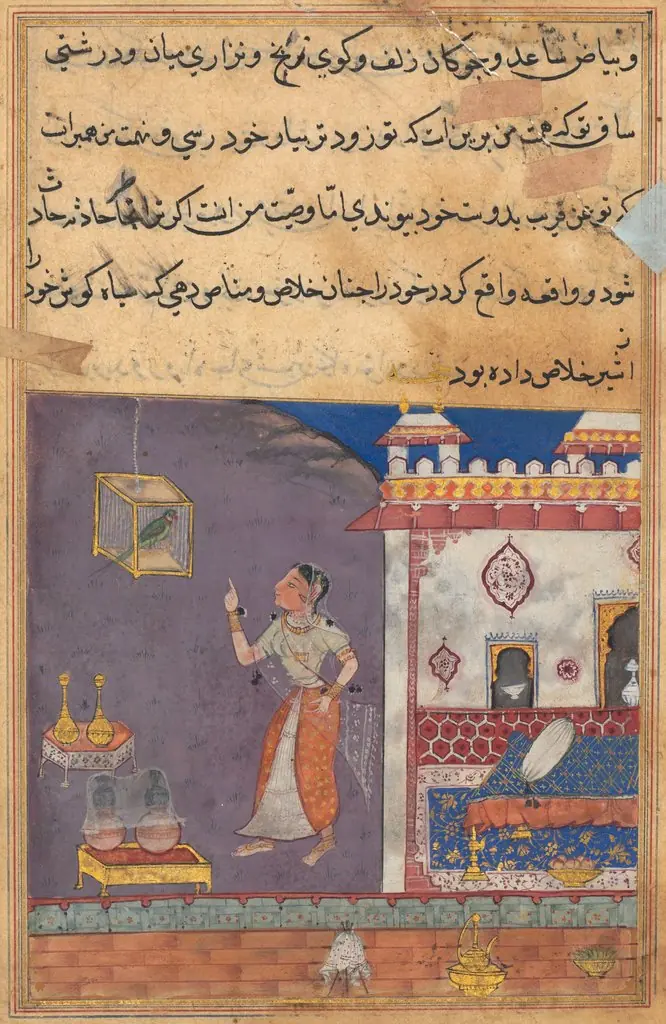 The Parrot Addresses Khujasta at the Beginning of the Twenty-ninth Night, from a Tuti-nama (Tales of a Parrot)
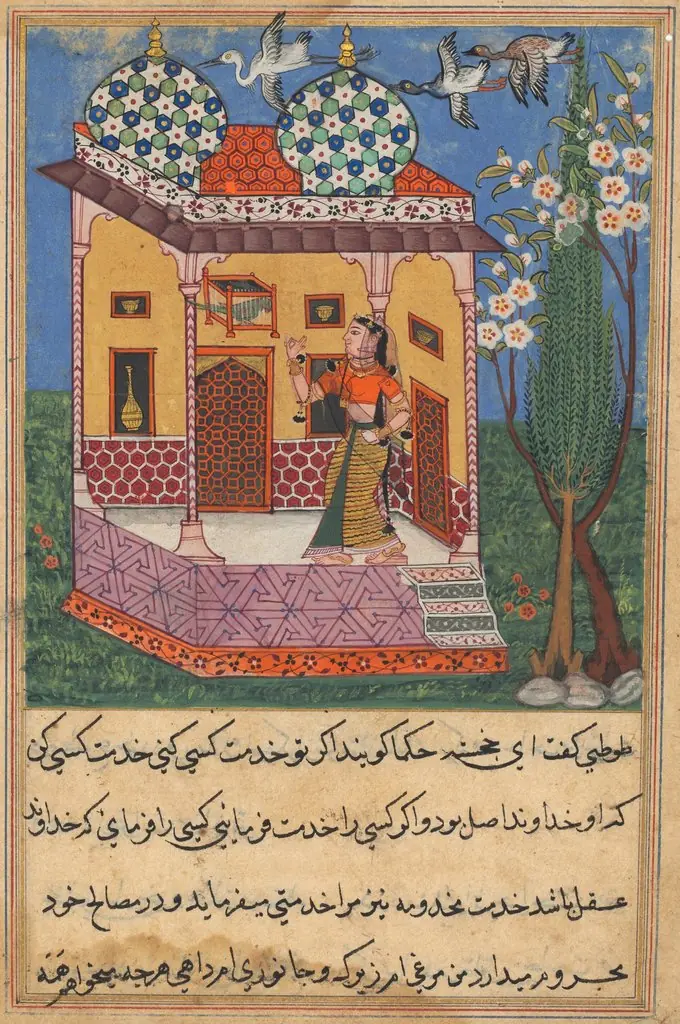 The Parrot Addresses Khujasta at the Beginning of the Twenty-sixth Night, from a Tuti-nama (Tales of a Parrot)
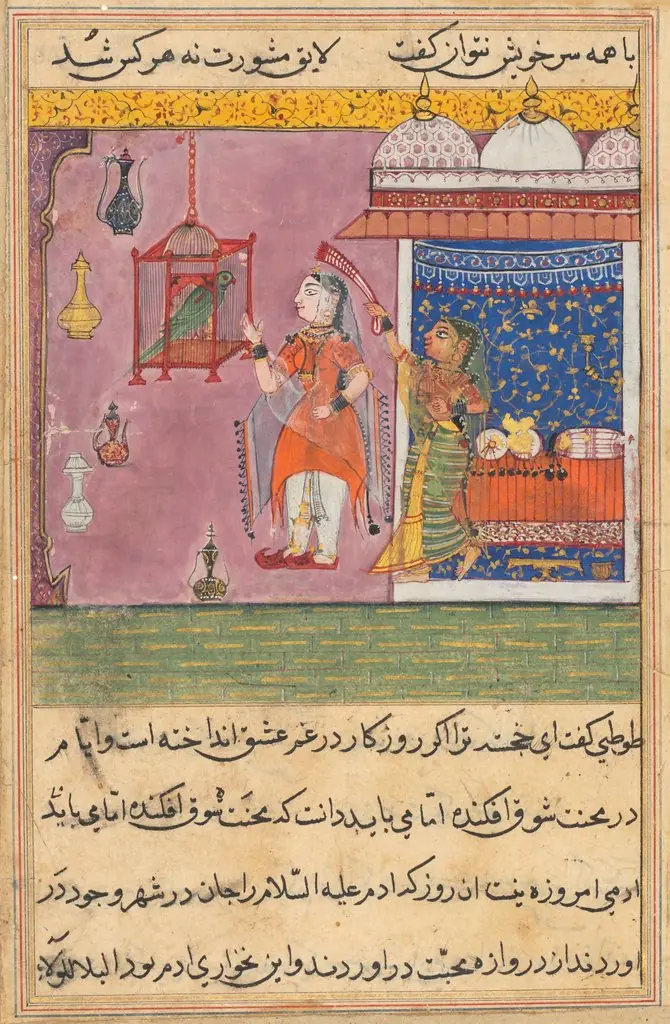 The Parrot Addresses Khujasta at the Beginning of the Nineteenth Night, from a Tuti-nama (Tales of a Parrot)
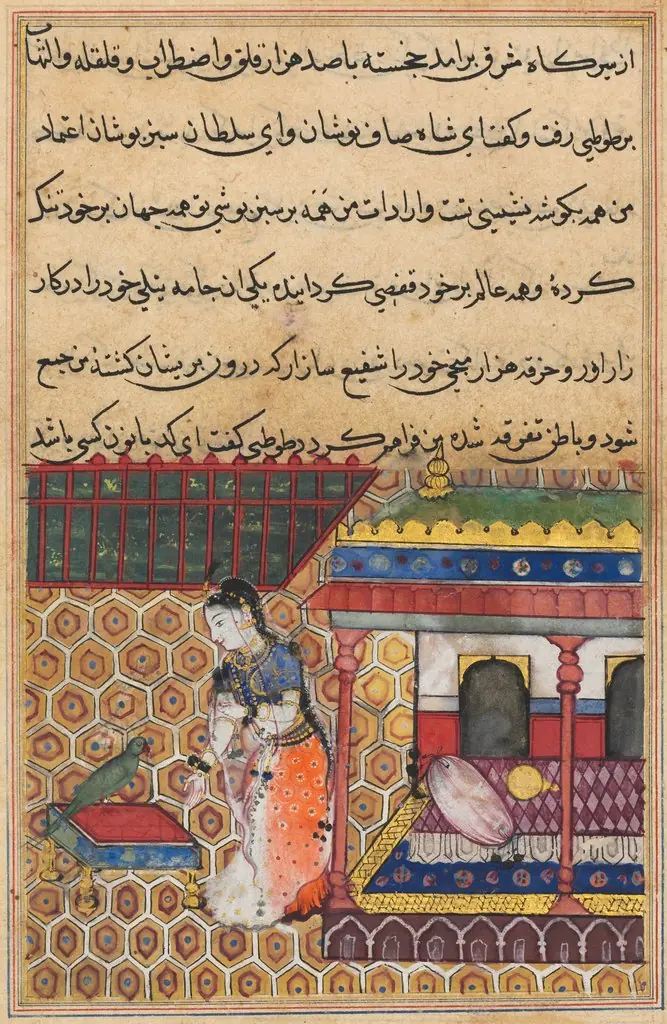 The parrot addresses Khujasta at the beginning of the thirty-eighth night, from a Tuti-nama (Tales of a Parrot)
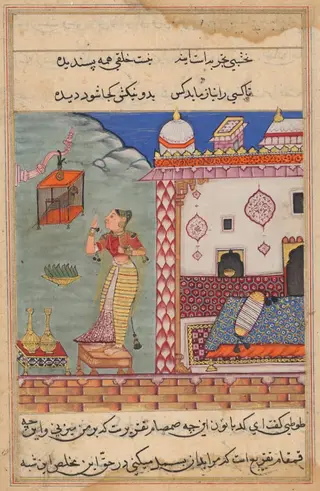 The Parrot Addresses Khujasta at the Beginning of the Twenty-seventh Night, form a Tuti-nama (Tales of a Parrot)
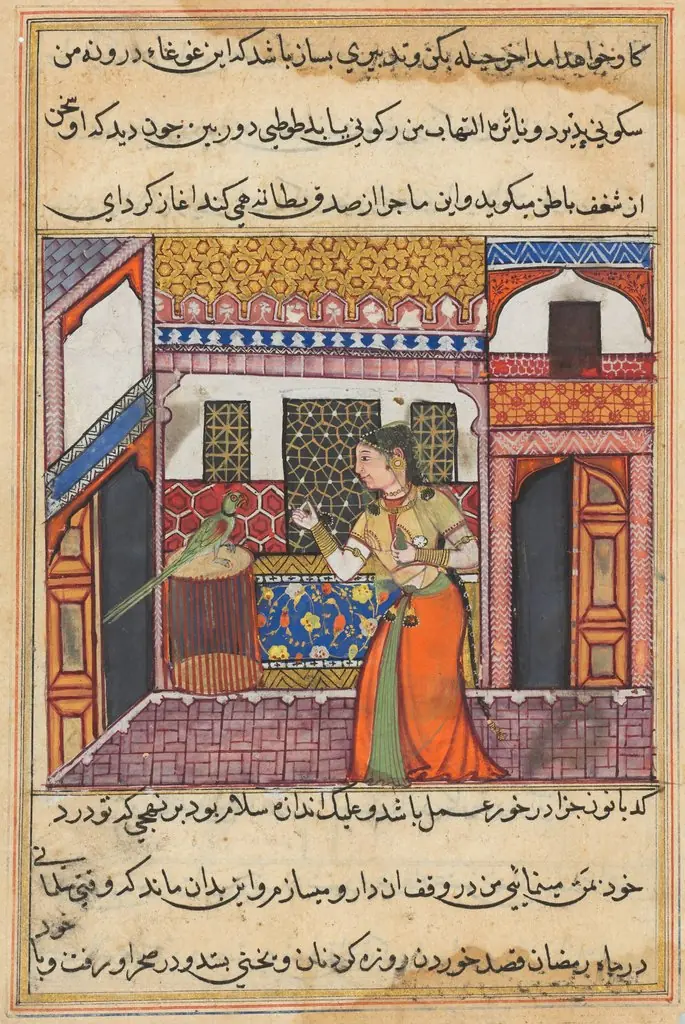 The parrot addresses Khujasta at the beginning of the forty-third night, from a Tuti-nama (Tales of a Parrot)
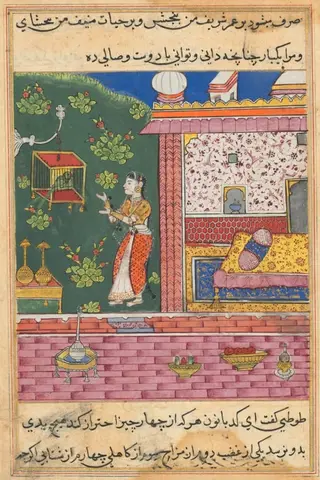 The Parrot Addresses Khujasta at the Beginning of the Thirtieth Night, from a Tuti-nama (Tales of a Parrot)
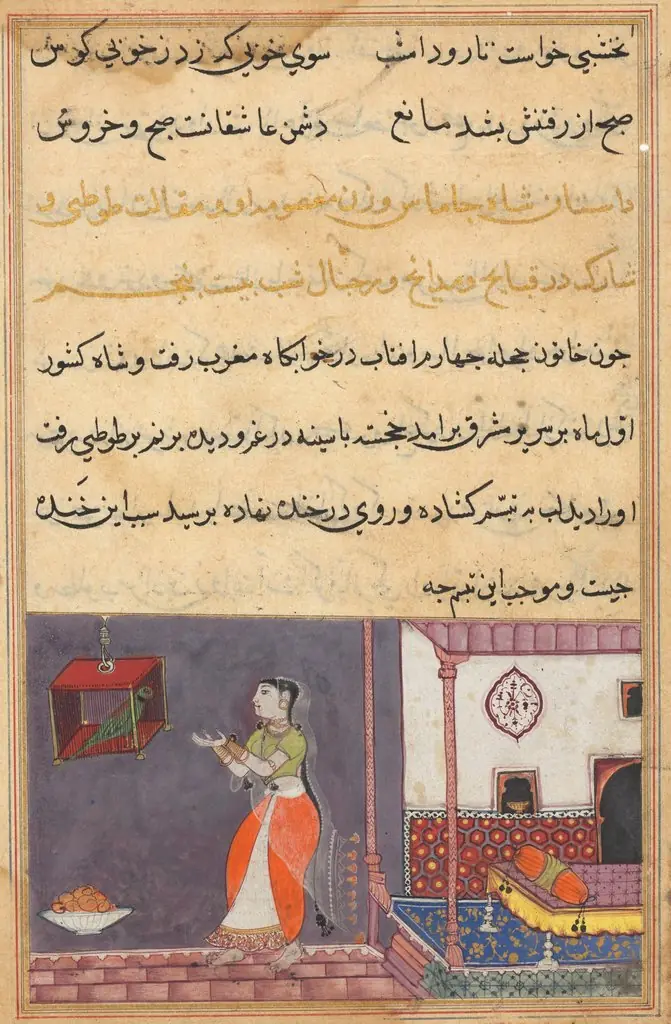 The Parrot Addresses Khujasta at the Beginning of the Twenty-fifth Night, from a Tuti-nama (Tales of a Parrot)
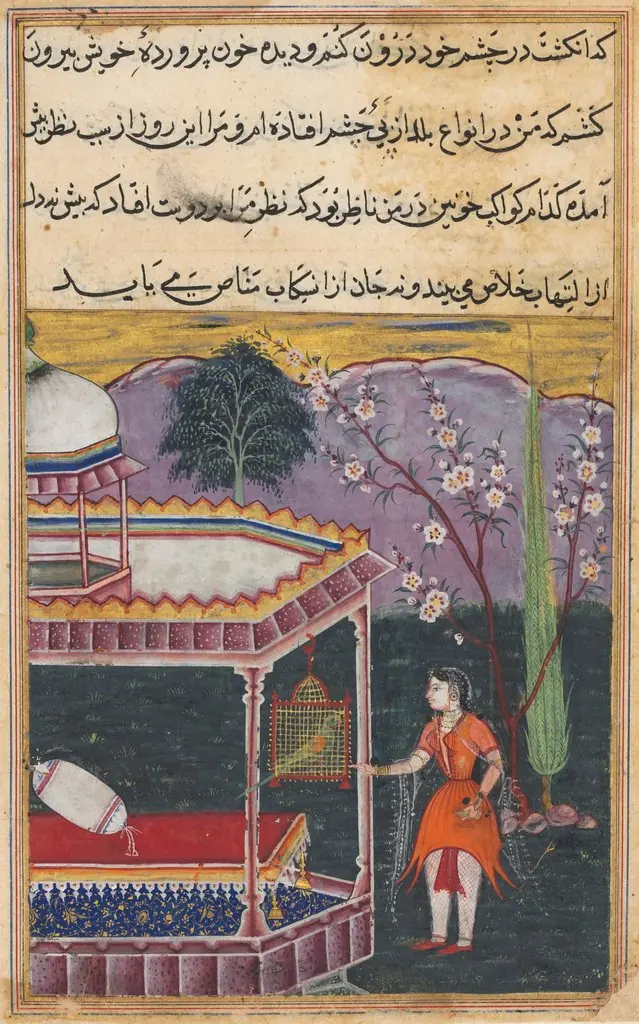 The Parrot Addresses Khujasta at the Beginning of the Eighth Night, from a Tuti-nama (Tales of a Parrot)
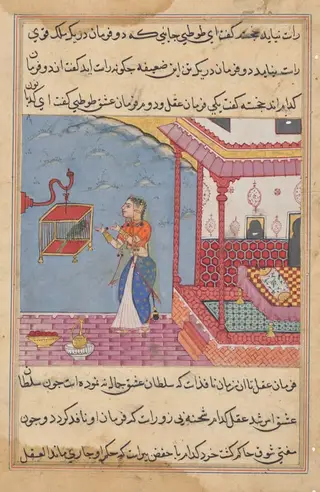 The Parrot Addresses Khujasta at the Beginning of the Twenty-Fourth Night, from a Tuti-nama (Tales of a Parrot)
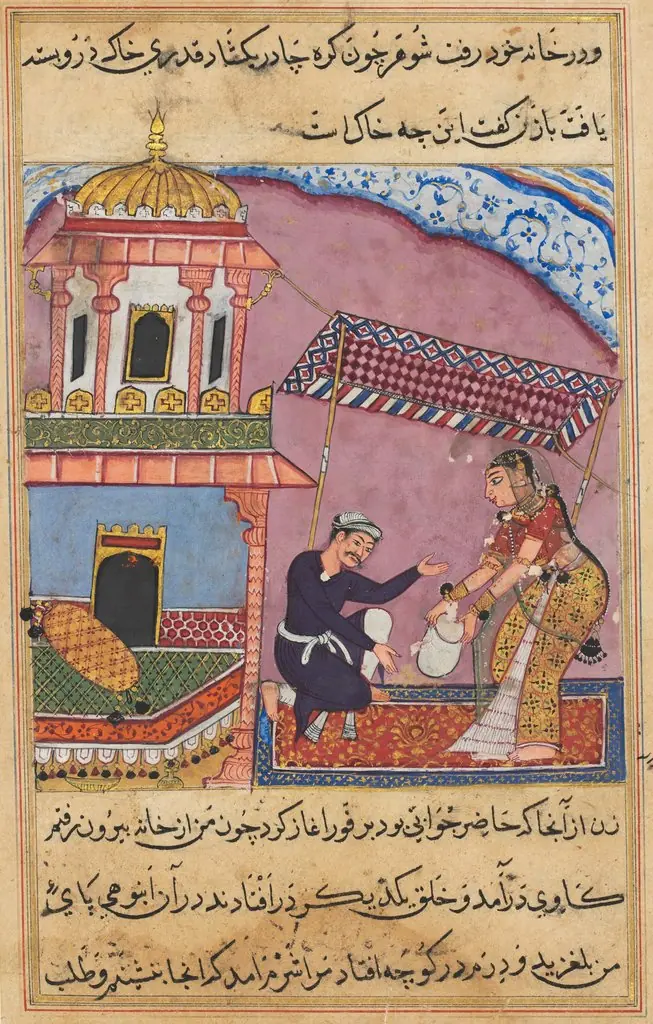 The husband berates his wife for purchasing gravel instead of sugar, from a Tuti-nama (Tales of a Parrot): Eighth Night
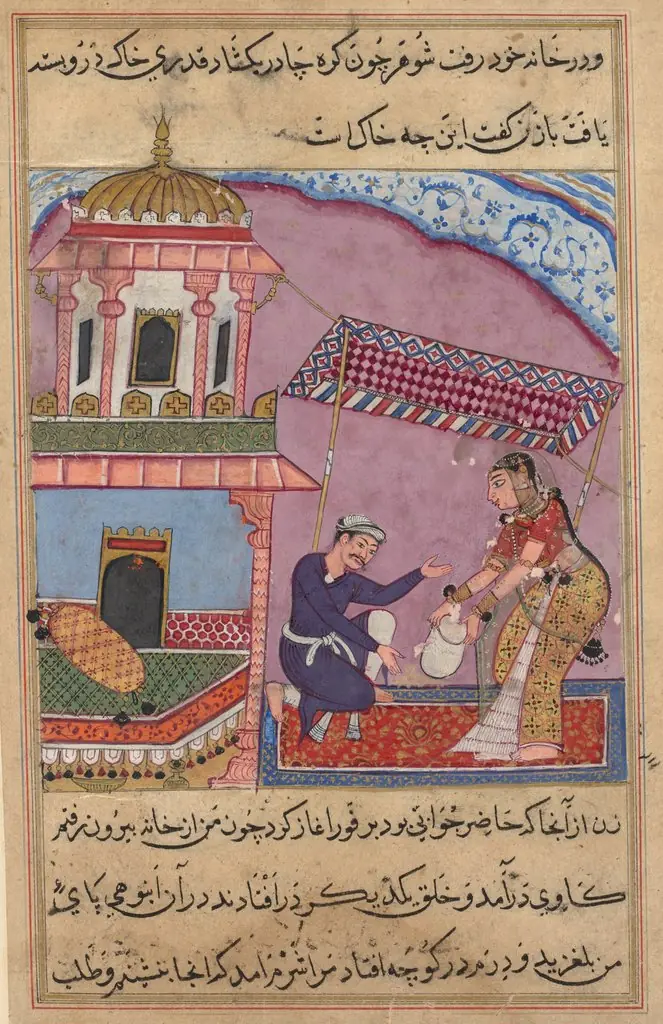 The merchant’s clerk replaces the sugar purchased by the philandering wife with gravel, from a Tuti-nama (Tales of a Parrot): Eighth Night