Artwork
On to Liberty
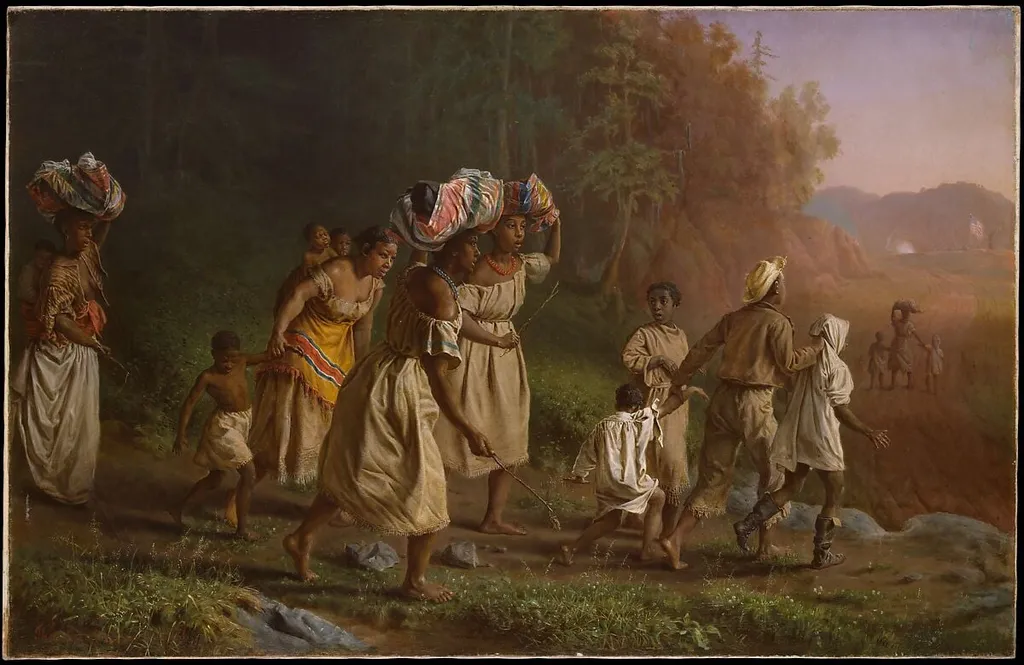
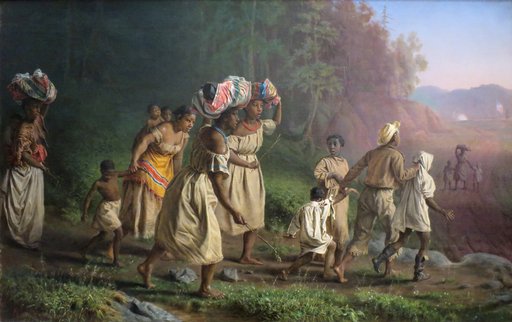
On to Liberty is an oil painting by the Impressionist artist Theodor Kaufmann. It dates from 1867 and is held in the collection of the Metropolitan Museum of Art.
- Accession no.
- 1982.443.3
- Credit line
- Gift of Erving and Joyce Wolf, in memory of Diane R. Wolf, 1982
About this work
Subject & Meaning
The painting On to Liberty, completed by Theodor Kaufmann in 1867, portrays a freed enslaved family in motion toward a symbolic Liberty figure.
The painting On to Liberty, completed by Theodor Kaufmann in 1867, portrays a freed enslaved family in motion toward a symbolic Liberty figure. A woman cradles a child while a man, identified as a former slave, leads the group, their gestures suggesting hope and forward movement. The inclusion of a child and the man’s posture underscore themes of emancipation and the promise of freedom after the Civil War.
By situating the figures within a historic genre scene, Kaufmann links personal liberation to the broader national ideal of liberty, making the work both a documentary record and an allegorical statement on post‑war America.
Technique & Style
Created in 1867 by Theodor Kaufmann, On to Liberty is executed as an oil painting on canvas. The work measures 91.4 centimeters in height and 142.2 centimeters in width, presenting a horizontal format typical of genre scenes. As a piece housed within the American Wing of the Metropolitan Museum of Art, the painting utilizes traditional materials of oil paint and woven fabric support to depict figures including men, women, and children within a narrative of slavery.
The available records confirm the medium and dimensions but do not provide specific details regarding the artist's brushwork, surface condition, or distinct stylistic handling beyond its classification as a genre scene.
History & Provenance
Painted in 1867 by Theodor Kaufmann, On to Liberty is dated to that year in the artist’s oeuvre and in institutional records. The work entered the collection of The Metropolitan Museum of Art, New York, where it has remained. No documented commission or preparatory history has been published, and the painting’s early ownership beyond acquisition by the museum is unrecorded.
On to Liberty is held by the Metropolitan Museum of Art, where it belongs to the collection of The American Wing. The painting, an oil on canvas work completed by Theodor Kaufmann in 1867, is catalogued within that institutional grouping. Its physical dimensions, recorded as 91.4 cm in height and 142.2 cm in width, are consistent with the Met's holdings. No specific accession number, acquisition date, or details of past exhibitions are documented in the available sources.
Context
The 1867 oil on canvas genre scene by Theodor Kaufmann, titled On to Liberty, is housed in the Metropolitan Museum of Art’s American Wing and classified as an American genre painting. Its depiction of a child, a man, a woman, and the motif of slavery, as recorded in the work’s cataloguing, situates it within 19th‑century American art’s engagement with post‑Civil War social themes. As part of Kaufmann’s broader oeuvre focusing on historical and contemporary American life, the piece is frequently cited in scholarship examining artistic responses to emancipation and national identity. Its inclusion in a major museum collection underscores its recognized significance within U.S. art historical narratives.
Overview
Theodor Kaufmann's 'On to Liberty' (1867) is an oil-on-canvas genre scene depicting a group of formerly enslaved people moving urgently toward freedom in the immediate aftermath of the American Civil War. The composition features a dynamic, diagonal arrangement of figures of varying ages and genders, all advancing from left to right across the canvas. They are dressed in a mix of ragged and modest attire, carrying bundles and small American flags that symbolize their new citizenship and the promise of liberty.
Kaufmann employs a loose, energetic brushwork style that conveys the movement and emotional intensity of the moment, prioritizing the narrative of liberation over academic precision. Created two years after the ratification of the Thirteenth Amendment, the work reflects the artist's engagement with Reconstruction-era themes and the complex mixture of hope and uncertainty facing African Americans. As one of the few mid-19th-century American paintings to explicitly celebrate the emancipation of enslaved people from a sympathetic perspective, it stands as a significant historical document within Kaufmann's career and the broader canon of American genre painting.
Artist & collection

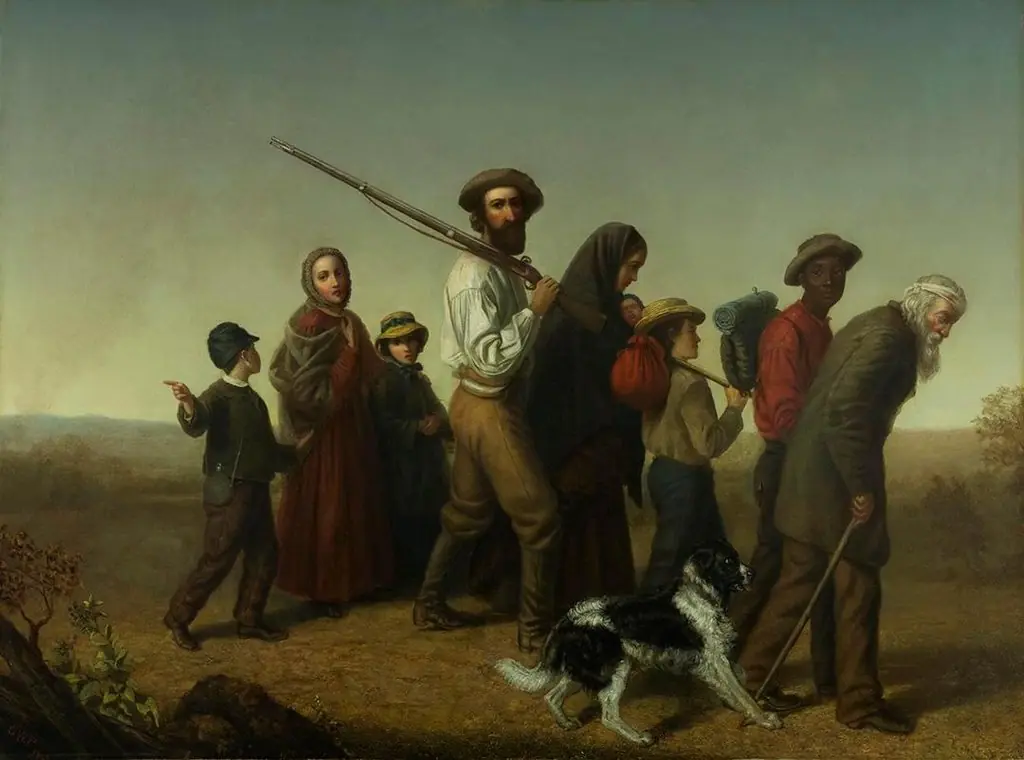
- Union Refugees
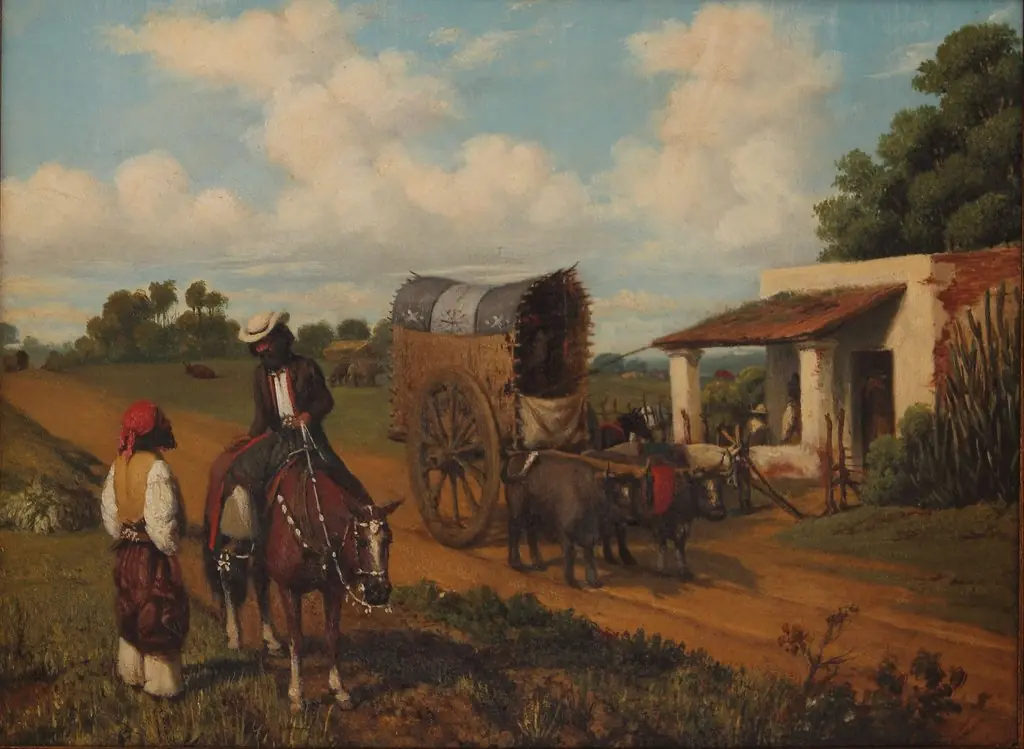 Un alto en la pulpería
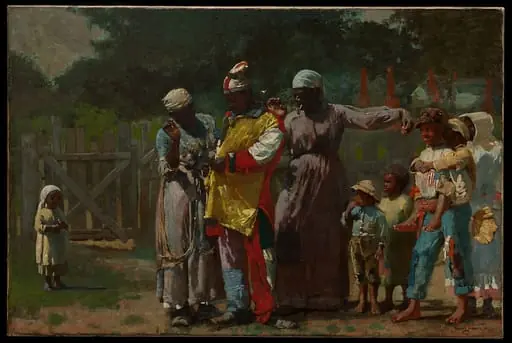 Dressing for the Carnival
 Two Women Chatting by the Sea, St. Thomas
 Sioux Indians Breaking Up Camp
 Carts at the riverside
![View of Mount Emo [Haemus] or Great Balkan in Bulgaria with guards assembled to collect a toll from travellers, by Luigi Mayer](https://artifactworldgallery.com/img/luigi-mayer--view-of-mount-emo-haemus-or-great-balkan-in-bulgaria-with-gu--689442e1e99001cb-w320.webp) View of Mount Emo [Haemus] or Great Balkan in Bulgaria with guards assembled to collect a toll from travellers
View of Mount Emo [Haemus] or Great Balkan in Bulgaria with guards assembled to collect a toll from travellers Hora peste Olt
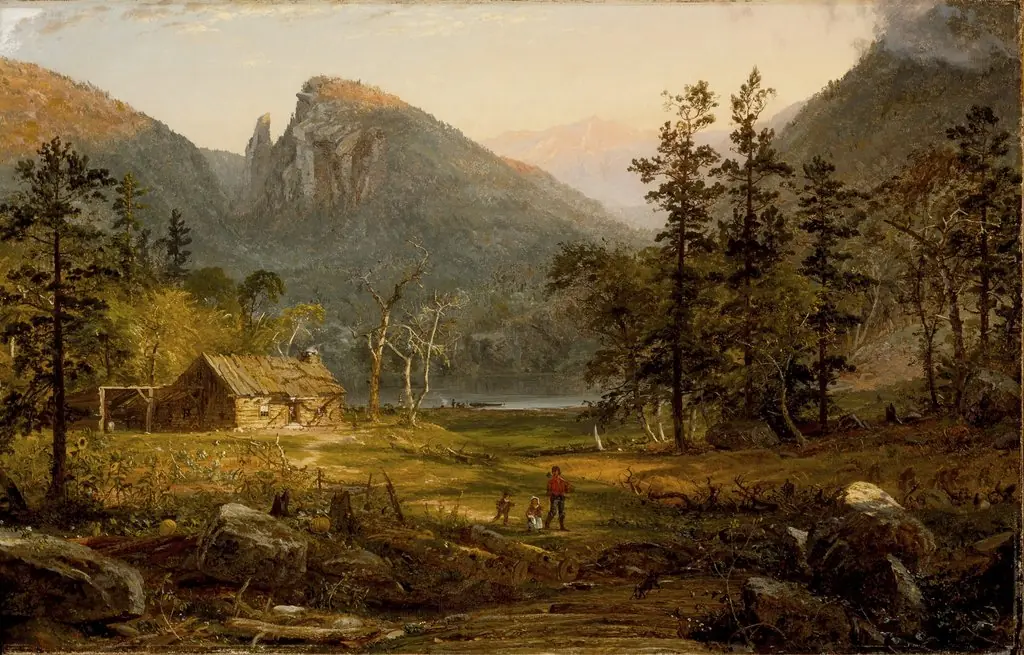 Pioneer's Home, Eagle Cliff, White Mountains
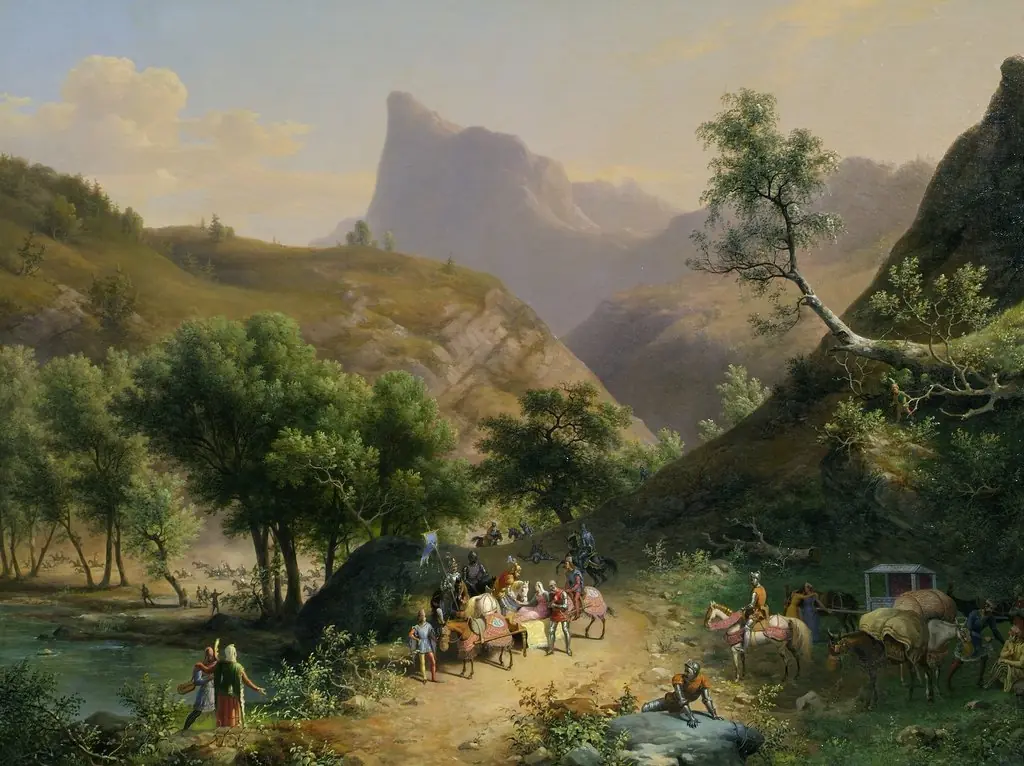 Entführung der Tochter des Herzogs von Genf (?) durch Thomas von Savoyen
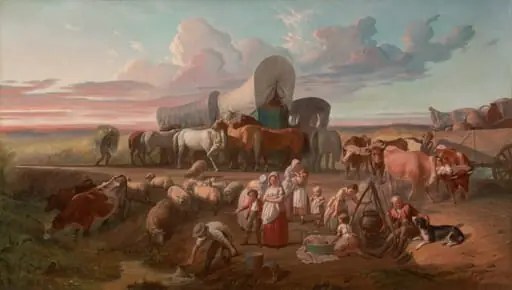 An Evening Halt - Emigrants Moving to the West in 1840
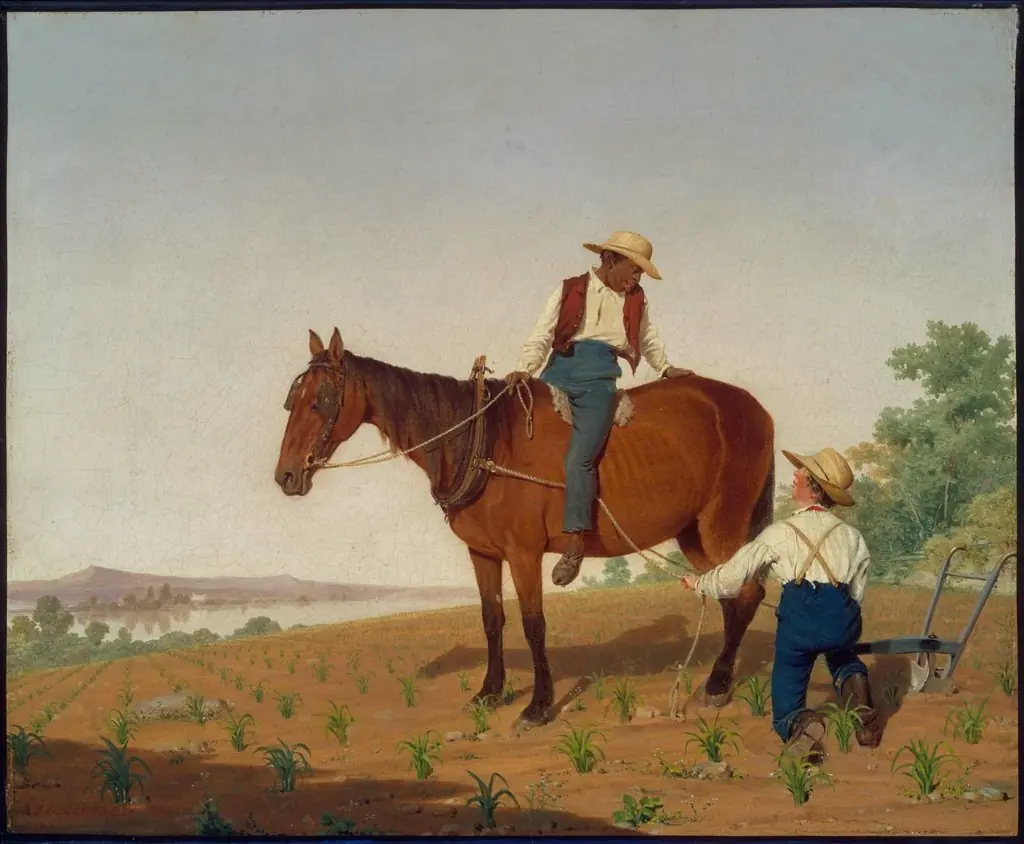 In the Cornfield