Artwork
Portrait of Marcantonio Barbaro (1518-1595) as ambassador to Constantinople
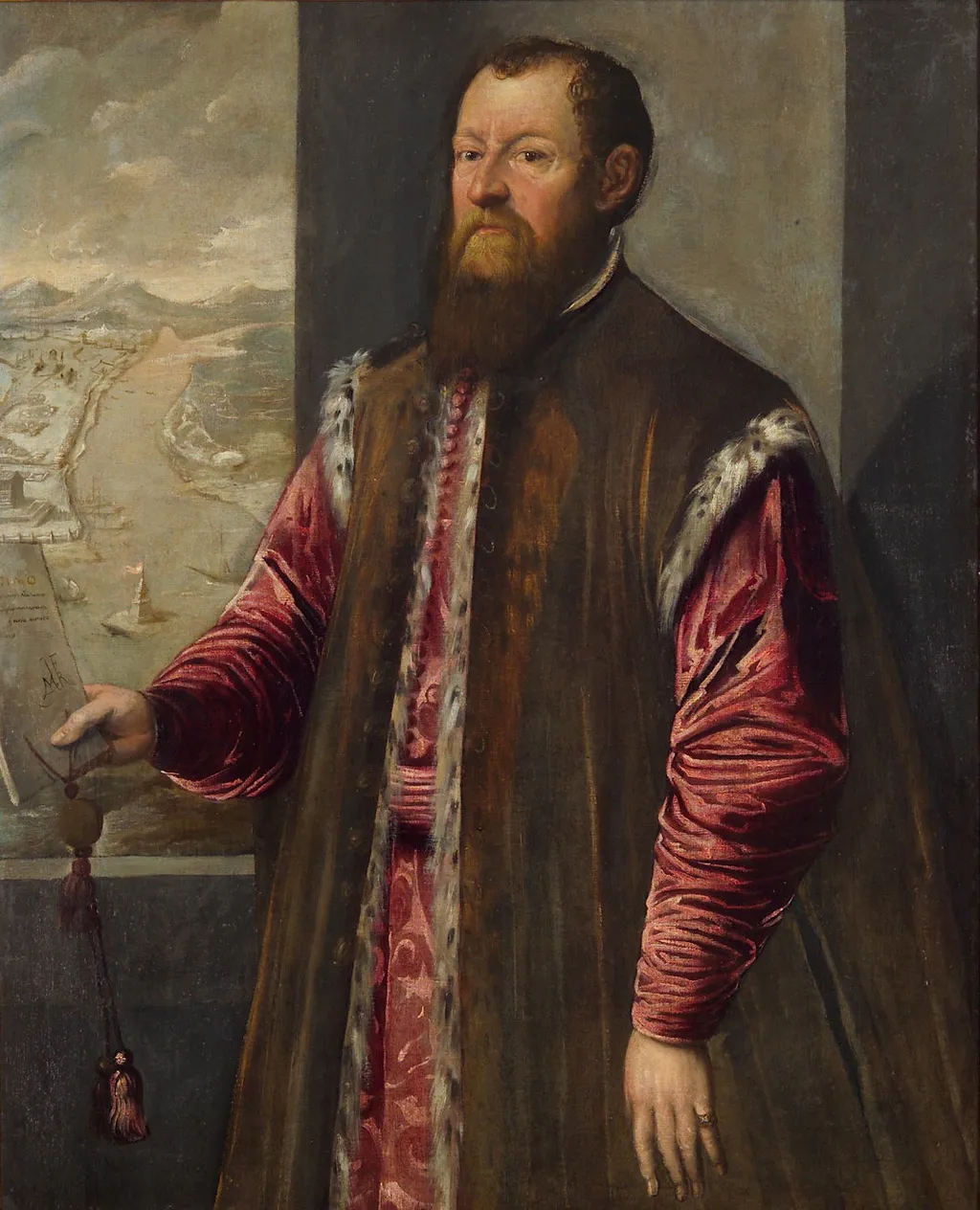
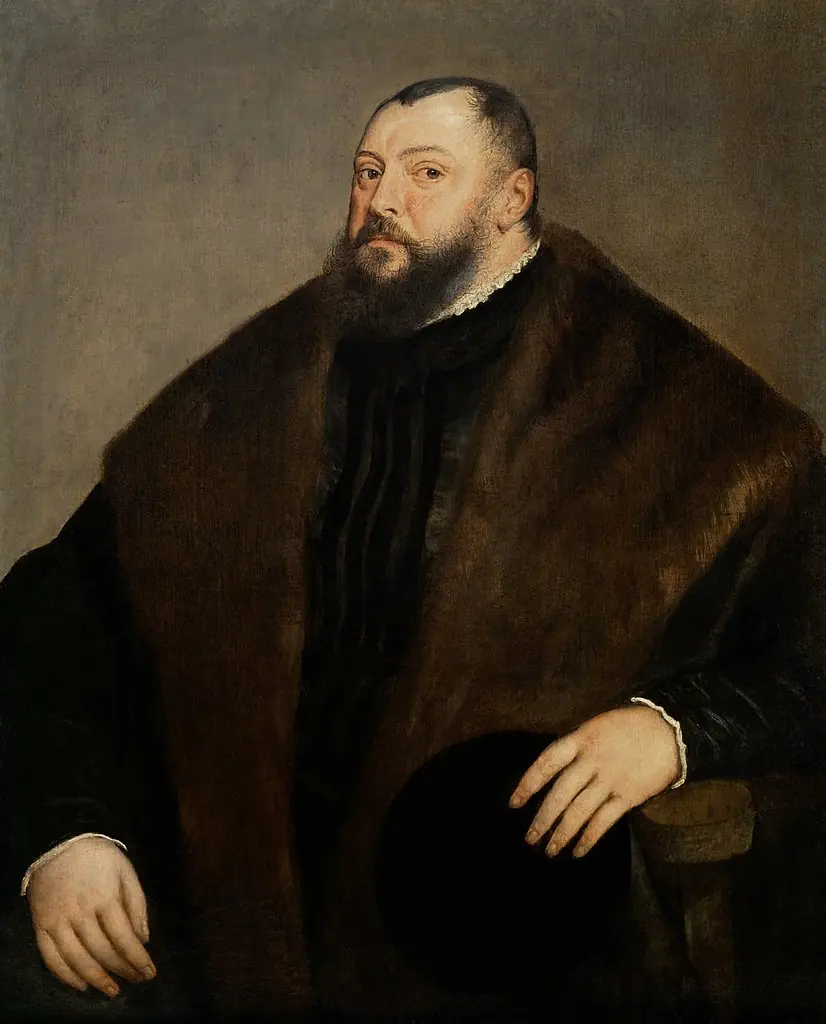
Portrait of Marcantonio Barbaro (1518-1595) as ambassador to Constantinople is an unspecified painting by the Venetian Renaissance artist Unknown. It dates from 1570 and is held in the collection of the Kunsthistorisches Museum. This painting depicts a dignified figure in a dark brown robe with red sleeves, holding a rolled-up map.
About this work
Subject & Meaning
He holds a letter or document, a conventional attribute of envoys, while a distant landscape hints at the political context of his mission.
The painting shows Marcantonio Barbaro in the role of Venetian ambassador to the Ottoman court, presenting him in formal diplomatic attire that underscores his official status. He holds a letter or document, a conventional attribute of envoys, while a distant landscape hints at the political context of his mission. The work therefore conveys both the individual's public function and the broader diplomatic relations between Venice and the Ottoman Empire in the late sixteenth century.
History & Provenance
The portrait was created in 1570 and depicts Marcantonio Barbaro in his role as ambassador to Constantinople. It is classified as a painting in the portrait genre.
The work later entered the collection of Archduke Leopold Wilhelm of Austria, a notable seventeenth-century Habsburg collector. It is now held by the Kunsthistorisches Museum, where it remains part of the institution's holdings.
The portrait of Marcantonio Barbaro is held in the collection of the Kunsthistorisches Museum in Vienna. The work is attributed to a Venetian artist and was created in 1570. Historically, the painting was part of the holdings of Archduke Leopold Wilhelm of Austria before entering the museum's collection.
Specific inventory or accession numbers are not provided in the available sources, nor is an exhibition history documented.
Legacy
The portrait of Marcantonio Barbaro as an ambassador to Constantinople has been recognized as a significant example of 16th-century Venetian portraiture, influencing later diplomatic imagery. Its depiction of a Venetian noble in an imperial context contributed to the visual vocabulary of state representation in European courts. The work remains part of the collection at the Kunsthistorisches Museum, where it is studied within the broader context of Habsburg-era art patronage.
The painting's composition and diplomatic symbolism have been cited in scholarly discussions of early modern portraiture and cross-cultural diplomacy.
Overview
This painting depicts a dignified figure in a dark brown robe with red sleeves, holding a rolled-up map. A window behind him reveals a cityscape with a harbor.
Technique & Style
The portrait employs chiaroscuro, a technique using strong contrasts between light and dark. The subject's face is lit from one side, creating deep shadows on the other, adding depth and drama to the image.
Artist & collection









- Portrait of a Gentleman
 Hans Christoph I. Vöhlin von Frickenhausen (1522-1576)
 Männliches Bildnis
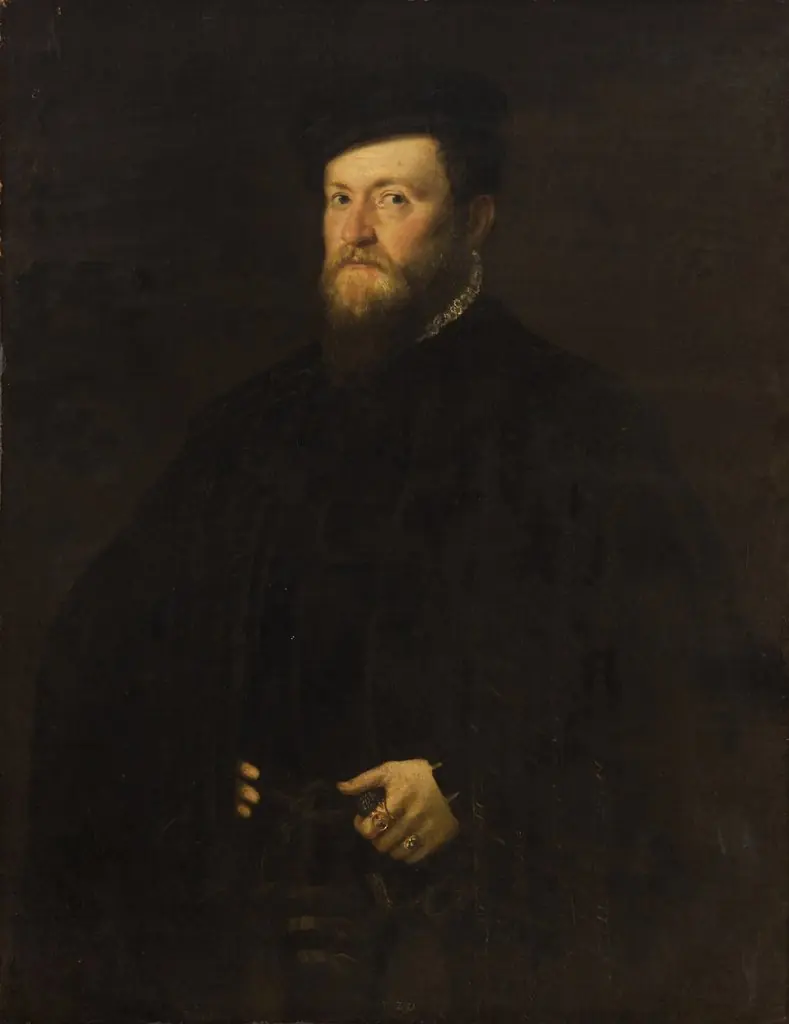 Portrait of a Man in a Cape
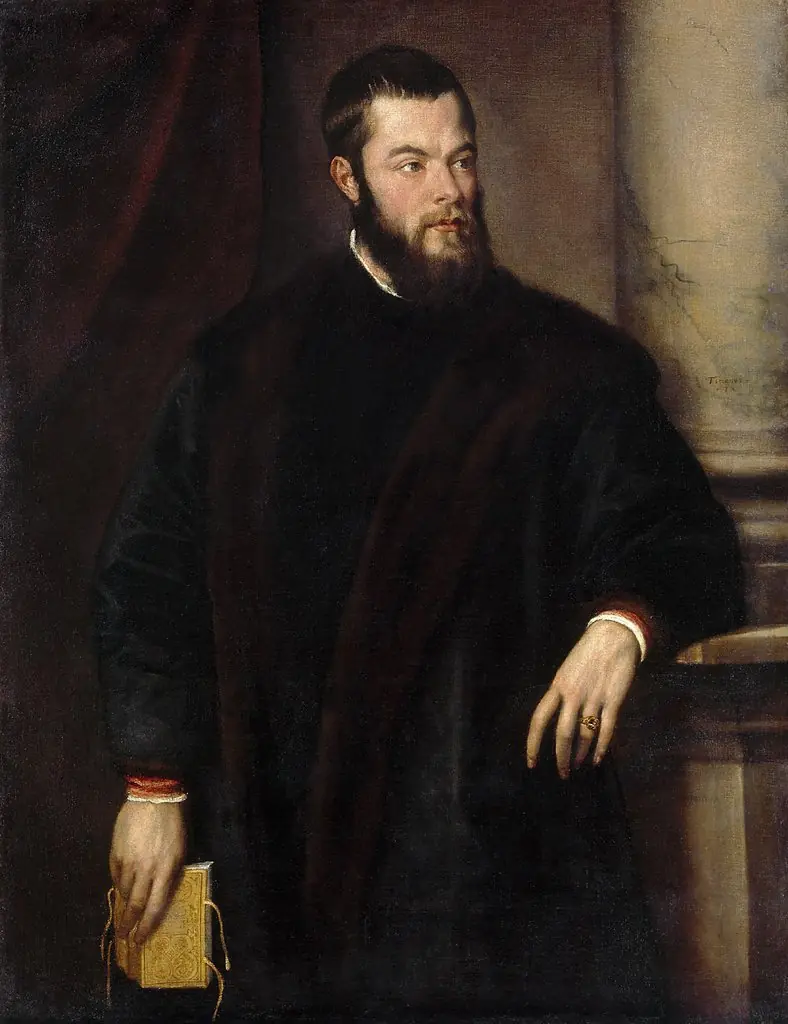 Portrait of Benedetto Varchi
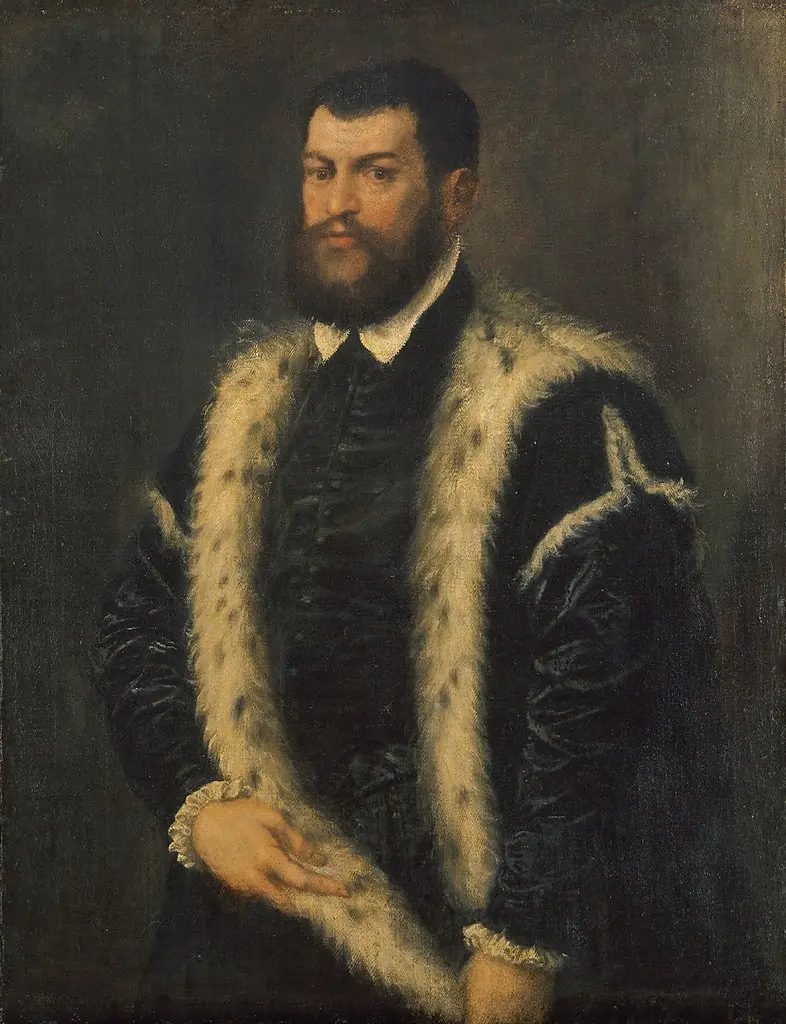 Man with Ermine Coat
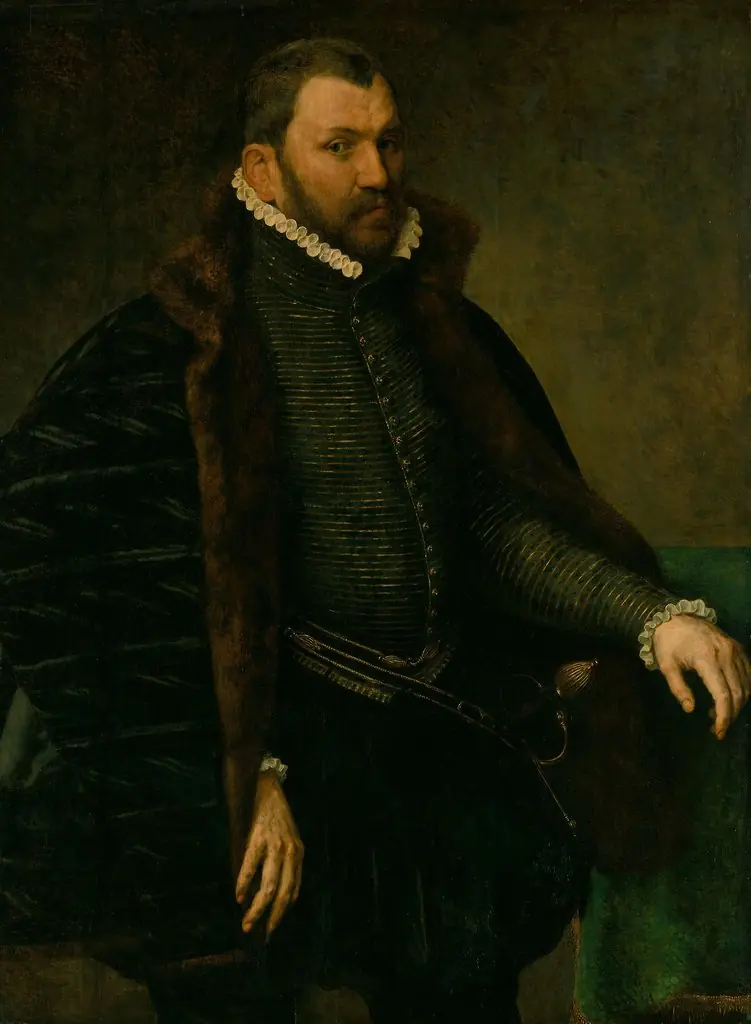 Portrait of a Man
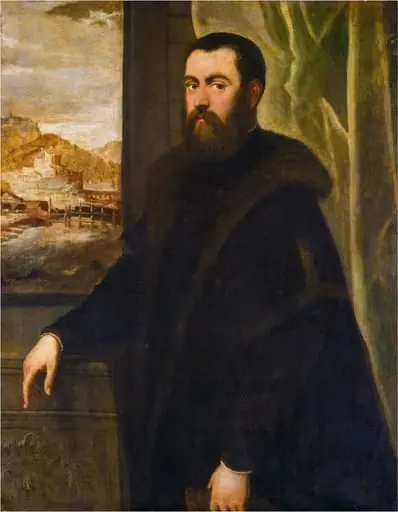 Portrait of a Man with a Landscape View
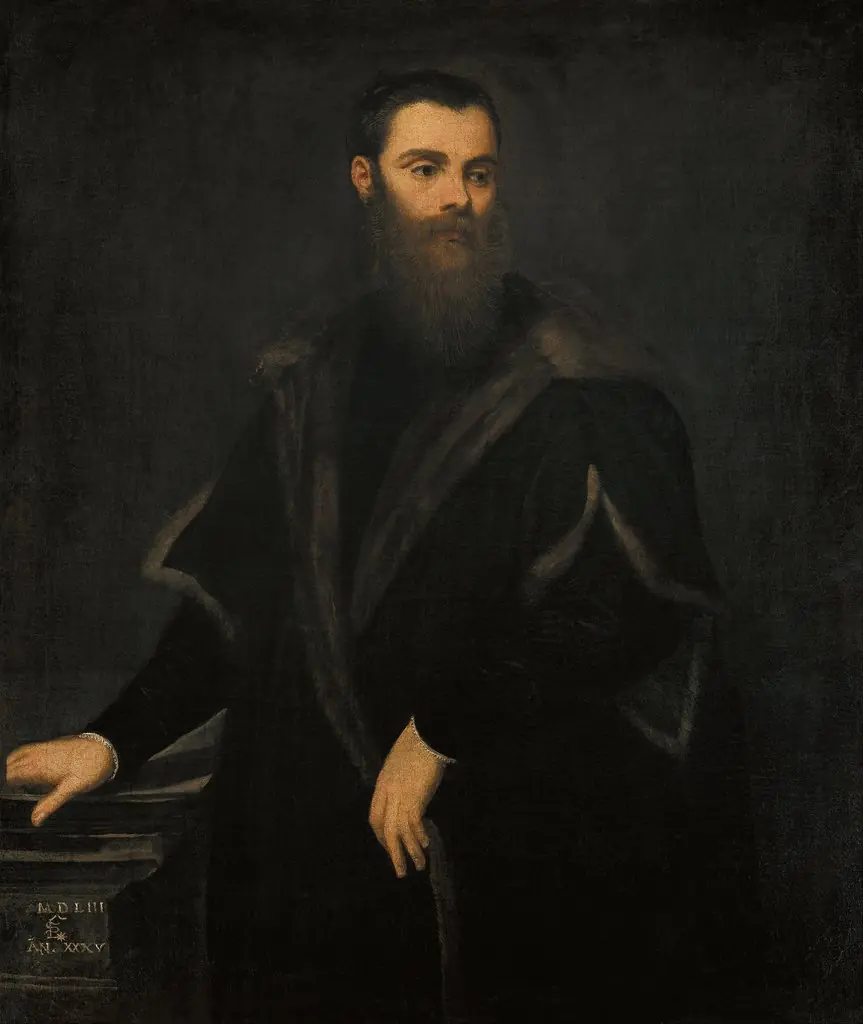 Lorenzo Soranzo
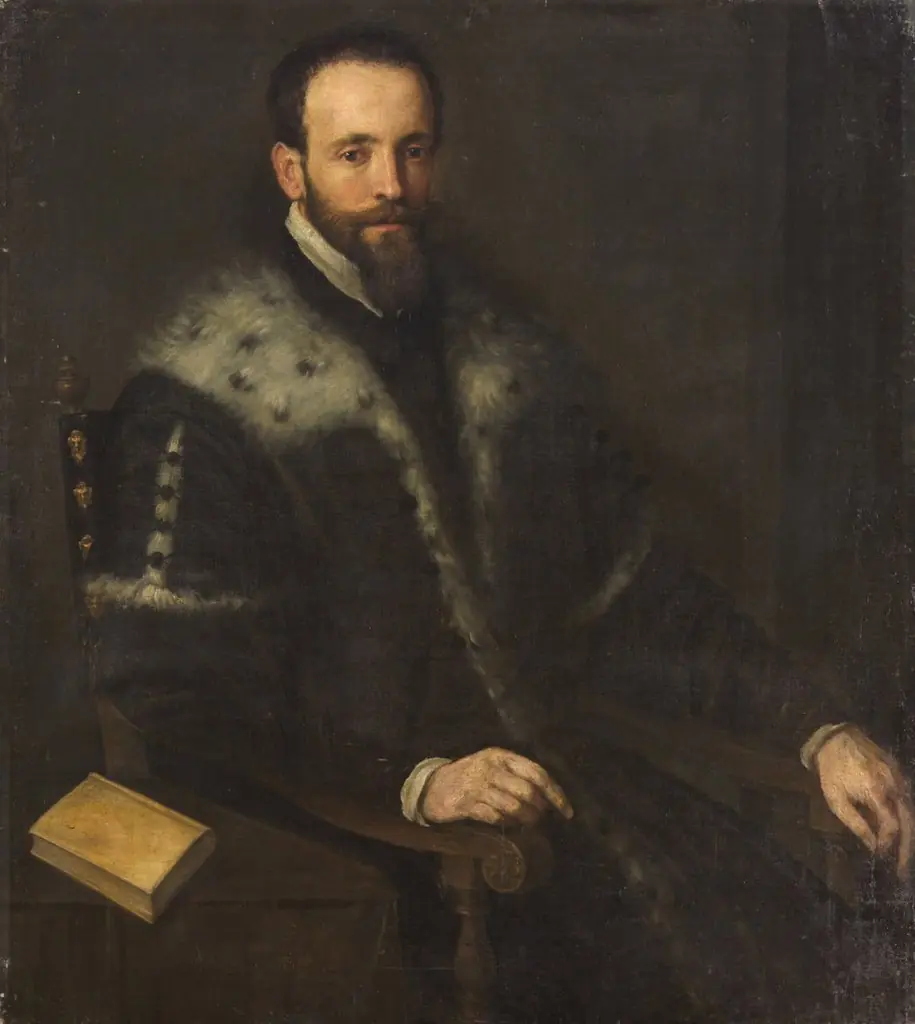 Bildnis eines Mannes im Lehnstuhl
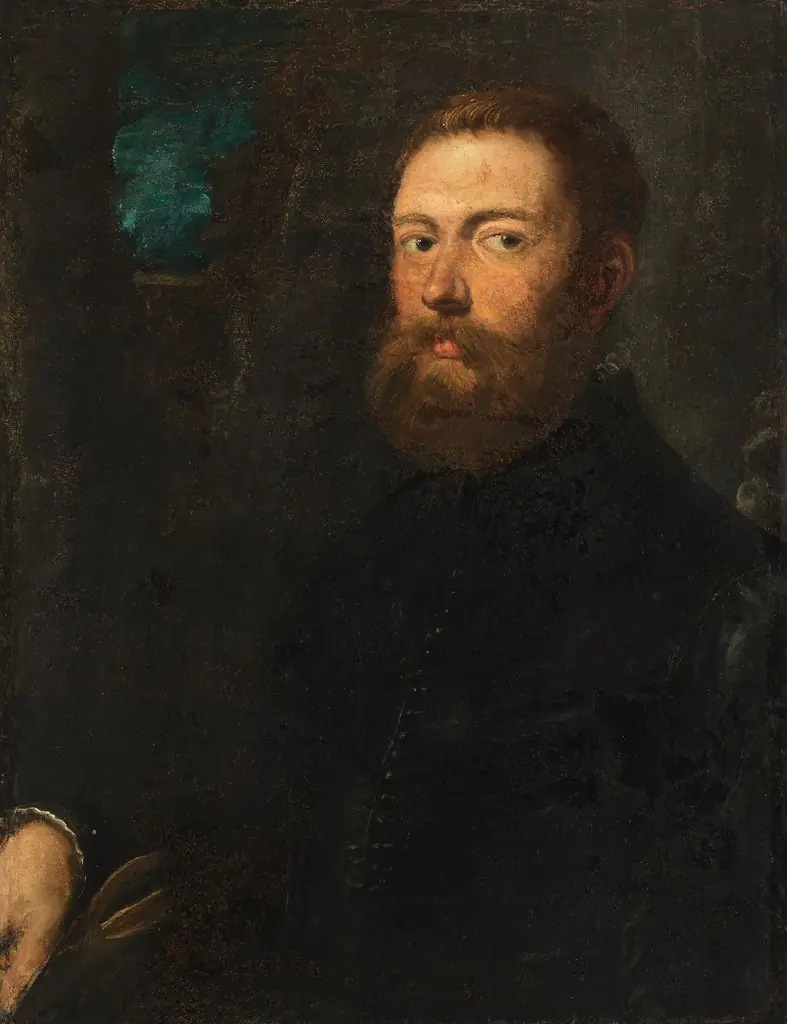 Bildnis eines Mannes
 John Frederick, Elector of Saxony