Artwork
Cupid with the Wheel of Time
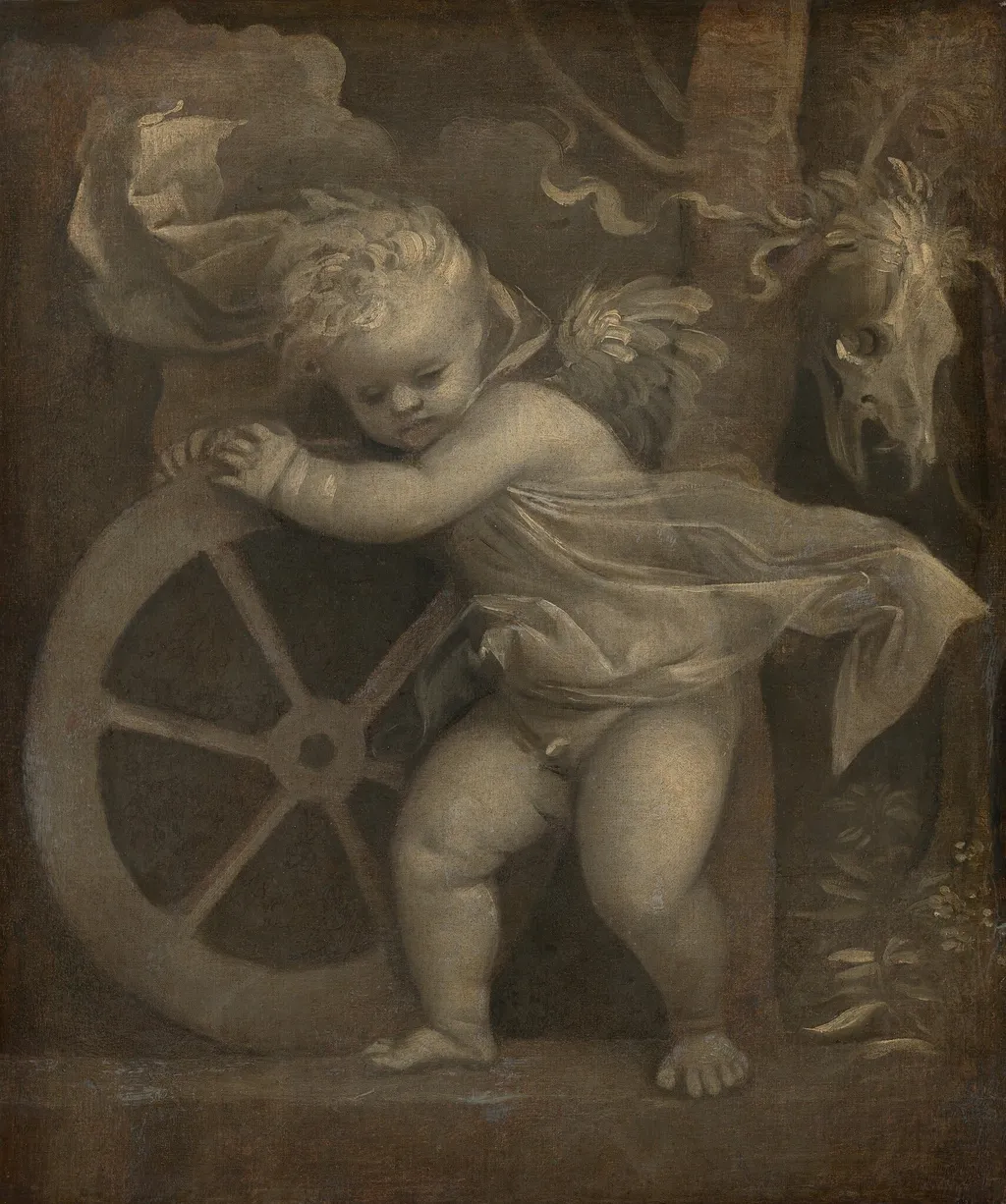
Cupid with the Wheel of Time is an oil painting by the High Renaissance artist Titian. It dates from 1518 and is held in the collection of the National Gallery of Art.
About this work
Subject & Meaning
The artwork's main subject is Cupid, depicted alongside the symbolic wheel, intertwining themes of romantic desire with the capricious nature of fate.
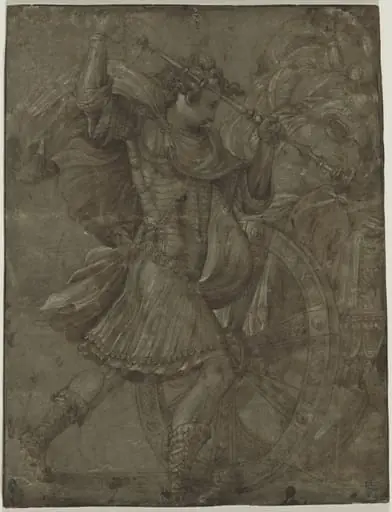
Titian's Cupid with the Wheel of Time presents a mythological allegory centering on the figure of Cupid interacting with the Wheel of Fortune. The artwork's main subject is Cupid, depicted alongside the symbolic wheel, intertwining themes of romantic desire with the capricious nature of fate. Historically, the painting's iconography was subject to varying interpretations: early nineteenth-century sale catalogues alternatively described the composition as A Genius trying to stop a Wheel or simply an allegory, and misattributed it to artists such as Parmigianino and Polidoro.
A 1935 bill of sale referred to the piece as Cupid with Wheel of Life. The work is now classified under mythology, representing the convergence of love and the turning, unpredictable forces of fortune and time.
Technique & Style
Cupid with the Wheel of Time is executed in oil paint on a canvas support, a medium typical of Titian's practice in the early sixteenth century. The technique relies on the layered application of oil pigments to achieve subtle modeling and color transitions characteristic of the Venetian school. Stylistically, it aligns with High Renaissance ideals, reflecting the harmonious composition and mythological subject matter associated with Titian's oeuvre during this period.
History & Provenance
Created in 1518 by Titian, this oil on canvas emerged from the Venetian High Renaissance. Its early history traces to Rome's Altieri Palace, from which it entered the collection of Angelo Bonelli by 1803. Bonelli attempted to sell the work several times in London under varying attributions, first as a Parmigianino at the Roman Gallery in 1804, then at Christie's, and at Farebrother's as an allegory by Polidoro, without finding a buyer.
The painting later passed through Viani in Rome and Count Alessandro Contini Bonacossi in Florence and Rome. In October 1935 Contini Bonacossi sold it, recorded in a bill of sale as Cupid with Wheel of Life, to the Samuel H. Kress Foundation in New York, which gifted it to the National Gallery of Art in Washington, D.C., in 1939. The sources do not record specific exhibition dates or venues.
Context
Cupid with the Wheel of Time occupies a notable place in Titian's oeuvre as a mythological painting of the Venetian High Renaissance. The work's attribution and interpretation were long subjects of confusion: when it entered the London market via Angelo Bonelli in 1803–1804 it was variously catalogued as A Genius trying to stop a Wheel by Parmigianino and as an allegory by Polidoro, from the Altieri Palace. Later scholarship identified it as a depiction of Cupid and the Wheel of Fortune by Titian.
By 1935, when Count Alessandro Contini Bonacossi sold it to the Samuel H. Kress Foundation, it was recorded as Cupid with Wheel of Life; the foundation's subsequent gift placed it within the National Gallery of Art's holdings of Italian Renaissance art.
Legacy
The painting entered the Samuel H. Kress Collection in 1935 and was subsequently gifted to the National Gallery of Art, where it remains on public view. Its documented provenance, from Bonelli's 1803–1804 London sales through Count Alessandro Contini Bonacossi to Kress, has been cited in scholarly studies of Titian's mythological output and his reception in the nineteenth-century art market, underscoring the work's role as a High Renaissance example of Venetian mythological painting and contributing to the broader appreciation of Titian's influence on later European art.
Overview
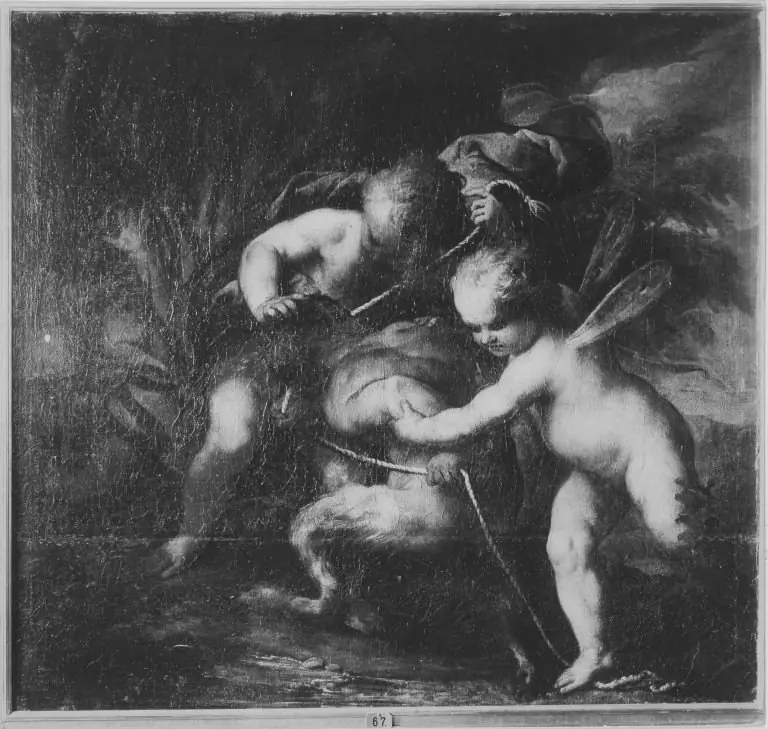
Cupid with the Wheel of Time is an oil on canvas painting by Titian, presenting a plump, winged Cupid engaging with a substantial wooden wheel. The deity appears at ease, seemingly in control of the rotating mechanism. This artwork exemplifies Titian's early approach to allegorical subjects, combining mythological figures with symbolic elements.
Own this work as a print
Artist & collection
Artist
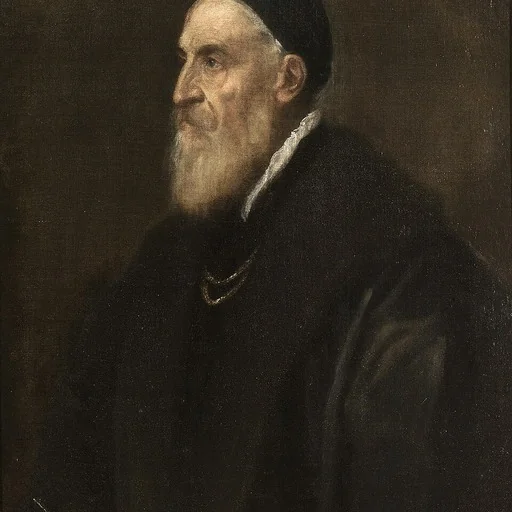
Tiziano Vecellio (Italian:; c. 1488/1490 – 27 August 1576), Latinized as Titianus, hence known in English as Titian ( TISH-ən), was an Italian Renaissance painter. The most important artist of Renaissance Venetian…