Artwork
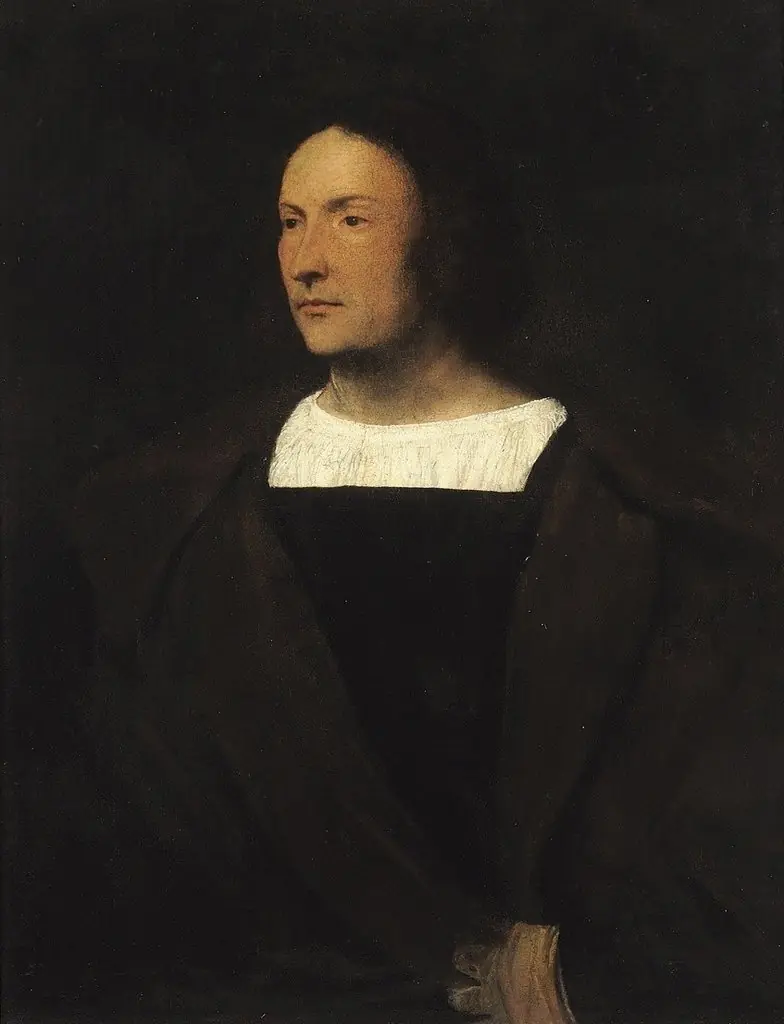
The physician Gian Giacomo Bartolotti da Parma
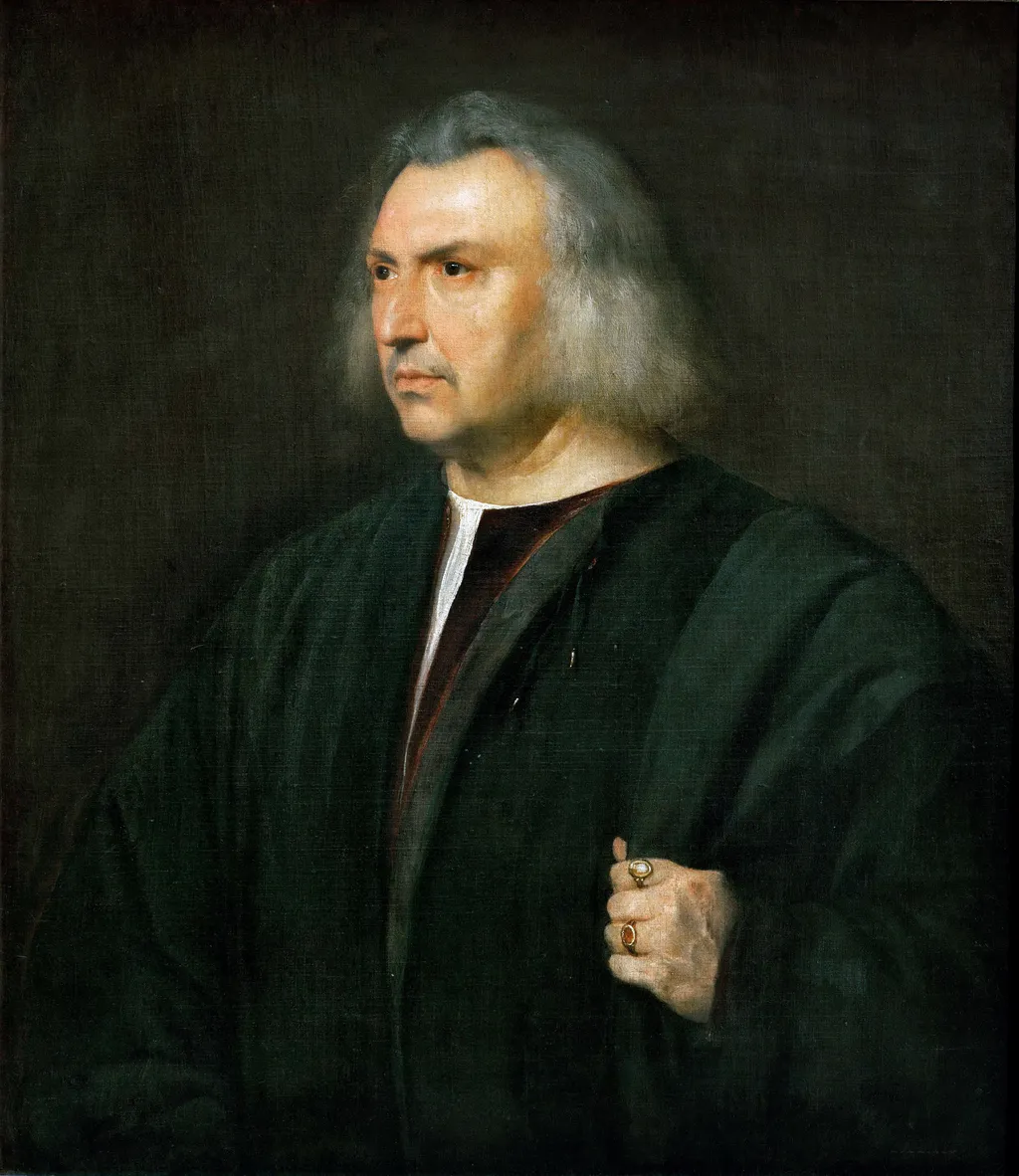
The physician Gian Giacomo Bartolotti da Parma is an oil painting by the High Renaissance artist Titian. It dates from 1516 and is held in the collection of the Kunsthistorisches Museum.
About this work
Subject & Meaning
Beyond these identifying features, the work communicates the subject's elevated social status, evidenced by two rings visible on his hand.
The portrait depicts Gian Giacomo Bartolotti da Parma, a physician from Parma who served as Titian's doctor and later as an official physician for the Venetian military fleet. Identified by Carlo Ridolfi in 1648, the subject is characterized by a shaved face and white hair falling to his ears or shoulders. The composition emphasizes specific physical traits to convey the sitter's identity and character; his left hand clasps a strip of black cloth or cord, described as a habitual gesture by which the distinguished doctor could be recognized from afar. His gaze is fixed on a distant point, suggesting deep concentration.
Beyond these identifying features, the work communicates the subject's elevated social status, evidenced by two rings visible on his hand. The overall aesthetic and psychological rendering project qualities of dignity, nobility of spirit, determination, and intelligence, presenting the physician not merely as a professional but as a figure of significant intellectual and moral weight.
Technique & Style
The work is an oil painting on canvas measuring 88 cm by 75 cm, created around 1515-1518 and currently housed in the Kunsthistorisches Museum in Vienna. Titian rendered the physician’s left hand clasping a strip of black cloth, a distinctive gesture that identified him as a prominent doctor, while the eyes are fixed on a distant point, conveying concentration and intellectual authority. The composition features a dark background, a three‑quarter view turned to the right, a dark mantle over a brown jacket and white shirt, long white hair reaching the shoulders, and two rings on the cloth that signal the sitter’s high social status. Stylistically, the portrait exemplifies the Venetian school’s High Renaissance approach, emphasizing psychological depth, nobility of spirit, and refined realism in the handling of light and texture.
History & Provenance
The portrait was painted by Titian in oil on canvas, with its creation dated to around 1515-1518 (the Kunsthistorisches Museum dating it to about 1515), though other scholars have placed it as early as 1511 or as late as circa 1520 based on stylistic comparisons with works such as the Hampton Court Portrait of a Scholar. The sitter, Gian Giacomo Bartolotti, a physician from Parma, was reportedly Titian's own doctor. The earliest documented owner is Bartolomeo della Nave in Venice, in whose collection the work probably appeared by 1636. It subsequently passed to James Hamilton, 1st Duke of Hamilton, between 1638 and 1649. By 1660 it had entered the collection of Archduke Leopold Wilhelm of Austria, where it is recorded as a Titian in the Theatrum Pictorium. The painting ultimately came into the holdings of the Kunsthistorisches Museum in Vienna, where it remains today. The physician Gian Giacomo Bartolotti da Parma is held in the Kunsthistorisches Museum in Vienna. Its inventory number is not specified in the provided sources. The work entered the collection of Archduke Leopold Wilhelm of Austria by 1660, as recorded in Theatrum Pictorium. Prior to that, it was owned by James Hamilton, 1st Duke of Hamilton, from 1638 to 1649, and likely belonged to Bartolomeo della Nave in Venice around 1636. Earlier provenance is not documented in the sources. Exhibition history is not detailed in the provided materials.
Context
Attributed to Titian, the work is generally situated within the High Renaissance and the Venetian school, though its precise dating has varied among scholars. While the Kunsthistorisches Museum and some modern critics place the creation around 1515-1520, Georg Gronau argued for an earlier date near 1511 based on stylistic parallels with Paduan frescoes. The painting's authorship faced historical debate; critics such as Cook and Justi proposed Giorgione, while Cavalcaselle, Tietze, and Hetzer suggested Domenico Campagnola. Giovanni Morelli ultimately reasserted Titian's hand, a view now held by the majority of art historians. Carlo Ridolfi provided the earliest specific identification of the sitter as the physician Gian Giacomo Bartolotti da Parma in 1648, noting the subject's distinctive appearance. The composition is frequently compared to the Portrait of a Scholar at Hampton Court due to similar structural arrangements.
Legacy
The physician Gian Giacomo Bartolotti da Parma has remained a notable example of Titian’s early portraiture, influencing later depictions of learned figures through its psychological depth and dignified composition. Its legacy is anchored in the recognition of Titian’s ability to convey intellectual authority, as highlighted by contemporaries such as Carlo Ridolfi, who identified the sitter as a Parma physician and noted the work’s presence in Venetian collections by 1648. The painting’s provenance, documented in the Theatrum Pictorium inventory of 1660 and later held by Archduke Leopold Wilhelm, ensured its visibility across European art circles, reinforcing its role as a reference point for portraitists seeking to emulate its blend of realism and status symbolism.
Own this work as a print
Artist & collection
Artist
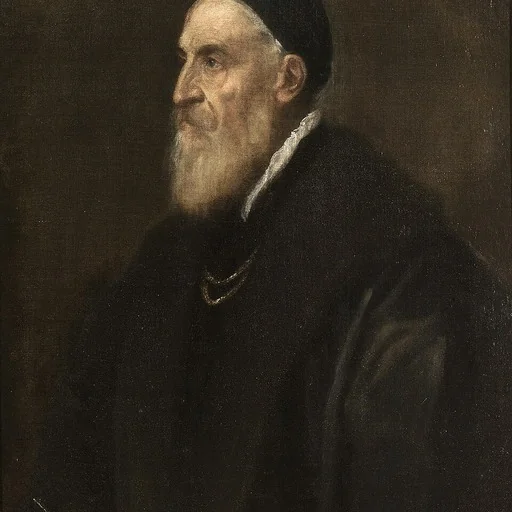
Tiziano Vecellio (Italian:; c. 1488/1490 – 27 August 1576), Latinized as Titianus, hence known in English as Titian ( TISH-ən), was an Italian Renaissance painter. The most important artist of Renaissance Venetian…

- Portrait of Perugino
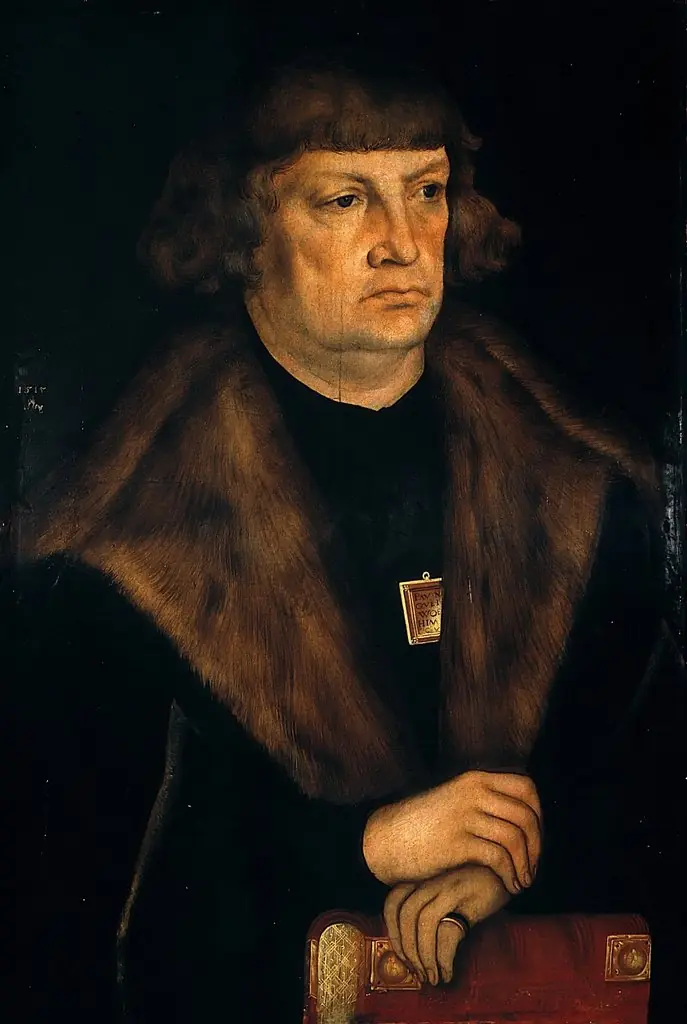 Portrait of the Mayor of Weißenfels
 Portretul lui Paracelsus
 Portrait of a young man in red garment
 Portrait of Francesco delle Opere
 Portrait of Nicolas Poussin, painter
 Portrait of a Man
 Portret kardynała Jana Kazimierza Denhoffa (1649-1697)
 Portrait of a priest (Piarist?)
 Portrait of a Man
 Portrait of a Notable (or Gerolamo Casio)
 Portrait of Andrea dei Franceschi