Artwork
작자미상 포도 조선|作者未詳 墨葡萄圖 朝鮮|Grapevine in the Wind
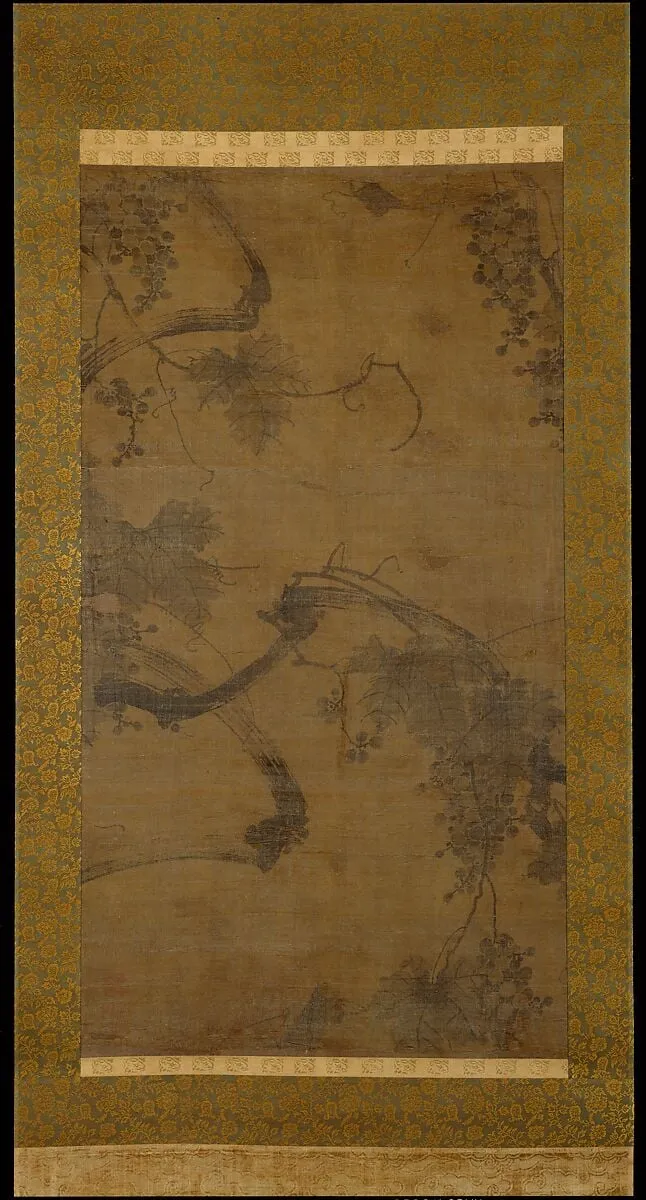
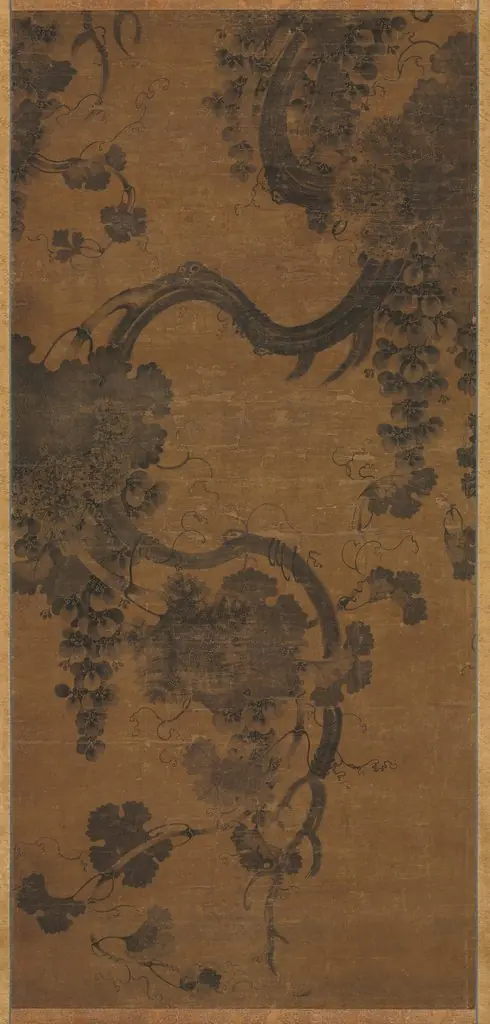
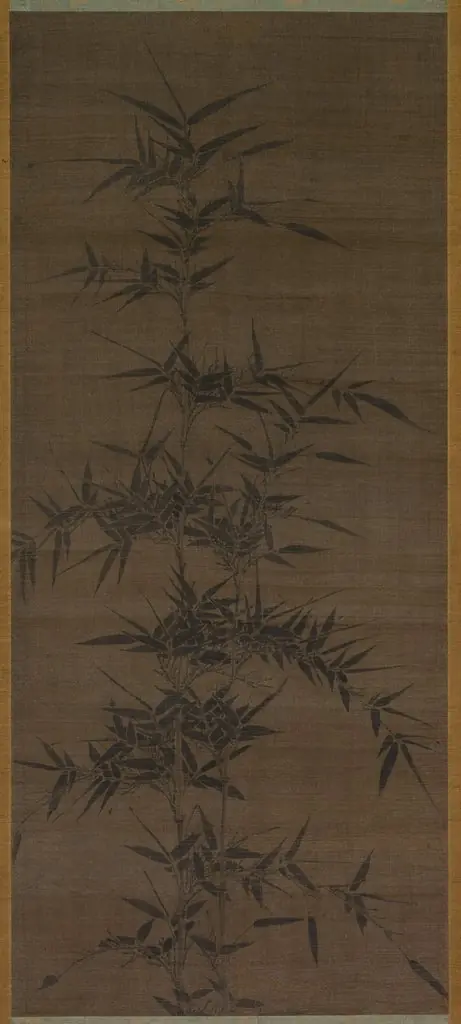
작자미상 포도 조선|作者未詳 墨葡萄圖 朝鮮|Grapevine in the Wind is an ink painting. It dates from 1549 and is held in the collection of the Metropolitan Museum of Art. This hanging scroll, rendered in black ink on pale silk, depicts a solitary grapevine that winds across the surface.
- Accession no.
- 1994.439
- Credit line
- Purchase, The Dillon Fund Gift and Friends of Asian Art Gifts, 1994
About this work
Subject & Meaning
The painting depicts a grapevine rendered in monochrome ink on silk, its trailing shoots and clusters twisting dynamically across the surface.
The painting depicts a grapevine rendered in monochrome ink on silk, its trailing shoots and clusters twisting dynamically across the surface. Within East Asian traditions, the grape motif carried multiple layers of meaning: abundance and fertility were primary associations, while the vine’s vigorous growth also symbolized endurance and the cyclical renewal of life. The use of ink alone, without color, aligned the work with literati aesthetics that valued expressive brushwork and conceptual resonance over descriptive detail.
In the context of mid-Joseon Korea, grape imagery could further evoke cosmopolitan exchange and cultural openness, as grapevines were introduced from China and became a recurring subject in scholarly painting. The composition’s emphasis on the vine’s motion suggests a metaphorical link to nature’s ceaseless vitality.
Technique & Style
Created in 1549 by an unidentified Korean artist, this work is executed as a hanging scroll. The piece utilizes ink applied directly onto a silk support, a medium characteristic of East Asian painting traditions of the period. Stylistically, the composition focuses on the depiction of grapes, rendered through monochromatic ink washes.
The handling of the brush and ink on the delicate silk surface demonstrates the specific technical approach required for this genre of landscape painting, emphasizing the organic forms of the vine and fruit without the use of color.
History & Provenance
The painting, an ink-on-silk hanging scroll depicting a grapevine, is dated to 1549 during the Joseon dynasty and is attributed to an unidentified artist. No information on its commission, original ownership, or early provenance has been documented in the available sources. The work is now held in the collection of the Metropolitan Museum of Art, where it is catalogued under accession number 1994.439. The transfer into the museum's holdings and any intervening ownership between its creation and acquisition remain unrecorded.
The painting is held by the Metropolitan Museum of Art in New York, where it is part of the museum's collection of Asian paintings. Its accession number is 1994.439, a designation consistent with a work accessioned by the institution in 1994. The work is catalogued as a hanging scroll executed in ink on silk, dated to 1549.
No exhibition history is documented in the available sources, and no prior provenance details, such as earlier owners, dealers, or intermediate collections, have been recorded.
Context
An anonymous Korean painter created a hanging scroll in 1549 using ink on silk, portraying a grapevine in a wind‑blown composition; the piece is categorized as a landscape within the Joseon dynasty's painting tradition. The work, listed in the Metropolitan Museum of Art collection, exemplifies the genre’s compositional strategies and is frequently cited in studies of unidentified artists from the period. Its inclusion in a prominent museum highlights its recognized significance within the broader narrative of Korean ink art.
Overview
This hanging scroll, rendered in black ink on pale silk, depicts a solitary grapevine that winds across the surface. The composition is stark, with the vine, leaves, and clusters of fruit occupying only a fraction of the paper, while the surrounding emptiness suggests a sense of wind and space.
Legacy
The scroll exemplifies the cross‑cultural journeys of East Asian art objects, illustrating how Korean artistic practices reached distant audiences long before modern globalization. Its presence in a Mexican collection highlights the historical networks that moved artworks across continents.
Artist & collection