Artwork
明/清 佚名 錢選(僞款) 洗象圖 卷|Washing the Sacred Elephant
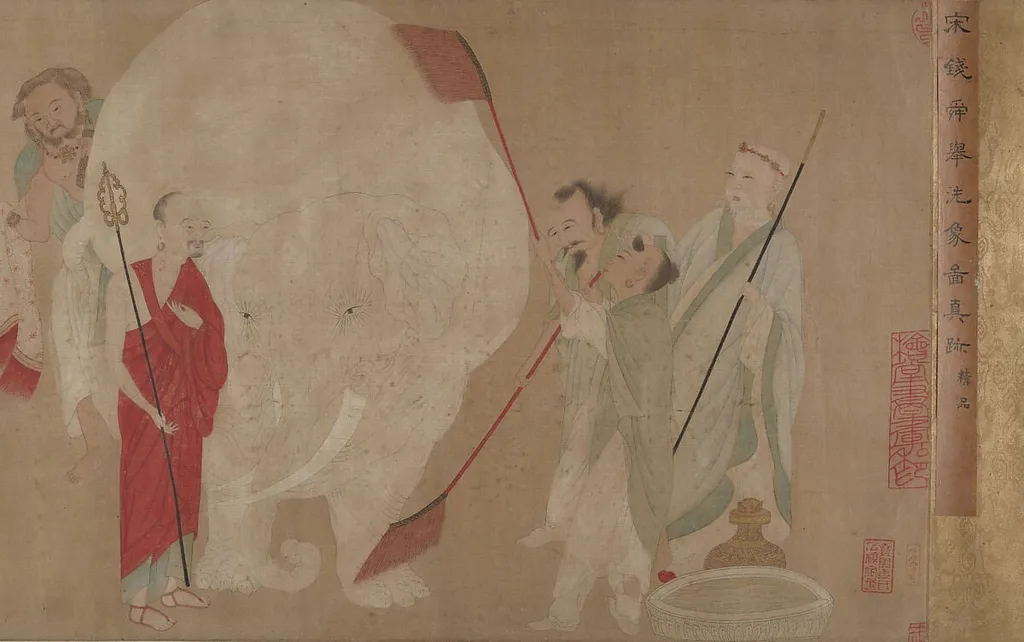
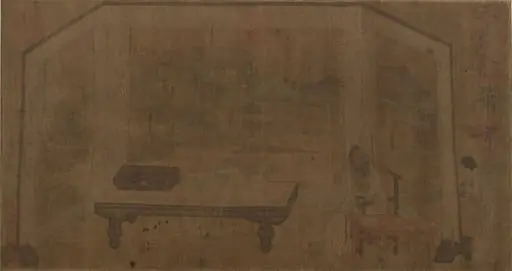
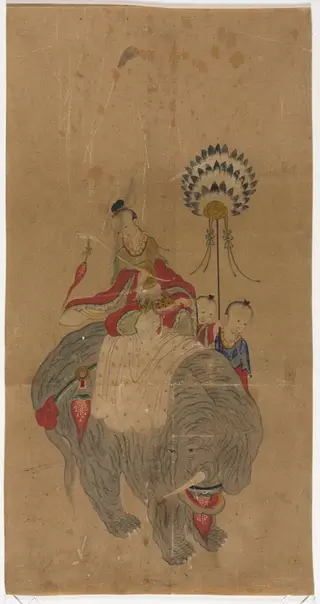
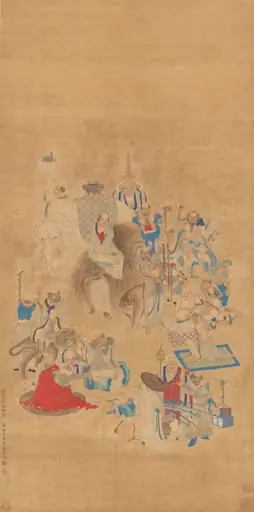
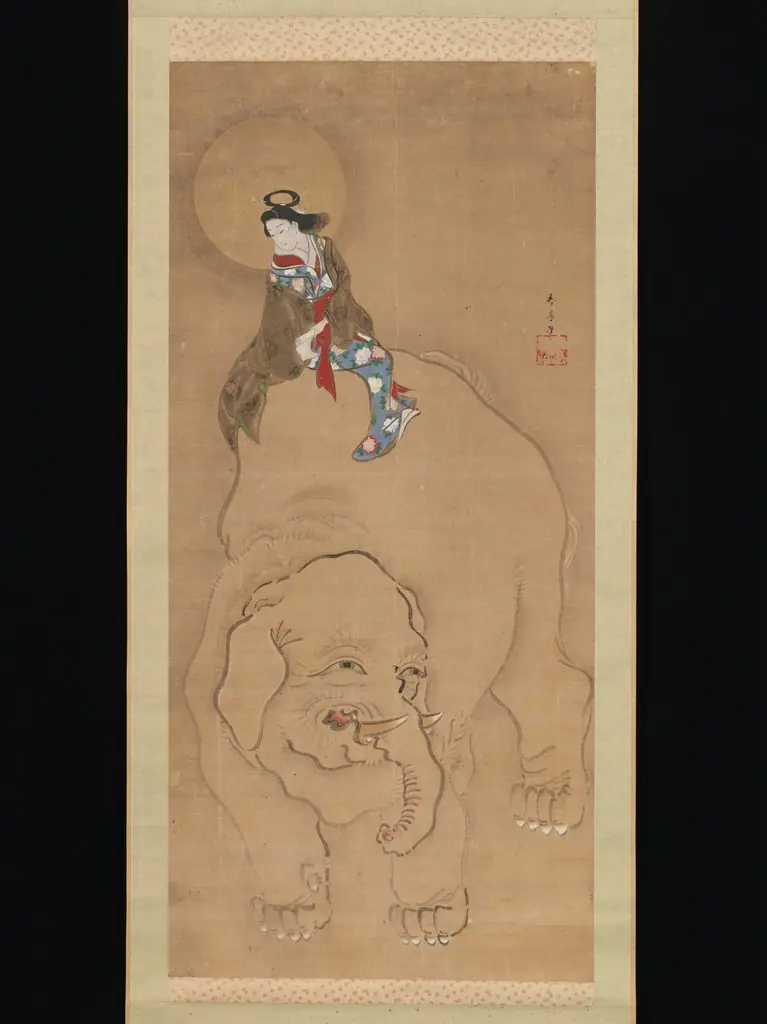
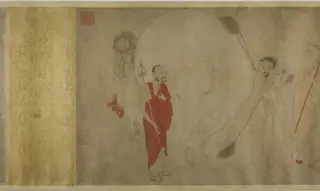
明/清 佚名 錢選(僞款) 洗象圖 卷|Washing the Sacred Elephant is an ink painting by the Ming dynasty painting artist After Qian Xuan. It dates from 1639 and is held in the collection of the Metropolitan Museum of Art. The Chinese handscroll titled "Washing the Sacred Elephant" is a painting rendered with ink and color on silk.
About this work
Subject & Meaning
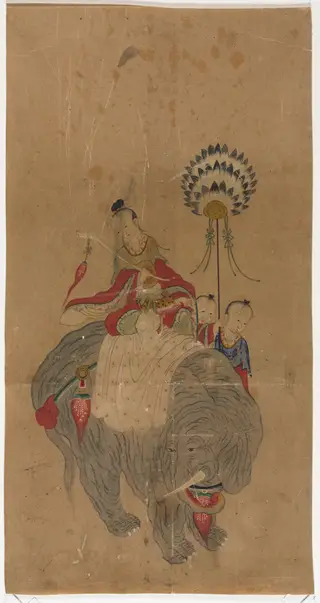
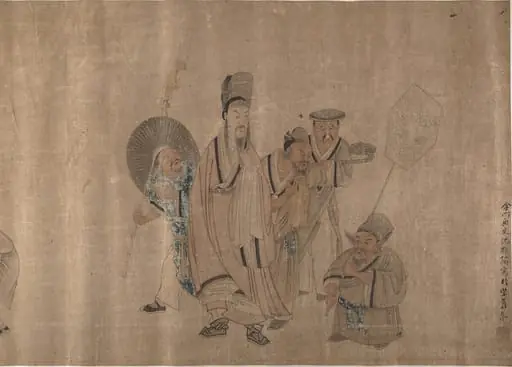
The scroll depicts a man bathing an elephant, aligning with the title's literal subject of washing.
The scroll depicts a man bathing an elephant, aligning with the title's literal subject of washing. Elephants in Chinese art often symbolized exotic tribute or auspicious strength, while the act of washing evokes purification or care, reinforcing a narrative of reverence for the creature. Anonymous Ming-Qing handscrolls bearing the forged signature of Qian Xuan typically appropriated earlier Yuan motifs; here the pairing of human and elephant may allude to the rare arrival of tributes from the southwest, signifying imperial harmony and cosmic order under a sagely ruler.
Technique & Style
Created in 1639, this handscroll is executed in ink and color on a silk support. The work measures 34.0 centimeters in height and 57.2 centimeters in width, presenting a genre scene of men washing an elephant. Although the scroll bears a signature attributing it to the Yuan dynasty master Qian Xuan, scholarly consensus identifies the piece as a later anonymous creation from the Ming or Qing period.
The formal qualities reflect a traditional Chinese painting style focused on narrative depiction rather than the specific stylistic hallmarks of Qian Xuan's authentic oeuvre. The medium of ink and pigment on silk allows for the detailed rendering of the figures and the animal within the composition, consistent with handscroll formats designed for sequential viewing.
History & Provenance
Washing the Sacred Elephant was created in 1639 in China, dating the work to the late Ming or early Qing dynasty. Although the painting carries a spurious signature attributing it to the earlier Yuan-dynasty painter Qian Xuan, the handscroll is recognized as the work of an anonymous artist. Executed as an ink and color on silk handscroll, the piece eventually entered the collection of the Metropolitan Museum of Art, where it is currently housed.
Context
The handscroll Washing the Sacred Elephant, dated 1639, is an ink and color on silk work measuring 34 x 57 cm, created in China and held by the Metropolitan Museum of Art. It is classified as a genre scene and depicts a man washing a sacred elephant, a motif associated with anonymous Ming-Qing painters working after the manner of Qian Xuan. Its stylistic characteristics and subject matter contribute to the understanding of seventeenth-century Chinese figurative art and illustrate the anonymous workshop practices of the period.
Legacy
The handscroll, dated 1639 and attributed to an anonymous painter after Qian Xuan, is part of the Metropolitan Museum of Art's collection, a status that reflects its recognized importance in the study of late Ming and Qing painting; its documented depiction of a man washing a sacred elephant provides insight into the iconography of the period, and its presence in a major museum has contributed to continued scholarly attention to the work's artistic and cultural significance.
Overview
The Chinese handscroll titled "Washing the Sacred Elephant" is a painting rendered with ink and color on silk. Created around 1639 during the late Ming dynasty, this artwork is attributed to an anonymous artist, despite bearing a spurious signature of the earlier Yuan dynasty painter Qian Xuan. The scroll presents a detailed genre scene, illustrating men engaged in the activity of bathing an elephant within a courtyard setting.
Artist & collection
Artist
Working after Qian Xuan, the painter rendered scenes of the past in fine detail. The Brocade Hall scroll shows scholars in a misty garden, their robes crisp against the silk. Look closely and one scholar steals a glance…