Artwork
Eguchi no Kimi
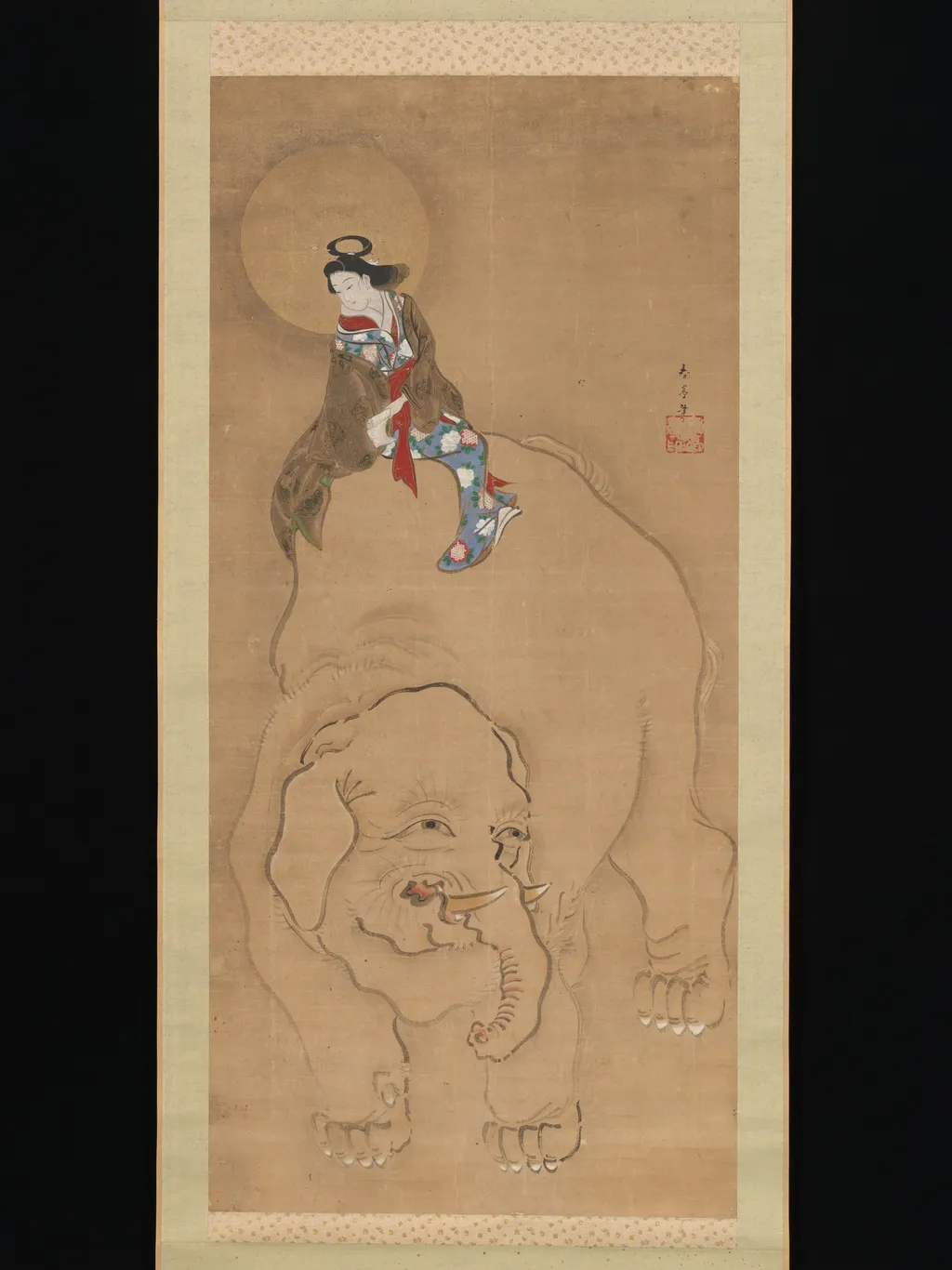
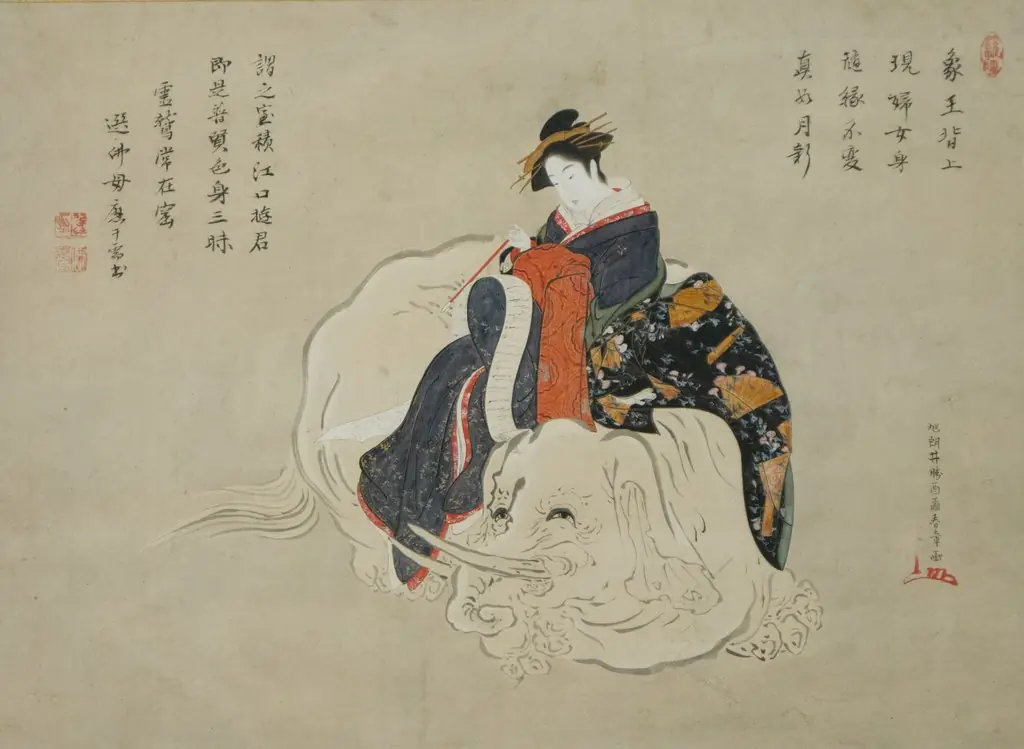
Eguchi no Kimi is an unspecified painting by the Ukiyo-e artist Katsukawa Shuntei. It dates from 1798 and is held in the collection of the Metropolitan Museum of Art.
About this work
Subject & Meaning
The juxtaposition of the elegant figure with the large animal thus blends a literary allusion with Buddhist symbolism.
The painting depicts a woman, identified as the titular Eguchi no Kimi, standing alongside an elephant. The imagery draws on the legend of the courtesan of Eguchi, a boatwoman who famously rebuffed the poet Saigyō and was held to be a manifestation of the bodhisattva Fugen (Samantabhadra), whose traditional mount is a white elephant. The juxtaposition of the elegant figure with the large animal thus blends a literary allusion with Buddhist symbolism.
Technique & Style
Katsukawa Shuntei's Eguchi no Kimi (1798) is a painting executed in traditional Japanese techniques, using ink and color on paper, a common medium for Edo-period works. Stylistically it reflects the ukiyo-e aesthetic, characterized by graceful, flowing lines and a focus on elegant figural representation, with fine brushwork used to render facial features and textile patterns. Specific pigments and the work's present condition are not recorded in the available sources. The painting is held in the Metropolitan Museum of Art's collection.
History & Provenance
Created in 1798 by the Japanese artist Katsukawa Shuntei, this painting depicts a woman and an elephant. The work was produced in Japan during the late Edo period. It currently resides in the collection of the Metropolitan Museum of Art, where it is held as part of the permanent holdings.
Context
Eguchi no Kimi is a 1798 painting by Katsukawa Shuntei, recorded as a work of the Japanese school and held by the Metropolitan Museum of Art, where it is described as a scene including a woman and an elephant. Produced in Japan during the late Edo period, the work exemplifies the narrative subjects drawn from classical literature and legend that were popular among artists of the time.
Overview
Katsukawa Shuntei's painting, Eguchi no Kimi, created in 1798, presents a striking image of a woman mounted on an elephant. This work is part of The Metropolitan Museum of Art's collection. The composition features a central figure in elaborate attire, rendered with a serene demeanor, contrasting with the powerful animal she rides. The artwork exemplifies late 18th-century Japanese painting, focusing on narrative and figure representation.
Own this work as a print
Artist & collection


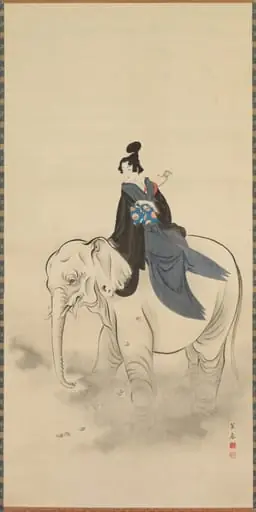 Stand-in Fugen
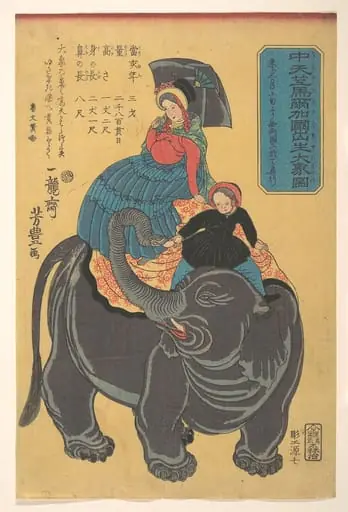 Chū tenjiku Maruka koku shūsshō daizō zu|Picture of an Elephant Born in Maruka in Central India
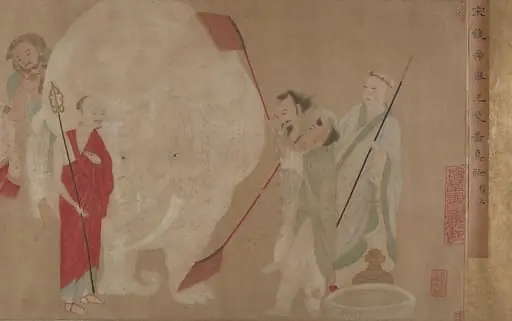 明/清 佚名 錢選(僞款) 洗象圖 卷|Washing the Sacred Elephant
 Monkeys
 Monju Bosatsu
 The Brine Maiden Matsukaze
 Portrait of the Heavenly Master
 Bathing of the Buddha Festival
 Samantabhadra on an Elephant with Two Attendants
 Washing the White Elephant
 馬鳴菩薩図像|Iconographic Drawing of the Bodhisattva Memyō (Ashvaghosha)
- Courtesan of Eguchi (Eguchi no kimi)