Artwork
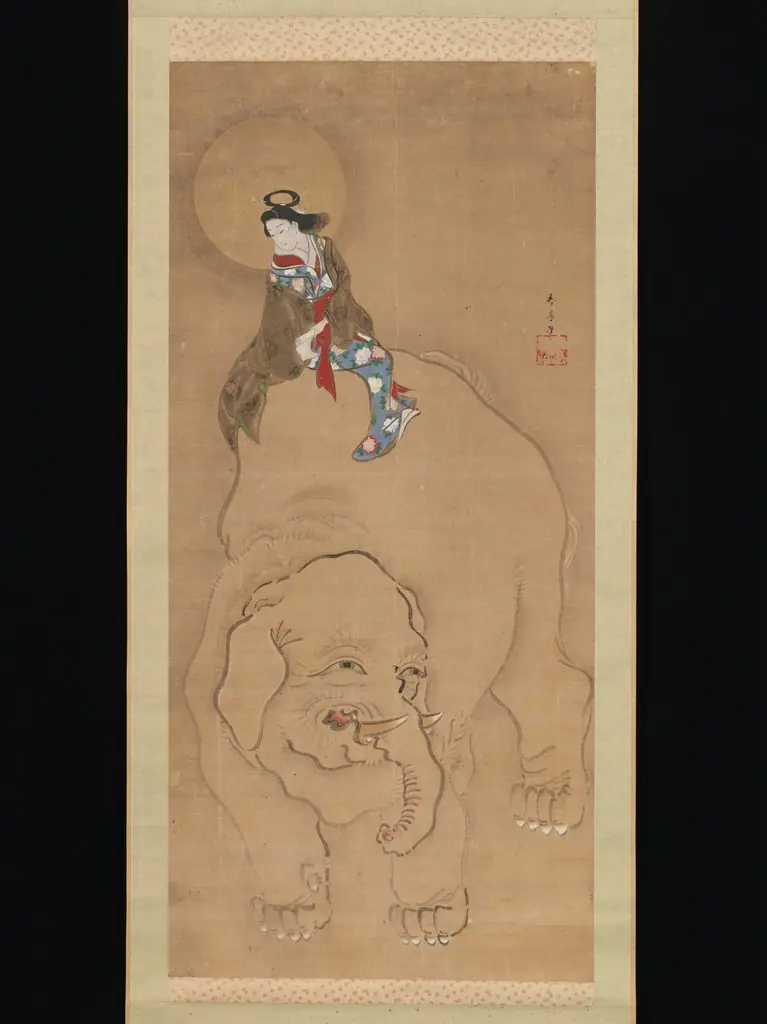
Washing the White Elephant
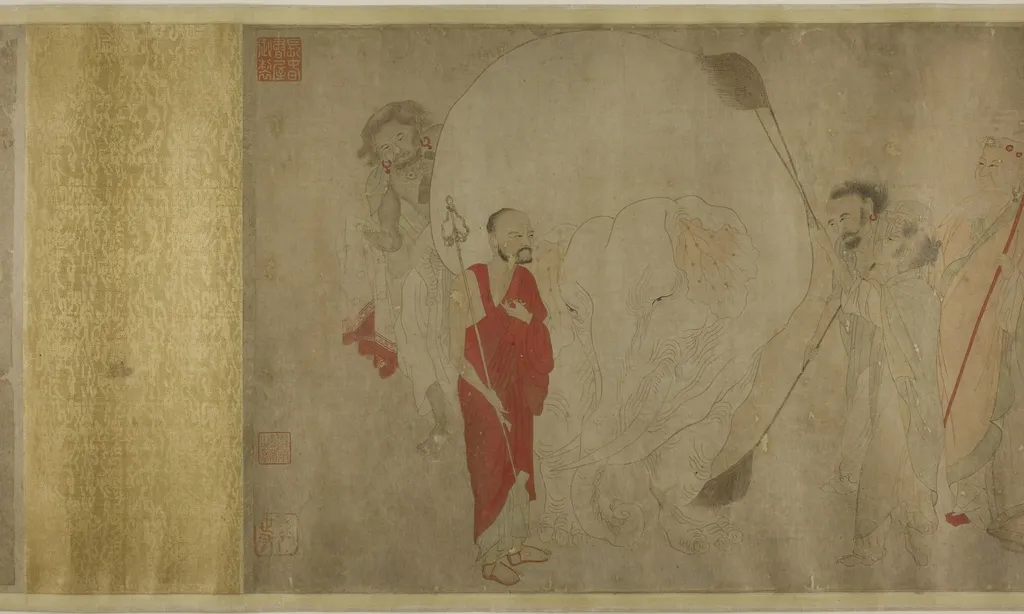
Washing the White Elephant is an unspecified painting by the Mannerist artist Unknown. It dates from 1594 and is held in the collection of the Art Institute of Chicago.
About this work
Overview
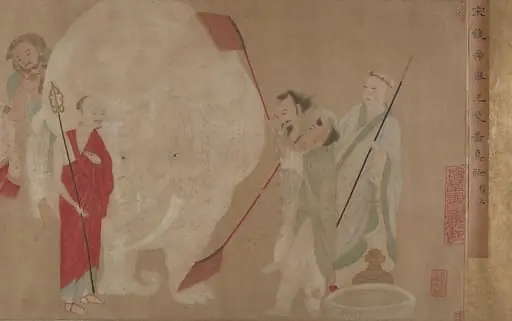
This painting depicts a ceremonial gathering centered on a white elephant, rendered in a muted palette that reflects both age and deliberate tonal restraint.
This painting depicts a ceremonial gathering centered on a white elephant, rendered in a muted palette that reflects both age and deliberate tonal restraint. The composition directs focus to the animal, surrounded by figures in traditional attire, engaged in what appears to be a ritual act of cleaning. The scene’s quiet intensity is heightened by the soft fading of pigments, which preserves detail despite visible deterioration.
Subject & Meaning
The white elephant, a symbol of royal power and sacred status in Southeast Asian courts, is shown being tended to by a group of attendants. Their actions, holding a long stick, grasping the tail, suggest a ritual purification, likely tied to religious or royal tradition. The absence of overt grandeur implies a focus on devotion rather than spectacle, emphasizing duty and reverence over display.
Technique & Style
The artist employs a restrained color scheme and soft brushwork, allowing the figures and elephant to emerge clearly despite pigment degradation. Facial expressions and textile patterns are rendered with careful attention, suggesting observational realism. The background’s uniform tone eliminates distraction, reinforcing the centrality of the ritual and the animal’s symbolic weight.
History & Provenance
The painting’s age and condition indicate it was created centuries ago, likely within a royal or religious context in mainland Southeast Asia. Its survival through time suggests it was preserved in a temple, palace, or aristocratic collection. No documented provenance is available, but its subject matter aligns with historical records of elephant care in royal courts.
Context
In pre-modern Southeast Asian societies, white elephants were considered divine omens, owned exclusively by monarchs. Their care involved elaborate rituals and specialized attendants, often documented in court chronicles. This painting reflects a cultural practice where the animal’s well-being was intertwined with spiritual and political legitimacy, making its depiction a form of sacred record.
Legacy
Though not widely known outside regional art histories, the painting contributes to the visual documentation of royal rituals and human-animal relationships in pre-colonial courts. Its endurance offers insight into the material culture and ceremonial life of a time when such practices were central to governance and belief, preserving a quiet but significant tradition.
Artist & collection









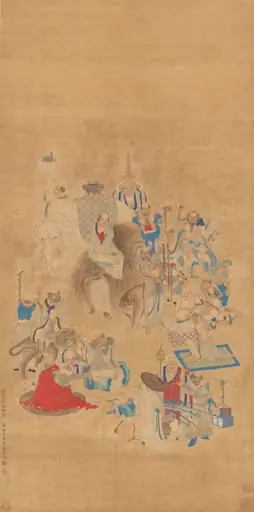 Bathing of the Buddha Festival
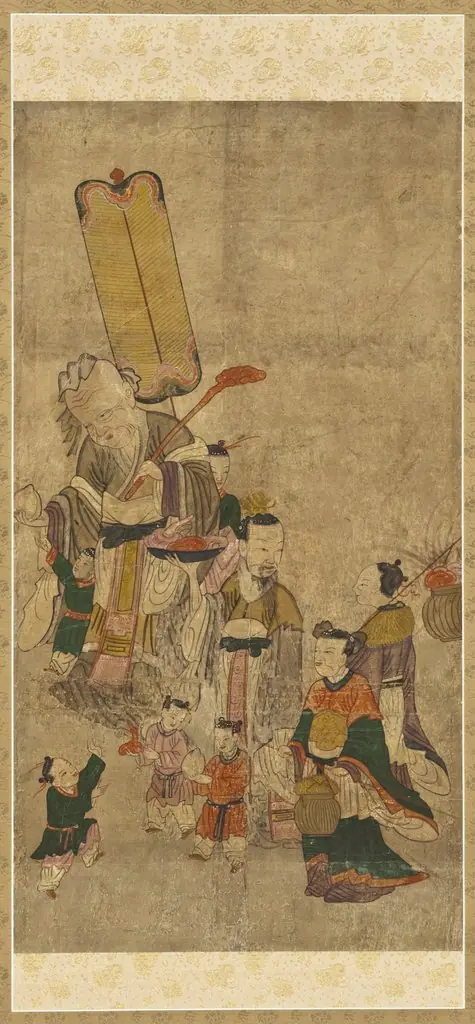 Dongfang Shuo (Tongbang Sak), one of the Eight Chinese Immortals
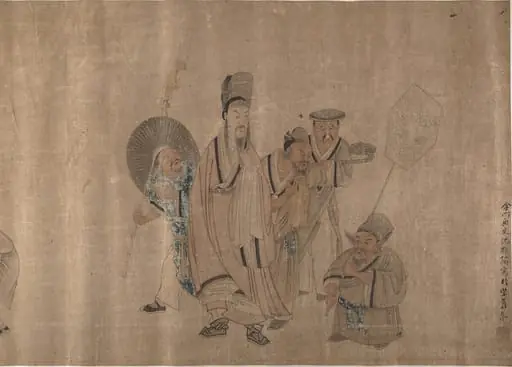 Untitled
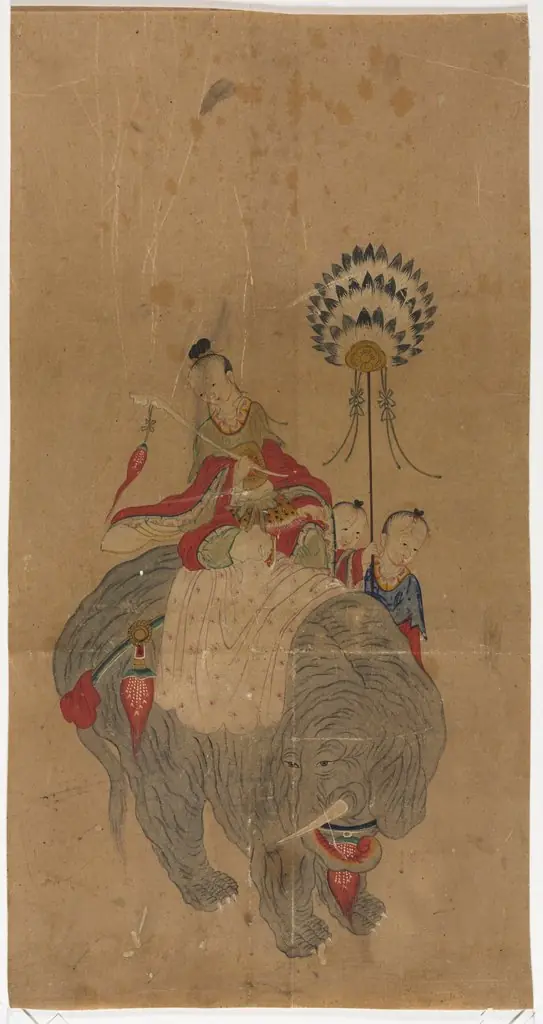 Samantabhadra on an Elephant with Two Attendants
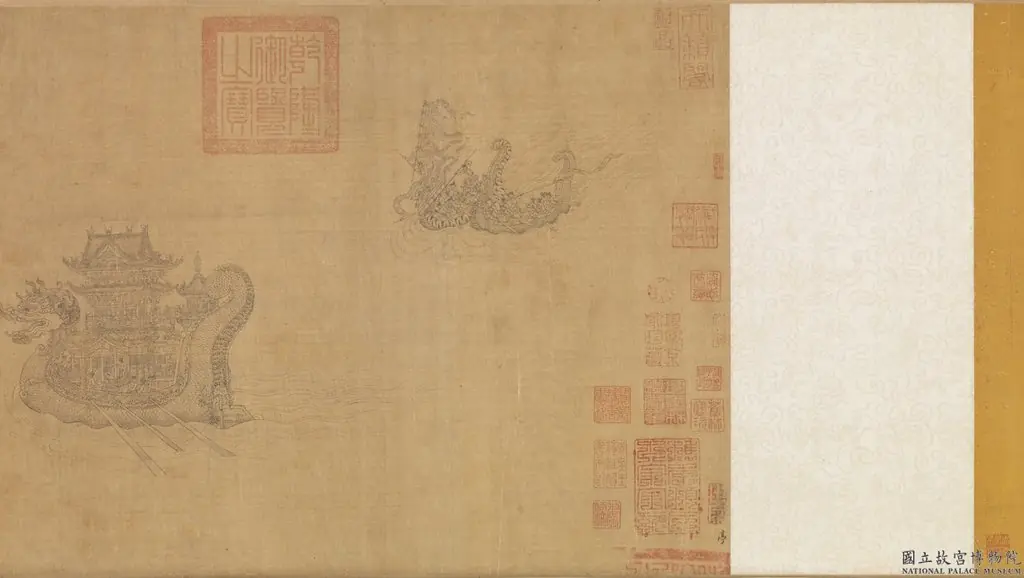 元王振鵬龍舟圖 卷
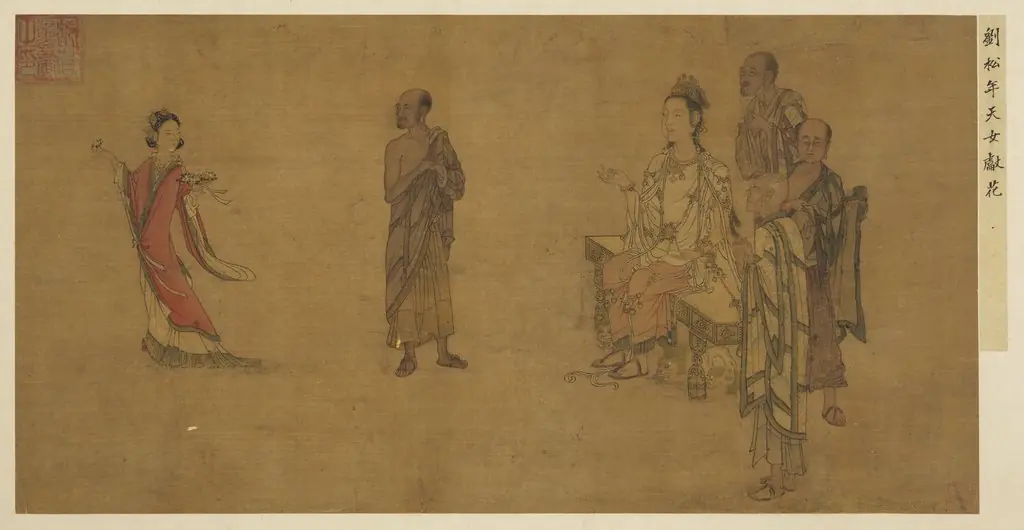 名繪集珍 冊 宋劉松年天女獻花
 Eguchi no Kimi
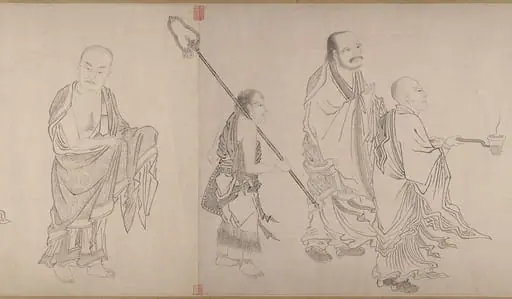 明 傳仇英 十六羅漢圖 卷|The Sixteen Luohans
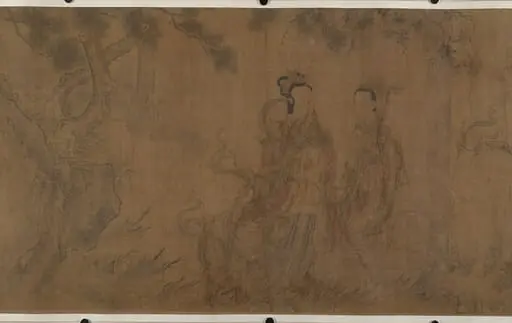 元? 佚名 仿李公麟 屈原九歌圖 卷|The Nine Songs: Illustrations to the poems of Qu Yuan (343–277 B.C.)