Artwork
John Dee, Astrologer
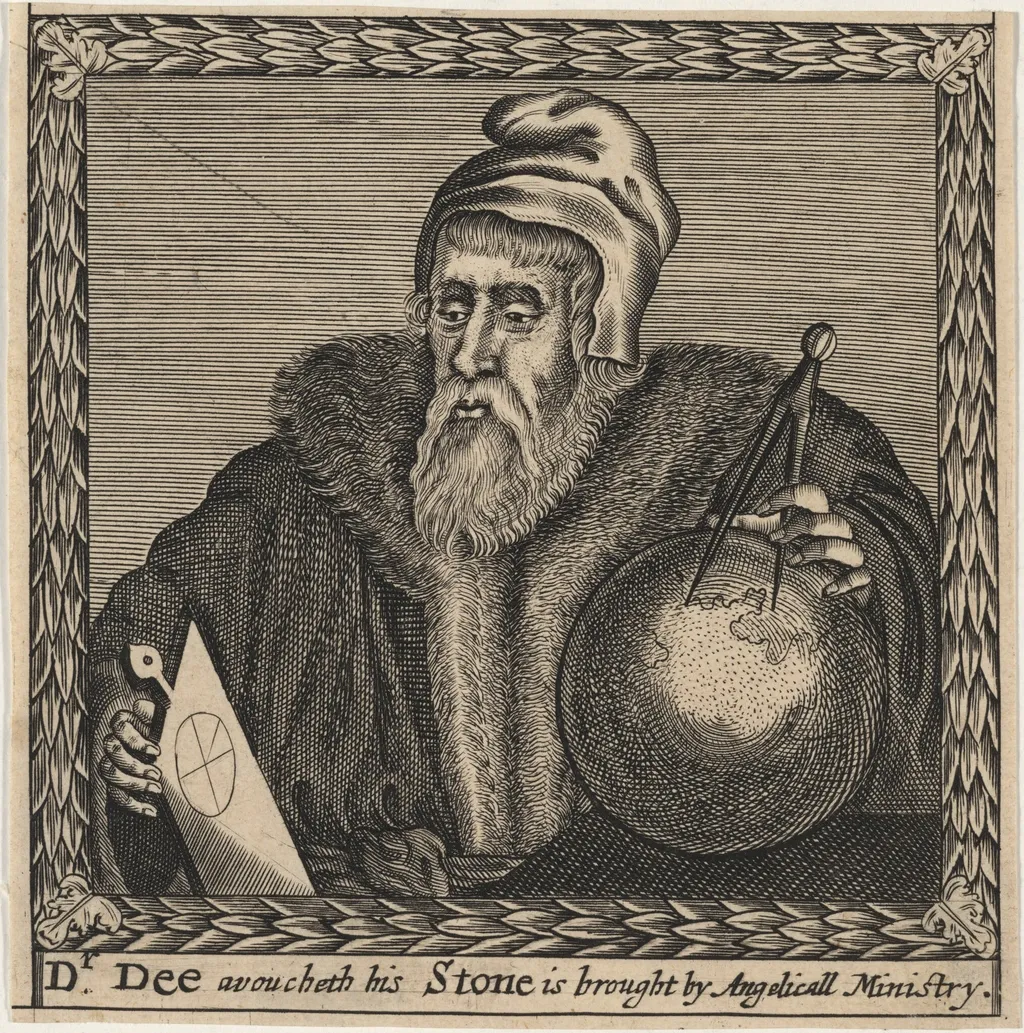
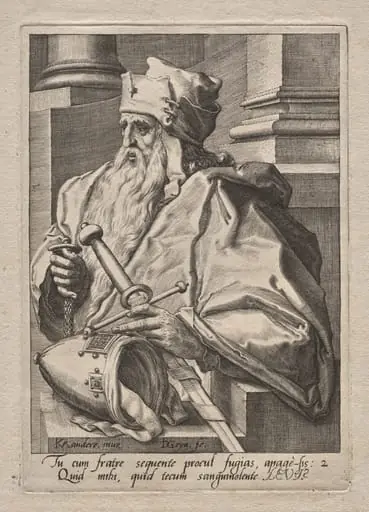
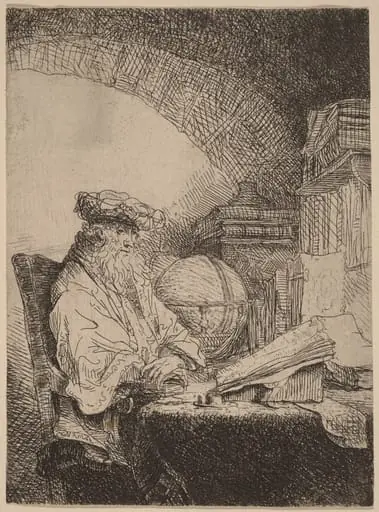
John Dee, Astrologer is an ink print by the Romanticist artist Unknown 19th Century. It dates from 1850 and is held in the collection of the National Gallery of Art. This black-and-white engraving depicts John Dee, a 16th-century English scholar, as a figure engaged in esoteric practice.
About this work
Overview
Dee is shown holding a luminous orb and a circular instrument marked with a cross, suggesting a blend of scientific and mystical inquiry.
This black-and-white engraving depicts John Dee, a 16th-century English scholar, as a figure engaged in esoteric practice. Rendered with fine cross-hatching, the image conveys depth and texture through intricate line work alone. Dee is shown holding a luminous orb and a circular instrument marked with a cross, suggesting a blend of scientific and mystical inquiry. The background’s wavy lines imply an ethereal or otherworldly space, reinforcing the subject’s connection to the supernatural.
Subject & Meaning
John Dee is portrayed not merely as an academic but as an intermediary between the earthly and the divine. The glowing orb and cross-marked device reference his claimed communications with angels, central to his pursuit of hidden knowledge. The inscription beneath asserts that his 'Stone', likely a reference to the philosopher’s stone, was delivered through angelic intervention. This framing positions Dee as a bridge between Renaissance science and occult tradition.
Technique & Style
The artist employs dense cross-hatching to model form and suggest volume without color or tone gradation. Fine, overlapping lines build shadow and texture, particularly in Dee’s robe and facial features, lending a tactile realism to the figure. The background’s undulating lines contrast with the sharp detail of the subject, isolating him visually and symbolically. This technique was common in engravings of the period, valued for its precision and reproducibility.
History & Provenance
The engraving likely originated in the late 16th or early 17th century, during or shortly after Dee’s lifetime, as part of a broader interest in his life and work. It may have been produced to accompany printed texts on natural philosophy or occultism. Though the artist’s identity is unrecorded, the image reflects contemporary fascination with Dee’s dual role as mathematician, advisor to Queen Elizabeth I, and seeker of divine knowledge.
Context
In Dee’s era, the boundaries between astronomy, alchemy, mathematics, and spiritual communication were fluid. His work was part of a wider European trend where scholars sought to uncover hidden natural laws through both empirical study and ritual. This engraving captures that intellectual climate, portraying Dee not as a fraud but as a serious, if controversial, figure whose pursuits straddled emerging science and ancient mysticism.
Legacy
The image endures as a visual shorthand for the intersection of science and mysticism in the Renaissance. It has been reproduced in scholarly works on the history of science and occultism, often used to illustrate the complexity of early modern intellectual life. While Dee’s angelic communications are no longer accepted as factual, the engraving remains a testament to how knowledge, belief, and representation were intertwined in his time.
Artist & collection

Artist