Artwork
A Mughal Prince, Perhaps Danyal, Holding a Sprig of Flowers
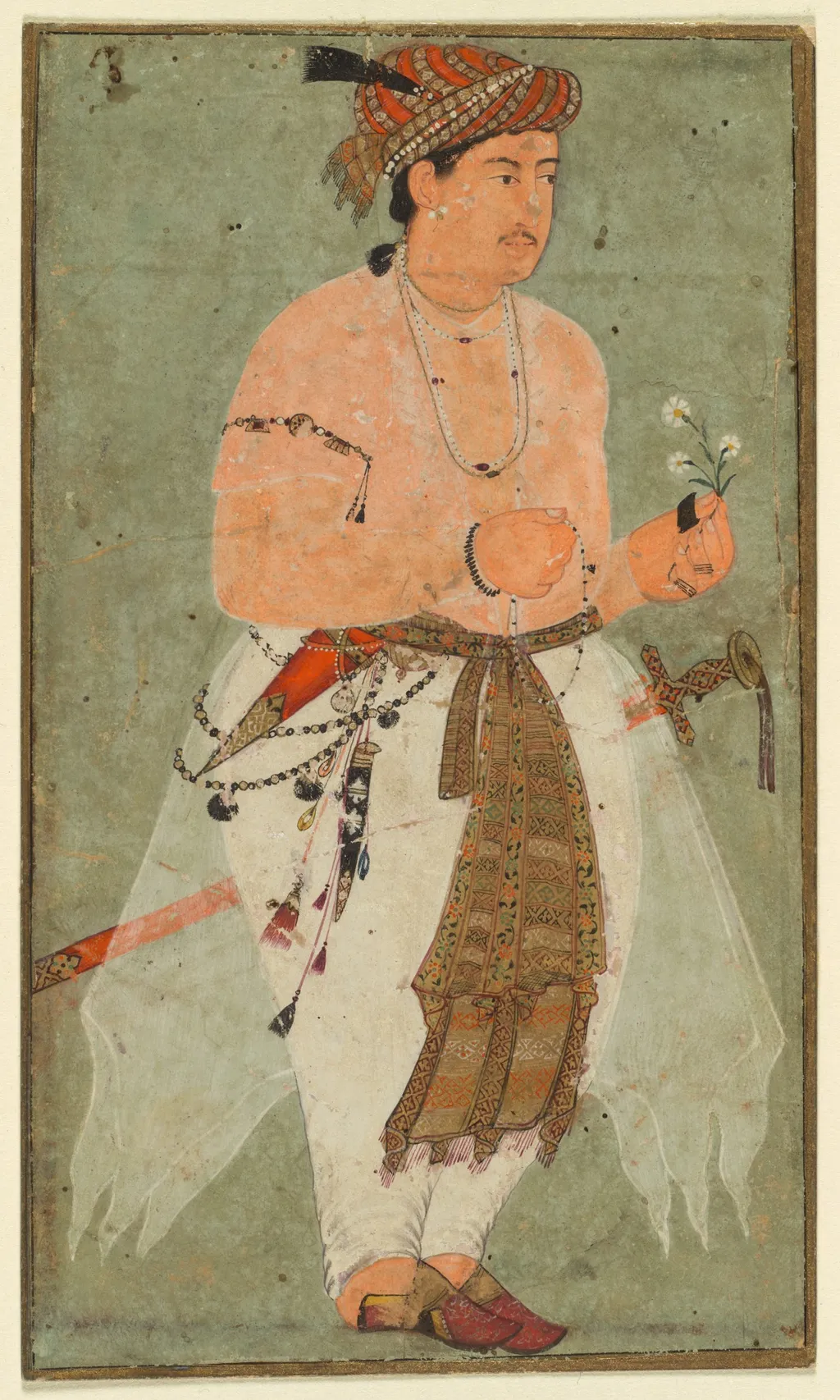
A Mughal Prince, Perhaps Danyal, Holding a Sprig of Flowers is an unspecified painting. It dates from 1593 and is held in the collection of the Cleveland Museum of Art. The work depicts a solitary figure dressed in vivid, uncomplicated hues.
About this work
History & Provenance
The piece reflects Mughal court portraiture of the late sixteenth century, though no specific patron or workshop has been identified.
The painting, dated to 1585, is attributed to an unknown artist working in the Mughal Empire. Its commission and earlier ownership are not recorded in the available sources; the work entered the Cleveland Museum of Art in 2013, receiving the accession number 2013.293, and has remained in the museum’s collection since. The piece reflects Mughal court portraiture of the late sixteenth century, though no specific patron or workshop has been identified.
The painting is held in the collection of the Cleveland Museum of Art in Cleveland, Ohio.
The work is cataloged under the accession number 2013.293.
It was included in the museum’s inaugural exhibition of its Indian miniature collection in 2014.
Context
Dated to 1585, this painting depicts a Mughal prince, possibly Danyal, holding a sprig of flowers, reflecting the court's fascination with natural symbolism and refined portraiture. Attributed to an unknown artist, it is part of the Cleveland Museum of Art's collection, acquired through the 2013.293 accession and displayed as a representative work of Mughal imperial artistry. Scholars have examined its stylistic parallels to Persian miniature traditions while emphasizing the distinct synthesis of Central Asian court aesthetics and Indian naturalism characteristic of Emperor Akbar's reign.
The piece contributes to broader understandings of cross-cultural artistic exchange within the Mughal Empire and serves as a key example in studies of 16th-century manuscript painting and princely iconography.
Overview
The work depicts a solitary figure dressed in vivid, uncomplicated hues. He wears a peach‑toned shirt, a white lower garment edged with orange patterning, and a tall red headdress trimmed in gold. In his left hand he holds a small bowl, while his right hand presents a sprig of white flowers.
A sword hangs at his side, and a necklace with a pendant rests around his neck, set against a muted green‑gray backdrop.
Subject & Meaning
The portrait is identified as a Mughal prince, possibly Danyal, suggested by the princely attire and the presence of a ceremonial sword. The flower sprig may symbolize refinement or a courtly pastime, while the bowl could indicate a ritual offering. Together the objects convey a blend of regal authority and cultured leisure typical of elite Mughal portraiture.
Technique & Style
Executed in a flat, decorative manner, the painting relies on bold blocks of color rather than detailed modeling. The background is rendered in a uniform green‑gray tone, allowing the figure’s garments to dominate the visual field. The brushwork appears smooth and the surface shows signs of age, indicating a traditional Mughal studio technique that favored clear outlines and stylized forms.
Legacy
Paintings of Mughal princes continue to inform scholarly understanding of courtly fashion, ceremonial objects, and the visual language of power in early modern South Asia. The work serves as a reference point for comparative studies of royal portraiture across the Mughal empire and its artistic legacy.
Artist & collection

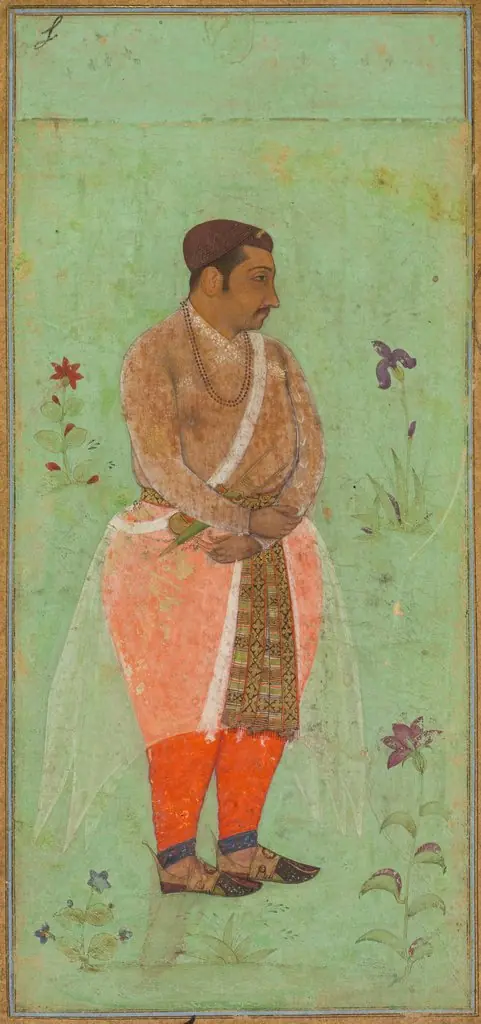 Portrait of Suraj Singh Rathor, Raja of Marwar and Maternal Uncle of Shah Jahan: A Page from the Prince Khurram Album
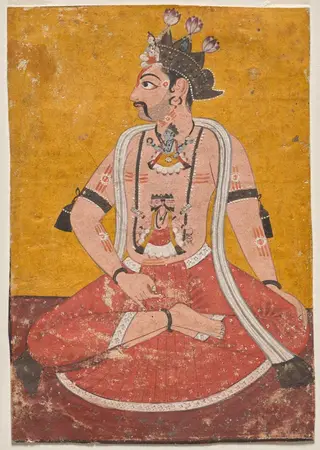 Man Dhata in Yogi Position
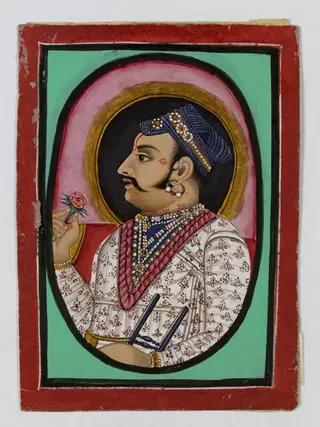 Rao Raja Bhoj
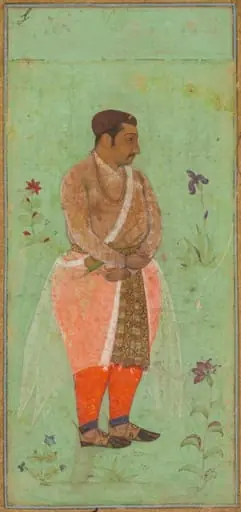 Portrait of Suraj Singh Rathor, Raja of Marwar and Maternal Uncle of Shah Jahan: A Page from the Prince Khurram Album
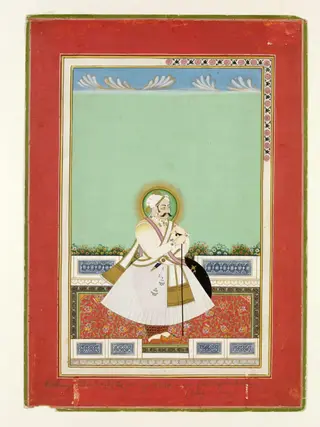 Raja Udai Singh
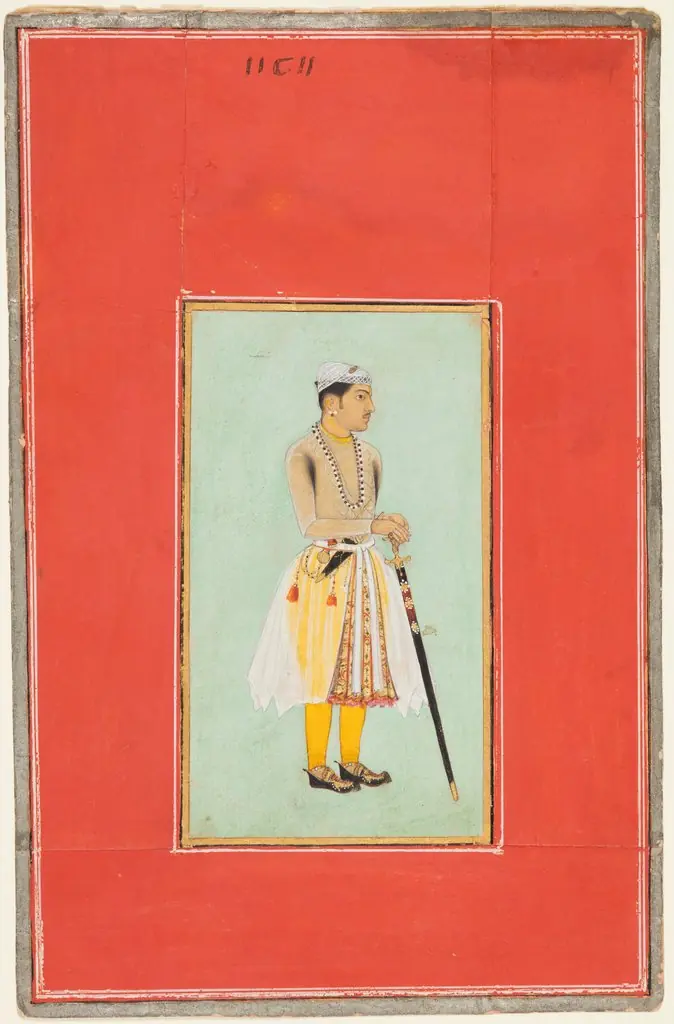 Portrait of Prince Sur Singh Rathor of Bikaner (1594–1631)
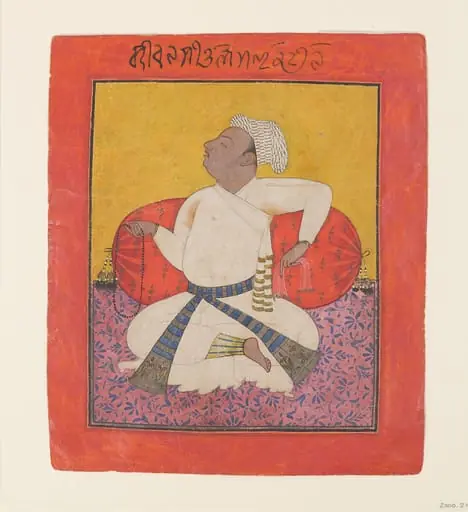 Untitled
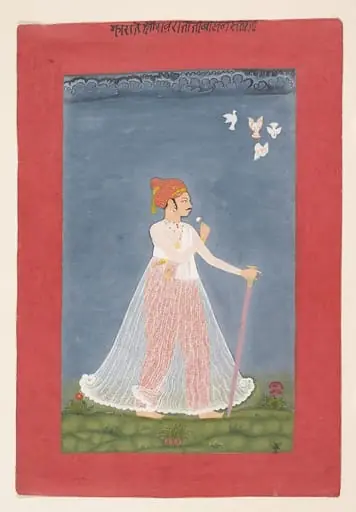 Untitled
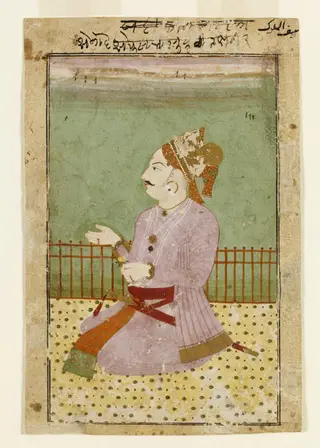 Raja Abhai Singh of Jodhpur
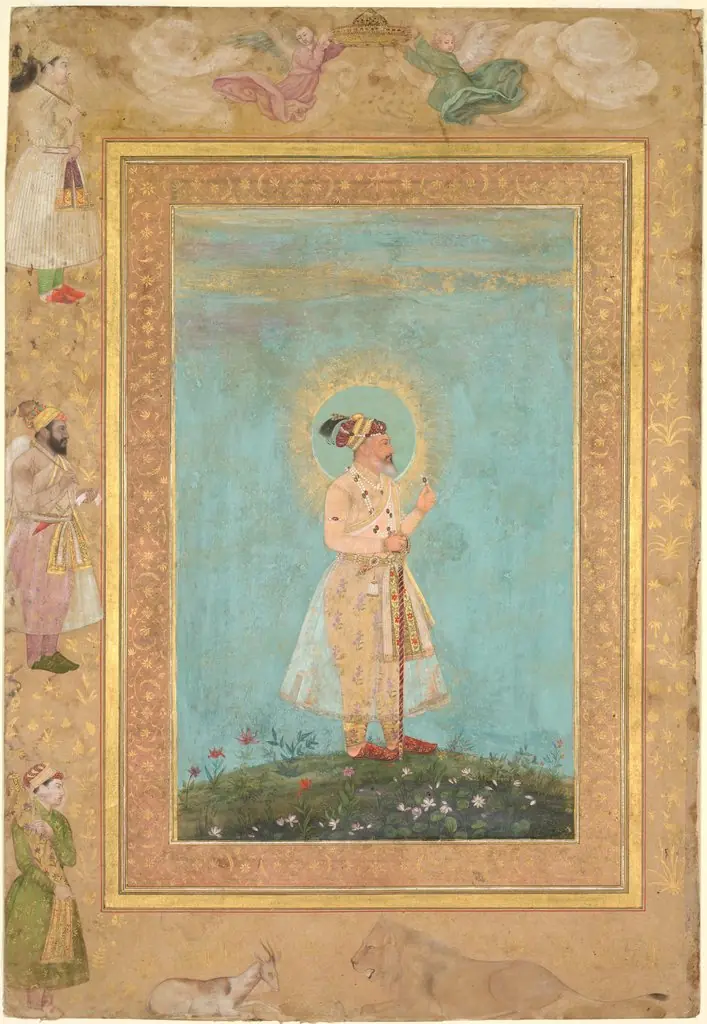 Shah Jahan holding a spinel and a long Deccan sword, from the Late Shah Jahan Album