Artwork
A Shaivite ascetic
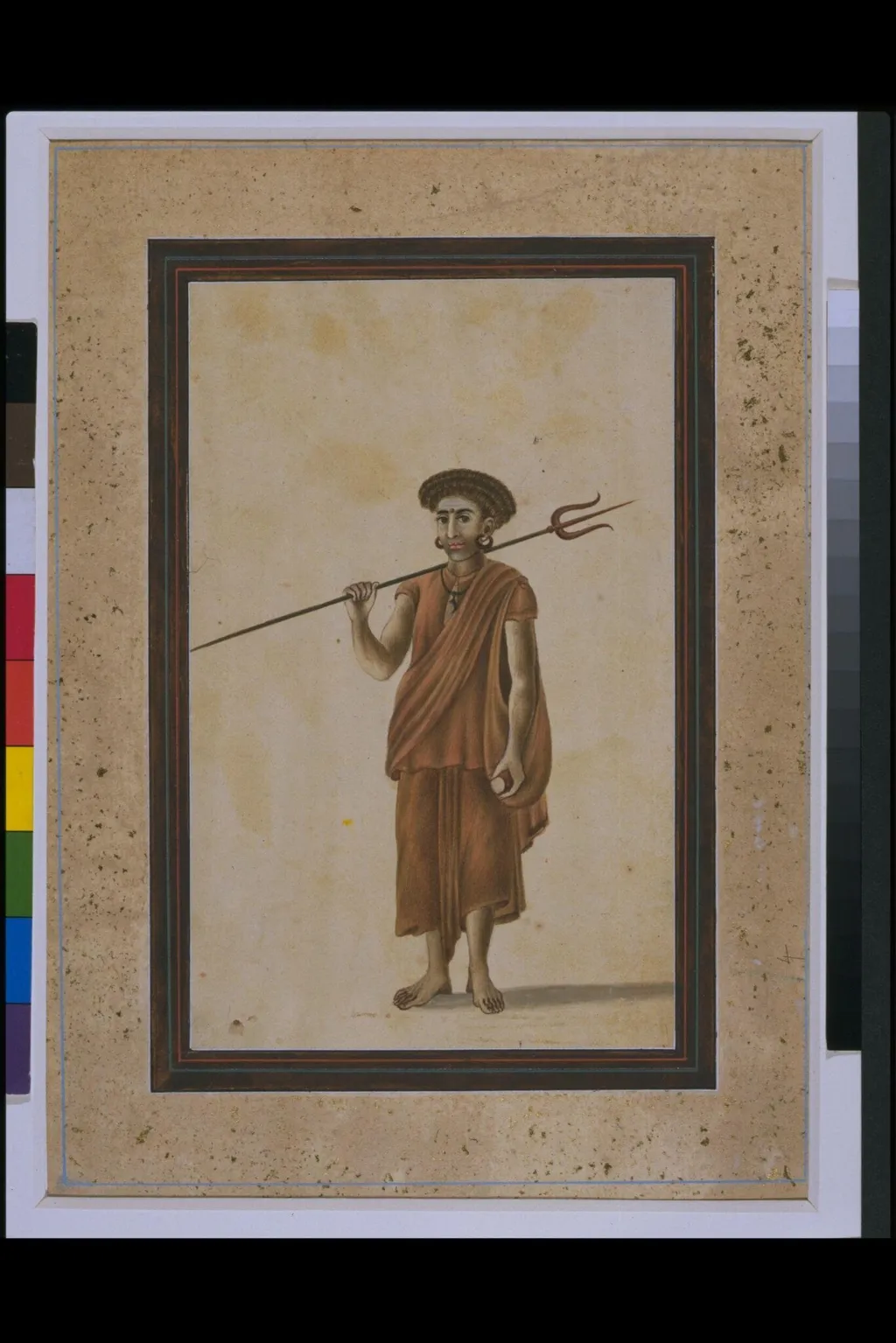
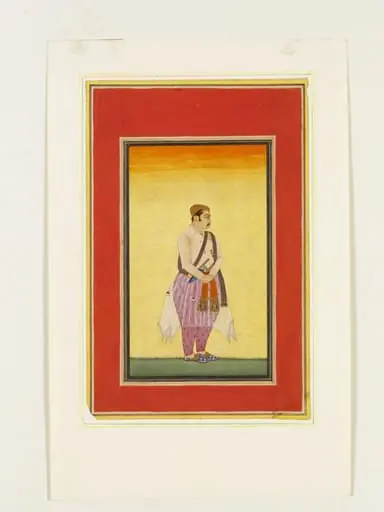
A Shaivite ascetic is a paint painting by the Impressionist artist Unknown. It dates from 1860 and is held in the collection of the Victoria and Albert Museum.
About this work
Overview
This watercolor portrays a Shaivite ascetic, a Hindu renunciant devoted to Shiva, rendered in delicate pigments on paper.
This watercolor portrays a Shaivite ascetic, a Hindu renunciant devoted to Shiva, rendered in delicate pigments on paper. The figure stands alone against a pale, unadorned background, emphasizing spiritual solitude. His attire is minimal, a brown robe, and he is barefoot, signaling renunciation of worldly comforts. The composition is restrained, focusing attention on the ascetic’s presence rather than elaborate surroundings.
Subject & Meaning
The ascetic holds a trisula, the three-pronged spear symbolic of Shiva’s power over creation, preservation, and destruction. His calm yet intense gaze reflects inner discipline and meditative focus. The fawn nearby, a traditional emblem of nonviolence and harmony in ascetic imagery, underscores his detachment from worldly conflict. Together, these elements convey a life devoted to spiritual transcendence.
Technique & Style
The painting employs fine brushwork and subtle watercolor washes to define form without heavy shading. Dark outlines around facial features enhance expression while maintaining a soft, ethereal quality. Gold flecks along the border suggest sacredness without ostentation.
The restrained palette and lack of background detail align with devotional painting traditions that prioritize inner state over external narrative.
History & Provenance
The work likely originates from a North Indian atelier active in the 18th or early 19th century, where devotional imagery was produced for private worship or monastic use. Its preservation in a museum collection indicates it was valued early for its aesthetic and spiritual resonance, though its specific provenance prior to institutional acquisition remains undocumented.
Context
In the broader tradition of Indian miniature painting, ascetics were frequently depicted as embodiments of dharma and renunciation. This piece reflects regional styles from areas where Shaivism flourished, particularly in Punjab and the Himalayan foothills. Such images served not only as objects of veneration but also as visual aids for meditation and spiritual instruction.
Legacy
The painting exemplifies a quiet, contemplative strand of Indian devotional art that prioritizes inner stillness over spectacle. Its influence endures in later religious illustrations and modern interpretations of ascetic life. Collections such as the Victoria and Albert Museum preserve similar works, offering insight into the enduring visual language of Hindu renunciation.
Artist & collection









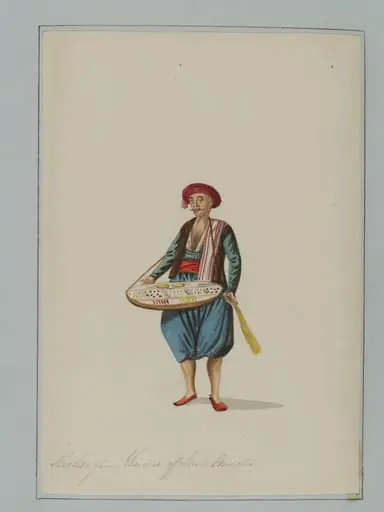 Servant bearing a present of Sweetmeats on Festival occasions -
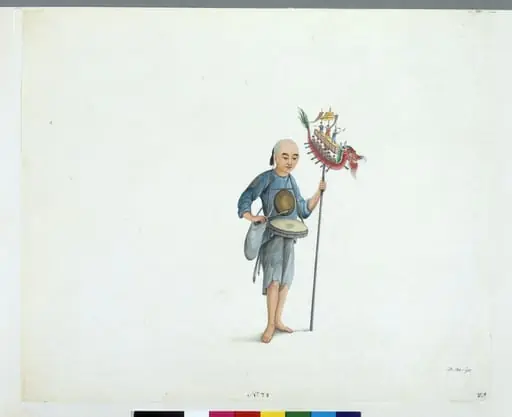 Man Singing Dragon Boat Songs
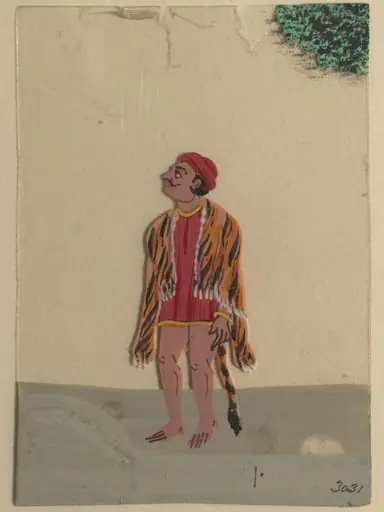 Twelve drawings of unidentified ascetics and mendicants.
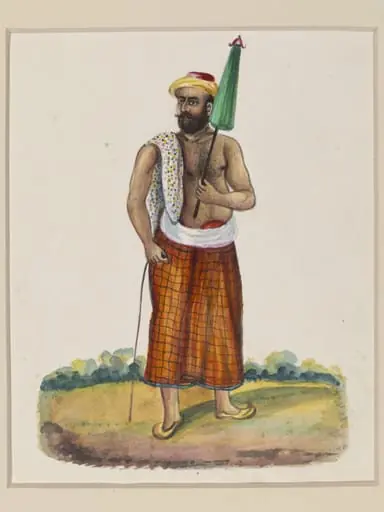 An Indian Man
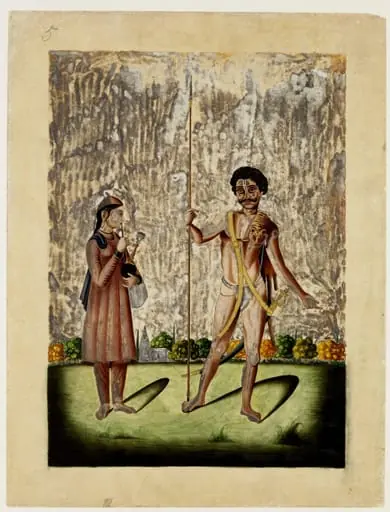 A naked hunter
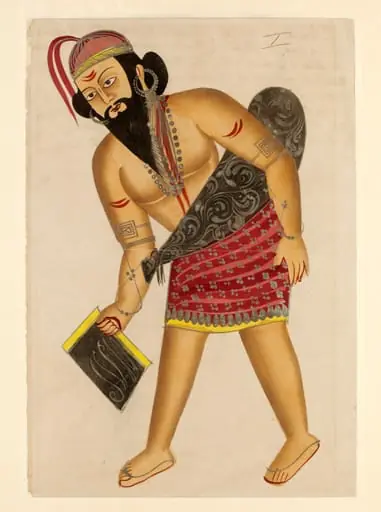 Untitled
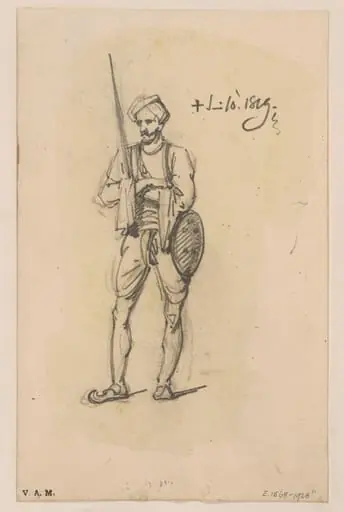 An Indian chowkidar
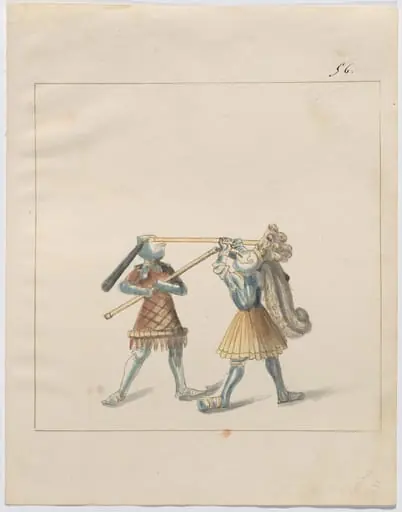 Foot Combat with Flails
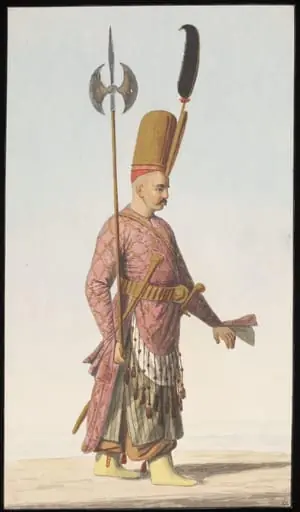 An official of the Sultan
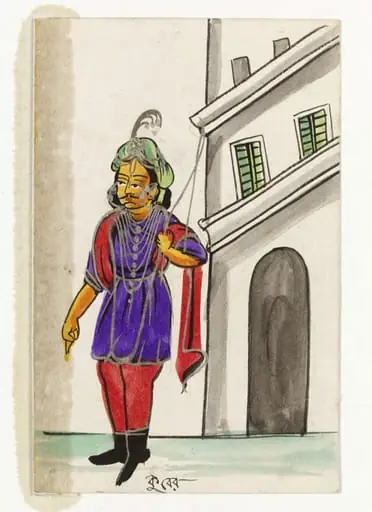 Kuvera
 Raja Surjan Singh
- A garlanded Shaivite, ascetic