Artwork
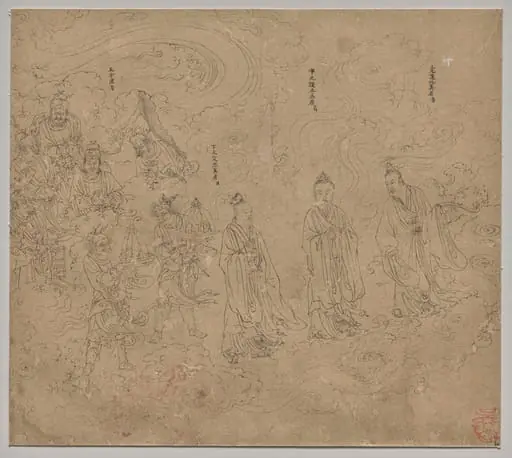
Album of Daoist and Buddhist Themes: Procession of Daoist Deities: Leaf 24
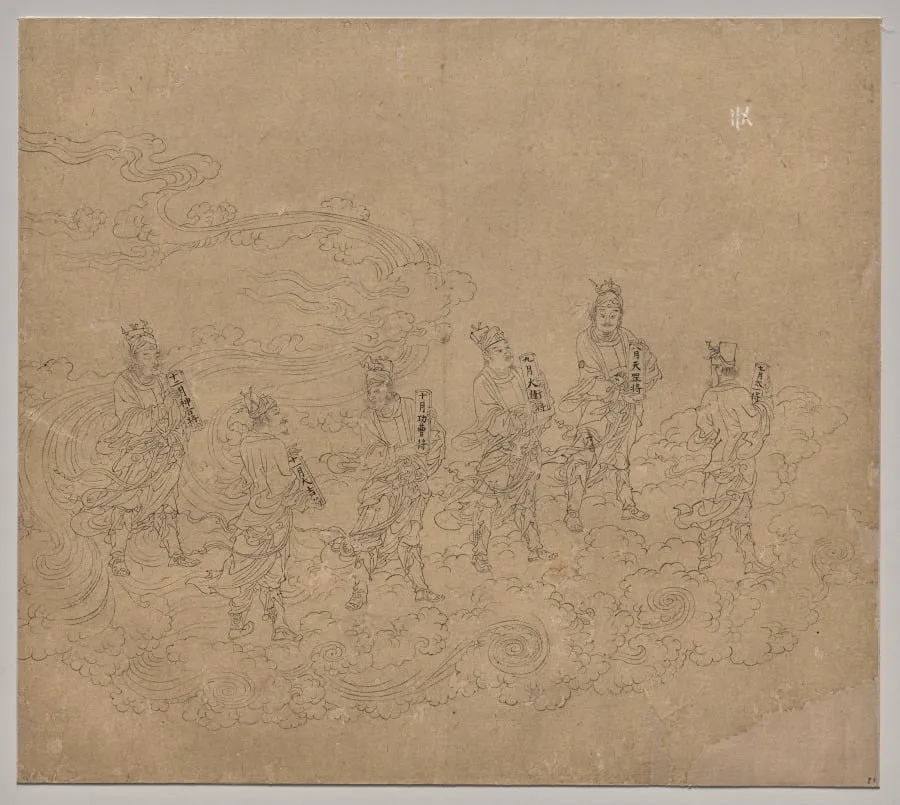
Album of Daoist and Buddhist Themes: Procession of Daoist Deities: Leaf 24 is an unspecified painting by the Song dynasty painting artist Unknown. It dates from 1204 and is held in the collection of the Cleveland Museum of Art. This album leaf is part of a larger series depicting Daoist deities associated with the twelve months of the year.
- Accession no.
- 2004.1.24
- Credit line
- John L. Severance Fund in honor of Dr. Ju-hsi Chou and Gift of various donors to the department of Asian Art (by exchange)
About this work
We don’t know who painted it, but the careful details suggest someone trained in court art.
You see six Daoist gods walking in a line, each holding a name plaque. They wear flowing robes and tall hats, moving from right to left like a slow parade.
This is one page from a larger album showing gods tied to the months of the year. The artist arranged them in order, almost like a calendar. We don’t know who painted it, but the careful details suggest someone trained in court art.
To see more work from this time, look up subject: china, southern song dynasty (1127-1279).
Overview
This album leaf is part of a larger series depicting Daoist deities associated with the twelve months of the year. Each leaf presents six figures, arranged in procession from right to left. Leaf 24 illustrates the deities linked to the seventh through twelfth months, continuing the sequence begun in Leaf 23. The composition follows a formal, rhythmic structure, typical of courtly painting traditions in southern Song China.
Subject & Meaning
The six figures represent Daoist celestial officials, each identified by a plaque bearing their name. Their orderly march symbolizes the cyclical passage of time and the divine governance of the calendar. These deities were believed to oversee seasonal transitions and cosmic order, reflecting Daoist cosmology in which spiritual authority aligns with natural rhythms.
Technique & Style
The figures are rendered with precise brushwork, emphasizing flowing robes and tall, stylized headgear. Details such as folds in fabric and delicate facial features suggest training in the refined court painting tradition. The use of ink and light color on silk reflects the aesthetic priorities of southern Song artists, favoring subtlety over dramatic contrast.
History & Provenance
The album’s origin remains undocumented, with no known signature or inscription identifying the artist. Its quality indicates production within a professional atelier, likely under imperial patronage. The album was likely compiled during the Southern Song dynasty (1127–1279), a period when Daoist and Buddhist iconography flourished in elite artistic circles.
Context
During the Southern Song dynasty, Daoist ritual imagery was frequently integrated into courtly art, often alongside Buddhist themes. This album reflects a broader cultural interest in synchronizing spiritual hierarchies with the lunar calendar. Such albums served both devotional and scholarly purposes, reinforcing the connection between celestial order and imperial legitimacy.
Legacy
The album stands as a rare surviving example of Daoist calendrical painting from the Southern Song. Its structured composition influenced later iconographic traditions in East Asia, particularly in the depiction of divine processions. Though the artist is unknown, the work preserves a sophisticated visual language of spiritual order that persisted in Chinese religious art for centuries.
Artist & collection









- Album of Daoist and Buddhist Themes: Procession of Daoist Deities: Leaf 8
 Album of Daoist and Buddhist Themes: Procession of Daoist Deities: Leaf 5
 Album of Daoist and Buddhist Themes: Procession of Daoist Deities: Leaf 22
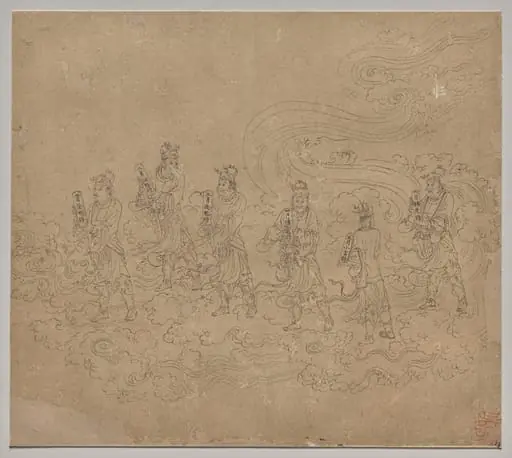 Album of Daoist and Buddhist Themes: Procession of Daoist Deities: Leaf 23
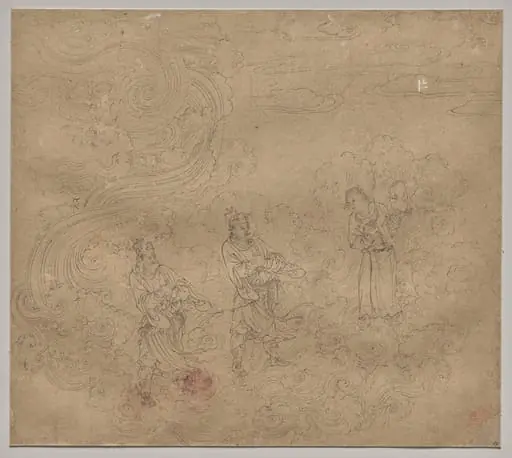 Album of Daoist and Buddhist Themes: Procession of Daoist Deities: Leaf 17
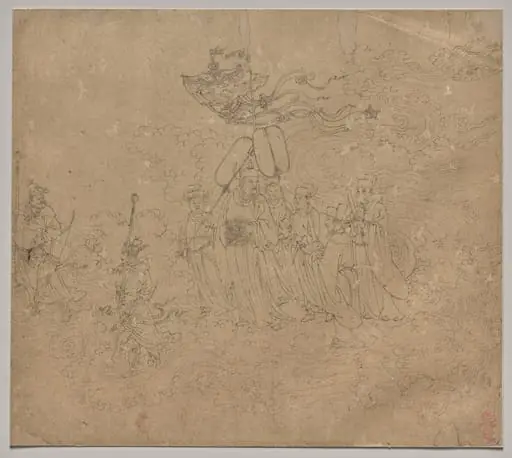 Album of Daoist and Buddhist Themes: Procession of Daoist Deities: Leaf 6
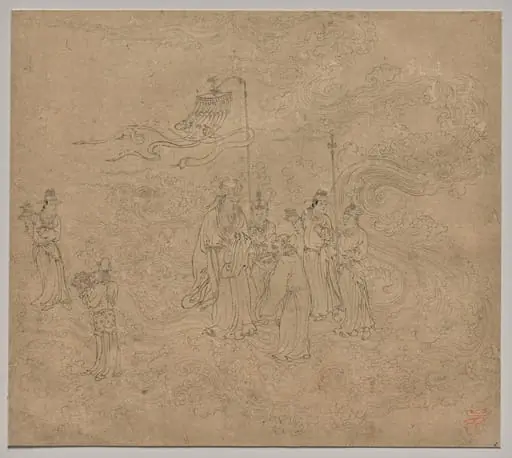 Album of Daoist and Buddhist Themes: Procession of Daoist Deities: Leaf 7
 Album of Daoist and Buddhist Themes: Procession of Daoist Deities: Leaf 20