Artwork
Album of Daoist and Buddhist Themes: Procession of Daoist Deities: Leaf 6
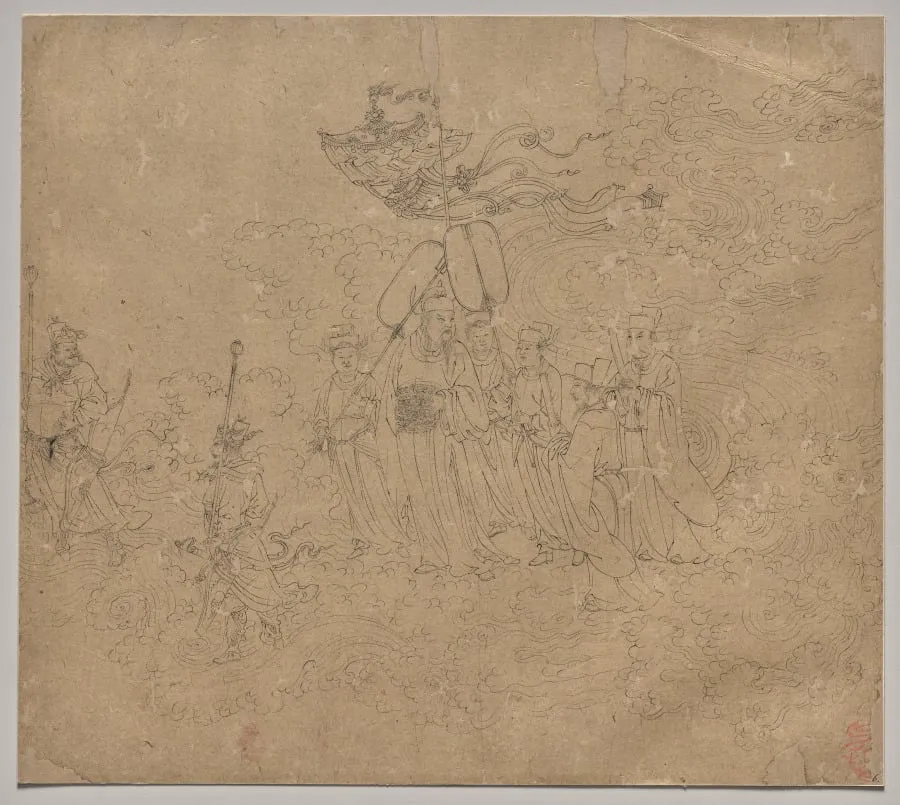
Album of Daoist and Buddhist Themes: Procession of Daoist Deities: Leaf 6 is an unspecified painting by the Song dynasty painting artist Unknown. It dates from 1204 and is held in the collection of the Cleveland Museum of Art. The work belongs to a 50‑page album that illustrates a range of Daoist and Buddhist figures.
- Accession no.
- 2004.1.6
- Credit line
- John L. Severance Fund in honor of Dr. Ju-hsi Chou and Gift of various donors to the department of Asian Art (by exchange)
About this work
This painting was part of a teaching album, like a sketchbook for artists learning to paint religious scenes.
You see a long line of gods in flowing robes, riding clouds and carrying banners. Some have animal heads; others glow with halos.
This painting was part of a teaching album, like a sketchbook for artists learning to paint religious scenes. Fifty pages showed different gods and demons, so apprentices could copy them for temple walls.
To see more paintings like this, look up china, southern song dynasty (1127-1279).
Overview
The work belongs to a 50‑page album that illustrates a range of Daoist and Buddhist figures. This particular leaf, numbered six, depicts a procession of Daoist deities, each rendered in flowing garments and accompanied by banners while traversing clouds. The composition serves as a visual reference for artists learning to portray religious subjects.
Subject & Meaning
The scene presents a line of celestial beings from the Daoist pantheon, some bearing animal heads and luminous halos, suggesting their divine status. The procession likely symbolizes the orderly movement of heavenly forces, a motif used to convey the hierarchy and ritual significance of Daoist worship.
Technique & Style
Executed with fine brushwork on paper, the painting employs delicate lines to define robes and cloud forms, while color washes highlight the ethereal atmosphere. The use of halos and exaggerated gestures reflects the instructional purpose of the album, guiding apprentices in rendering sacred iconography.
History & Provenance
Created during the Southern Song period (1127–1279), the album was probably produced by a workshop of skilled craftsmen who assembled the leaves as teaching models for apprentices tasked with temple commissions. The first 26 leaves focus on the Jade Emperor and Daoist deities, followed by Buddhist Ten Kings and a third section titled “Clearing the Mountains.”
Context
In the Southern Song era, religious art served both devotional and didactic functions. Albums such as this one provided standardized visual templates, ensuring consistency across temple murals and portable screens. The inclusion of both Daoist and Buddhist subjects reflects the syncretic religious climate of the time.
Artist & collection









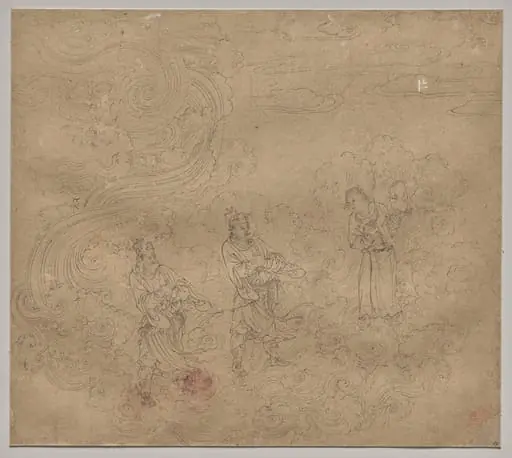 Album of Daoist and Buddhist Themes: Procession of Daoist Deities: Leaf 17
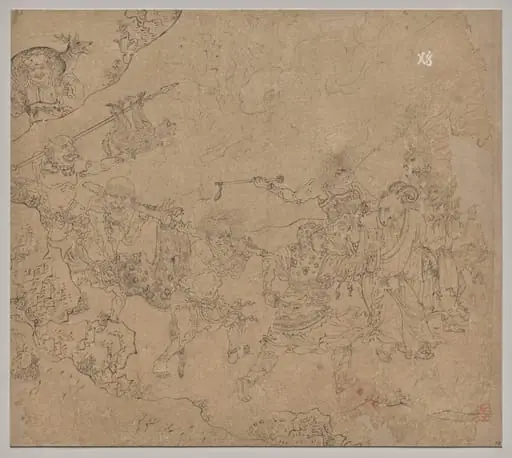 Album of Daoist and Buddhist Themes: Search the Mountain: Leaf 45
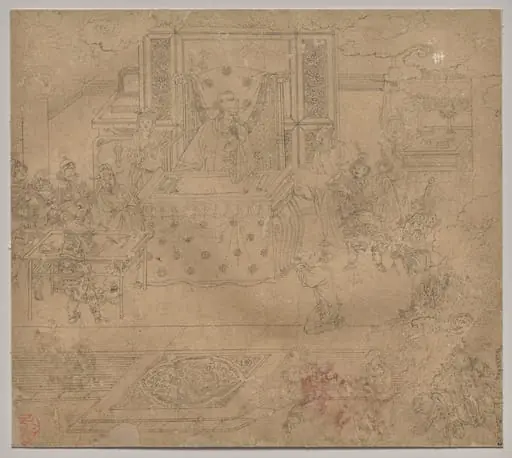 Album of Daoist and Buddhist Themes: Kings of Hells: Leaf 30
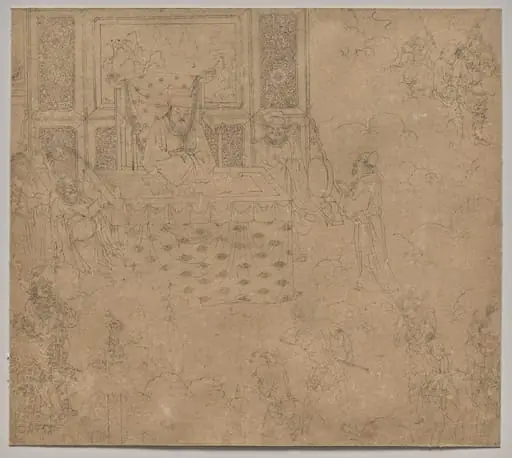 Album of Daoist and Buddhist Themes: Kings of Hells: Leaf 31
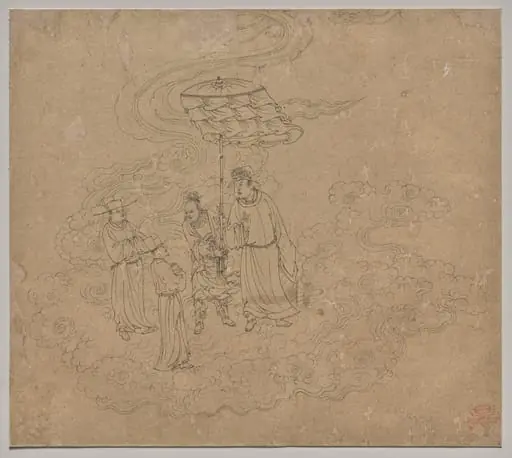 Album of Daoist and Buddhist Themes: Procession of Daoist Deities: Leaf 9
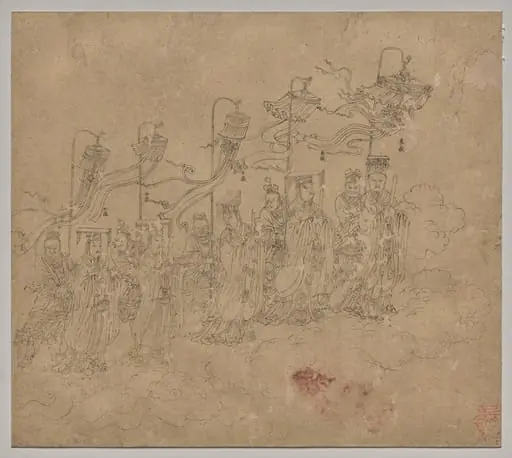 Album of Daoist and Buddhist Themes: Procession of Daoist Deities: Leaf 5
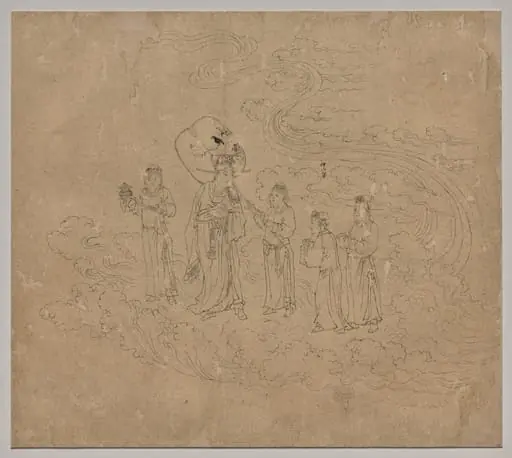 Album of Daoist and Buddhist Themes: Procession of Daoist Deities: Leaf 10
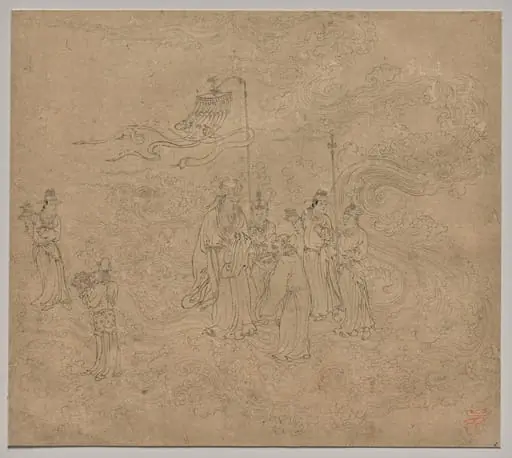 Album of Daoist and Buddhist Themes: Procession of Daoist Deities: Leaf 7
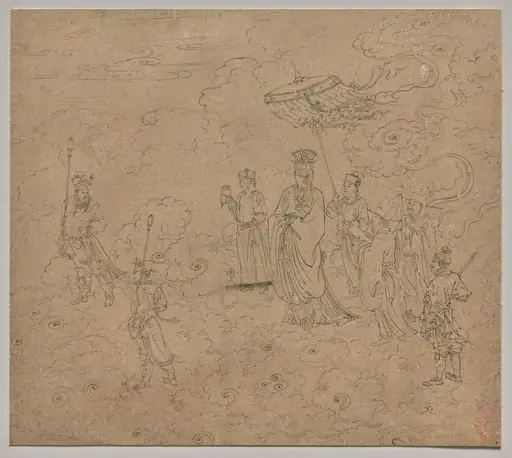 Album of Daoist and Buddhist Themes: Procession of Daoist Deities: Leaf 8