Artwork
Shakyamuni Triad
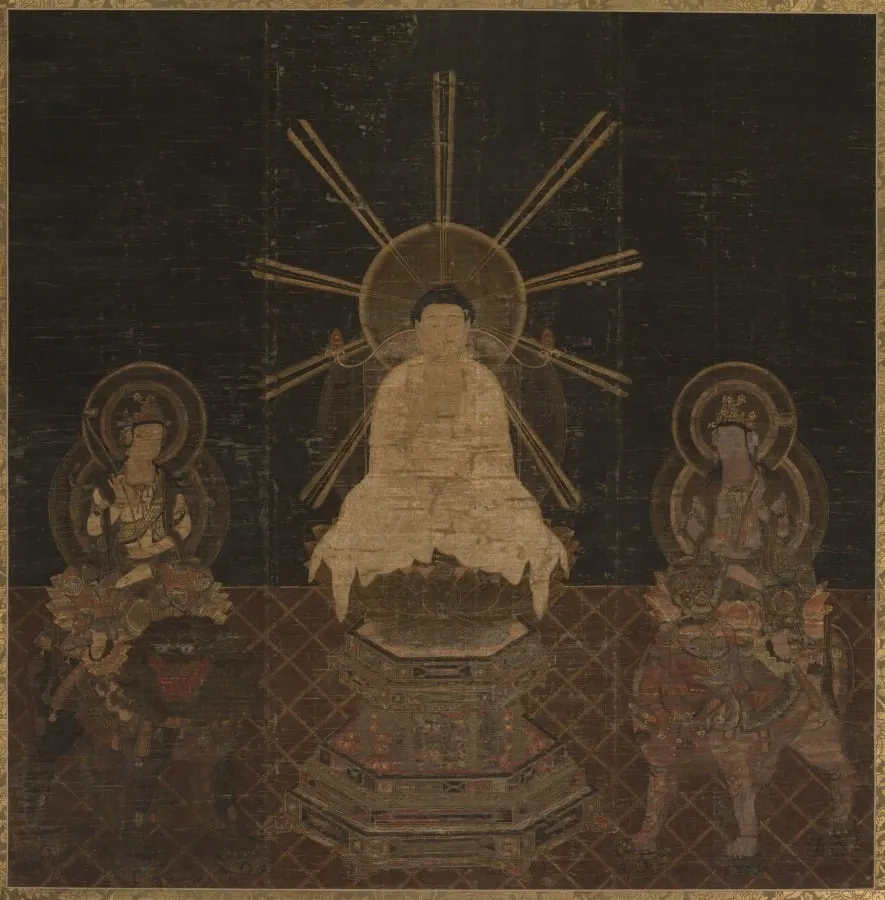
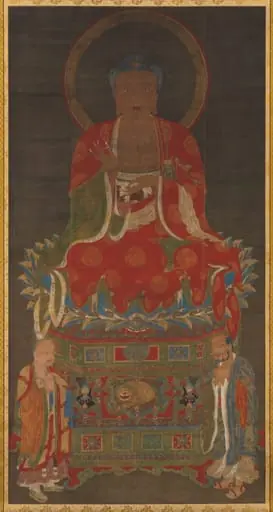
Shakyamuni Triad is an unspecified painting by the Joseon dynasty painting artist Unknown. It dates from 1266 and is held in the collection of the Cleveland Museum of Art.
- Accession no.
- 1916.1059
- Credit line
- Worcester R. Warner Collection
About this work
Overview
The central figure occupies a raised platform, clothed in a light, richly textured robe and framed by a golden halo.
The work, titled Shakyamuni Triad, presents three seated figures set against a deep, almost black background. The central figure occupies a raised platform, clothed in a light, richly textured robe and framed by a golden halo. On either side, two smaller, halo‑encircled figures hold symbolic objects, a wheel and a staff, while the ground beneath them is rendered in a checkerboard pattern. The painting’s edges show signs of wear and fading.
Subject & Meaning
The composition depicts the Buddha Shakyamuni flanked by two attendant figures, likely representing bodhisattvas or disciples. The wheel held by the left figure alludes to the Dharma wheel, a symbol of Buddhist teaching, whereas the staff carried by the right figure may signify spiritual authority or guidance. Together, the trio conveys the centrality of the Buddha’s teachings and the supportive role of his followers within the tradition.
Technique & Style
Executed with layered brushwork, the central robe displays a fabric‑like texture achieved through successive strokes that suggest depth and weight. Softly luminous halos are painted with delicate washes, allowing the faces to emerge from the dark ground. The checkerboard floor employs a restrained geometric pattern, characteristic of the Kamakura period’s interest in clear spatial organization and subtle chiaroscuro.
History & Provenance
The painting originates from Japan’s Kamakura era (late 12th to early 14th century), a time when Buddhist iconography was widely produced for temple settings. Although the exact patron is unknown, the work’s stylistic traits align with other Kamakura devotional paintings. The current location and ownership history are not documented in the available sources, and the piece shows typical age‑related wear along its margins.
Context
During the Kamakura period, Buddhist art shifted toward greater realism and emotional immediacy, reflecting the era’s militaristic and socially turbulent climate. Artists emphasized solid forms and expressive faces, as seen in this triad, to make religious figures more accessible to lay worshippers. The use of a dark background and focused illumination mirrors contemporary approaches to highlight spiritual presence.
Artist & collection









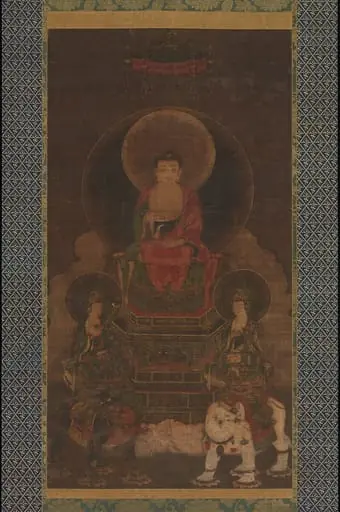
- 釈迦三尊像|Shaka (Shakyamuni) Triad
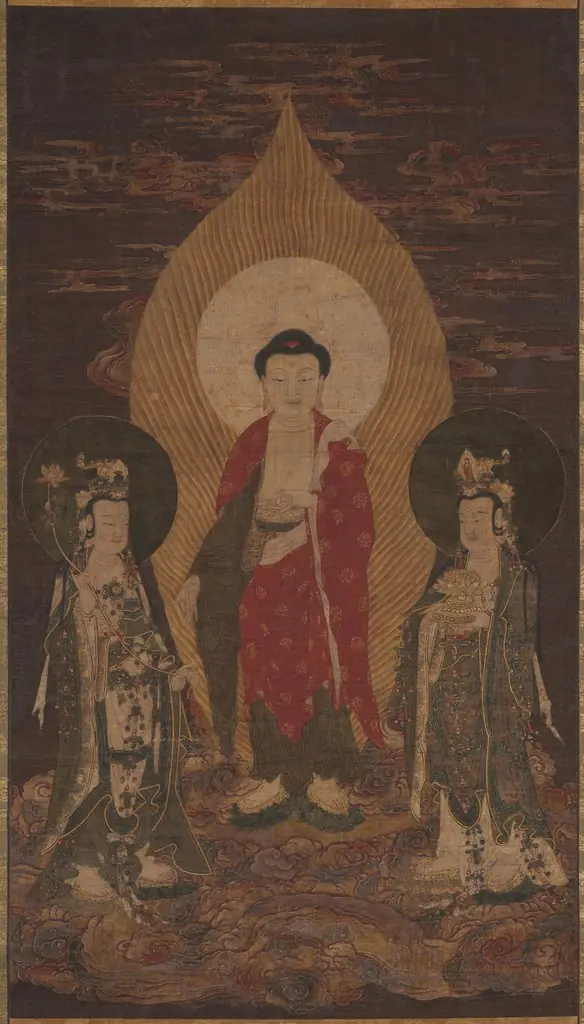 Amitābha Triad
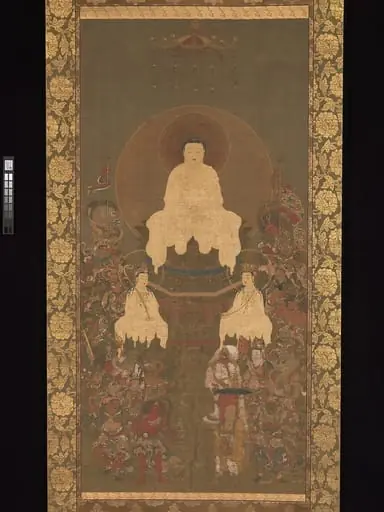 釈迦三尊十六善神像|Shaka (Shakyamuni), the Historical Buddha, with Two Attendant Bodhisattvas and Sixteen Benevolent Deities
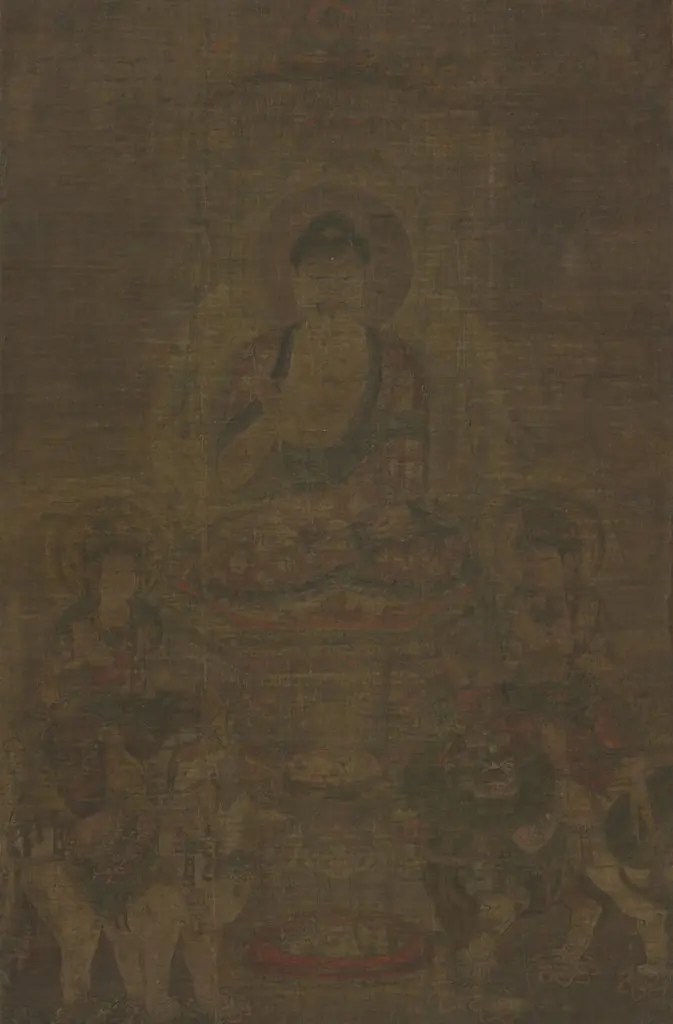 Shakyamuni Triad: Buddha Attended by Manjushri and Samantabhadra
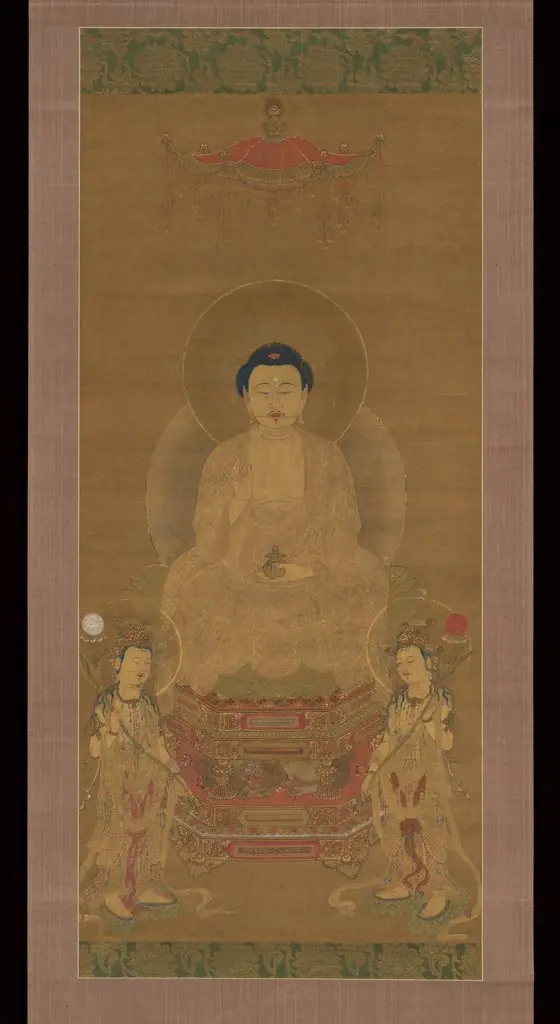 Triad of the Medicine Master Buddha Yakushi (Bhaisajya Buddha)
 아미타삼존도 고려|阿彌陀三尊圖 高麗|Amitabha triad
 석가삼존도 조선|釋迦三尊圖 朝鮮|Shakyamuni triad
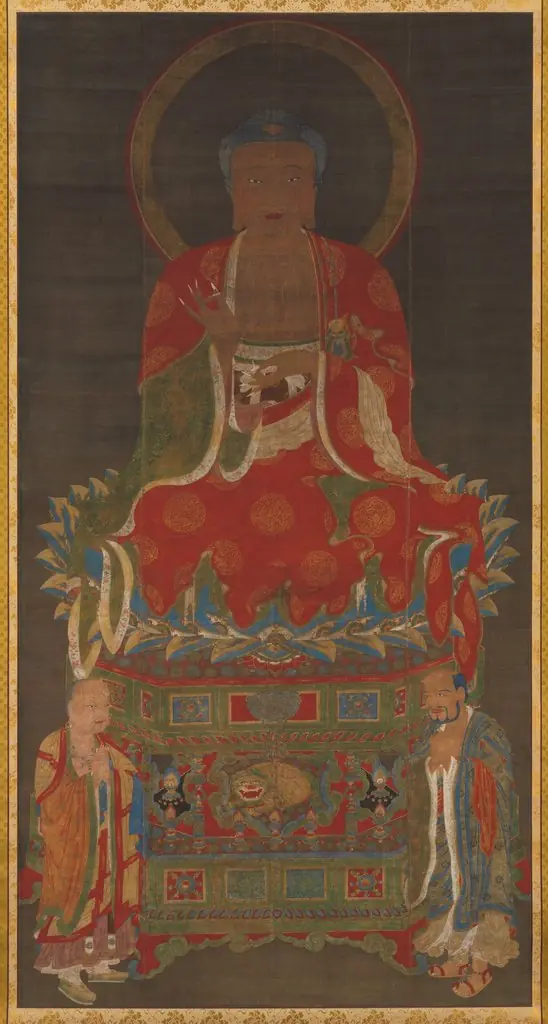 Shakyamuni with two attendants
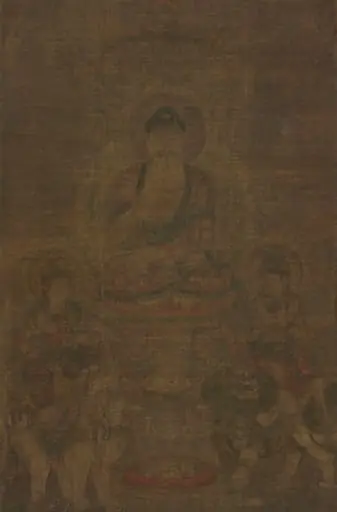 Shakyamuni Triad: Buddha Attended by Manjushri and Samantabhadra
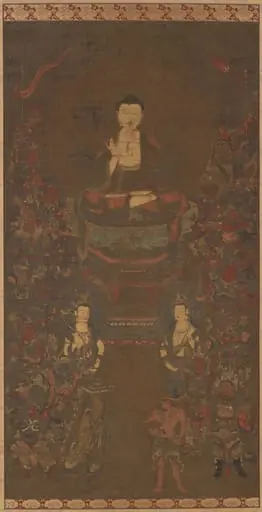 Shakyamuni with the Sixteen Benevolent Deities
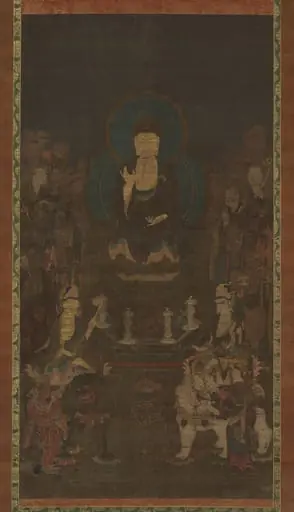 釈迦三尊十大弟子像|Shaka (Shakyamuni), the Historical Buddha, with Two Attendant Bodhisattvas and the Ten Great Disciples
 Shakyamuni with two attendants